The short answer
Medical first, always. Cats peeing outside the box are almost always communicating a problem. Common medical causes: UTI, urinary obstruction (life-threatening in male cats within 24-48 hours), FLUTD, bladder stones, kidney disease, diabetes, arthritis. Schedule an Edmonton vet visit before investing weeks in setup changes. Once medical is ruled out, audit setup: one litter box per cat plus one extra, unscented clumping clay litter, quiet accessible locations away from food and water, daily scooping. Address environmental stressors. Clean soiled spots with enzyme cleaners (uric acid lingers and attracts cats back). Never punish; the cat is communicating a problem and punishment makes underlying stress worse. Most issues resolve within 2 to 8 weeks.
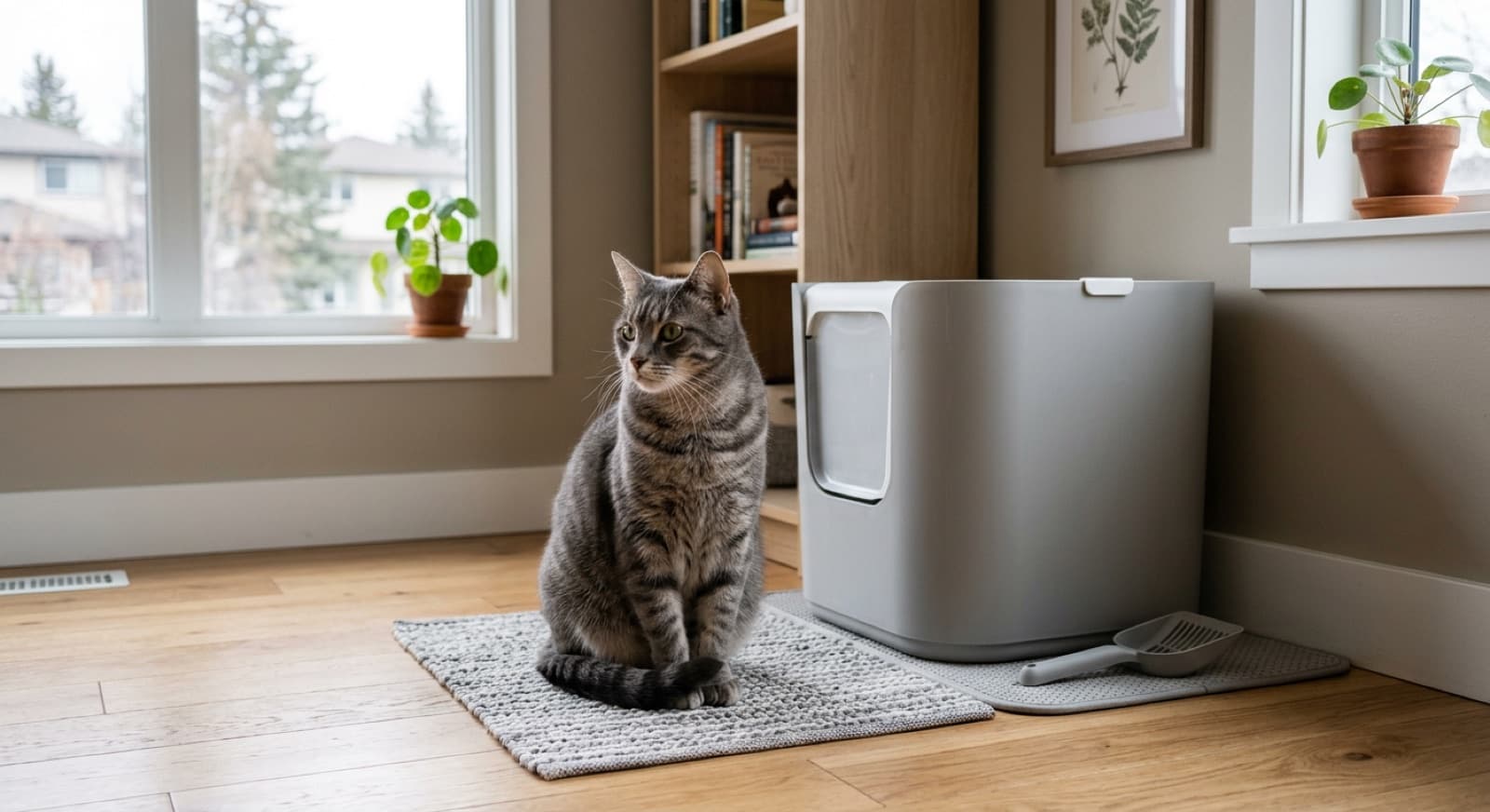
Medical workup first
Schedule a vet visit before assuming behavioural. Urinary obstruction in male cats is fatal within 24-48 hours. Several common medical conditions cause litter avoidance.
Common medical causes of litter box avoidance:
- Urinary tract infection (UTI): bacterial infection causing pain and urgency
- Urinary obstruction: blockage preventing urination; life-threatening in male cats within 24-48 hours; emergency vet visit immediately
- Feline Lower Urinary Tract Disease (FLUTD): umbrella term for various lower urinary conditions including idiopathic cystitis
- Bladder stones: mineral concretions causing pain and obstruction risk
- Kidney disease: increased urine production, accidents from sheer volume
- Diabetes: increased urine production, accidents from urgency
- Arthritis: the cat cannot comfortably climb in and out of the box, particularly senior cats with covered or high-walled boxes
- Feline interstitial cystitis: stress-related bladder inflammation mimicking UTI
Edmonton urinalysis cost: typically $80 to $200 at a primary vet, or included in any visit billed for urinary concerns. The American Veterinary Medical Association publishes general feline health guidance. For urinary blockage emergencies, see our Edmonton cat emergency vet guide.
Browse adoptable cats in Edmonton
Edmonton rescue cats arrive litter-trained. If issues develop later, work through the medical-first framework above. The ASPCA publishes additional general feline care guidance.
See Available Cats →Frequently Asked Questions
Why is my cat peeing outside the litter box?
Always rule out medical causes first. Litter box avoidance in cats is most commonly caused by medical issues that make using the box painful or impossible: urinary tract infection (UTI), urinary obstruction (especially in male cats; life-threatening within 24-48 hours), Feline Lower Urinary Tract Disease (FLUTD), bladder stones, kidney disease, diabetes, arthritis (the cat cannot comfortably get in and out of the box), feline interstitial cystitis (stress-related bladder inflammation). Schedule an Edmonton vet visit before assuming the problem is behavioural; the cost of ruling out medical issues is far less than the cost of allowing a medical condition to progress. If the cat is straining without producing urine, this is an emergency; go to an Edmonton 24-hour ER vet immediately (especially for male cats).
How do I know if it is a medical issue?
Several red flags suggest medical rather than behavioural. (1) Sudden change in behaviour (a cat who used the box reliably for years suddenly stops). (2) Straining or vocalising during litter box use. (3) Blood in urine. (4) Frequent small amounts of urine in many places. (5) Excessive grooming of genital area. (6) Lethargy or decreased appetite. (7) Increased water consumption. (8) Vomiting. (9) Cat hides more than usual. Any of these warrant immediate vet attention. Even if no red flags are present, a baseline urinalysis is the first diagnostic step; rule-out medical causes before investing time in setup changes. The Edmonton Humane Society and most Edmonton primary vets can run a urinalysis for $80 to $200; the cost is a fraction of treating undiagnosed urinary disease.
How many litter boxes do I need?
The widely-accepted standard is one litter box per cat plus one extra. Two cats means three boxes. Three cats means four boxes. The rule reflects feline preference for clean separated bathroom facilities. Most multi-cat households having litter problems have too few boxes. Box placement matters: distribute boxes across the home in different rooms; do not cluster them in one location (cats see clustered boxes as effectively one location). Each box should be in a quiet accessible location away from food and water bowls, with clear escape routes (no dead-end corners where one cat can ambush another). For multi-storey homes, place at least one box on each floor.
What kind of litter should I use?
Most cats prefer unscented clumping clay litter. Several reasons: the texture is similar to natural soil (which cats evolved to dig in), it clumps cleanly for easy daily scooping, and unscented options match the cat's preference (cats find perfumes overwhelming). Avoid: scented litters (most cats avoid them despite the marketing), pellet litters made of recycled paper or wood (texture is unfamiliar to many cats), crystal litters (some cats avoid the unusual texture). If your cat is rejecting a current litter, test 2 to 3 unscented clumping clay options to find one the cat prefers. Sudden litter changes can trigger box avoidance; transition slowly by mixing new litter with old over 7 to 14 days. Keep enough litter in the box: 2 to 3 inches deep for most cats, scooped daily, with full litter change every 2 to 4 weeks.
Where should I put litter boxes?
Quiet accessible locations with clear escape routes. Best practices: not next to food and water bowls (cats find this unappetising and may avoid both), not in high-traffic areas, not next to loud appliances (washing machines, furnaces), not in cold drafty areas like an uninsulated basement corner in Edmonton winter, not in spots where another cat or a dog can ambush during use. For multi-cat households, distribute boxes across rooms; do not cluster them. For multi-storey homes, at least one box per floor. Senior cats with arthritis need boxes with low entry walls and on the main floor where they spend most time. Avoid covered or hooded boxes for most cats (despite the marketing); many cats prefer open boxes because they can see approaches and feel less trapped.
My cat is spraying on vertical surfaces. What is this?
Spraying is a different behaviour than litter box avoidance. The cat backs up to a vertical surface, tail quivers, and a small amount of urine is sprayed. Spraying is typically a marking behaviour driven by stress, hormones (unneutered cats are more prone), or perceived threat from other cats (indoor or outdoor through windows). Solutions: ensure spay/neuter (Edmonton rescue cats are already spayed/neutered as part of the adoption package), identify the stressor (new pet, new household member, outdoor cats visible through windows, schedule change), use synthetic feline pheromone diffusers (Feliway is the established brand), block visual access to outdoor cats if that is the trigger (window film, closing curtains), increase environmental enrichment (vertical space, hiding spots, daily play sessions). If spraying continues, work with an Edmonton vet to consider anti-anxiety medications combined with behaviour modification.
How do I clean cat urine effectively?
Cat urine smells linger because of uric acid crystals that ordinary cleaners do not break down. Cats can smell residual urine and return to the same spot. Use an enzyme-based cleaner specifically designed for pet urine (Nature's Miracle, Anti-Icky-Poo, Urine-Off are widely available at Edmonton pet stores). The enzymes break down uric acid; ammonia-based cleaners actually attract cats back because the smell mimics urine. Cleaning steps: blot up fresh urine immediately (do not rub; that pushes urine deeper), saturate the area with enzyme cleaner per product instructions, let it work for the recommended time (often 24 hours), blot up and let air dry. For carpets, treat both the carpet and the underpad if urine has soaked through. For mattresses or upholstery, treat surface and let dry; some severely damaged items may not fully recover. Persistent urine smell during showings has triggered some Edmonton home sellers to replace flooring; prevention is cheaper.
What about Edmonton dry winter and litter behaviour?
Edmonton dry winter (15-25% indoor humidity from furnace heat during 5-6 months of cold-season weather) can stress cats and contribute to litter behaviour issues. Dry air increases the risk of feline interstitial cystitis (stress-related bladder inflammation that mimics UTI), can dry out skin and coat increasing grooming-related stress, and can dehydrate cats slightly (which concentrates urine and increases urinary issues). Practical responses: indoor humidifier to maintain 35 to 45% humidity in main living areas, ensure water bowls are clean and accessible (some cats prefer water fountains because moving water signals freshness), consider wet food supplementation if your cat eats only dry kibble (the moisture content matters for urinary health), reduce environmental stressors during winter months (cats are more sensitive to schedule changes during dark winter days).
My cat is going outside the box in protest. Is this real?
Cats do not pee outside the box out of spite or revenge. The framing of "protest peeing" is a human projection onto what is almost always a medical or environmental issue. Common actual causes that look like protest: medical issue (most common), litter box dirty (especially for fastidious cats), litter box in a stressful location (recently moved, new pet using same area, loud appliance nearby), new household stressor (new person, new pet, schedule change, construction noise, family conflict), seasonal stress (Edmonton winter dark days, family travel patterns), litter type change. Work through the medical-first checklist (vet visit), then the setup checklist (boxes, litter, location), then environmental stressors. The cat is communicating a problem; the framing of "protest" delays solving it.
When should I see a vet?
Any litter box avoidance warrants a vet visit. The medical-first principle means do not invest weeks in setup changes while a UTI or urinary obstruction progresses untreated. Schedule an Edmonton primary vet visit for: any sudden change in litter behaviour, any straining or vocalising during use, blood in urine, frequent small amounts, excessive grooming of genitals, lethargy, decreased appetite, increased water consumption. Emergency vet visit (24-hour) for: straining without producing urine (especially in male cats; urinary obstruction is fatal within 24-48 hours), complete absence of urine for more than 12 hours, severe lethargy, vomiting combined with urinary symptoms, vocalising loudly. The cost of a vet visit is a fraction of treating an untreated urinary obstruction at an emergency vet.
How long does it take to resolve litter box problems?
Variable based on cause. Medical issues resolve once treated (UTI antibiotic course 7 to 14 days; FLUTD management ongoing; urinary obstruction immediate with appropriate intervention; bladder stones may require dissolution diet or surgery). Setup issues (wrong box, wrong litter, wrong location) typically resolve within 1 to 2 weeks once corrected. Stress-related issues take 4 to 8 weeks of consistent environmental management plus possibly anti-anxiety medication. Old-pattern behaviour (the cat has been peeing in a specific spot for months) takes longer to resolve because the cat has established that spot as "the bathroom"; thorough enzyme cleaning of all soiled spots plus blocking access during retraining matters. Most Edmonton cat owners who follow the medical-first principle resolve issues within 2 to 8 weeks.
Bottom line for Edmonton cat litter box problems?
Medical first, always. Schedule an Edmonton vet visit before assuming the problem is behavioural; urinary blockage in male cats is a life-threatening emergency within 24-48 hours and several common medical issues (UTI, FLUTD, bladder stones, kidney disease, diabetes, arthritis) cause litter avoidance. Once medical is ruled out, audit setup: one litter box per cat plus one extra, unscented clumping clay litter, quiet accessible locations away from food/water, daily scooping. Address environmental stressors (new pets, schedule changes, visible outdoor cats, Edmonton dry winter). Clean all soiled spots with enzyme cleaners (uric acid lingers and attracts cats back). Most issues resolve within 2 to 8 weeks of consistent intervention. Never punish the cat; the cat is communicating a problem, and punishment makes the underlying stress worse.
Adoptable Cats in Edmonton
Live listings from Edmonton Humane Society, Zoe's, SCARS, and AARCS Edmonton fosters.
Cat Emergency Vet Edmonton
When litter symptoms become emergencies, particularly urinary blockage in male cats.
Cat Adoption Guide Edmonton
Day-one preparation for a new cat including litter box placement and the 3-3-3 settling rule.
First Week with a Rescue Cat Edmonton
Some new-cat litter issues are settling stress, not behavioural. The 3-3-3 framework helps differentiate.