Showing 6 cats
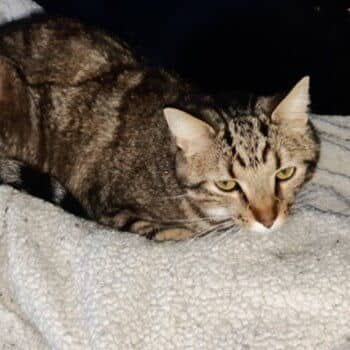
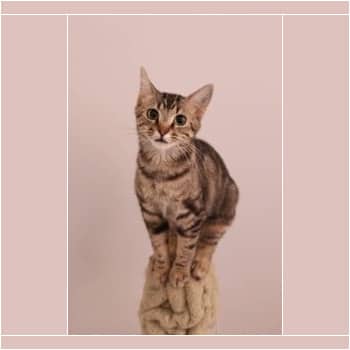

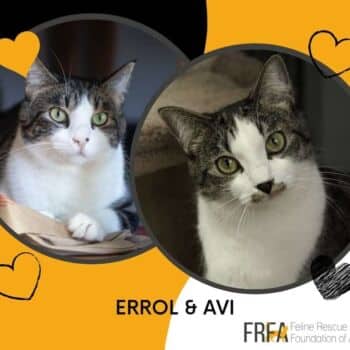


Bonded cat pairs are two (occasionally three) cats that have lived together so long, or formed such a strong attachment, that separating them would cause significant distress. Calgary rescues — especially MEOW Foundation and Feline Rescue Foundation of Alberta (FRFA) — keep bonded pairs together and require they be adopted as a unit. The cats listed here come as a pair.
Adopting a bonded pair is often easier than adopting a single cat. The cats already have a built-in companion, so they entertain each other when you're at work, settle in faster (familiar territory of one another), and don't suffer the loneliness that singleton cats can feel in working households. Most rescues offer a discounted “pair fee” rather than charging two single adoption fees.
Common bonded pair scenarios: littermates, mother-and-kitten that grew up together, two adults rescued together from a hoarding situation, or two cats whose previous owner passed away. The cats know each other; you just need to provide the home.
Bonded Pair Adoption FAQ
How many bonded pairs are available for adoption in Calgary?▼
As of October 2026, 6 bonded pairs are available for adoption in Calgary across 1 rescue on LocalPetFinder. Listings update regularly as pets are adopted and new ones arrive — browse them above and apply directly through the rescue.
Do I have to adopt both cats in a bonded pair?▼
Yes — that's what makes it a bonded pair. The rescue won't separate them. Adopting a bonded pair is a commitment to two cats, not one. If you can only commit to one cat, look at our individual cat listings instead.
Is adopting two cats more work than one?▼
Surprisingly, often less work. Two bonded cats entertain each other, share a litter setup (with one extra box per cat), and need the same amount of human attention as a single cat. The marginal cost is mostly food and a slightly larger litter setup.
How much does it cost to adopt a bonded pair in Calgary?▼
Most Calgary rescues charge a discounted pair fee — typically $250 to $400 for both cats together, vs ~$200 each individually. MEOW Foundation often runs “Name Your Fee” promotions for bonded senior pairs.
Can bonded pairs live in apartments?▼
Yes — two cats fit comfortably in apartments. They primarily occupy vertical space (cat trees, shelves) and don't need much square footage. Just make sure you have enough litter boxes (rule of thumb: one per cat, plus one extra) and feeding stations to avoid resource guarding.