The short answer
4-week structured introduction protocol. Week 1: total separation in different rooms, scent swapping with cloths. Week 2: food bowls progressively closer to the closed door (positive association building). Week 3: visual contact through baby gate or cracked door. Week 4: supervised direct contact in neutral space. Provide multiple resources: one litter box per cat plus one extra, multiple food and water bowls, multiple sleeping spots and scratching posts. Watch for red flags (refusal to eat, litter avoidance, sustained aggression) and pause back to earlier weeks if needed. Realistic goal: peaceful coexistence or friendship over 2 to 6 weeks plus 3 to 12 months for true bonding. Edmonton dry winter increases baseline stress; humidifier helps. Foster home observation of cat compatibility is the most reliable predictor.
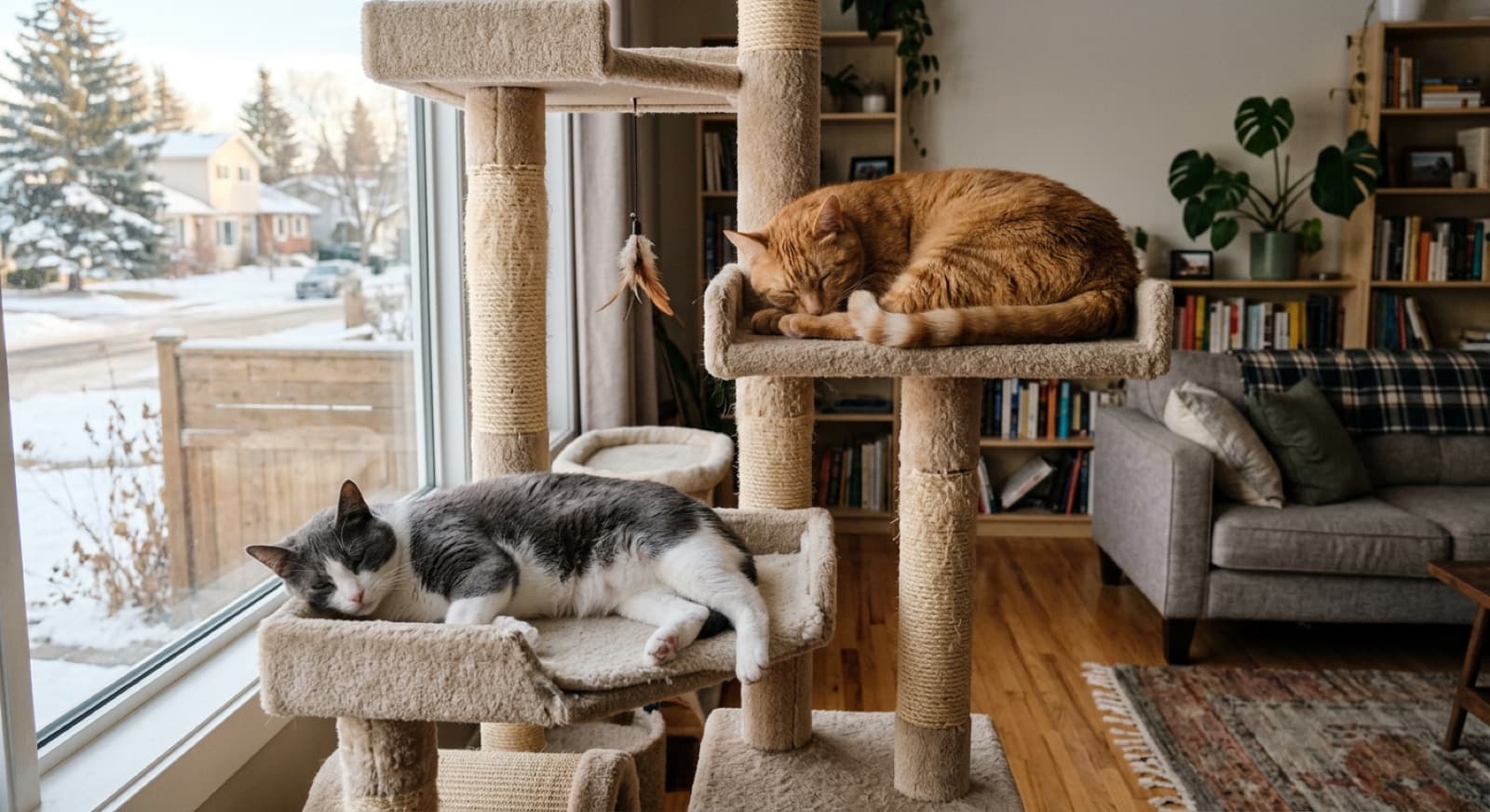
Browse adoptable cats in Edmonton
For multi-cat households, foster home observation of cat compatibility is gold. Ask explicitly during the phone screen. The American Veterinary Medical Association publishes general feline behaviour guidance applicable to multi-cat households.
See Available Cats →Frequently Asked Questions
How long does cat-to-cat introduction take?
Typically 2 to 6 weeks for the structured protocol, with full bonding (true friendship rather than tolerance) taking 3 to 12 months. Rushing the introduction is the most common reason new-cat households fail; cats who feel ambushed or pressured establish negative patterns that take much longer to fix than the slow introduction would have taken. The 4-week protocol below works for most adult-cat-to-adult-cat introductions. Kittens introduced to adult cats typically adapt faster (1 to 3 weeks) because adults often accept kittens more readily. Senior cats meeting other senior cats sometimes take longer because both cats have established preferences. Foster home observation of the new cat's tolerance with other cats is the most reliable predictor; ask Edmonton rescues explicitly about observed cat compatibility during the phone screen.
What is week 1 of the introduction protocol?
Total separation in different rooms. The new cat lives in a safe starter room (bathroom, bedroom, or office) with food, water, litter box, hiding spots, and scratching surfaces. The resident cat has full access to the rest of the home. The cats do not see each other; they should only smell each other through the closed door. Begin scent swapping on day 3: take a clean cloth, gently rub the new cat's cheeks and chin (where scent glands are), then place the cloth where the resident cat can investigate (a corner of the living room, near the resident cat's food bowl, on a favourite resting spot). Do the same with the resident cat's scent into the new cat's room. This builds familiarity with the other cat's smell before any direct contact. End of week 1: both cats should be calm in their respective spaces, eating well, and investigating the scent cloths without aggression.
What is week 2 of the introduction protocol?
Continued separation plus food-bowl proximity exercises. Place food bowls on opposite sides of the closed door. The cats eat in proximity with the door between them, building positive associations (food = good = the other cat being nearby = good). Move bowls progressively closer to the door over 4 to 7 days. Continue scent swapping daily; rotate the cats' access to spaces (let the new cat explore the rest of the home while the resident cat is closed in a different room, then swap; this allows the new cat to learn the home's layout and the resident cat to investigate the new cat's scent in their old space). Watch for signs of stress: hissing through the door (mild stress, normal), refusal to eat near the door (significant stress, slow down), litter avoidance, hiding, vocalising loudly. End of week 2: both cats eat calmly within a few feet of the closed door without aggression.
What is week 3 of the introduction protocol?
Visual contact through a barrier (baby gate, cracked door, screen). The cats can see each other but cannot physically interact. Begin with short sessions (5 to 10 minutes) and increase gradually. Watch body language: relaxed bodies and tails, normal blinking, occasional eye contact without staring (slow blinks at each other are positive social signals); hissing once or twice is normal; sustained growling, hard staring with dilated pupils, or aggressive posturing means slow down. Continue food-bowl exercises now within visual range of each other through the barrier. End of week 3: both cats can be in visual contact for 30+ minutes with calm body language and the ability to eat treats or play in each other's presence.
What is week 4 and beyond?
Supervised direct contact in a neutral space (living room, not either cat's favourite spot). Begin with short sessions (10 to 15 minutes) with both cats in the same room without barriers. Provide multiple resources: two food bowls in different spots, two water bowls, multiple litter boxes (one per cat plus one extra), multiple sleeping spots at different heights, multiple scratching posts. Have a way to separate them quickly if things escalate (a thick towel to throw over an aggressing cat, a sturdy piece of cardboard to slide between them). Watch for: relaxed body language, casual sniffing, sharing space without conflict (positive signs); puffed tails, growling escalating to yowling, swatting with claws out, biting (negative signs requiring immediate separation and back to week 2 protocol). Most cat-to-cat introductions stabilise by end of week 4 to week 6.
What are red flags requiring me to pause the protocol?
Several signs warrant pausing and reassessing. (1) Either cat stops eating or eats noticeably less. (2) Either cat starts avoiding the litter box or using it outside the box. (3) Either cat hides constantly and refuses to come out. (4) Loud yowling, hissing escalating to growling, swatting with claws, biting during any contact. (5) One cat targets the other with stalking behaviour (intense staring, ambushing at doorways). (6) Either cat shows physical signs of stress (excessive grooming bald patches, weight loss, lethargy). Pause the protocol back to total separation; consult an Edmonton vet to rule out medical contributors to the stress, and consider working with a force-free cat behaviour consultant (some Edmonton vets and trainers offer this; cost typically $150 to $300 per session). Synthetic feline pheromone diffusers (Feliway Multicat is specifically designed for multi-cat households) can help reduce stress during the introduction.
What if my cats never become friends?
Many multi-cat households reach "peaceful coexistence" rather than "true friendship." This is acceptable and common. Peaceful coexistence: the cats share space without aggression, may eat in the same room without conflict, may sleep in the same room without conflict, occasionally interact neutrally (sniffing, brief touches), but do not actively seek each other out for play or grooming. True friendship: the cats actively seek each other, groom each other, play together, sleep curled together. Both outcomes are successful; not every cat needs a cat friend. Some pairings do reach friendship over months or years; others stabilise at peaceful coexistence and stay there. Provide separate resources (food, water, litter, sleeping, scratching) so each cat has their own zones, and respect each cat's preferred relationship distance.
How does Edmonton dry winter affect cat introductions?
Edmonton dry winter (15-25% indoor humidity from furnace heat through 5-6 months) increases baseline stress for both cats, which can complicate introductions. Practical responses: introduce humidifiers to maintain 35-45% humidity in main living areas; this helps both cats stay calmer. Reduce other environmental stressors during the introduction period (avoid major schedule changes, construction, holiday-visitor influx). Consider timing the introduction for milder seasons if you have flexibility; cats stuck in close indoor proximity through long winter months without a healthy relationship can become more entrenched in negative patterns. If the introduction is happening in deep winter, slow the protocol slightly and provide extra environmental enrichment for both cats (more play, more vertical space, more enrichment puzzles).
What are common Edmonton-specific cat introduction mistakes?
Several patterns to avoid. (1) Skipping the scent-swapping phase and going straight to visual or direct contact. (2) Forcing physical proximity (carrying one cat to meet the other, locking them in a room together to "work it out"). (3) Punishing aggressive displays (this damages the cat's relationship with you without teaching them to like the other cat). (4) Not providing enough resources (one litter box, one food bowl, one sleeping spot for two cats); resource scarcity drives ongoing conflict. (5) Rushing the timeline because human visitors are coming or because separated cats are inconvenient. (6) Giving up too soon; some introductions take 3 to 6 months to fully stabilise. (7) Not noticing that one cat is bullying the other in subtle ways (resource guarding, blocking doorways, stalking). The fix for most failed introductions is going back to a slower protocol with more environmental enrichment and patience.
When should I work with a professional cat behaviourist?
If the 4-week protocol stalls or fails despite consistent execution. Signs that warrant professional consultation: aggression continues despite slow protocol, one cat is showing signs of chronic stress (urinary issues, weight loss, hiding), the cats have established a stable negative pattern that persists despite separation, you are unable to identify what is going wrong. Edmonton certified force-free behaviour consultants (CCPDT-CFTS, KPA, IAABC Feline Behaviour Consultants) can assess your specific situation and provide tailored guidance. Cost typically $150 to $300 per session; remote consultations are widely available. The investment is far less than the cost of giving up and rehoming a cat, and addresses the underlying issue rather than just managing symptoms.
Bottom line for Edmonton cat-to-cat introduction?
Four-week structured protocol, with peaceful coexistence (rather than guaranteed friendship) as the realistic goal. Week 1: total separation with scent swapping. Week 2: continued separation plus food-bowl proximity exercises. Week 3: visual contact through a barrier. Week 4: supervised direct contact in a neutral space. Provide multiple resources throughout (one per cat plus one extra of litter boxes, food bowls, water bowls, sleeping spots, scratching posts). Watch for red flags (refusal to eat, litter avoidance, sustained aggression) and pause back to earlier weeks if needed. Edmonton dry winter increases baseline stress; humidifier helps. Foster home observation of cat compatibility from Edmonton rescues is the most reliable predictor. Synthetic feline pheromone diffusers (Feliway Multicat) can ease the transition. Some cats reach true friendship; many stabilise at peaceful coexistence. Both outcomes are successful.
Adoptable Cats in Edmonton
Live listings from Edmonton Humane Society, Zoe's, SCARS, and AARCS Edmonton fosters.
First Week with a Rescue Cat Edmonton
The 3-3-3 settling rule and safe-room setup framework that applies to the new cat during weeks 1 to 4.
Cat Litter Box Problems Edmonton
Litter avoidance during introductions is common; the medical-first framework helps differentiate.
Cat Scratching Furniture Edmonton
Multi-cat households need multiple scratching surfaces; the redirection framework helps.