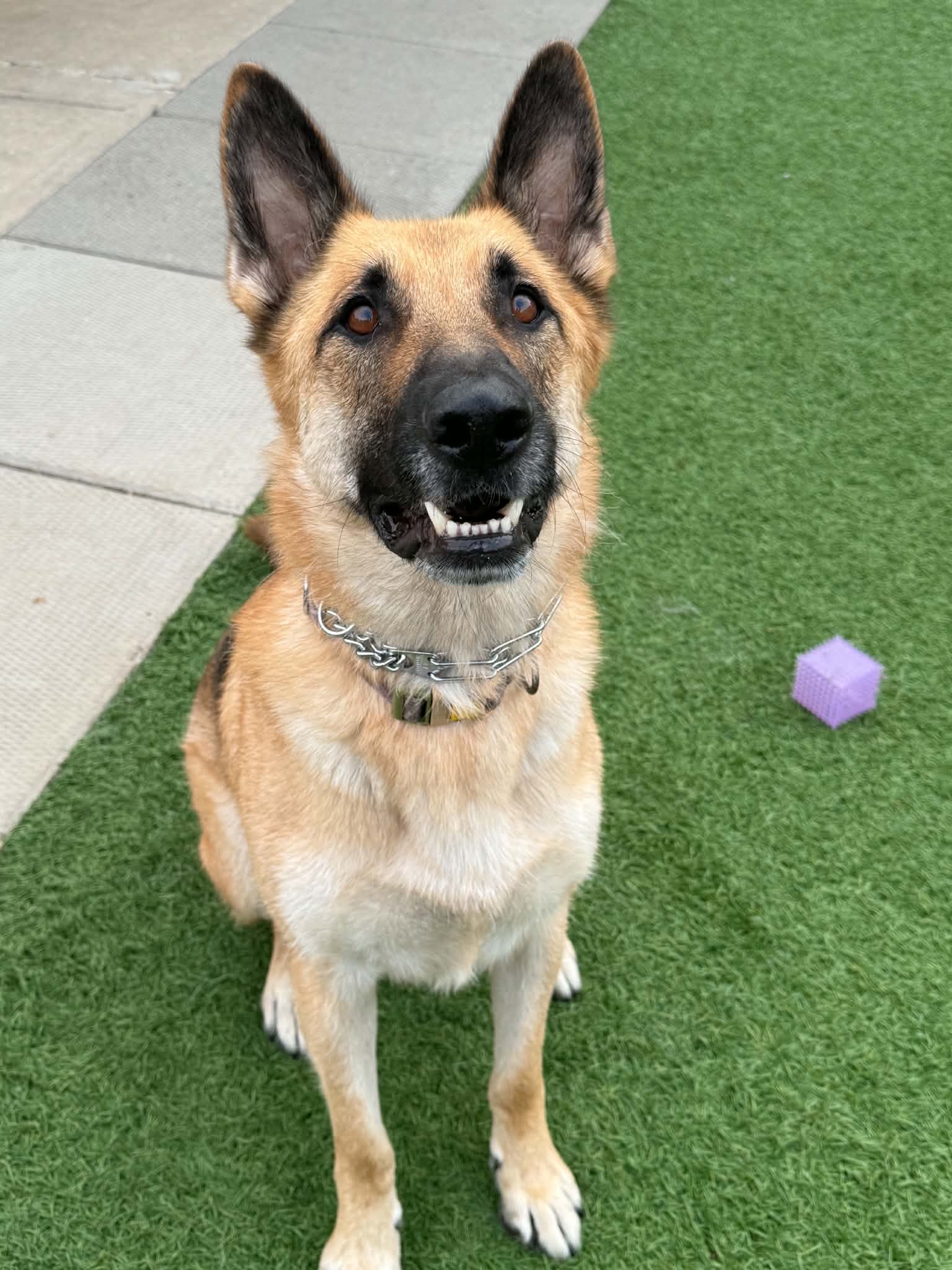
German Shepherds in Regina, right now
We're currently tracking 1 adoptable German Shepherd in southern Saskatchewan, listed by 1 rescue including Running Wild Rescue. Listings update regularly, and most German Shepherds in Regina get adopted within days of being posted — if one catches your eye, reach out fast.
Adopting a German Shepherd in Regina
German Shepherds are one of the most common large-breed surrenders in Regina rescue. The Regina Humane Society on Parliament Avenue sees GSDs and Shepherd crosses most months, Bright Eyes Dog Rescue places them out of foster homes across the city, and rural southern Saskatchewan intake brings more Shepherds into Regina-based fosters than most adopters realise. The story foster homes hear from surrenderers is the same one over and over. The family bought a puppy that grew into 75 to 90 lbs of unstructured drive, and the Cathedral or Harbour Landing rental did not have the space or the routine to put into the dog.
This page pulls every adoptable GSD from the launched Regina-area shelters into one searchable place, refreshed regularly. Foster homes routinely arrange meets across the city regardless of whether you live in Lakeview, Whitmore Park, Rosemont, Walsh Acres or Wascana View. The drive from north Regina out to a Moose Jaw foster home is a normal trip when the right dog is on the other end.
Why German Shepherds cycle through Regina rescue
The first reason is the gap between the puppy and the adult. A German Shepherd between 8 and 18 months hits a window where drive ramps up, training holes show, and the family realises they did not actually want the dog they bought. Foster homes pick up GSDs at that age every month of the year in Regina. The second is the working-line problem. Some Czech, DDR and West German working-line puppies get sold to Regina pet families that thought they were buying a companion. The dog has the genetics of a police or sport prospect, the household has the schedule of a casual Wascana walker, and the dog falls into rescue by 12 to 24 months.
The third pattern is rural southern Saskatchewan intake. Bright Eyes and the Regina Humane Society both take Shepherds and Shepherd crosses from communities outside the city when local resources run thin. Those dogs land in Regina foster homes for assessment, often with no breeder history, and the foster gets to know the dog before placement. Rescue Shepherds out of that pipeline are usually 1 to 4 years old and adjusting from rural to city life takes a few weeks.
A working dog in a prairie climate
A German Shepherd is a working breed in a pet body, and that is the single most useful thing for a Regina adopter to understand. The dog needs mental work as much as physical exercise: training, scent games, structured walks, a routine it can rely on. A GSD left to fill its own day in a Heritage rental finds outlets the household will not like. Bonny Estates / Cathy Lauritsen Off-Leash Dog Park is the largest fenced off-leash area in Regina and the standout option for a high-drive Shepherd, with Mahon Estates as a secondary fenced space and the Wascana Centre paths for leashed loop walks.
Regina winter is actually the easier season for a double-coated working breed. A -35°C January morning is no problem for a healthy adult Shepherd, and the dry prairie cold is gentler on the coat than wet coastal winters. The two real climate hazards are prairie wind that drives wind chills past -50°C on the worst days (paws and ears need watching) and the hot dry summers with tornado-prone severe weather (south Saskatchewan sits in tornado alley and summer storms can be sudden). Walk early morning or after dark in July and August on heat advisory days, and bring the dog inside before a severe-thunderstorm watch turns into a warning.
Health concerns and the WCVM Saskatoon drive
German Shepherds have several well-documented health concerns Regina fosters should answer plainly. Hip and elbow dysplasia are the most common. Degenerative myelopathy, a progressive spinal condition, shows up in older dogs of the breed. Bloat, the sudden twisting of the stomach, is the emergency every deep-chested large dog owner should know. Exocrine pancreatic insufficiency and chronic skin allergies also come up. A foster who has lived with the dog for weeks knows whether it moves smoothly, holds weight, and is comfortable. Ask directly.
The Regina-specific framing for serious specialty work is the Western College of Veterinary Medicine (WCVM) in Saskatoon, the only veterinary college on the prairies. Regina GP vets handle routine care, but anything that needs board-certified orthopedic surgery for advanced hip work, neurology for DM diagnostics, or internal medicine for complex pancreatic cases usually means the ~2.5 hour drive north on Highway 11. Build that drive into the budget. Pet insurance taken out the week you bring the dog home is genuinely worth it for a GSD given the specialty referral cost stack at WCVM.
What German Shepherds are actually like to live with
A well-matched German Shepherd in Regina is loyal, trainable and deeply bonded to its household. The harder parts of the breed show up at home, and they are why so many end up in rescue:
- Needs a job. A GSD without mental work and structure invents its own, usually destructively.
- Bonds hard, can be wary of strangers. Plan a slow introduction routine for visitors, delivery drivers and unfamiliar dogs.
- High exercise needs. Plan on an hour or more of real activity daily, year-round, regardless of January wind chill or summer heat advisories.
- Sheds constantly. The double coat blows heavily twice a year. Expect a vacuum routine, and dry forced-air heating that pushes loose fur around every Regina winter.
- Reactivity is common in rescue GSDs. Many need a calm handler and a training plan, not a busy off-leash area on day one.
- Large and strong. Walking gear, the home and the budget all need to fit a powerful 70 to 90 lb dog.
- Heat and tornado-warning days reshape the routine. Summer afternoons in Regina can run 32 to 35°C with severe-storm watches; plan exercise for cool mornings.
What the fee usually covers
German Shepherd adoption fees at Regina-area rescues typically run $350 to $600 for an adult dog. The fee covers the medical work the rescue already paid for: spay or neuter, core vaccinations, microchip, deworming, and a vet check before placement. Confirm the exact number on the dog's own listing, because it varies with age and any special medical care.
How to actually search
Use the filters above to narrow by energy level (most GSDs are high), size (large), compatibility, and shelter. Read the listing carefully for notes on reactivity and stranger comfort, because rescue GSDs vary widely. If a dog fits, apply the same day. Foster homes across Regina are usually willing to set up a video call before you drive across the city for an in-person meet.
Looking more broadly? Browse every adoptable dog across the province on Dog Adoption Saskatchewan.
The rescues that most often list German Shepherds across Saskatchewan are Regina Humane Society, Bright Eyes Dog Rescue, and Moose Jaw Humane Society. For breed-specific background, the Canadian Kennel Club is a useful reference.
German Shepherd adoption in other Saskatchewan cities
German Shepherd Adoption FAQ — Regina
How many German Shepherds are available for adoption in Regina?
As of October 2026, German Shepherds are rare in Regina rescue — only 1 is listed right now across 1 rescue on LocalPetFinder. They tend to get adopted fast, so setting an alert is the most reliable way to find one.
Where can I adopt a German Shepherd near me in Regina?
Regina has German Shepherds and GSD crosses in rescue most months of the year. The major sources are the Regina Humane Society on Parliament Avenue, Bright Eyes Dog Rescue (foster-based, Regina), and Moose Jaw Humane Society about 70 km west. This page lists what is currently available across all of them. Each profile links directly to the rescue to apply.
Do German Shepherds handle Regina winter cold?
Yes, comfortably. The double coat is built for hard prairie winter and a healthy adult Shepherd is fine on a -35°C January walk. The two things to watch are prairie wind chill on the worst days (Regina wind can push -45°C feels-like past -50°C, and paw pads + ear tips are exposed), and dry forced-air heating indoors that can dry out skin. Booties for the coldest days, paw wax for daily walks November to March, and a humidifier inside help. The summer heat advisories with 32 to 35°C afternoons are actually harder on the breed than the cold is.
Where can I exercise a German Shepherd in Regina?
Bonny Estates / Cathy Lauritsen Off-Leash Dog Park is the largest fenced off-leash area in Regina and the standout option for a high-drive Shepherd. Mahon Estates off-leash and the smaller A.E. Wilson Park work for shorter outings. The Wascana Centre and Wascana Lake corridor handle leashed loop walks through the centre of the city — not off-leash but a clean green space. For a reactive rescue GSD, a long line in a quieter spot like a quiet Whitmore Park or Rosemont street beats a crowded off-leash area on day one.
Where do Regina German Shepherds go for specialty vet care?
Regina GP vets handle routine care, but board-certified specialty work — orthopedic surgery for advanced hip dysplasia, neurology for degenerative myelopathy workup, internal medicine for complex pancreatic cases — usually means the Western College of Veterinary Medicine (WCVM) in Saskatoon. WCVM is the only veterinary college on the prairies and sits about 2.5 hours north of Regina on Highway 11. Budget the drive into the medical plan for any GSD with a serious diagnosis, and consider pet insurance for the breed because specialty referral costs add up fast.
Are SK rescue German Shepherds working line or pet line?
Almost all are pet-line or mixed-line, not working-line. A pet-line Shepherd is moderate energy and trainable with reasonable effort. Foster homes can tell you whether the specific dog settles in the evening or paces, which is the best indicator of whether you are looking at a family-suitable Shepherd or a high-drive working dog.
What is the difference between working-line and show-line German Shepherds?
Working-line German Shepherds are bred for drive, stamina, and job focus, and tend to be leaner and more intense with a straighter back. Show-line dogs, especially West German show lines, are bred more for appearance and often have the sloped topline you see in the ring. In rescue you will mostly meet Shepherds and Shepherd mixes where the line is unknown and barely matters. Judge the individual dog: its energy, recall, and temperament tell you far more than any label about how it will fit your home.
How much does it cost to adopt a German Shepherd in Regina?
Adopting a German Shepherd in Regina typically costs $250 to $650, and puppies usually carry a premium at $450 to $800. The exact fee varies by rescue, and older dogs are often reduced. That fee is not a purchase price. It covers work already done on the dog: spay or neuter, vaccinations, deworming, microchip, and a basic vet workup, which would cost several hundred dollars more if you arranged it yourself after buying. Buying the same breed from a registered breeder generally runs well over $1,000, usually with a waitlist. Ask the rescue what is included before you apply, since a few include extras like a starter bag of food or a first-month insurance trial.
Are these German Shepherds for sale in Regina?
Not for sale, for adoption, which is usually the better deal. Every German Shepherd here comes from a Regina rescue or shelter, not a breeder, pet store, or classified seller. Adoption fees are typically $250 to $650, with puppies at $450 to $800 and already include vaccinations, deworming, microchip and spay or neuter when age-appropriate, versus roughly several thousand dollars to buy a German Shepherd from a breeder. If you searched "german shepherd for sale regina" or "german shepherd puppies for sale," adopting gets you a healthy, vetted dog for a fraction of the price.
Where can I buy a German Shepherd in Regina, and should I?
You can buy from a registered breeder, but it is worth weighing against adoption first. A reputable German Shepherd breeder typically charges several thousand dollars and often has a waitlist, while a rescue German Shepherd costs $250 to $650, with puppies at $450 to $800 fully vetted and may be available now. Be cautious of cheap german shepherd-for-sale ads on classified sites and marketplaces, which are frequently backyard breeders or puppy-mill resellers with unvetted, sometimes sick animals and no health guarantee. If you do buy, insist on seeing where the puppies were raised and getting vet records. For most families in Regina, adopting a rescue German Shepherd is cheaper, faster, and gives a dog in need a home.
Are there free German Shepherds in Regina, or german shepherds under $500?
Adoption is the closest honest answer, and it is not free. A rescue German Shepherd in Regina typically costs $250 to $650, with puppies at $450 to $800, so the lower end lands under the "$500" people search for and the rest does not. What the fee buys is work already done, the vaccinations, deworming, microchip and spay or neuter, which would cost more than the fee itself if you arranged it yourself, and it is still far below breeder prices. Be wary of genuinely free german shepherd listings. An animal advertised free to a good home has usually not been vetted, and free rehoming ads are the route flippers and unregistered breeders use to move animals with no health guarantee and no recourse. Paying a rescue fee buys you a dog someone has already examined, treated, and been honest with you about.
Are there German Shepherd puppies in Regina, or only adults?
Both, but adults far outnumber puppies, and it is worth knowing that before you start looking. Most German Shepherds arriving in Regina rescue are adolescents and adults, because that is the age at which first homes tend to give up. Puppies do come through, usually as accidental litters or with a surrendered mother, and they are typically spoken for quickly. Setting an alert beats refreshing the page. It is also worth asking whether you actually want one: an adult arrives with a temperament a foster has already observed and described, where a German Shepherd puppy is a prediction, and for this breed in particular knowing what you are getting is the more useful thing.
Where can I find a German Shepherd near me in Regina?
Start with the listings on this page, which pull from Regina rescues and shelters and are refreshed regularly, so what you see is what is genuinely available rather than a stale directory. If nothing suits today, that is normal for this breed: rescue intake is intermittent rather than steady, and a breed with none listed this week often has several next month. Setting an alert beats checking back, and it is worth widening to nearby towns, since most rescues serving Regina will adopt out across a reasonable driving distance rather than only inside one municipality.
Have a dog to rehome?
Rehoming a German Shepherd in Regina?
List your dog free. Local adopters browsing Regina see owner listings first: no shelter, no fees, you choose the home.
List your pet free →Takes 3 minutes. You stay in control of who adopts.
Not seeing one yet?
Get notified when a German Shepherd is listed in Regina
We'll email you the moment a German Shepherd is listed in Regina on LocalPetFinder, from a rescue or an owner rehoming.
One email when there's a match. Unsubscribe anytime.
For rescues & shelters
Are you a Regina-area rescue? List your adoptable dogs free.
Free shelter account: your dogs appear here and across LocalPetFinder, with analytics and adoption applications included.