The short answer
Three conditions matter most: Polycystic Kidney Disease (PKD1), a Persian-specific autosomal dominant disease historically reported at 36 to 49 percent in unscreened lines, with a reliable UC Davis DNA test; Brachycephalic Airway Syndrome (BAS), more severe in Peke Face Persians than Doll Face; and Hypertrophic Cardiomyopathy (HCM), which has no Persian-specific DNA test, so annual echocardiograms from age 2 are the screening tool. Add to those: daily eye care for the 85 to 90 percent of Persians with epiphora, faster-than-average dental crowding, ringworm susceptibility, and a higher-risk anaesthesia profile from the BAS-plus-HCM stack. Lifespan is 12 to 17 years with proactive care. The single highest-leverage decision a Calgary Persian owner makes is buying pet insurance before any diagnosis, ideally before age 3.
Informational only, not veterinary advice. Always consult your Calgary veterinarian for individualised guidance on your specific cat.
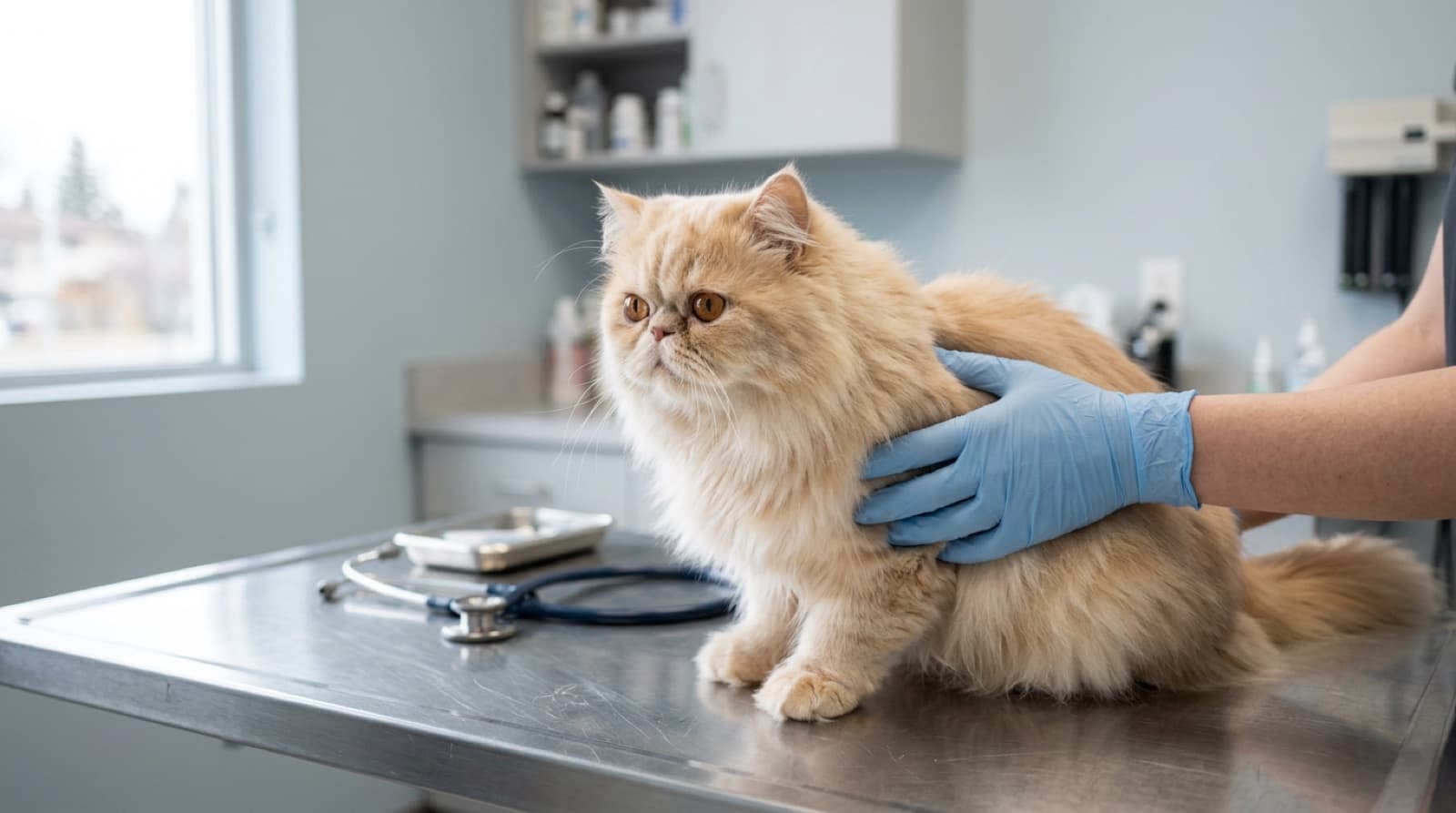
This article is informational only and is not veterinary advice. Always consult your Calgary veterinarian for individualised health guidance for your specific cat. Persians are a breed with documented genetic and structural health risks across kidney, respiratory, cardiac, ocular, dental, and dermatological systems. Proactive screening, ethical breeding history (where available), and ongoing veterinary care are essential. No medication, dosage, or treatment protocol is recommended on this page. Those decisions belong entirely with your veterinary team.
Sources informing this article include the Cornell Feline Health Center, the Universities Federation for Animal Welfare (UFAW) Persian polycystic kidney disease summary, peer-reviewed research indexed on PubMed Central (PKD1 prevalence studies; Persian S100A9 dermatophyte susceptibility), the UC Davis Veterinary Genetics Laboratory for PKD1 and PRA-pd DNA tests, the VCA Hospitals brachycephalic airway syndrome reference, EveryCat Health Foundation Persian dermatophyte research, and breed standard references from the Cat Fanciers' Association (CFA). Calgary specialty referrals go through Western Veterinary Specialist & Emergency Centre. Treatment specifics still belong with your Calgary veterinarian.
PKD1: the breed-defining health risk
Polycystic Kidney Disease is the most distinctive Persian health issue and the one most adopters have heard of even before reading a breed guide. It is a single-gene autosomal dominant disease. The good news for Calgary adopters: PKD1 is DNA-testable through UC Davis VGL for about $44, and a negative result is definitive.
PKD1 is caused by a single defect in the PKD1 gene. Inheritance is autosomal dominant, which means a single copy of the defective gene from one affected parent is enough to cause the disease in the offspring. A breeding cat with PKD1 has approximately a 50 percent chance of passing the condition to each kitten. The UFAW Persian polycystic kidney disease summary describes the inheritance and clinical course in depth.
Historical prevalence in unscreened lines
Studies across the UK, US, Germany, Australia, France, and Iran have reported PKD1 prevalence in unscreened Persian populations between 36 and 49 percent. The PubMed Central literature on Persian PKD prevalence summarises these studies. Prevalence in DNA-testing breeding communities has dropped substantially in the last two decades because the test allows breeders to identify carriers and remove them from breeding programs. The remaining population in pet homes still includes a meaningful proportion of PKD1-positive cats, which is why testing matters for adopted Persians without breeder paperwork.
How the disease progresses
Small fluid-filled cysts begin forming in the kidneys very early in life, sometimes visible on ultrasound by about 7 weeks of age. Over years, the cysts grow and multiply, progressively replacing functional kidney tissue. Clinical signs of chronic kidney disease (CKD) typically appear between 3 and 10 years of age, though variability is wide. The disease ranges from mild and slowly progressive to aggressive renal failure.
Symptoms to watch for
- Increased thirst and increased urination (classic CKD signs)
- Unexplained weight loss
- Decreased appetite or intermittent vomiting
- Lethargy or reduced activity in a previously active cat
- Poor coat condition in a Persian whose coat was previously well-managed
- Bad breath with a distinctive uremic odour in advanced disease
Any of these signs in a Persian warrants a vet workup with renal bloodwork (creatinine, BUN, SDMA) and urinalysis at minimum. The Cornell Feline Health Center material on feline kidney disease covers the diagnostic pathway.
The UC Davis DNA test
The UC Davis Veterinary Genetics Laboratory offers a PKD1 DNA test for Persians. A cheek swab kit is mailed to you, you collect the sample at home with the included swabs, and you return the kit for laboratory analysis. Results typically come back within two to three weeks. The PKD1 test alone is about $44 USD; bundled with the PRA-pd (progressive retinal atrophy) test the bundle is about $66 USD. A PKD1-negative result is definitive: the cat does not carry the disease and cannot pass it on. A PKD1-positive cat will develop cysts and is at meaningful risk for progressive kidney disease. Ethical breeders test all breeding cats and do not breed PKD1-positive animals. For Calgary adopters acquiring a Persian without breeder paperwork, the test is the single most useful piece of pre-adoption information you can buy.
Treatment
No cure exists for PKD1. Treatment is supportive and entirely vet-directed: a prescription renal diet, fluid therapy (initially in-clinic, sometimes transitioning to home subcutaneous fluids), blood pressure management, and ongoing monitoring of renal values. No medication or dosage is recommended on this page; those decisions belong with your veterinary team. Lifetime cost of management varies widely with the stage at diagnosis. This is one of the conditions where pet insurance enrolled before any kidney values shift makes the biggest financial difference for a Calgary owner.
Brachycephalic Airway Syndrome (BAS)
Brachycephalic Airway Syndrome is the structural breathing compromise that comes from selectively breeding for a flat-face skull. The VCA Hospitals brachycephalic airway syndrome reference and the PetMD BAS in cats material both describe the condition.
The three structural components
- Stenotic nares. The external nostrils are narrowed, so airflow at the nose is restricted at baseline.
- Elongated soft palate. The soft tissue at the back of the mouth extends further than normal into the airway, partially obstructing flow into the trachea.
- Smaller-than-normal trachea (tracheal hypoplasia). The windpipe itself can be narrower, reducing airflow capacity for the cat's body size.
Doll Face vs Peke Face severity
The Doll Face (traditional) Persian retains a longer muzzle and a less compressed skull, which substantially reduces BAS severity. Many Doll Face Persians have only mild symptoms (some snoring, slightly noisy breathing during exertion). The Peke Face (extreme show-type) Persian has a much flatter face with a more compressed skull, which intensifies all three structural problems. Peke Face Persians more frequently develop moderate to severe BAS requiring surgical correction (stenotic nares widening and soft palate trimming) at a specialty centre. Our separate Doll Face versus Peke Face Persian guide walks through the body type differences in more depth.
Symptoms to watch for
- Noisy breathing at rest (snorting, snuffling)
- Dramatic snoring during sleep (often louder than owners expect from a cat)
- Exercise intolerance (the cat plays for 5 minutes and stops, panting visibly)
- Heat sensitivity (overheating during Calgary summers indoors, especially in homes without air conditioning)
- Post-meal respiratory distress (eating temporarily worsens airflow)
- Open-mouth breathing (always a same-day emergency in any cat)
- Bluish gum colour during episodes (urgent emergency)
Calgary climate angle
Calgary summers are relatively mild compared to many North American cities, which is a small mercy for brachycephalic cats. The bigger seasonal issue is winter: forced-air furnace heating produces dry indoor air, which can irritate the airways of flat-face cats. A humidifier in the main living area helps. Stress and excitement also exacerbate BAS symptoms; keeping the home calm and avoiding situations that trigger panting (long car rides without breaks, hot rooms, vigorous play in a small space) matters more for Persians than for non-brachycephalic breeds.
Surgical correction for severe cases
Persians with severe BAS may benefit from surgical correction: widening of the stenotic nares and trimming of the elongated soft palate. This is specialty surgery typically performed at a referral centre. In Calgary, Western Veterinary Specialist & Emergency Centre is the typical referral destination. Outcomes are generally good when the procedure is performed before secondary airway changes set in, but every surgical decision needs to be made between you and the veterinary team. No surgical recommendation is made on this page. Anesthesia for BAS surgery requires the cardiology-aware planning discussed in the anaesthesia section below.
HCM (Hypertrophic Cardiomyopathy)
Hypertrophic cardiomyopathy is the most common feline heart disease and is documented at elevated risk in Persians (alongside Maine Coons, Ragdolls, Bengals, and Siamese). The disease causes the wall of the left ventricle to thicken abnormally; the chamber holds less blood, the heart works harder, and in some cats the condition progresses to congestive heart failure, a saddle thrombus that paralyses the rear legs, or sudden cardiac death.
No Persian-specific DNA test
Unlike Maine Coons (MyBPC3 mutation) and Ragdolls (HCM1 mutation), no widely available Persian-specific commercial DNA test for HCM has been established. The practical screening tool is therefore the same as for Siamese and Bengals: an annual echocardiogram by a veterinary cardiologist from age 2 onward. The Royal Canin Academy feline HCM clinical management material is a useful reference for veterinary teams.
Calgary cardiology access
Echocardiograms for HCM screening are performed by veterinary cardiologists, not general-practice vets. In Calgary, this is typically a referral from your general-practice vet to Western Veterinary Specialist & Emergency Centre, which houses the city's main feline cardiology service. Expect to pay roughly $400 to $600 per scan. The recommended cadence for an asymptomatic Persian is annual from age 2 onward.
The BAS plus HCM anaesthesia stack
The critical Persian-specific point about HCM is that it stacks with the brachycephalic airway risk to produce a higher-than-average anaesthesia profile. A Persian with undiagnosed HCM and an already-compromised airway is at meaningfully higher risk for anaesthetic complications than a non-brachycephalic cat with the same heart disease. The implication: pre-anaesthetic cardiac biomarker screening (NT-proBNP) or an echocardiogram is worth discussing for any Persian aged 4 or older before any elective surgery, including dental cleanings. The anaesthesia section below covers this stack in more depth.
Symptoms and emergency signs
HCM is often silent until late. Watch for increased respiratory rate at rest (a sleeping cat should breathe 15 to 30 times per minute; persistently faster is a vet call), lethargy in a usually active Persian, sudden weakness or collapse, rear-leg paralysis (saddle thrombus, a same-day emergency), or open-mouth breathing. Open-mouth breathing in any cat is a same-day Calgary 24-hour emergency. Drive to a Calgary 24-hour emergency vet rather than wait until morning.
Treatment is entirely vet-directed and depends on the stage of disease. No medication or dosage is recommended on this page. Lifetime management cost varies widely; this is one of the strongest arguments for pet insurance enrolled before age 2.
Epiphora and daily eye care
Roughly 85 to 90 percent of Persians experience some degree of epiphora (chronic tearing), a figure commonly reported across feline ophthalmology and breed-welfare literature. The mechanism is structural: the brachycephalic skull kinks or blocks the nasolacrimal ducts that normally drain tears into the nose. The result is tear overflow onto the face, brown staining from oxidized tear-fluid compounds, and a daily cleaning routine that is not optional for this breed.
Tears are produced continuously by the lacrimal glands and normally drain through small openings (puncta) at the inner corner of each eye into the nasolacrimal duct, then into the nose. In Persians, the compressed skull shape kinks or partially blocks the ducts, so tears overflow onto the periocular skin instead. The iron-binding compounds in tear fluid oxidize on contact with air, producing the characteristic brown staining most Persian owners notice.
The daily cleaning routine
A simple, consistent routine works. Once a day, use a soft cloth or cotton pad dampened with a vet-approved eye cleanser (no specific brand recommended here; ask your Calgary veterinarian for a current recommendation). Wipe gently from the inner corner of the eye outward, using a fresh portion of the cloth for each eye to avoid cross-contamination. Do not use human eye drops, hydrogen peroxide, alcohol, or any product not formulated for cat ocular use. After cleaning, gently dry the periocular skin so it does not stay damp.
Risks if eye care is skipped
- Periocular dermatitis. The constant moisture from unmanaged tear overflow creates an environment for bacterial and yeast overgrowth, producing red, irritated skin around the eyes that can become a chronic problem.
- Corneal ulcers. The flat-face skull leaves Persian eyes more exposed than average, and the reduced blink protection means the cornea can develop ulcers that are painful and require urgent vet care.
- Tear-stain crusting. When dried oxidized tear compounds build up, they can mat the surrounding facial hair and create a small permanent crust that is uncomfortable for the cat.
- Cherry eye. Less common in cats than dogs but reported in Persians, cherry eye is the prolapse of the nictitating membrane (third eyelid) gland. Surgical correction is sometimes needed.
When to see the vet immediately
Eye redness, squinting, sudden discharge change (clear to coloured, thin to thick), pawing at the eye, or any visible injury to the eye surface warrants a same-day vet visit. Corneal ulcers in flat-face breeds can progress quickly. Do not attempt to treat at home.
Dental crowding: short jaw, big problems
The brachycephalic skull does not just shorten the muzzle, it shortens the dental arch. Persians have the same number of teeth as other cats but less room to fit them in, so the teeth are crowded, malpositioned, and overlap in ways that trap food and plaque. The result is dental disease that starts earlier and progresses faster than in non-brachycephalic breeds.
Conditions to watch for
- Gingivitis (red, inflamed gum line at the tooth base; reversible if caught early)
- Periodontitis (progression beyond gingivitis to bone and ligament damage; not reversible, only manageable)
- Feline odontoclastic resorptive lesions (FORLs), in which the tooth structure resorbs from the root upward; painful, treatable only by extraction
- Crowding-driven tartar accumulation, which builds faster on overlapping teeth than on properly spaced teeth
- Tooth fracture at higher rates because malpositioned teeth take abnormal bite force
Symptoms to watch for at home
- Bad breath (the earliest sign; do not normalise it)
- Drooling or pawing at the mouth
- Eating reluctance or chewing on one side
- Dropping food from the mouth while eating
- Weight loss in a previously healthy cat
- Visible red gum margins or yellow tartar at the tooth base
Calgary cost reality
A professional dental cleaning under anaesthesia at a Calgary general-practice clinic typically runs $400 to $800, including pre-anaesthetic bloodwork, anaesthesia, scaling, polishing, and recovery. Extractions add roughly $200 to $800 per tooth depending on complexity (simple incisor versus multi-rooted molar with surgical extraction). A Persian needing 4 or 5 extractions in one session can land in the $2,000 to $3,000 range without insurance.
Cadence: annual oral exam at the wellness visit from age 2 onward, professional cleaning every 1 to 2 years depending on individual disease progression. Home care (brushing with feline-safe paste, dental treats, dental diets) slows progression but does not eliminate the need for professional cleaning. Brushing is more effective when started in kittenhood and gradually built into routine. The anaesthesia note for Persians: every dental cleaning involves the BAS-plus-HCM stack, so cardiology screening and a pre-anaesthetic plan matter more than for non-brachycephalic breeds.
Ringworm (Dermatophytosis): the Persian susceptibility
Persians have a documented genetic predisposition to ringworm (dermatophytosis), a fungal skin infection most commonly caused by Microsporum canis. The EveryCat Health Foundation has funded targeted research on Persian dermatophyte susceptibility (project MT16-015), and PubMed Central work suggests an S100A9 gene cluster variant may be involved in the breed predisposition.
Dermatophytic pseudomycetoma
Persians are also at risk for a deep dermal form of ringworm called dermatophytic pseudomycetoma, which is seen almost exclusively in Persians worldwide. Pseudomycetoma is rare overall but breed-specific, with subcutaneous nodules forming below the skin surface. Diagnosis requires biopsy with appropriate fungal staining and culture; treatment is long-course antifungal therapy directed by a veterinarian, often combined with surgical excision of the nodules. No medication is recommended on this page; this is a specialty case.
What Calgary owners should watch for
- Patchy hair loss, especially in circular patterns
- Scaling or crusting on the skin
- Reddened skin under the lost-hair patches
- Subcutaneous lumps under intact skin (possible pseudomycetoma)
- Itching is variable; some cats are intensely itchy, others minimally so
Diagnosis is typically done with a Wood's lamp examination, microscopic examination of hair samples, and a fungal culture (which takes 1 to 3 weeks to develop). Treatment is vet-directed and often involves both topical and systemic antifungal therapy. Ringworm is zoonotic, meaning it can spread from cats to humans (and other pets in the household); children, immunocompromised people, and other cats in the home should be evaluated by their respective doctors or veterinarians if a Persian in the household is diagnosed. Environmental decontamination (laundering bedding in hot water, vacuuming thoroughly, wiping hard surfaces) is part of the treatment plan.
Ethical Calgary catteries with Persian breeding manage outbreaks aggressively with quarantine protocols, environmental decontamination, and treatment programs directed by their veterinary team. If you are adopting a Persian from a rescue, ask about ringworm exposure history and any treatment the cat has received.
PRA-pd (Progressive Retinal Atrophy, Persian-specific)
Progressive Retinal Atrophy in the Persian-specific form (PRA-pd) is an autosomal recessive degenerative disease of the retina that causes progressive vision loss leading to blindness, typically in young adulthood. Unlike PKD1, which is autosomal dominant (one affected parent enough), PRA-pd requires both parents to carry one copy of the gene for an affected kitten. A kitten with two carrier parents has a 25 percent chance of being affected, 50 percent chance of being a carrier, and 25 percent chance of being clear.
The UC Davis Veterinary Genetics Laboratory offers a PRA-pd DNA test. As noted earlier, it can be ordered standalone or as a bundle with PKD1 for about $66 USD. Ethical breeders test breeding cats and ensure that two carriers are not bred together, which prevents affected kittens. For Calgary adopters acquiring a Persian without breeder paperwork, the bundle test is a small one-time cost that answers two major genetic questions at once.
No treatment exists for PRA-pd; affected cats will eventually go blind. Blind cats can adapt remarkably well to indoor-only life, especially when furniture layout is kept consistent and no new hazards are introduced. Lifespan and quality of life with blindness alone are typically normal, provided no other concurrent disease is present.
Find your Persian companion in Calgary
Browse Persian-type cats currently in Calgary rescue. Adult Persians with known PKD-negative status or current screening records are often easier to insure than breeder kittens.
See Available Persians →Anesthesia profile: the BAS plus HCM stack
Persians carry a higher-than-average anaesthesia risk profile because two breed-specific issues stack. The brachycephalic airway makes intubation, extubation, and post-operative breathing more complicated. The elevated HCM risk means an undiagnosed cardiac condition can substantially raise anaesthetic risk. A Persian-aware anaesthetic plan addresses both.
For any Persian aged 4 or older, a pre-anaesthetic cardiac biomarker screen (NT-proBNP blood test) or an echocardiogram is worth discussing with your vet before any elective surgery, including dental cleanings. If an annual screening echocardiogram is already part of your cat's care plan, that report is what your vet uses. If not, a pre-operative echocardiogram referral to Western Veterinary Specialist & Emergency Centre is worth the conversation.
What a Persian-aware anaesthetic plan includes
- Pre-anaesthetic bloodwork including renal values (PKD risk) and cardiac biomarkers (NT-proBNP) where indicated
- Pre-anaesthetic echocardiogram for cats aged 4 or older, or any cat with a heart murmur
- Careful airway assessment and a plan for stenotic nares and elongated soft palate
- Conservative premedication dosing
- Intraoperative pulse oximetry, capnography, and blood pressure monitoring
- Extended monitored recovery period before discharge, with particular attention to post-extubation airway swelling
- IV fluid support to maintain blood pressure and renal perfusion
The Royal Canin Academy feline HCM clinical management material and the published feline anaesthetic literature on managing cats with HCM are useful references for veterinary teams reviewing a Persian protocol. Routine spay, neuter, and most dental cleanings remain manageable procedures with standard feline protocols once the cardiac and airway assessments are done. Discuss any specific concerns with your Calgary veterinarian well in advance of any procedure.
Pet insurance for Persians: timing and the dental add-on
This is the single highest-leverage decision a Calgary Persian owner makes. Buy before any diagnosis of PKD, BAS, HCM, or any chronic condition. The conditions Persians are at elevated risk for are exactly the ones insurance is most useful against, and the pre-existing condition exclusion is industry-wide.
Persians are pet-insurance-positive because the breed's combination of elevated multi-system risk (kidney, respiratory, cardiac, dental) and 12-to-17 year lifespan compounds cost over time. A few directional figures to plan around (these are 2026 Calgary estimates, not quotes from any specific provider):
- PKD workup and lifetime kidney management: varies widely with stage at diagnosis. Discuss specifics with your Calgary veterinarian.
- Annual cardiology echocardiogram at a Calgary specialty centre: typically $400 to $600
- BAS surgical correction (stenotic nares and soft palate, if indicated): specialty cost; discuss with your referral centre
- Professional dental cleaning every 1 to 2 years: $400 to $800 per cleaning, plus $200 to $800 per extraction if needed
- HCM management if diagnosed: varies widely. Discuss specifics with your Calgary veterinarian.
- Emergency visit for open-mouth breathing, saddle thrombus, or respiratory crisis: easily $1,500 to $3,000 for one night
Canadian carriers Persian owners typically consider include Trupanion, Petsecure, and Pet Plus Us. Monthly premium ranges roughly $60 to $110 depending on age, deductible, and coverage tier. Persian premiums tend to sit slightly above average because of the documented breed health risks.
The dental add-on: the gap most owners miss
Many Canadian base pet insurance policies exclude dental disease entirely, or cover only dental accidents (a broken tooth from trauma) and not dental disease (gingivitis, periodontitis, FORLs). For a breed with documented dental crowding, this is the wrong default coverage. Before signing a policy, confirm in writing:
- Is professional dental cleaning covered, or only dental accidents?
- Are extractions covered if dentally indicated?
- Is there a dental add-on rider available, and what does it cost?
- What is the waiting period before dental coverage starts?
A dental add-on that raises monthly premium by $10 to $15 often pays for itself within the first professional cleaning cycle for a Persian.
The pre-existing condition rule
Every Canadian pet insurance provider excludes pre-existing conditions. For a Persian, this means:
- Kidney cysts identified on ultrasound at age 2 with no prior policy: PKD and related kidney conditions permanently excluded
- BAS symptoms noted at the wellness exam at age 3 with no prior policy: respiratory conditions related to BAS may be excluded indefinitely
- Heart murmur or HCM noted at age 4 with no prior policy: cardiac coverage may be permanently excluded
- Periodontal disease noted on a dental exam with no prior policy: dental coverage may be excluded indefinitely on any new policy
- Ringworm diagnosed and treated with no prior policy: future skin or fungal conditions may be flagged on re-evaluation
Enrol at adoption or by the first vet visit, ideally before age 3. The cost of waiting is not the premiums saved, it is the coverage lost on the conditions you are most likely to need.
Calgary specialty vet access
Cardiology, ophthalmology, BAS surgical evaluation, and complex internal medicine for Persians usually involve referral from your general-practice vet to a specialty centre. The Calgary clinic that handles most Persian-relevant specialty work:
| Clinic | Services relevant to Persians |
|---|---|
| Western Veterinary Specialist & Emergency Centre | Cardiology (echocardiogram for HCM screening), internal medicine (PKD ultrasound and management, complex respiratory cases), ophthalmology (corneal ulcer evaluation, cherry eye), soft-tissue surgery (BAS surgical correction), dental specialty (complex extractions, oral surgery), 24-hour emergency. Referral from your general-practice vet typically required for specialty consults. Emergency walk-in is available. |
Your relationship with one general-practice clinic matters more than picking the “best” one. A vet who knows your Persian's baseline catches subtle changes that a one-time specialist visit misses. The specialist comes in when something specific is needed: the annual HCM echocardiogram, a kidney ultrasound, a BAS surgical evaluation, a complex dental cleaning, or an emergency.
For routine spay, neuter, vaccines, dental care, and wellness exams, any Calgary general-practice veterinary clinic you trust is appropriate. The Persian-specific layer (echocardiograms, PKD ultrasound, daily eye-care recommendations, dental cleaning under cardiology-aware anaesthesia) is where the partnership between general-practice and specialty referral matters.
Year-1 and ongoing Persian vet costs
The realistic budget for a healthy Calgary Persian, to discuss with your veterinarian and adjust based on the individual cat:
| Cost category | Calgary range (2026) |
|---|---|
| Routine annual wellness exam, vaccines, parasite prevention | $400 to $700 per year |
| Annual cardiology echocardiogram (age 2 onward) | $400 to $600 per year |
| UC Davis PKD1 plus PRA-pd DNA test (one-time) | $66 USD bundle (about $90 CAD) |
| Annual oral exam (included in wellness visit from age 2) | Included |
| Professional dental cleaning under anaesthesia (every 1 to 2 years) | $400 to $800 per cleaning |
| Dental extractions if indicated (per tooth) | $200 to $800 per tooth |
| Pet insurance with dental add-on (full coverage, before any diagnosis) | $720 to $1,320 per year |
| Spay or neuter (one-time, often via rescue at lower cost) | $200 to $500 one-time |
| Daily eye-care supplies (cleanser, cotton pads) | $100 to $200 per year |
| If PKD diagnosed (cumulative lifetime management) | A meaningful financial commitment. Discuss specifics with your Calgary veterinarian. |
| If BAS surgery indicated (specialty referral) | Varies. Discuss with referral centre. |
| If HCM diagnosed (cumulative lifetime, without insurance) | Varies widely. Discuss specifics with your Calgary veterinarian. |
The renal, cardiac, and surgical rows are why pet insurance matters. Without coverage, a single major diagnosis can run five figures over a 12-to-17 year lifespan. With coverage purchased before diagnosis, the same diagnosis may cost a few thousand in deductibles and co-insurance. The Persian-specific double-whammy: the BAS-plus-HCM anaesthesia stack means dental cleanings cost more per visit (cardiology screening, longer monitored recovery), so the dental add-on rider matters more for this breed than for shorter-faced cats.
Building a Persian emergency kit
Persians are small-to-medium cats (7 to 12 pounds adult), so emergency gear can be compact. The basics to keep in one accessible place:
- Cat carrier. A 22 by 14 inch hard-sided carrier rated for car travel is sufficient for most adult Persians, roughly $60 to $120. A familiar carrier left open in the home throughout the year is less stressful in an emergency. For brachycephalic cats, choose a carrier with good ventilation on multiple sides.
- Printed copy of your pet insurance policy. Including policy number and after-hours contact.
- Recent photo of your cat. For identification if a carrier opens during transport, or for posting if the cat is lost. Note any unusual markings, coat colour, and face type.
- Vaccination records. Most Calgary emergency clinics ask for current vaccine status on intake.
- Written list of known sensitivities and conditions. Any prior medication reactions, dental history, BAS severity, PKD1 status (positive, negative, untested), HCM screening results, and any chronic skin conditions. This list saves time when the cat cannot speak for itself.
- After-hours vet phone number. Western Veterinary Specialist & Emergency Centre operates 24-hour emergency. Save the number in your phone and post it on the fridge.
- Latest annual echocardiogram report. Especially important for Persians aged 2 and over. If your cat is brought in for breathing changes or collapse, the existing cardiology report saves critical time at triage.
- Daily eye-care supplies. Vet-approved eye cleanser and soft cloths in case the emergency-kit location is the only stable location in a household disruption.
Keep the kit in one place. A stressed owner during a same-day vet trip should not be searching through filing cabinets for paperwork.
The Persian lifespan question
Lifespan is one of the practical reasons to plan Persian health care carefully:
- Average Persian lifespan is 12 to 17 years
- Healthy individuals with negative PKD1 status, mild facial structure, and consistent screening can reach the upper end of that range
- PKD is the most common identifiable cause of premature mortality in affected Persians, with progressive kidney disease often the terminal diagnosis
- HCM, dental disease, and BAS-related respiratory crises are other meaningful contributors
- Indoor-only lifestyle, weight management, dental care, annual cardiology screening, daily eye care, and consistent veterinary care pull individual cats toward the longer end of the range
The 12-to-17 year lifespan is what makes Persian health planning worthwhile. A cat adopted at age 2 may live to age 15, which is 13 years of cumulative wellness visits, dental cleanings, and cardiology screenings. The Persians we see live longest share a pattern: their owners built a relationship with one Calgary veterinary clinic early, did not skip annual exams, started cardiology screening at age 2, took dental disease seriously from day one, established the daily eye-care routine from the first week home, and had pet insurance with dental coverage in place before any diagnosis. None of that requires a panicked or anxious owner. It requires consistency over a decade or more.
Frequently Asked Questions
What are the main Persian health issues?
Three conditions matter most for Persian cats: Polycystic Kidney Disease (PKD1, a Persian-specific autosomal dominant disease with a reliable UC Davis DNA test and historical prevalence of 36 to 49 percent in unscreened lines), Brachycephalic Airway Syndrome (BAS, more severe in Peke Face Persians than Doll Face), and Hypertrophic Cardiomyopathy (HCM, with no Persian-specific DNA test so annual echocardiograms from age 2 are the screening tool). Add to those: daily eye care for the 85 to 90 percent of Persians with epiphora (chronic tearing), faster-than-average dental crowding, ringworm susceptibility, and a higher-risk anaesthesia profile. Lifespan is 12 to 17 years with proactive care. Discuss screening with your Calgary veterinarian.
How common is PKD in Persians?
Historical prevalence in unscreened Persian lines worldwide is reported between 36 and 49 percent across studies in the UK, US, Germany, Australia, France, and Iran. The Universities Federation for Animal Welfare (UFAW) summary of Persian polycystic kidney disease and PubMed-indexed prevalence studies are the standard references. Prevalence has dropped substantially in lines where breeders test parents and remove affected cats from breeding programs. This is why a UC Davis VGL PKD1 DNA test (about $44 alone, or $66 bundled with PRA-pd) is the single most useful pre-adoption check for any Persian whose breeder status is unclear.
Is there a DNA test for Persian PKD?
Yes. The UC Davis Veterinary Genetics Laboratory PKD1 test detects the single autosomal dominant gene defect responsible for Persian PKD. A cheek swab kit is mailed to you, you collect the sample at home and return it, and results typically come back within two to three weeks. The PKD1 test alone is about $44 USD; bundled with the PRA-pd (progressive retinal atrophy) test the bundle is about $66 USD. A PKD1-negative result is definitive: that cat does not have Persian PKD and cannot pass it on. A PKD1-positive cat will develop cysts and is at risk for progressive kidney disease; ethical breeders do not breed PKD1-positive cats. Calgary owners adopting a Persian without breeder paperwork should consider testing.
What is the difference between Doll Face and Peke Face for health?
The Doll Face Persian retains a longer, more traditional muzzle and a less dramatic skull shape, which substantially reduces the severity of brachycephalic airway syndrome and ocular issues. The Peke Face (or extreme show-type) Persian has a much flatter face with a more compressed skull, which increases the rate and severity of breathing problems, tear-duct blockage, dental crowding, and anaesthesia complications. Both share the same genetic risks (PKD1, HCM, ringworm susceptibility), but the structural health burden is higher in the Peke Face. A separate guide on our site walks through the differences in more depth. Most Calgary rescues see a mix of body types, and rescue Persians are often somewhere between the two extremes.
Do Persians really have breathing problems?
Yes, to varying degrees. Brachycephalic Airway Syndrome (BAS) in cats involves three structural components: stenotic (narrowed) nares, an elongated soft palate, and a smaller-than-normal trachea. The VCA Hospitals brachycephalic airway syndrome reference and PetMD BAS in cats material both describe the condition. Doll Face Persians often have mild symptoms (some snoring, slightly noisy breathing). Peke Face Persians often have moderate to severe symptoms requiring surgical correction (stenotic nares widening, soft palate trimming) at a Calgary specialty centre. Symptoms to watch for: noisy breathing, dramatic snoring, exercise intolerance, heat sensitivity, and post-meal respiratory distress. Open-mouth breathing in any cat is a same-day Calgary 24-hour emergency.
Should I screen my Persian for HCM?
Yes. Persians are among the breeds overrepresented in HCM literature (alongside Maine Coons, Ragdolls, Bengals, and Siamese), but unlike Maine Coons (MyBPC3) and Ragdolls (HCM1) there is no widely available Persian-specific DNA test for HCM. The practical screening tool is therefore an annual echocardiogram by a veterinary cardiologist starting around age 2. In Calgary this is typically a referral from your general-practice vet to Western Veterinary Specialist & Emergency Centre (westernvet.ca), about $400 to $600 per scan. HCM combined with brachycephalic airway compromise also raises the anaesthesia risk profile, so a pre-anaesthetic echocardiogram is worth discussing for any Persian aged 4 or older before elective surgery.
Why does my Persian have brown tear stains?
Roughly 85 to 90 percent of Persians experience some degree of epiphora (chronic tearing) because the brachycephalic skull shape kinks or blocks the nasolacrimal ducts that normally drain tears down into the nose. Tears overflow onto the face instead, and the iron-binding compounds in tear fluid oxidize on contact with air, producing brown staining around the inner eye and down the muzzle. Daily eye cleaning is required: a soft cloth or cotton pad dampened with a vet-approved eye cleanser, wiping gently from the inner corner outward. If the periocular skin stays damp, secondary bacterial overgrowth and dermatitis can set in. If you notice eye redness, squinting, or sudden discharge changes, that warrants a vet check for possible corneal ulceration. Discuss the right cleanser with your Calgary veterinarian.
How often do Persians need dental cleanings?
Most Persians benefit from a professional dental cleaning under anaesthesia every 1 to 2 years from age 2 onward, with annual oral exams at the wellness visit. The brachycephalic skull shortens the dental arch, producing crowded and malpositioned teeth that trap food and plaque faster than other breeds. A typical Calgary cleaning runs $400 to $800 (pre-anaesthetic bloodwork, anaesthesia, scaling, polishing, recovery). Extractions add $200 to $800 per tooth depending on complexity. The added catch with Persians: anaesthesia for dental work carries higher stakes because of the BAS plus HCM risk stack, so cardiology screening and a pre-anaesthetic plan matter. Home brushing slows progression but does not replace professional cleaning.
Are Persians at higher anaesthesia risk?
Yes, for two stacking reasons. First, the brachycephalic airway (narrow nares, elongated palate, smaller trachea) makes intubation and extubation more complicated and post-operative respiratory distress more likely. Second, Persians are overrepresented in HCM literature, and undiagnosed HCM substantially raises anaesthetic risk for any cat. Reasonable practice: pre-anaesthetic cardiac biomarker screening (NT-proBNP) or an echocardiogram for any Persian aged 4 or older before elective surgery, conservative premedication, careful airway management, extended monitored recovery, and ideally a clinic with cat-specific anaesthetic protocols. The Royal Canin Academy feline HCM clinical management material and the published feline anaesthetic literature on managing cats with HCM are useful references for veterinary teams. Discuss specifics with your Calgary veterinarian.
What is the normal lifespan for a Persian?
Persians typically live 12 to 17 years with proactive care, slightly shorter than the longest-lived pedigreed breeds (Siamese 15 to 20, for comparison) because of the cumulative health burden of PKD risk, brachycephalic structure, and HCM. Healthy individuals with negative PKD1 status, mild facial structure, and consistent screening can reach the upper end of that range. The Persians we see live longest share a pattern: indoor-only, weight-managed, dentally cared for from age 2, annual echocardiogram from age 2, daily eye-cleaning routine, and pet insurance enrolled before any diagnosis. None of that requires an anxious owner. It requires consistency over a decade or more.
Where can I get a Persian echocardiogram in Calgary?
Echocardiograms are performed by veterinary cardiologists, not general-practice vets. In Calgary this is typically a referral from your primary vet to Western Veterinary Specialist & Emergency Centre (westernvet.ca), which houses the city's main feline cardiology service. Expect to pay roughly $400 to $600 per scan. Walking into a specialty centre without a referral is uncommon, so build the relationship with one general-practice clinic first, and ask them to refer you in for the annual screening echocardiogram from age 2 onward. The same centre handles BAS surgical evaluation and emergency care 24 hours a day.
Is pet insurance worth it for a Persian?
Usually yes. Persians carry documented elevated risk for PKD1, brachycephalic airway syndrome, HCM, dental disease, ringworm, and anaesthesia complications, all of which can produce four-to-five-figure lifetime cost. Canadian carriers (Trupanion, Petsecure, Pet Plus Us) typically run $60 to $110 per month for a Persian, slightly higher than average because of the known breed health risks. The pre-existing condition exclusion is industry-wide and bites hardest on breeds with multiple chronic risks. As with Siamese, check whether a dental add-on is available before signing because dental disease is often excluded from base coverage, and Persians are dentally predisposed.
When should I buy pet insurance for my Persian?
Buy at adoption or by the first vet visit, ideally before age 3. Every Canadian pet insurance provider excludes pre-existing conditions, and the conditions Persians are at elevated risk for (PKD, BAS, HCM, dental disease) are exactly the ones policies are most useful against. A kitten enrolled at month 3 with a clean exam and a negative PKD1 result qualifies for the broadest coverage available. A Persian enrolled at age 5 after a routine ultrasound flagged early kidney cysts has the kidney coverage excluded indefinitely. The cost of waiting is not the premiums saved, it is the coverage lost on the conditions you are most likely to need.
What is the deal with Persian ringworm?
Persians have a documented genetic predisposition to ringworm (dermatophytosis), a fungal skin infection caused most commonly by Microsporum canis. The EveryCat Health Foundation has funded research on Persian dermatophyte susceptibility (project MT16-015), and PubMed-indexed work suggests an S100A9 gene cluster variant may be involved. Persians can also develop dermatophytic pseudomycetoma, a deep dermal form of ringworm seen almost exclusively in Persians (rare overall, but Persian-specific). Ethical Calgary catteries with Persian breeding manage outbreaks aggressively with quarantine, environmental decontamination, and treatment protocols directed by their vet. For adopted Persians, any patchy hair loss, scaling, or circular lesions warrant a vet check and a Wood's lamp or fungal culture. Ringworm is zoonotic, so household humans (especially children) can also be affected.
Persian Cats in Calgary
Browse adoptable Persian and Persian-mix listings from Calgary rescues.
Persian Adoption Guide
Rescue versus breeder, real costs, scams, and the buy-vs-adopt math for Calgary.
Persian Grooming Calgary
Daily brushing, mat prevention, professional groomer schedule, and the bathing rhythm a long-coat cat needs.
Doll Face vs Peke Face Persian
Traditional versus extreme face type, body structure differences, and what Calgary adopters are likely to find.