The short answer
Russian Blues are one of the healthiest, longest-lived purebred cats (15 to 20 years), among the longest lifespans of any pedigreed breed. NO Russian Blue-specific genetic disorders are documented, and no validated breed-specific DNA tests exist. The actual management issues are not breed-defined: bladder stones and FLUTD (directionally elevated risk per multiple veterinary sources, prevention through wet-food-heavy diet, multiple water sources, weight management), obesity-driven diabetes mellitus (obesity substantially raises diabetes risk per AVMA guidance, prevention through portion control and scheduled feeding), and standard feline dental care from age 3 onward. The single highest-leverage decision a Calgary Russian Blue owner makes is weight management, because the breed is notably food-motivated and tends to low activity. Pet insurance enrolled before age 3 covers the breed's long lifespan against chronic-condition cost.
Informational only, not veterinary advice. Always consult your Calgary veterinarian for individualised guidance on your specific cat.
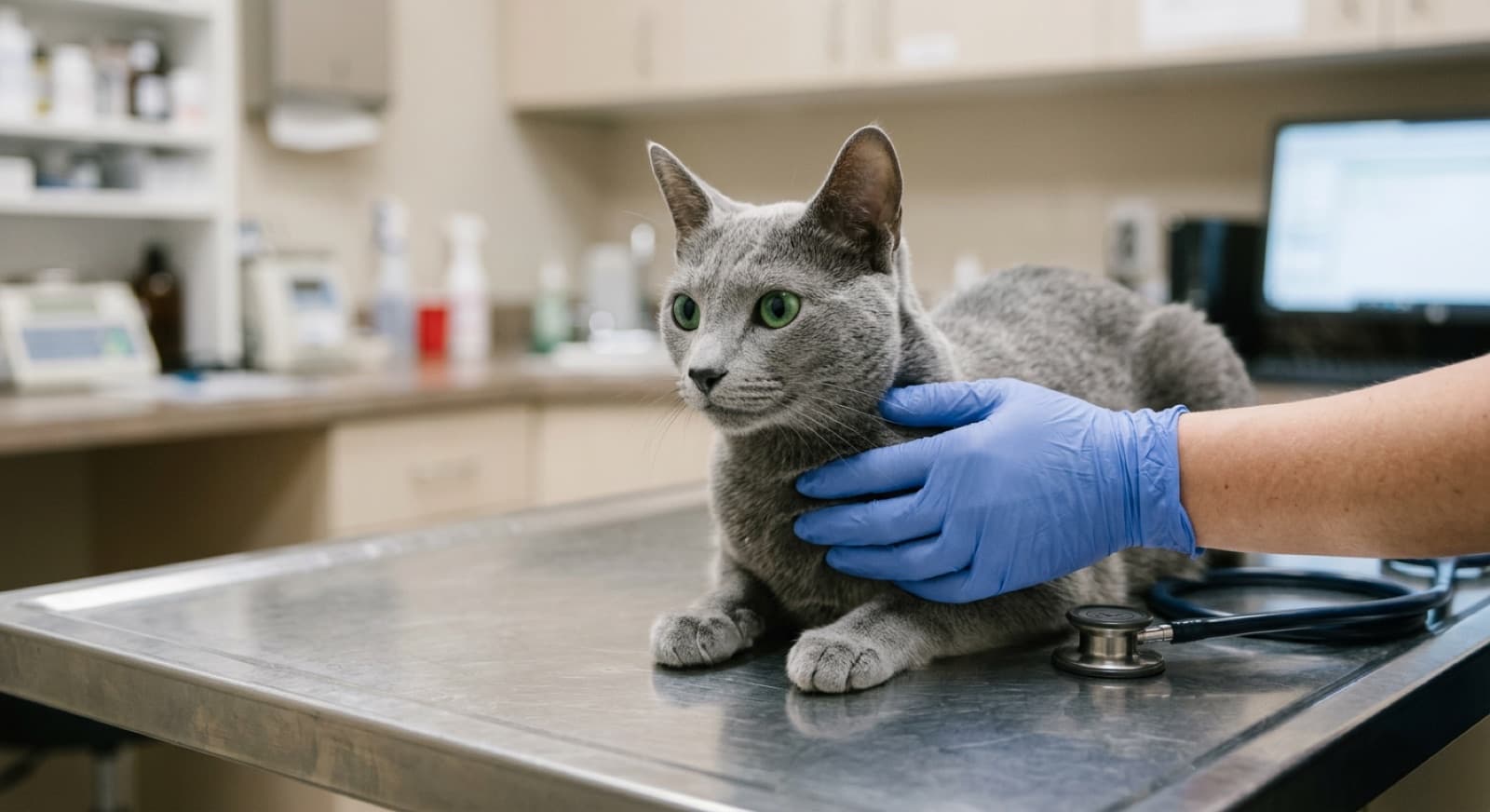
This article is informational only and is not veterinary advice. Always consult your Calgary veterinarian for individualised health guidance on your specific cat. Russian Blues are a generally healthy breed with no documented breed-specific genetic disorders, but they share the standard feline risks (urinary tract disease, obesity-driven diabetes, dental disease) and the breed's food motivation makes weight management the single most consequential decision. No medication, dosage, or treatment protocol is recommended on this page. Those decisions belong entirely with your veterinary team.
Sources informing this article include the Cornell Feline Health Center, the American Veterinary Medical Association (AVMA) on feline obesity and diabetes, the American Association of Feline Practitioners (AAFP) on cat-friendly clinical guidelines, peer-reviewed research indexed on PubMed Central and PubMed (the Satorina et al. allergen study, Clinical and Translational Allergy 2014, confirming all cats produce Fel d 1 indexed as PMC4072467), the UC Davis Veterinary Genetics Laboratory on feline DNA testing, the Royal Canin Academy feline weight management material, and breed standard references from the Cat Fanciers' Association (CFA), The International Cat Association (TICA), and the Canadian Cat Association (CCA). Calgary specialty referrals go through Western Veterinary Specialist & Emergency Centre. Treatment specifics still belong with your Calgary veterinarian.
A genuinely healthy breed (with caveats)
Russian Blues are a naturally occurring breed with no documented breed-specific genetic disorders and no validated breed-specific DNA tests. The 15-to-20 year lifespan (among the longest of any pedigreed cat) reflects this. The caveats: the breed is notably food-motivated, tends to low activity if not engaged, and shares the standard feline risk profile for urinary tract disease, diabetes, and dental care.
Unlike many pedigreed breeds, Russian Blues were not engineered through aggressive selective pressure. The breed developed naturally in the Arkhangelsk region of northwestern Russia (one origin story for the “Archangel Cat” name) and was refined rather than reconstructed in modern breeding. By contrast, breeds like the Persian and Sphynx carry concentrated genetic-defect loads from sustained selection for specific physical traits. The Russian Blue did not go through that kind of bottleneck. The result is a breed with a remarkably clean health profile relative to most pedigreed cats.
What this means in practical terms
For Calgary Russian Blue owners, the practical implication is that the breed does not require the extensive disease-specific screening protocol that some other breeds need. A Maine Coon owner schedules baseline echocardiograms from age 1 to 2 because of the breed's 30 to 35 percent HCM risk. A British Shorthair owner runs PKD1 DNA testing because of the Persian-inherited renal risk. Russian Blue owners do neither, because the breed does not carry those documented risks. The Russian Blue routine looks like a generally healthy cat's routine: annual wellness exam, weight monitoring, dental care from age 3, and a wet-food-heavy diet that supports urinary tract health.
The lifespan reality
Russian Blue lifespan is consistently reported at 15 to 20 years across multiple veterinary sources (Catster, Hill's Pet Nutrition, Hepper, PangoVet). This places the breed among the longest-lived purebred cats. For context, the general indoor cat lifespan averages 12 to 18 years, and many pedigreed breeds sit at the lower end of that range due to documented genetic risks. Russian Blues sit at the upper end. What separates a 14-year Russian Blue from a 19-year Russian Blue is largely controllable: weight management throughout life, indoor-only living, consistent annual wellness exams, dental care, and pet insurance enrolled before any chronic-condition diagnosis.
The DNA testing question
For pedigreed Russian Blue kittens from breeders, no breed-specific DNA test currently has the clinical validation that the Maine Coon MyBPC3 test, the Ragdoll R820W test, or the BSH/Persian PKD1 test have for their respective breeds. The UC Davis VGL does not list a Russian Blue-specific health panel. For Calgary adopters considering a pedigreed Russian Blue, this means there is no DNA certificate to request from a breeder, but it also means the breed does not have the concentrated genetic-disease load that makes those certificates necessary for other breeds. For an adopted Russian Blue-type cat without paperwork, no routine DNA panel is recommended.
Bladder stones and FLUTD: the most-cited concern
Bladder stones and Feline Lower Urinary Tract Disease (FLUTD) are the most breed-citationally elevated health concerns for Russian Blues per multiple veterinary sources. There is no formal prevalence study, so the framing is directional rather than statistical. Prevention is high-leverage: wet-food-heavy diet, multiple water sources, weight management, and stress reduction.
FLUTD is an umbrella term covering several conditions that affect the bladder and urethra in cats: idiopathic cystitis (inflammation without a clear cause), urinary stones (struvite and calcium oxalate are the most common in cats), urethral blockage, and urinary tract infection. The conditions overlap clinically because the symptoms are similar regardless of underlying cause. Multiple veterinary sources flag Russian Blues as among the breeds with directionally elevated FLUTD risk, though no breed-specific prevalence study has been published.
The symptoms to watch for
- Straining to urinate with little or no urine produced
- Blood in the urine (visible pink or red tinge in the litter)
- Urinating outside the litter box, often in unusual locations (bathtub, sink, smooth surfaces)
- Vocalising while urinating (a clear pain signal)
- Increased frequency of litter box visits with small volumes each time
- Excessive grooming of the genital area
- Lethargy, hiding, or appetite loss as the episode progresses
The emergency case: urinary blockage
A complete urethral obstruction (more common in male cats due to a narrower urethra) is a same-day Calgary 24-hour emergency. A blocked cat cannot urinate at all. Toxin buildup, kidney injury, and death can occur within 24 to 48 hours of complete blockage. Signs include repeated straining with no urine, vocalising in distress, vomiting, lethargy that worsens through the day, and a tense or painful belly. Do not wait. Western Veterinary Specialist & Emergency Centre handles after-hours and weekend cases in Calgary.
The high-leverage prevention
- Wet-food-heavy diet. Higher moisture intake dilutes urine and reduces stone-formation risk. A diet that is 50 to 80 percent wet food (by calories) is a reasonable target for most healthy Russian Blues.
- Multiple water sources throughout the home. A water fountain often increases water intake meaningfully. Pair with at least two static water bowls placed away from the food and litter areas.
- Weight management. Obesity is a documented FLUTD risk multiplier. Maintaining a healthy body condition score reduces episode risk.
- Stress reduction. Idiopathic cystitis is strongly stress-linked. Predictable routines, vertical space, multiple litter boxes (the rule of thumb is one box per cat plus one extra), and pheromone diffusers can help.
- Clean litter, daily. Cats may avoid a soiled box, leading to urine retention. Scoop at least once daily.
Treatment direction
Treatment of FLUTD is entirely vet-directed and varies by underlying cause. Idiopathic cystitis is managed with stress reduction, environmental modification, and supportive care. Stones may require dietary management (a prescription diet that dissolves struvite stones), surgical removal, or occasionally lithotripsy. Urinary blockages are emergencies and require immediate veterinary intervention to relieve the obstruction. Discuss specifics with your Calgary veterinarian.
Diabetes mellitus: the obesity downstream
Diabetes in Russian Blues is driven by obesity, not by direct genetic predisposition. The breed's food motivation plus low-activity tendency produces easy weight gain, and per the AVMA, obesity substantially raises the risk of feline diabetes mellitus compared to cats at a healthy weight. This means the diabetes risk is largely preventable through weight management.
Feline diabetes mellitus is a metabolic disease in which the body cannot regulate blood glucose effectively. In cats, it is primarily Type 2 diabetes (insulin resistance) and is most commonly driven by obesity and chronic high-carbohydrate dietary patterns. The breed-specific Russian Blue concern is not a hereditary diabetes mutation, it is the documented combination of strong food motivation and low-activity tendency that produces the obesity that produces the diabetes.
The symptoms to watch for
- Increased thirst (water bowl emptying faster than usual)
- Increased urination (more clumps in the litter box, larger volume)
- Weight loss despite eating well or eating more
- Lethargy or reduced activity
- Sweet or fruity breath in advanced cases (ketosis)
- Plantigrade stance (walking with the hocks dropped close to the floor, a sign of diabetic neuropathy)
Treatment direction
Feline diabetes treatment is vet-directed and typically involves insulin therapy combined with dietary management (low-carbohydrate prescription diets are standard) and weight loss if the cat is overweight. Many cats with newly diagnosed diabetes can achieve diabetic remission with aggressive early treatment, particularly if weight loss is achieved in the first 6 months after diagnosis. Insulin dosing belongs entirely with your veterinarian and is never to be self-adjusted. Home glucose monitoring may be part of the long-term management plan, depending on the individual cat.
The prevention is the same as the obesity routine
The single most effective diabetes prevention strategy for a Russian Blue is weight management. This is covered in detail in the next section because it is the breed-defining management issue.
Obesity management: the single highest-leverage decision
Russian Blues are notably food-motivated and tend toward low activity if not engaged, which combine to produce easy weight gain. Obesity is the upstream driver of FLUTD risk, diabetes risk, joint stress, and shortened lifespan. The Calgary climate (indoor-only winter months) compounds the low-activity tendency. Weight management is the single highest-leverage health decision a Russian Blue owner makes.
The healthy adult Russian Blue weight range is 7 to 12 pounds: females typically 7 to 10 pounds, males typically 9 to 12 pounds. Full size is reached around 18 to 24 months. The breed standard calls for a graceful, fine-boned cat with firm musculature, not a heavy cobby build. A Russian Blue carrying an extra 2 to 3 pounds is meaningfully overweight, not “just chunky.”
Body Condition Score: the practical tool
Body Condition Score (BCS) is a 9-point or 5-point scale used by veterinarians to assess feline body condition. On the 9-point scale, a score of 4 to 5 is ideal, 6 to 7 is overweight, and 8 to 9 is obese. Your Calgary general-practice vet will assign a BCS at every wellness visit. The key home assessments: you should be able to feel the ribs easily with light pressure but not see them prominently, there should be a visible waist when viewed from above, and there should be a slight abdominal tuck when viewed from the side. If the ribs are hard to feel and there is no waist, the cat is overweight.
The Calgary Russian Blue weight routine
- Portion control by weight, not by volume. Weigh the daily allotted food on a kitchen scale once, then transfer the measurement to a measuring cup so the daily ration is consistent. Eyeballing portions almost always overfeeds.
- Scheduled feeding, not free-feeding. Two or three meals per day at fixed times. A food-motivated Russian Blue with a constantly full bowl is the fastest path to weight gain.
- Monthly weigh-ins. Stand on a bathroom scale alone, then with the cat. Subtract. Note the cat's weight in a phone log. Trends matter more than single readings.
- Interactive play 10 to 15 minutes twice a day. Russian Blues are placid by temperament but will engage a wand toy well into adulthood if the routine is consistent. Two short sessions are better than one long one.
- Puzzle feeders and food-dispensing toys. Slow eating, increase activity, and make the daily food allocation more engaging. Inexpensive and effective for food-motivated breeds.
- Vet-monitored BCS at every wellness visit. Ask your Calgary general-practice vet for the target BCS and the daily calorie budget that maintains it.
- The Calgary winter caveat. Indoor-only winter months from November through March reduce baseline activity. Adjust portions slightly downward in winter and prioritise interactive play to compensate.
The Royal Canin Academy publishes peer-reviewed feline weight management material that your Calgary vet can adapt for a Russian Blue-specific feeding plan.
If your Russian Blue is already overweight
Weight loss in cats is a vet-supervised process and must be gradual. Rapid weight loss in cats triggers hepatic lipidosis (fatty liver disease), which is a serious and sometimes fatal condition. A safe weight loss rate is roughly 0.5 to 2 percent of body weight per week. For a 14-pound Russian Blue that should be a 10-pound cat, that means a structured 6 to 12 month weight loss program, not a crash diet. Your Calgary general-practice vet will calculate the calorie target and may recommend a prescription weight loss diet. Do not attempt to manage feline weight loss without veterinary supervision.
HCM: general feline risk, not breed-specific
Hypertrophic Cardiomyopathy is the most common feline heart disease overall and affects cats of all breeds. The relevant fact for Russian Blue owners is that the breed does NOT carry a documented elevated HCM risk. This contrasts sharply with several other pedigreed breeds where breed-specific HCM screening is essential: Maine Coon (MyBPC3 A31P mutation, DNA-testable), Ragdoll (R820W mutation, DNA-testable), British Shorthair (8.5 percent breed prevalence per Granstrom 2011, males 20.4 percent, no DNA test available), Sphynx, and Persian. Russian Blues sit at the general feline population baseline.
What screening makes sense for a Russian Blue
For Russian Blues, routine echocardiogram screening from age 1 to 2 is NOT a breed-recommended practice the way it is for Maine Coons or BSH. Instead, the general feline screening guidance applies: your primary vet listens to the heart at every annual wellness exam (auscultation) and recommends an echocardiogram only if a murmur is detected, if the cat shows symptoms suggestive of cardiac disease, or as a pre-anaesthetic screen for any senior cat aged 7 or older. This is sensible practice across all cat breeds and is not unique to Russian Blues.
If your Russian Blue needs cardiology
If your Calgary general-practice vet recommends an echocardiogram (murmur detected, symptoms, pre-anaesthetic screen for a senior cat), the referral typically goes to Western Veterinary Specialist & Emergency Centre, which houses Calgary's main feline cardiology service. Expect roughly $400 to $600 per scan. The cardiologist provides a written report, a treatment recommendation if disease is identified, and a follow-up schedule.
HCM symptoms in any cat
Worth knowing even though Russian Blues are not breed-specifically at risk: HCM is often silent until late. Watch for increased respiratory rate at rest (a sleeping cat should breathe 15 to 30 times per minute; persistently faster is a vet call), lethargy in a usually engaged cat, sudden weakness or collapse, rear-leg paralysis (saddle thrombus, a same-day emergency), or open-mouth breathing. Open-mouth breathing in any cat is a same-day Calgary 24-hour emergency. These signs warrant immediate vet attention regardless of breed.
Dental disease: standard feline care
Russian Blues do not have a documented breed-specific elevated dental risk, but most cats develop some degree of dental disease over a 15-to-20 year lifespan, so the routine matters. Standard feline guidance applies: annual oral exam at the wellness visit from age 3, professional dental cleaning every 2 to 3 years on average (more frequent if disease is documented), and ideally home brushing started young.
The Russian Blue dental schedule
- Annual oral exam from age 3 at the wellness visit. Catches early gingivitis when it is still reversible with cleaning.
- Professional cleaning every 2 to 3 years once any visible gingivitis or tartar is documented, typically starting in the age 5 to 8 window for an average Russian Blue.
- Home brushing with feline-safe paste, ideally started in kittenhood. Helps slow disease progression.
- Any reluctance to eat, dropping food, drooling, or visible red gum margins is a same-week vet call, not a wait-and-see situation.
Conditions to watch for
- Gingivitis (red, inflamed gum line at the tooth base; reversible if caught early)
- Periodontitis (progression beyond gingivitis to bone and ligament damage; not reversible, only manageable)
- Feline odontoclastic resorptive lesions (FORLs), in which the tooth structure resorbs from the root upward; painful, treatable only by extraction
Calgary cost reality
A professional dental cleaning under anaesthesia at a Calgary general-practice clinic typically runs $400 to $800, including pre-anaesthetic bloodwork, anaesthesia, scaling, polishing, and recovery. Extractions add roughly $200 to $800 per tooth depending on complexity. A senior Russian Blue needing multiple extractions in one session can land in the $1,500 to $3,000 range without insurance. Because the breed lives 15 to 20 years, cumulative dental cost over the cat's life is meaningful, which is why the dental add-on rider on pet insurance is worth considering.
Anaesthesia: standard feline protocol
Russian Blues do not have a documented breed-level anaesthesia contraindication. Standard feline protocols apply. Routine procedures (spay, neuter, dental cleaning) are well tolerated and there are no Russian Blue-specific pre-procedure considerations beyond what applies to any healthy adult cat.
What a standard feline anaesthetic plan includes
- Pre-anaesthetic bloodwork including chemistry panel and CBC
- Pre-anaesthetic auscultation; echocardiogram only if a murmur is detected or the cat is aged 7+ (general feline guidance, not Russian Blue-specific)
- Standard intraoperative pulse oximetry, capnography, and blood pressure monitoring
- Active warming throughout the procedure (warmed IV fluids, forced-air warming blankets)
- Monitored recovery until the cat is fully alert
For complex cases or specialty procedures, Western Veterinary Specialist & Emergency Centre handles feline anaesthetic management on referral when warranted. For routine spay, neuter, dental cleaning, and other elective procedures, any Calgary general-practice clinic you trust is appropriate.
Find your Russian Blue-type companion in Calgary
Real purebred Russian Blues are rare at Calgary rescues, but blue/grey domestic shorthair mixes with the look appear regularly. Adult cats with known weight and dental history are often easier to budget for than breeder kittens.
See Available Russian Blue-type Cats →The long-lifespan opportunity
Russian Blues live 15 to 20 years with proactive care, among the longest of any purebred cat. The lifespan reality has a financial implication: proactive screening, weight management, and dental care have high cumulative value because they pay off over nearly two decades. A $400-to-$700 annual wellness exam budget plus dental care plus pet insurance compounds across a 15-year cat into a meaningfully lower total cost than the same cat managed reactively after chronic conditions develop.
What drives the upper end of the range
The Russian Blue owners whose cats live longest share a pattern. They built a relationship with one Calgary general-practice clinic early, did not skip annual wellness exams, maintained a healthy body condition score throughout life through portion control and scheduled feeding, fed a wet-food-heavy diet that supported urinary tract health, took dental disease seriously from age 3 onward, and had pet insurance with dental coverage in place before any chronic-condition diagnosis. For that owner, a 17-to-19 year lifespan is a reasonable planning assumption. None of it requires aggressive medicine. It requires consistency over nearly two decades.
What drives the lower end
- Unmanaged obesity is the most preventable accelerator of Russian Blue decline. It drives diabetes risk, FLUTD risk, joint stress, and shortened lifespan.
- Untreated FLUTD episodes or urinary blockages can cause acute death (in blockage) or recurrent chronic disease that erodes lifespan.
- Untreated dental disease contributes to systemic health decline over years and is itself painful.
- Pre-existing condition exclusion from insurance bought late means owners face full out-of-pocket cost on chronic conditions and sometimes cannot sustain it.
The math of proactive care
A roughly $400 to $700 annual preventive care budget (wellness exam, vaccines, parasite prevention) for a Russian Blue across a 15-year lifespan is $6,000 to $10,500 in total. Compare to the cost of reactive care for a single late-diagnosed chronic condition: a diabetic Russian Blue requires daily insulin, regular vet visits, glucose monitoring, and prescription diet over years; a chronic FLUTD case may require recurrent surgical intervention; a dental case left untreated until full-mouth extraction can run $3,000 to $5,000 in a single procedure. Proactive care is not just better for the cat, it is typically also cheaper across the cat's long lifespan.
The hypoallergenic claim: a health-context note
Russian Blues are widely marketed as hypoallergenic. The claim is one of the most persistent in cat ownership and is also one of the most consistently misrepresented. Peer-reviewed research by Satorina et al., Clinical and Translational Allergy 2014, indexed on PubMed Central as PMC4072467, confirms that all cats produce the Fel d 1 protein that triggers the majority of human cat allergies. No breed is truly hypoallergenic.
Russian Blues may produce somewhat less Fel d 1 than some other breeds, and the breed's dense double coat structure traps shed hair and dander before it disperses through the home, which can make Russian Blues more tolerable for people with mild allergies. The breed is not safe for moderate-to-severe allergy sufferers. For Calgary households considering a Russian Blue specifically for allergy reasons, a hands-on allergy test with the specific cat before adoption is essential. Reactions vary cat-to-cat and person-to-person.
For the full evidence base, the allergy management protocols, and the practical implications for allergy-prone Calgary households, see our dedicated guide: Russian Blue Hypoallergenic Myth Calgary.
Pet insurance for Russian Blue: buy before age 3
Russian Blues sit at the lower end of Canadian cat-breed pet insurance premium ranges because the breed does not carry the documented elevated cardiac and renal risks of Maine Coon, Ragdoll, Persian, or British Shorthair. Typical monthly premium $40 to $80 across Trupanion, Petsecure, and Pet Plus Us. The critical timing rule: buy before age 3, before any chronic-condition diagnosis.
Russian Blues are still pet-insurance-positive because of the breed's long 15-to-20 year lifespan. Cumulative veterinary cost compounds over the cat's years, and the combination of FLUTD risk, diabetes risk, and dental care reality across a long lifespan adds up. A few directional figures to plan around (these are 2026 Calgary estimates, not quotes from any specific provider):
- Annual wellness exam, vaccines, parasite prevention: typically $400 to $700 per year
- Annual oral exam from age 3 (included in wellness): no additional cost
- Professional dental cleaning every 2 to 3 years from age 5 to 8 onward: $400 to $800 per cleaning
- Dental extractions per tooth if needed: $200 to $800 per tooth
- FLUTD episode management (urinalysis, possible imaging, dietary management): variable, discuss with your Calgary veterinarian
- Urinary blockage emergency (more common in males): a meaningful financial commitment, discuss with your vet
- Diabetes management if diagnosed: ongoing insulin, monitoring, prescription diet, discuss with your veterinarian
- Emergency visit for open-mouth breathing, urinary blockage, or unexpected illness: easily $1,500 to $3,000 for one night
Canadian carriers and premium ranges
Trupanion, Petsecure, and Pet Plus Us are the Canadian carriers Russian Blue owners typically consider. Monthly premiums of $40 to $80 are typical for a healthy Russian Blue enrolled before age 3, lower than the $55-to-$95 range for HCM-heavy breeds. The base policy is the foundation; the dental add-on rider is worth considering for the long-lived breed.
The pre-existing condition rule
Every Canadian pet insurance provider excludes pre-existing conditions. For a Russian Blue, the timing matters because the breed's long lifespan means chronic conditions that develop in middle age have to be managed over many years:
- FLUTD or urinary tract episode noted before policy enrolment: urinary coverage permanently excluded on any new policy
- Diabetes diagnosed before policy enrolment: diabetes coverage permanently excluded
- Gingivitis noted at a dental exam with no prior policy: dental coverage may be excluded indefinitely
- Cardiac change noted on a senior pre-anaesthetic screen with no prior policy: cardiac coverage excluded
Enrol at adoption or by the first vet visit, ideally before age 3. The cost of waiting is not the premiums saved, it is the coverage lost on the conditions you are most likely to need across a long-lived breed.
Calgary specialty vet access
Most Russian Blue veterinary care happens at a Calgary general-practice clinic. Specialty referrals (cardiology, internal medicine, complex dental work, emergency) typically go through one centre:
| Clinic | Services relevant to Russian Blue |
|---|---|
| Western Veterinary Specialist & Emergency Centre | Cardiology (echocardiogram if a murmur is detected or pre-anaesthetic screen for senior cats), internal medicine (diabetes management, chronic kidney disease), urology (recurrent FLUTD or urinary blockage cases), dental specialty (complex extractions, refractory periodontitis), and 24-hour emergency for urinary blockage, open-mouth breathing, or other acute presentations. Referral from your general-practice vet is typically required for specialty consults; emergency walk-in is available. |
Your relationship with one general-practice clinic matters more than picking the “best” one. A vet who knows your Russian Blue's baseline catches subtle changes (a slight weight gain, an early dental concern, a mild change in litter box habits) that a one-time specialist visit would miss. The specialist comes in when something specific is needed: a complex dental case, a urinary emergency, a diabetes management consultation, or 24-hour emergency care.
For routine spay, neuter, vaccines, dental care, wellness exams, and weight management, any Calgary general-practice veterinary clinic you trust is appropriate.
Building a Russian Blue emergency kit
Russian Blues are medium-sized cats (7 to 12 pounds adult), so standard cat emergency gear fits. The basics to keep in one accessible place:
- Cat carrier sized for a medium adult cat. A 20 by 14 inch hard-sided carrier rated for car travel works for most Russian Blues, roughly $50 to $100. A familiar carrier left open in the home throughout the year is less stressful in an emergency.
- Printed copy of your pet insurance policy. Including policy number and after-hours contact.
- Recent photo of your cat. For identification if a carrier opens during transport.
- Vaccination records. Most Calgary emergency clinics ask for current vaccine status on intake.
- Written list of known sensitivities and conditions. Any prior medication reactions, diabetes status if relevant, dental history, prior FLUTD episodes, current weight. This list saves time when the cat cannot speak for itself.
- After-hours vet phone number. Western Veterinary Specialist & Emergency Centre operates 24-hour emergency. Save the number in your phone and post it on the fridge.
- A note about urinary symptoms. Especially relevant for male Russian Blues. If your cat strains in the litter box, produces little or no urine, or vocalises while urinating, it is a same-day emergency. Do not wait.
Keep the kit in one place. A stressed owner during a same-day vet trip should not be searching through filing cabinets for paperwork.
Year-1 and ongoing Russian Blue vet costs
The realistic budget for a healthy Calgary Russian Blue, to discuss with your veterinarian and adjust based on the individual cat:
| Cost category | Calgary range (2026) |
|---|---|
| Routine annual wellness exam, vaccines, parasite prevention | $400 to $700 per year |
| Annual oral exam (included in wellness from age 3) | Included |
| Professional dental cleaning under anaesthesia (every 2 to 3 years from age 5 to 8 onward) | $400 to $800 per cleaning |
| Dental extractions if indicated (per tooth) | $200 to $800 per tooth |
| Spay or neuter (one-time, often via rescue at lower cost) | $200 to $500 one-time |
| Pet insurance with dental add-on (before any diagnosis, before age 3) | $480 to $960 per year |
| Echocardiogram if a murmur is detected (not routine for the breed) | $400 to $600 if needed |
| FLUTD episode management (urinalysis, possible imaging) | A meaningful financial commitment. Discuss with your Calgary veterinarian. |
| Urinary blockage emergency (more common in males) | Significant. Discuss with your veterinarian. |
| Diabetes management if diagnosed (chronic, long-term) | Ongoing. Discuss with your veterinarian. |
The annual wellness and dental rows are why pet insurance matters for Russian Blues even though the breed sits at a lower premium tier. The 15-to-20 year lifespan compounds those routine costs into substantial cumulative spend, and a single chronic condition (FLUTD, diabetes) layered on top can multiply that significantly. With coverage purchased before age 3 and before any chronic-condition diagnosis, the same diagnosis may cost a fraction of the out-of-pocket alternative over the cat's long life.
Frequently Asked Questions
What are the main Russian Blue health issues?
Russian Blues are one of the healthiest purebred cats and have NO documented breed-specific genetic disorders. The actual management issues are not breed-defined: directionally elevated risk of bladder stones and Feline Lower Urinary Tract Disease (FLUTD) per multiple veterinary sources, obesity-driven diabetes mellitus (obesity substantially raises diabetes risk per AVMA guidance), standard feline dental disease from age 3 onward, and a tendency to obesity because Russian Blues are notably food-motivated. Lifespan with proactive care is 15 to 20 years, among the longest of any purebred cat. The single highest-leverage decision a Calgary Russian Blue owner makes is weight management.
Are Russian Blues a generally healthy breed?
Yes. Russian Blues are a naturally occurring breed, not engineered through aggressive selective pressure like the Persian or Sphynx. The smaller genetic-defect load shows up in the lifespan data: 15 to 20 years is typical with proactive care, and multiple veterinary sources (Catster, Hill's Pet Nutrition, Hepper, PangoVet) consistently place Russian Blues among the longest-lived purebred cats. There is no Russian Blue-specific HCM mutation, no breed-specific PKD risk, no documented hereditary blood disorder. Annual wellness exams, weight management, and basic dental care cover the vast majority of clinical reality for the breed.
How long do Russian Blues live?
Russian Blue lifespan with proactive care is typically 15 to 20 years, among the longest of any purebred cat. The number reflects the breed's naturally healthy genetic baseline and the absence of any breed-specific high-prevalence condition. What drives an individual cat to the upper end of the range is consistent: weight maintained at a healthy body condition score throughout life, annual wellness exams from kittenhood, professional dental care from age 3 onward, and a wet-food-heavy diet that supports urinary tract health. A 17-to-19 year lifespan is a reasonable planning assumption for a healthy adopted Russian Blue.
Why are Russian Blues prone to bladder stones?
Multiple veterinary sources flag bladder stones and Feline Lower Urinary Tract Disease (FLUTD) as the most breed-citationally elevated health concern for Russian Blues. The mechanism is not fully characterised in the breed and there is no specific prevalence study, so the framing is directional rather than statistical. Practically, Russian Blue owners watch for FLUTD symptoms: straining to urinate, blood in urine, urinating outside the litter box, and vocalising while urinating. The high-leverage prevention is wet-food-heavy diet, multiple water sources throughout the home, weight management, and stress reduction. A FLUTD episode is a same-day vet call, never a wait-and-see. A complete urinary blockage (more common in males) is a same-day Calgary 24-hour emergency.
Why are Russian Blues prone to diabetes?
The diabetes risk in Russian Blues is not a direct genetic predisposition. It is driven by the breed's strong food motivation combined with a tendency toward low activity, which together produce easy weight gain. Per the American Veterinary Medical Association, obesity substantially raises the risk of feline diabetes mellitus compared to cats at a healthy weight. The risk for the breed is therefore behavioural and lifestyle-driven, which means it is largely preventable through portion control, scheduled feeding (not free-feeding), and interactive play. Symptoms of feline diabetes include increased thirst, increased urination, weight loss despite eating well, and lethargy. Treatment is entirely vet-directed.
Are Russian Blues at higher HCM risk?
No. Hypertrophic Cardiomyopathy (HCM) is the most common feline heart disease overall, but Russian Blues do NOT carry a documented breed-specific elevated risk. Unlike Maine Coon (MyBPC3 A31P mutation), Ragdoll (R820W mutation), or British Shorthair (Granstrom 2011 cohort showed 8.5 percent breed prevalence), Russian Blues sit at the general feline population baseline. The recommended screening is general feline guidance: annual cardiac auscultation by your primary vet from age 5 onward, with an echocardiogram only if a murmur is detected or other clinical concerns arise. In Calgary, that referral goes to Western Veterinary Specialist & Emergency Centre.
Is there a DNA test for Russian Blue health?
No validated Russian Blue-specific DNA test exists. Unlike Maine Coon (MyBPC3 A31P for HCM), Ragdoll (R820W for HCM), or British Shorthair (PKD1 inherited from Persians, testable through UC Davis VGL), there is no breed-specific genetic disorder in Russian Blues that has been validated for commercial DNA screening. Running a Maine Coon or Ragdoll HCM DNA panel on a Russian Blue is not clinically useful: those mutations are not breed-typing for Russian Blues, and a result either way provides no actionable guidance. The screening tools that matter for Russian Blues are annual wellness exams, ongoing weight monitoring, and a wet-food-heavy diet for urinary tract health.
How do I keep my Russian Blue at a healthy weight?
Weight management is the single highest-leverage health decision for a Russian Blue owner. The breed is notably food-motivated and tends to low activity if not engaged, which together drive easy weight gain. The Calgary Russian Blue weight routine: portion control by weight (weigh the daily allotted dry food on a kitchen scale once, then transfer the measurement to a measuring cup); scheduled feeding (two or three meals per day at fixed times, never free-feeding); monthly weigh-ins (stand on a bathroom scale alone, then with the cat, log the weight); interactive play 10 to 15 minutes twice a day (Russian Blues will engage a wand toy well into adulthood); and vet-monitored body condition scoring at every annual wellness visit. Ask your Calgary general-practice vet for the target body condition score and the daily calorie budget that maintains it.
What is the right diet for a Russian Blue?
A wet-food-heavy diet supports the two main Russian Blue health priorities: urinary tract health (higher moisture intake reduces FLUTD and bladder stone risk) and weight management (wet food provides volume per calorie that helps satiety in a food-motivated breed). Specific brand recommendations belong with your veterinarian based on your individual cat. The structural principles that apply to most healthy adult Russian Blues: high-quality protein primary, controlled carbohydrate, controlled portion size, scheduled meals rather than free-feeding, and multiple fresh water sources throughout the home (a pet water fountain often increases water intake meaningfully). If your Russian Blue develops a chronic condition (FLUTD, diabetes, kidney disease), your veterinarian will tailor a prescription diet to the specific diagnosis.
Are Russian Blues at higher anaesthesia risk?
No. Russian Blues do not have a documented breed-level anaesthesia contraindication, and standard feline anaesthetic protocols apply. Routine procedures (spay, neuter, dental cleaning) are well tolerated. For any cat aged 7 or older, a pre-anaesthetic echocardiogram is sensible general feline guidance to screen for unrecognised cardiac changes before elective surgery; this is not Russian Blue-specific but is reasonable practice for any senior cat. Pre-anaesthetic bloodwork including renal panel is standard. Active warming throughout the procedure, monitored recovery, and standard intraoperative pulse oximetry and capnography are routine. Discuss specifics with your Calgary veterinarian well in advance of any procedure.
Are Russian Blues hypoallergenic?
No, no cat is truly hypoallergenic. The claim that Russian Blues are hypoallergenic is one of the most persistent myths in cat ownership. Peer-reviewed research (Satorina et al., Clinical and Translational Allergy 2014, indexed on PubMed Central as PMC4072467) confirms that all cats produce the Fel d 1 protein that triggers the majority of human cat allergies. Russian Blues may produce somewhat less Fel d 1 than some other breeds and shed less due to their dense undercoat structure, which can make them more tolerable for people with mild allergies. However, the breed is not safe for people with moderate-to-severe cat allergies, and no purebred cat is guaranteed allergen-safe. See our dedicated guide on this topic for the full evidence and the practical implications for allergy-prone Calgary households.
Is pet insurance worth it for a Russian Blue?
Yes, but at a lower premium tier than HCM-heavy breeds. Canadian carriers (Trupanion, Petsecure, Pet Plus Us) typically price Russian Blue monthly premiums at $40 to $80 because the breed does not carry the documented elevated cardiac and renal risks of Maine Coon, Ragdoll, Persian, or British Shorthair. The financial case for insurance is still solid: a 15-to-20 year lifespan compounds cumulative veterinary cost, FLUTD or diabetes diagnoses can run into the thousands over a chronic course, and dental disease eventually affects most cats. The base policy is the foundation; the dental add-on rider is worth considering. Buy before age 3 and before any chronic-condition diagnosis is on file.
When should I buy pet insurance for my Russian Blue?
Buy at adoption or by the first vet visit, ideally before age 3 and before any chronic-condition diagnosis. Every Canadian pet insurance provider excludes pre-existing conditions. A Russian Blue enrolled at month 3 or month 6 with a clean baseline qualifies for the broadest coverage available. A Russian Blue enrolled at age 4 after a urinary tract episode has urinary coverage excluded indefinitely on any new policy. The same logic applies to dental: gingivitis noted at a first dental exam with no prior policy may exclude dental coverage. The cost of waiting is not the premiums saved, it is the coverage lost on the conditions you are most likely to need.
Where can I get a Russian Blue echocardiogram in Calgary?
Echocardiograms are performed by veterinary cardiologists, not general-practice vets. In Calgary, this is a referral from your primary vet to Western Veterinary Specialist & Emergency Centre (westernvet.ca), which houses the city's main feline cardiology service. For Russian Blues specifically, routine baseline echocardiogram screening is NOT a breed-recommended practice because the breed does not carry elevated HCM risk. An echocardiogram is appropriate if a murmur is detected on auscultation by your primary vet, if symptoms suggest cardiac disease, or as a pre-anaesthetic screen for any senior cat (general feline guidance, not Russian Blue-specific). Expect roughly $400 to $600 per scan if needed.
Russian Blue Cats in Calgary
Browse adoptable Russian Blue and Russian Blue-type domestic shorthair listings from Calgary rescues.
Russian Blue Adoption Guide
Rescue versus breeder, real costs, scam patterns, and the buy-vs-adopt math for Calgary Russian Blue adopters.
Russian Blue Hypoallergenic Myth
The Fel d 1 evidence, what the peer-reviewed research actually shows, and how to test compatibility before adopting.
Russian Blue vs Domestic Shorthair
How to tell a real Russian Blue from a grey DSH lookalike, and why the distinction matters for adoption cost and health expectations.