The short answer
Four conditions define the Siamese health profile: renal amyloidosis (a breed-specific kidney disease often presenting under age 5, no widely available DNA test), feline asthma (roughly twice the rate of other breeds, up to about 5 percent breed prevalence reported), dental disease (small jaw plus crowded teeth produces early periodontitis and resorptive lesions; annual exams from age 2), and HCM (no Siamese-specific DNA test established; annual echocardiogram from age 2). General anaesthesia warrants a cautious plan based on anecdotal sensitivity reports, though no formal contraindication is published. Lifespan is 15 to 20 years with proactive care. The single highest-leverage decision a Calgary Siamese owner makes is buying pet insurance with a dental add-on before any diagnosis.
Informational only, not veterinary advice. Always consult your Calgary veterinarian for individualised guidance on your specific cat.
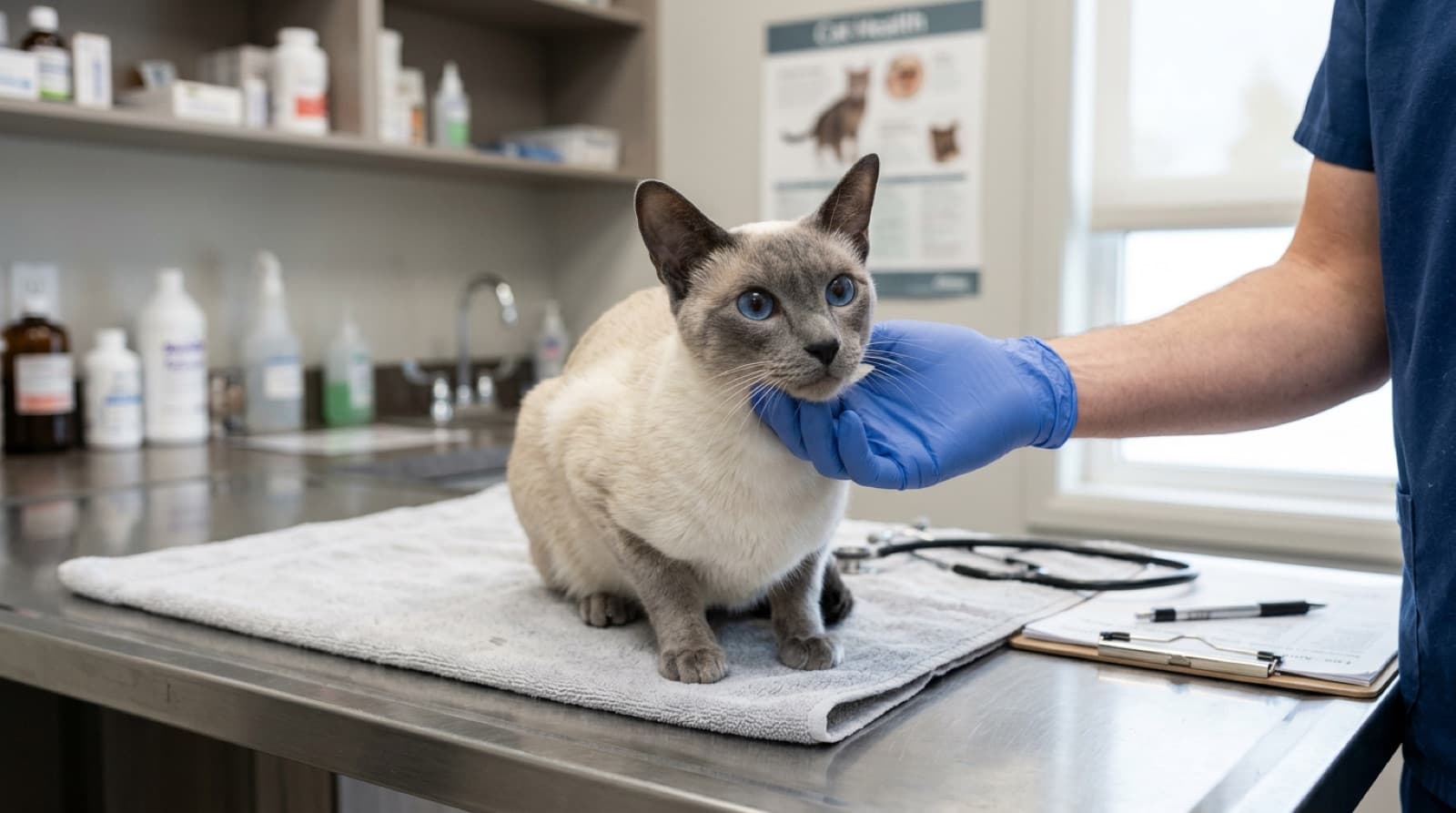
This article is informational only and is not veterinary advice. Always consult your Calgary veterinarian for individualised health guidance for your specific cat. Siamese are a breed with documented genetic and acquired health risks across kidney, respiratory, dental, and cardiac systems. Proactive screening, ethical breeding history (where available), and ongoing veterinary care are essential. No medication, dosage, or treatment protocol is recommended on this page. Those decisions belong entirely with your veterinary team.
Sources informing this article include the Cornell Feline Health Center, the Universities Federation for Animal Welfare (UFAW) breed-specific disease summaries, peer-reviewed research indexed on PubMed (generalised AA-amyloidosis in Siamese and Oriental cats), the UC Davis Veterinary Genetics Laboratory, and breed standard references from the Cat Fanciers' Association (CFA). Calgary specialty referrals go through Western Veterinary Specialist & Emergency Centre. Treatment specifics still belong with your Calgary veterinarian.
Renal amyloidosis: the Siamese-specific kidney disease
Renal amyloidosis is the most distinctive Siamese health issue and the one most owners have never heard of before adopting. It is a breed-specific protein-folding disease that produces kidney failure at an unusually young age. Onset is often under 5 years, sometimes as early as 1. Every Calgary Siamese owner should know the signs.
Amyloidosis is a disease in which the body produces an abnormally folded protein (amyloid) that deposits in organs and progressively impairs their function. In Siamese cats the deposits target primarily the kidneys, and sometimes the liver. As the deposits accumulate, kidney filtration declines and the cat develops chronic kidney disease, often progressing to renal failure.
The disease in Siamese is classified as an AA-amyloidosis (the same general category as the disease in Abyssinians), but the amino acid sequence of the amyloid protein differs between breeds. The peer-reviewed literature on generalised AA-amyloidosis in Siamese and Oriental cats documents it as a distinct breed-specific variant. The UFAW Siamese amyloidosis summary describes the same condition.
Why this matters: unusually young onset
Most feline chronic kidney disease (CKD) is a disease of older cats, typically diagnosed from age 10 onward. Siamese amyloidosis breaks that pattern. Onset is often between ages 1 and 5, which is the time of life when most owners are not watching closely for kidney signs. The combination of young onset and slow progression means the disease can be advanced by the time it is recognised.
Symptoms to watch for
- Increased thirst and increased urination (the classic CKD signs, but appearing in a 2 to 4 year old cat)
- Unexplained weight loss
- Decreased appetite or intermittent vomiting
- Lethargy or decreased activity
- Jaundice or sudden abdominal pain (rare; can indicate hepatic involvement, sometimes with hepatic rupture)
- Poor coat condition in a previously sleek cat
Any of these signs in a Siamese under age 5 warrants a vet workup that includes renal bloodwork (creatinine, BUN, SDMA) and urinalysis at minimum. The Cornell Feline Health Center renal amyloidosis material covers the diagnostic pathway in more depth.
Diagnosis and DNA testing
Definitive diagnosis is by kidney biopsy with specific staining for amyloid protein. Bloodwork and urinalysis identify kidney dysfunction; biopsy confirms amyloidosis as the cause. A commercial DNA test for Siamese amyloidosis is not widely established as of this writing. The UC Davis Veterinary Genetics Laboratory offers tests for several feline inherited diseases; verify directly which panels include Siamese amyloidosis at the time of testing. Ethical breeders track family history of early-onset kidney disease and avoid breeding affected lines.
Treatment
Treatment is supportive and entirely vet-directed: a prescription renal diet, fluid therapy (initially in-clinic, sometimes transitioning to home subcutaneous fluids), blood pressure management, and ongoing monitoring of renal values. No medication or dosage is recommended on this page; those decisions belong with your veterinary team. Lifetime cost of management varies widely with the stage at diagnosis and the individual cat's response. This is one of the conditions where pet insurance enrolled before any kidney values shift makes the biggest financial difference.
Feline asthma: roughly twice the breed rate
Feline asthma is a chronic inflammatory airway disease that produces wheezing, coughing, and exercise intolerance. The Cornell Feline Health Center feline asthma summary and the UFAW chronic bronchial disease summary both note that Siamese are over-represented, with prevalence reported up to about 5 percent of the breed, roughly twice the rate of other breeds. Hereditary airway reactivity is suspected as the underlying mechanism.
Symptoms most owners miss at first
The classic confusion is a cough that owners interpret as a hairball. A hairball cough produces a hairball. A repeated dry cough that produces nothing is more likely respiratory than gastrointestinal. Other signs:
- Audible wheezing, especially after activity
- Increased respiratory effort (visible chest movement at rest)
- Exercise intolerance (a Siamese that previously played for 20 minutes now stops at 5)
- Open-mouth breathing (always urgent in a cat; same-day Calgary emergency)
- Crouched posture with extended neck while breathing
Diagnosis and management
Diagnosis typically involves chest radiographs, sometimes bronchoscopy, and ruling out heart disease (asthma and HCM can present with similar early respiratory signs, which is why the cardiology workup matters in Siamese). Lifelong inhaler-based management is common, often using a feline aerosol chamber designed for cats. Many asthmatic Siamese live full lives once stabilised, with rescue inhalers for flare-ups and maintenance medication directed by the vet.
Environmental triggers to manage at home: dust (low-dust litter, frequent vacuuming), cigarette smoke (zero exposure), scented candles and diffusers (avoid), strong cleaning products, and aerosol sprays. Calgary winter air dryness can also exacerbate symptoms; a humidifier in the living space helps some cats. All treatment specifics belong with your Calgary veterinarian.
Dental disease: small jaw, crowded teeth, early problems
Siamese have a notably small, wedge-shaped jaw with crowded teeth. The result is earlier and more frequent dental disease than average: gingivitis from young adulthood, juvenile periodontitis in some cats, and feline odontoclastic resorptive lesions (FORLs) at higher than average rates. Annual dental exams from age 2 are not optional for this breed.
The dental story is the most underestimated Siamese health issue. Owners plan for kidney, asthma, and heart concerns and skip dental, only to face thousand-dollar extractions in middle age. The economics favour earlier and more frequent preventive cleaning.
Conditions to watch for
- Gingivitis (red, inflamed gum line at the tooth base; reversible if caught early)
- Periodontitis (progression beyond gingivitis to bone and ligament damage; not reversible, only manageable)
- Feline odontoclastic resorptive lesions (FORLs), in which the tooth structure itself resorbs from the root upward; painful, treatable only by extraction
- Tooth crowding (the breed-specific risk; small jaw plus full feline dentition produces overlapping teeth that trap food and plaque)
Symptoms to watch for at home
- Bad breath (the earliest sign; do not normalise it)
- Drooling or pawing at the mouth
- Eating reluctance or chewing on one side
- Dropping food from the mouth while eating
- Weight loss in a previously healthy cat
- Visible red gum margins or yellow tartar at the tooth base
Calgary cost reality
A professional dental cleaning under anaesthesia at a Calgary general-practice clinic typically runs 400 to 800 dollars, including pre-anaesthetic bloodwork, anaesthesia, scaling, polishing, and recovery. Extractions add roughly 200 to 800 dollars per tooth depending on complexity (simple incisor versus multi-rooted molar with surgical extraction). A Siamese facing 4 or 5 extractions in one session can land in the 2,000 to 3,000 dollar range without insurance.
Cadence: annual oral exam at the wellness visit from age 2 onward, professional cleaning every 1 to 3 years depending on individual disease progression. Home care (brushing with feline-safe paste, dental treats, dental diets) slows the progression but does not eliminate the need for professional cleaning. Brushing is more effective when started in kittenhood and gradually built into routine.
The insurance gap most owners miss
Most pet insurance base policies in Canada exclude dental disease, or exclude it after a short policy waiting period. For a breed predisposed to early dental issues, this is the wrong default. Before signing a policy, ask specifically whether dental disease (not just dental accidents like a broken tooth) is covered, and what the dental add-on coverage costs. A dental add-on that raises monthly premium by 10 to 15 dollars often pays for itself within the first professional cleaning cycle.
HCM (hypertrophic cardiomyopathy)
Hypertrophic cardiomyopathy is the most common feline heart disease and is documented in Siamese as in many other breeds. The disease causes the wall of the left ventricle to thicken abnormally; the chamber holds less blood and the heart works harder. In some cats this stays mild for years. In others it progresses to congestive heart failure, a saddle thrombus that paralyses the rear legs, or sudden cardiac death.
No Siamese-specific DNA test
Unlike Ragdolls (HCM1 mutation) and Maine Coons (MyBPC3 mutation), there is no breed-specific commercial DNA test for Siamese HCM established as of this writing. The MYBPC3 variants known in other breeds have been studied in some Siamese lines, but a widely available, Siamese-validated DNA panel is not commercially established. The practical screening tool is the same as for Bengals: an annual echocardiogram from a veterinary cardiologist starting around age 2.
Calgary cardiology access
Echocardiograms for HCM screening are performed by veterinary cardiologists, not general-practice vets. In Calgary, this is typically a referral from your general-practice vet to Western Veterinary Specialist & Emergency Centre, which houses the city's main feline cardiology service. Expect to pay roughly 400 to 600 dollars per scan. The recommended cadence for an asymptomatic Siamese is annual from age 2 onward.
Symptoms and emergency signs
HCM is often silent until late. Watch for increased respiratory rate at rest (a sleeping cat should breathe 15 to 30 times per minute; persistently faster is a vet call), lethargy in a usually active Siamese, sudden weakness or collapse, rear-leg paralysis (saddle thrombus; same-day emergency), or open-mouth breathing. Open-mouth breathing in any cat is a same-day Calgary 24-hour emergency. Drive to a Calgary 24-hour emergency vet rather than wait until morning.
Treatment is entirely vet-directed and depends on the stage of disease. No medication or dosage is recommended on this page. Lifetime management cost varies widely; this is the strongest single argument for pet insurance enrolled before age 2.
Mediastinal lymphoma: the young-onset cancer risk
Siamese and the closely related Oriental Shorthair carry a documented elevated risk for young-onset mediastinal lymphoma, a cancer of the lymphatic tissue inside the chest cavity. Unusually for feline lymphoma, this presentation in Siamese is typically not associated with feline leukaemia virus (FeLV) or feline immunodeficiency virus (FIV) infection, which sets it apart from most other feline lymphoma patterns.
The diagnostic challenge is that mediastinal lymphoma presents with cough, exercise intolerance, and respiratory distress, which overlaps with feline asthma symptoms. Imaging (chest radiograph, sometimes ultrasound) is the differentiator. Any persistent cough or worsening exercise tolerance in a Siamese deserves a thorough workup that does not stop at “probably asthma.”
Treatment if diagnosed is oncology specialty referral. Chemotherapy protocols for feline lymphoma have improved significantly and remission is achievable in many cases. Discuss prognosis, treatment options, and cost with your Calgary veterinarian and the referral oncologist. No treatment protocol is recommended on this page.
Find your Siamese companion in Calgary
Browse Siamese-type cats currently in Calgary rescue. Adult cats with known dental and cardiac history are often easier to insure than breeder kittens.
See Available Siamese →Other conditions to keep on the radar
Beyond the four headline conditions, several less common issues are worth knowing:
- Mast cell tumours. Siamese have a documented predisposition to a histiocytic form of mast cell tumour, with KIT gene mutations implicated. Juvenile multi-nodular skin lesions sometimes regress spontaneously, but any new lump warrants a vet evaluation, never home treatment.
- Gangliosidosis (GM1 and GM2). A degenerative neurological disease, genetic in origin. The UC Davis Veterinary Genetics Laboratory offers feline gangliosidosis testing; verify which breed panels include Siamese at the time of testing. Ethical breeders test breeding cats and follow standard recessive-disease pairing logic.
- Strabismus and nystagmus. Crossed eyes and rhythmic eye movement are historically common in Siamese due to a quirk of optic nerve pathway development associated with the colourpoint gene. Modern show-line breeding has reduced this, but it still appears. It is not progressive, not painful, and does not impair quality of life.
- Skin and allergy issues. Some Siamese develop psychogenic alopecia (overgrooming-related hair loss linked to stress) and miliary dermatitis. Both are managed through environmental adjustment and vet-directed care.
- Vestibular signs. Rare but documented; sudden head tilt or balance loss warrants same-day vet evaluation.
None of these conditions on its own changes the adoption decision. Siamese are fundamentally healthy as a breed, with the four headline risks managed through annual screening and one or two add-on conditions to recognise if symptoms appear.
General anaesthesia for Siamese: caution, not contraindication
There is no formally published Siamese-specific anaesthetic contraindication. Anecdotal reports from veterinary clinicians describe prolonged recovery times and heightened sensitivity in some Siamese individuals, but this has not crystallised into a formal protocol the way Maine Coon or Ragdoll HCM screening has. The reasonable practice position is caution, not contraindication: a Siamese-aware anaesthetic plan with conservative premedication dosing and careful monitoring.
For any Siamese aged 4 or older, a pre-anaesthetic echocardiogram is worth discussing with your vet before elective surgery because of the HCM risk profile. If an annual screening echocardiogram is already part of your cat's care plan, that report is what your vet uses. If not, a pre-operative echocardiogram referral to Western Veterinary Specialist & Emergency Centre is worth the conversation.
Standard pre-operative bloodwork, IV fluid support, and pulse oximetry monitoring during surgery round out the protocol. Routine spay, neuter, and most dental cleanings are still low-risk procedures with standard feline protocols. Discuss any specific concerns with your Calgary veterinarian before the procedure.
Pet insurance for Siamese: timing and the dental add-on
This is the single highest-leverage decision a Calgary Siamese owner makes. Buy before any diagnosis, and read the dental coverage clause carefully. The conditions Siamese are at elevated risk for (renal amyloidosis under age 5, asthma, dental disease, HCM) are exactly the ones insurance is most useful against. Pre-existing condition exclusion is industry-wide and bites hardest on a long-lived breed.
Siamese are pet-insurance-positive because the breed's combination of elevated multi-system risk and 15-to-20 year lifespan compounds cost over time. A few directional figures to plan around (these are 2026 Calgary estimates, not quotes from any specific provider):
- Renal amyloidosis workup and lifetime management: varies widely with stage at diagnosis. Discuss specifics with your Calgary veterinarian.
- Annual cardiology echocardiogram at a Calgary specialty centre: typically 400 to 600 dollars
- Lifetime asthma management (inhalers, medications, periodic imaging): varies widely with severity
- Professional dental cleaning every 1 to 3 years: 400 to 800 dollars per cleaning, plus 200 to 800 dollars per extraction if needed
- HCM management if diagnosed: varies widely. Discuss specifics with your Calgary veterinarian.
- Emergency visit for open-mouth breathing, saddle thrombus, or asthma flare: easily 1,500 to 3,000 dollars for one night
Canadian carriers Siamese owners typically consider include Trupanion, Petsecure, and Pet Plus Us. Monthly premium ranges roughly 45 to 85 dollars depending on age, deductible, and coverage tier. Siamese premiums tend to sit slightly below larger breeds in some carriers because adult body weight is small to medium (6 to 14 pounds).
The dental add-on: the gap most owners miss
Many Canadian base pet insurance policies exclude dental disease entirely, or cover only dental accidents (a broken tooth from trauma) and not dental disease (gingivitis, periodontitis, FORLs). For a breed with documented small-jaw dental predisposition, this is the wrong default coverage. Before signing a policy, confirm in writing:
- Is professional dental cleaning covered, or only dental accidents?
- Are extractions covered if dentally indicated?
- Is there a dental add-on rider available, and what does it cost?
- What is the waiting period before dental coverage starts?
A dental add-on that raises monthly premium by 10 to 15 dollars often pays for itself within the first professional cleaning cycle for a Siamese. The economics favour adding it from day one.
The pre-existing condition rule
Every Canadian pet insurance provider excludes pre-existing conditions. For a Siamese, this means:
- Kidney values trending up at age 3 on a routine blood panel with no prior policy: amyloidosis and related kidney conditions permanently excluded from any subsequent policy
- Cough investigated at age 2 and labelled as asthma with no prior policy: asthma permanently excluded
- Periodontal disease noted on a dental exam at age 4 with no prior policy: dental coverage may be excluded indefinitely on any new policy
- Heart murmur noted but not investigated: enrolling immediately may preserve coverage, but providers vary
Enrol at adoption or by the first vet visit, ideally before age 3 to 4. The cost of waiting is not the premiums saved, it is the coverage lost on the conditions you are most likely to need.
Calgary specialty vet access
Cardiology, oncology, and complex internal medicine for Siamese usually involve referral from your general-practice vet to a specialty centre. The Calgary clinic that handles most Siamese-relevant specialty work:
| Clinic | Services relevant to Siamese |
|---|---|
| Western Veterinary Specialist & Emergency Centre | Cardiology (echocardiogram for HCM screening), internal medicine (amyloidosis workup, complex respiratory cases), oncology (mediastinal lymphoma), 24-hour emergency. Referral from your general-practice vet typically required for specialty consults. Emergency walk-in is available. |
Your relationship with one general-practice clinic matters more than picking the “best” one. A vet who knows your Siamese's baseline catches subtle changes that a one-time specialist visit misses. The specialist comes in when something specific is needed: the annual HCM echocardiogram, a young-onset kidney workup, a lymphoma diagnostic, or an emergency.
For routine spay, neuter, vaccines, dental care, and wellness exams, any Calgary general-practice veterinary clinic you trust is appropriate. The Siamese-specific layer (echocardiograms, amyloidosis diagnostics, dental cleaning under anaesthesia) is where the partnership between general-practice and specialty referral matters.
Year-1 and ongoing Siamese vet costs
The realistic budget for a healthy Calgary Siamese, to discuss with your veterinarian and adjust based on the individual cat:
| Cost category | Calgary range (2026) |
|---|---|
| Routine annual wellness exam, vaccines, parasite prevention | 400 to 700 dollars per year |
| Annual cardiology echocardiogram (age 2 onward) | 400 to 600 dollars per year |
| Annual oral exam (included in wellness visit from age 2) | Included |
| Professional dental cleaning under anaesthesia (every 1 to 3 years) | 400 to 800 dollars per cleaning |
| Dental extractions if indicated (per tooth) | 200 to 800 dollars per tooth |
| Pet insurance with dental add-on (full coverage, before any diagnosis) | 540 to 1,020 dollars per year |
| Spay or neuter (one-time, often via rescue at lower cost) | 200 to 500 dollars one-time |
| If renal amyloidosis diagnosed (cumulative lifetime management) | A meaningful financial commitment. Discuss specifics with your Calgary veterinarian. |
| If HCM or lymphoma diagnosed (cumulative lifetime, without insurance) | Varies widely. Discuss specifics with your Calgary veterinarian. |
The renal, cardiac, and oncology rows are why pet insurance matters. Without coverage, a single major diagnosis can run five figures over a 15-to-20 year lifespan. With coverage purchased before diagnosis, the same diagnosis may cost a few thousand in deductibles and co-insurance. For a long-lived breed the math compounds: every year of policy in force is a year of pre-existing protection on conditions that may not appear until age 7 or 10.
Building a Siamese emergency kit
Siamese are small-to-medium cats (6 to 14 pounds adult), so emergency gear can be more compact than for a larger breed. The basics to keep in one accessible place:
- Cat carrier. A 22 by 14 inch hard-sided carrier rated for car travel is sufficient for most adult Siamese, roughly 60 to 120 dollars. A familiar carrier left open in the home throughout the year is less stressful in an emergency.
- Printed copy of your pet insurance policy. Including policy number and after-hours contact.
- Recent photo of your cat. For identification if a carrier opens during transport, or for posting if the cat is lost. Note any unusual markings.
- Vaccination records. Most Calgary emergency clinics ask for current vaccine status on intake.
- Written list of known sensitivities and conditions. Any prior medication reactions, dental history, asthma diagnosis, kidney value baselines, or echocardiogram findings. This list saves time when the cat cannot speak for itself.
- After-hours vet phone number. Western Veterinary Specialist & Emergency Centre operates 24-hour emergency. Save the number in your phone and post it on the fridge.
- Latest annual echocardiogram report. Especially important for Siamese aged 2 and over. If your cat is brought in for breathing changes or collapse, the existing cardiology report saves critical time at triage.
- Asthma inhaler (if prescribed). For diagnosed asthmatic cats, the rescue inhaler in the emergency kit can prevent a crisis from becoming an emergency vet visit.
Keep the kit in one place. A stressed owner during a same-day vet trip should not be searching through filing cabinets for paperwork.
The Siamese lifespan question
Lifespan is one of the strongest reasons to adopt a Siamese and one of the strongest reasons to plan health care carefully:
- Average Siamese lifespan is 15 to 20 years
- Healthy individuals frequently reach the upper end of that range
- Renal amyloidosis is the leading cause of premature death in cats affected by it, with onset often under age 5
- HCM, dental disease, and asthma are the other conditions most likely to shorten lifespan in middle-aged or older cats
- Indoor-only lifestyle, weight management, dental care, annual screening, and consistent veterinary care pull individual cats toward the longer end of the range
The 15-to-20 year lifespan is what makes Siamese health planning compound. A cat adopted at age 2 may live to age 18, which is 16 years of cumulative wellness visits, dental cleanings, and potential cardiology screenings. The Siamese cats we see live longest share a pattern: their owners built a relationship with one Calgary veterinary clinic early, did not skip annual exams, started cardiology screening at age 2, took dental disease seriously from day one, and had pet insurance with dental coverage in place before any diagnosis. None of that requires a panicked or anxious owner. It requires consistency over years.
Frequently Asked Questions
What are the main Siamese health issues?
Four conditions matter most for Siamese cats: renal amyloidosis (a breed-specific protein-folding kidney disease, often presenting under age 5), feline asthma (Siamese are roughly twice as likely as other breeds, with up to about 5 percent breed prevalence reported in Cornell and UFAW summaries), dental disease (small jaw plus crowded teeth produces early gingivitis and resorptive lesions), and hypertrophic cardiomyopathy (HCM). General anaesthesia warrants extra care because of anecdotal Siamese sensitivity reports, though no formal breed contraindication is published. Lifespan is 15 to 20 years with proactive care. Discuss screening with your Calgary veterinarian.
What is Siamese renal amyloidosis?
Siamese renal amyloidosis is a breed-specific form of AA-amyloidosis in which abnormally folded protein deposits in the kidneys (and sometimes the liver) and progressively impairs function. Onset is often under age 5, sometimes as early as age 1, which is unusually young for feline kidney disease. The amino acid sequence of the amyloid protein in Siamese differs from the variant documented in Abyssinians, so it is a separate disease genetically even though the clinical presentation overlaps. Diagnosis is by bloodwork, urinalysis, and biopsy. Treatment is supportive (renal diet, fluid therapy, and vet-directed management). No medication or dosage is recommended on this page. Discuss specifics with your Calgary veterinarian.
Are Siamese really prone to asthma?
Yes. Siamese are documented in the Cornell Feline Health Center and UFAW chronic bronchial disease summaries as approximately twice as likely to develop feline asthma as other breeds, with breed prevalence reported up to about 5 percent. Hereditary airway reactivity is suspected. Symptoms include wheezing, coughing (often confused with hairballs), exercise intolerance, and open-mouth breathing in severe cases. Diagnosis is by imaging or bronchoscopy at a veterinary clinic. Lifelong inhaler-based management is common, and many cats live full lives once stabilised. Open-mouth breathing in any cat is a same-day Calgary 24-hour emergency.
How often do Siamese need dental cleanings?
Most Siamese benefit from a professional dental cleaning under anaesthesia every 1 to 3 years, with annual oral exams from age 2 onward. The breed has a small jaw with crowded teeth, which produces early gingivitis, juvenile periodontitis, and feline odontoclastic resorptive lesions (FORLs) more often than average. A typical Calgary professional cleaning runs roughly 400 to 800 dollars; complex extractions add about 200 to 800 dollars per tooth depending on difficulty. Home care (brushing, dental treats, dental diets) helps but does not replace professional cleaning. Insurance note: many base policies exclude dental disease, so check whether a dental add-on is available.
Is there a DNA test for Siamese HCM?
Not a Siamese-specific commercial DNA test. The MYBPC3 variants known to cause HCM in Maine Coons and Ragdolls have been studied in some Siamese lines, but a widely available, breed-validated DNA test for Siamese HCM is not commercially established as of this writing. The practical screening tool is therefore the same as for Bengals: an annual echocardiogram by a veterinary cardiologist from age 2 onward. In Calgary this is typically a referral from your general-practice vet to Western Veterinary Specialist & Emergency Centre. Treatment of HCM is entirely vet-directed.
What is the difference between Siamese and Abyssinian amyloidosis?
Both are AA-amyloidosis, both deposit abnormally folded protein in the kidneys, and both shorten lifespan, but the amino acid sequence of the amyloid protein differs between the two breeds. The PubMed literature on generalised AA-amyloidosis in Siamese and Oriental cats describes it as a distinct breed-specific variant. Abyssinians tend to present with predominantly renal involvement, while Siamese amyloidosis can also affect the liver, sometimes with hepatic rupture as a presenting sign. Both are inherited but the precise mode of inheritance in Siamese is not as cleanly characterised as in some other breeds. Practical takeaway: any Siamese with unexplained weight loss, increased thirst, or vomiting under age 5 deserves a vet workup that includes renal and hepatic bloodwork.
Are Siamese at higher cancer risk?
Siamese (and the closely related Oriental Shorthair) are documented at elevated risk for young-onset mediastinal lymphoma, a cancer of the lymphatic tissue in the chest. Notably, unlike most feline lymphomas, this presentation is not typically associated with FeLV or FIV infection in Siamese. Symptoms include cough, exercise intolerance, and respiratory distress, which can be confused with feline asthma, so diagnostic imaging is the differentiator. Mast cell tumours of the histiocytic form also occur in Siamese, with KIT gene mutations implicated, though juvenile multi-nodular lesions sometimes regress spontaneously. Any new lump or persistent cough deserves a vet evaluation, never home treatment.
Should I screen my Siamese for HCM?
Yes, the standard recommendation for Siamese is an annual echocardiogram performed by a veterinary cardiologist starting around age 2. HCM can stay silent for years before producing symptoms, and the first sign is sometimes sudden collapse, open-mouth breathing, or a saddle thrombus (a blood clot that paralyses the rear legs). In Calgary, screening is typically a referral from your general-practice vet to Western Veterinary Specialist & Emergency Centre cardiology. The cost is roughly 400 to 600 dollars per scan. A pre-anaesthetic echocardiogram is also worth discussing for any Siamese aged 4 or older before elective surgery.
Are Siamese risky for anesthesia?
There is no formally published Siamese-specific anaesthetic contraindication, but anecdotal reports from veterinary clinicians describe prolonged recovery times and heightened sensitivity in some individuals. Reasonable practice is a Siamese-aware anaesthetic plan with conservative premedication dosing and careful monitoring, though this is not a formalised protocol. For any Siamese aged 4 or older, a pre-anaesthetic echocardiogram is worth discussing with your vet before elective surgery because of the underlying HCM risk profile. Routine spay, neuter, and most dental cleanings are still low-risk procedures with standard feline protocols. Discuss specific concerns with your Calgary veterinarian.
What is the normal lifespan for a Siamese?
Siamese typically live 15 to 20 years, with healthy individuals frequently reaching the upper end of that range. This is among the longer-lived pedigreed cat breeds and is part of why Siamese health planning matters more than for shorter-lived breeds: the cat will likely outlive several Calgary vet relationships, several insurance policy renewals, and at least one or two dental cleaning cycles. The Siamese cats we see live longest share a pattern: indoor-only, weight-managed, dentally cared for, screened for HCM annually from age 2, and insured before any diagnosis.
Where can I get a Siamese echocardiogram in Calgary?
Echocardiograms for HCM screening are performed by veterinary cardiologists, not general-practice vets. In Calgary this typically means a referral from your primary vet to Western Veterinary Specialist & Emergency Centre (westernvet.ca), which houses the city's main feline cardiology service. Expect to pay roughly 400 to 600 dollars per scan. Walking into a specialty centre without a referral is uncommon, so build the relationship with one general-practice clinic first, and ask them to refer you in for the annual screening echocardiogram from age 2 onward.
Is pet insurance worth it for a Siamese?
Usually yes, with a specific caveat about dental. Siamese carry documented elevated risks for renal amyloidosis, feline asthma, dental disease, and HCM, all of which can produce four-to-five-figure lifetime cost. Canadian carriers (Trupanion, Petsecure, Pet Plus Us) typically run 45 to 85 dollars per month for a Siamese depending on age and coverage tier. The critical caveat: dental disease is often excluded from base coverage, and Siamese are dentally predisposed. Check whether a dental add-on is available before signing, even if it raises the premium. The pre-existing condition exclusion is industry-wide and bites hardest on a long-lived breed.
When should I buy pet insurance for my Siamese?
Buy at adoption or by the first vet visit, ideally before age 3 to 4. Every Canadian pet insurance provider excludes pre-existing conditions, and the conditions Siamese are at elevated risk for (renal amyloidosis under age 5, feline asthma, dental disease, HCM) are exactly the ones policies are most useful against. A kitten enrolled at month 3 with a clean exam qualifies for the broadest coverage available. A Siamese enrolled at age 6 after a dental cleaning that flagged early periodontal disease has that diagnosis (and likely all related dental coverage) excluded indefinitely. The cost of waiting is not the premiums saved, it is the coverage lost on the conditions you are most likely to need.
What should be in my Siamese emergency kit?
A cat-rated carrier (a 22 by 14 inch hard-sided carrier is sufficient for most adult Siamese, roughly 60 to 120 dollars), a printed copy of your pet insurance policy with after-hours contact, a recent photo of your cat for identification, vaccination records, a written list of known sensitivities or chronic conditions (including any asthma diagnosis and medications), the after-hours phone number for a Calgary 24-hour emergency clinic, and the most recent annual echocardiogram report if your cat is age 2 or older. Western Veterinary Specialist & Emergency Centre runs 24-hour emergency. Keep the kit in one accessible place so a stressed owner is not searching during a same-day vet trip.
Siamese Cats in Calgary
Browse adoptable Siamese and Siamese-mix listings from Calgary rescues.
Siamese Adoption Guide
Rescue versus breeder, real costs, scams, and the buy-vs-adopt math for Calgary.
Siamese Vocalization & Separation Anxiety
Why Siamese talk so much, how to read the calls, and the Calgary alone-time playbook.
Traditional vs Modern Siamese
Apple-head versus wedge-head, body type differences, and what Calgary adopters are likely to find.