The short answer
Three conditions decide Sphynx health outcomes: HCM (Hypertrophic Cardiomyopathy), documented at 20 to 40 percent breed prevalence with no reliable Sphynx-specific DNA test (annual echocardiogram from age 1 is the screening tool); CMS (Congenital Myasthenic Syndrome), DNA-testable through UC Davis VGL (request the certificate from any breeder); and juvenile-onset dental disease, with documented gingivitis from 7 to 10 months in some lines. Add skincare for sebaceous overproduction, urticaria pigmentosa risk, indoor sunburn through south-facing windows, and an anaesthesia profile that needs hypothermia-aware planning. Lifespan: the 2024 RVC UK study found a 6.8-year median (the shortest of any breed studied); breed-club estimates cite 8 to 14 years with proactive screening and dental care. Both numbers are honest. The single highest-leverage decision a Calgary Sphynx owner makes is buying pet insurance before age 1, before the first echocardiogram is on file.
Informational only, not veterinary advice. Always consult your Calgary veterinarian for individualised guidance on your specific cat.
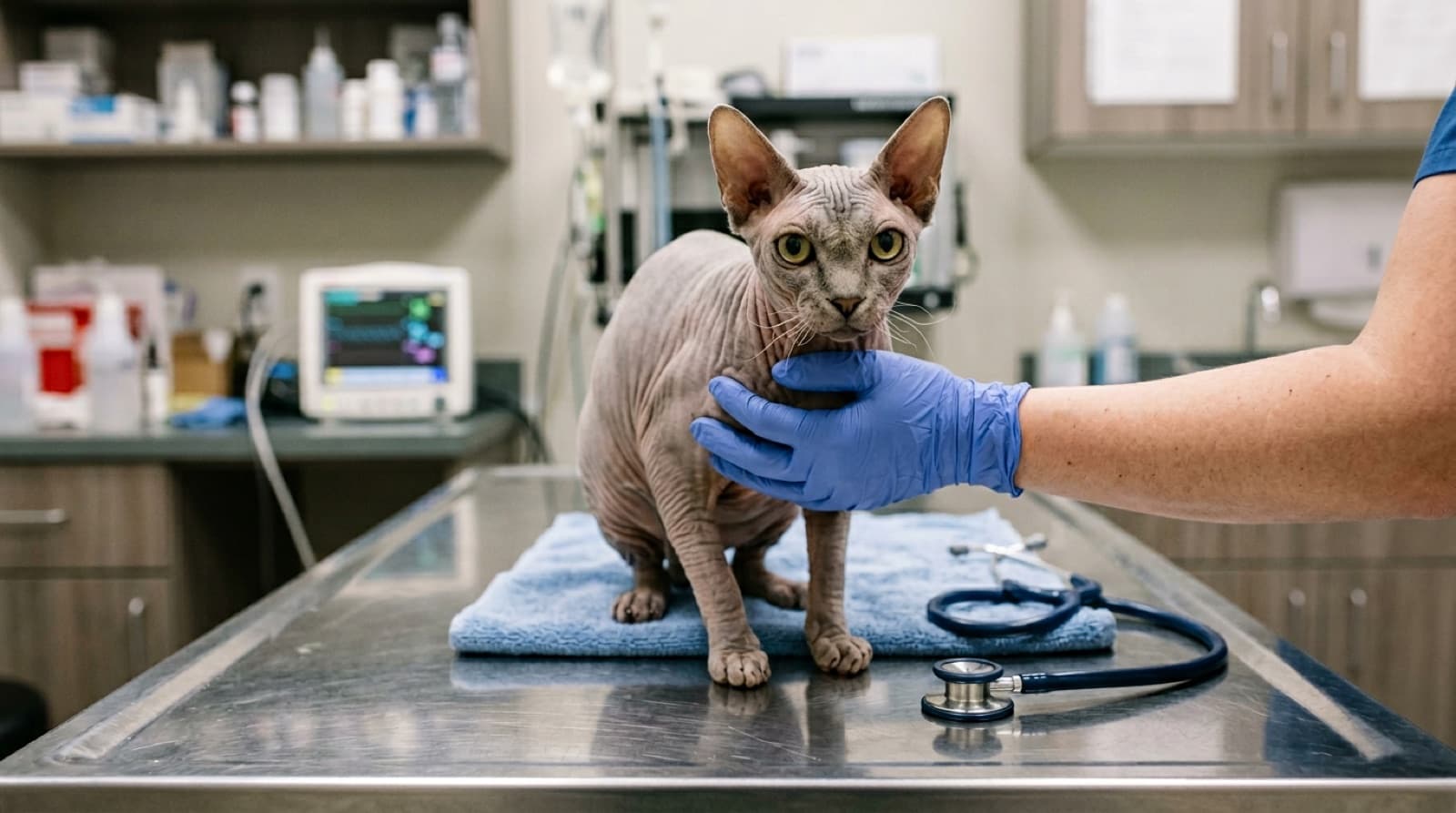
This article is informational only and is not veterinary advice. Always consult your Calgary veterinarian for individualised health guidance for your specific cat. Sphynx are a breed with documented genetic and structural health risks across cardiac, neuromuscular, dental, dermatological, and anaesthetic systems. Proactive screening, ethical breeding history (where available), and ongoing veterinary care are essential. No medication, dosage, or treatment protocol is recommended on this page. Those decisions belong entirely with your veterinary team.
Sources informing this article include the Cornell Feline Health Center, the Royal Veterinary College VetCompass programme (2024 breed lifespan study), peer-reviewed research indexed on PubMed Central (the 2024 New Zealand Sphynx HCM cohort study PMC11428990, Chetboul 2012 French Sphynx HCM prevalence, Meurs 2021 ALMS1 variant identification), the UC Davis Veterinary Genetics Laboratory for the Sphynx and Devon Rex CMS DNA test, the PLOS ONE COLQ mutation paper identifying the CMS gene, the WCVM Saskatchewan urticaria pigmentosa retrospective case series, the Royal Canin Academy feline HCM and anaesthesia material, and breed standard references from the Cat Fanciers' Association (CFA) and The International Cat Association (TICA). Calgary specialty referrals go through Western Veterinary Specialist & Emergency Centre. Treatment specifics still belong with your Calgary veterinarian.
HCM: the breed-defining health risk
Hypertrophic cardiomyopathy is the most important Sphynx health condition by a meaningful margin, and the one that most strongly drives the breed's short median lifespan in population data. Prevalence is documented at 20 to 40 percent depending on the study population and age cohort, increasing with age. There is no reliable Sphynx-specific DNA test. The screening tool is annual echocardiogram from age 1 onward by a veterinary cardiologist.
HCM is the most common feline heart disease overall, but Sphynx are documented at meaningfully elevated breed risk. The disease causes the wall of the left ventricle to thicken abnormally; the chamber holds less blood, the heart works harder, and in some cats the condition progresses to congestive heart failure, a saddle thrombus that paralyses the rear legs, or sudden cardiac death.
Prevalence: 20 to 40 percent across studies
Chetboul 2012 examined a French Sphynx population and reported approximately 20 percent prevalence. A 2024 New Zealand cohort study indexed on PubMed Central as PMC11428990 reported 40 percent prevalence at a median age of 5.8 years, with 21.8 percent diagnosed at the very first screening, and males significantly more affected than females (p=0.048). The variation between studies reflects population age, screening intensity, and selection of the study cohort. The honest summary: somewhere between 1 in 5 and 2 in 5 Sphynx will develop HCM during their lifetime, with risk increasing as the cat ages. This is among the highest breed-specific cardiac risk profiles documented in cats.
Why ALMS1 DNA testing is NOT the answer
The Meurs 2021 paper identified an ALMS1 variant in Sphynx, and some commercial labs (Genimal, Basepaws panels) offer it as part of breed-specific testing. However, the 2024 New Zealand cohort study found NO statistically significant association between ALMS1 variant status and HCM diagnosis in that population. Variant frequency was 70.9 percent across all Sphynx tested, but variant carriers were not significantly more likely to develop disease than non-carriers. Critically, UC Davis Veterinary Genetics Laboratory does NOT offer ALMS1 as a standalone Sphynx HCM test, which is consistent with the lack of clinical predictive value.
The practical conclusion for Calgary owners: do not order an ALMS1 DNA test as a Sphynx HCM screening tool. A negative result does not mean the cat will not develop HCM. A positive result does not mean the cat will. Spend that money on the annual echocardiogram instead. The DNA test that DOES matter for Sphynx is the CMS test, covered in the next section.
The actual screening tool: annual echocardiogram from age 1
Echocardiogram is the gold standard for HCM screening, performed by a veterinary cardiologist. The Sphynx-specific recommendation is annual cadence starting at age 1 (more aggressive than the age-2 starting point used for most other at-risk breeds), because Sphynx HCM is documented at younger median age at diagnosis and a meaningful fraction are diagnosed at the very first screening. In Calgary, this is a referral from your general-practice vet to Western Veterinary Specialist & Emergency Centre, which houses the city's main feline cardiology service. Expect roughly $400 to $600 per scan.
The insurance timing window matters more for this breed
Every Canadian pet insurance provider excludes pre-existing conditions. If a Sphynx is enrolled in pet insurance BEFORE the first echocardiogram at age 1, HCM coverage is included. If the same Sphynx is enrolled AFTER the first echo flagged any cardiac change, cardiac coverage is excluded indefinitely. Given that Sphynx HCM management can become a five-figure lifetime cost, the timing of the policy purchase is more financially material for this breed than for any other cat breed. Buy before age 1, before the first echo.
Symptoms and emergency signs
HCM is often silent until late. Watch for increased respiratory rate at rest (a sleeping cat should breathe 15 to 30 times per minute; persistently faster is a vet call), lethargy in a usually active Sphynx, sudden weakness or collapse, rear-leg paralysis (saddle thrombus, a same-day emergency), or open-mouth breathing. Open-mouth breathing in any cat is a same-day Calgary 24-hour emergency. Treatment is entirely vet-directed and depends on stage of disease. No medication or dosage is recommended on this page.
CMS (Congenital Myasthenic Syndrome): the DNA-testable risk
This is the Sphynx genetic test that actually matters. CMS is autosomal recessive, affects Sphynx and Devon Rex, has a clear DNA test through UC Davis VGL, and is preventable through ethical breeding. If you are buying from a breeder, ask for the CMS certificates on both parents. If you are adopting without paperwork, the test is a one-time genetic question answered.
Congenital Myasthenic Syndrome is a neuromuscular disease caused by a mutation in the COLQ gene, identified in a PLOS ONE paper that describes the molecular basis. The condition affects the neuromuscular junction, the connection between nerve and muscle, producing weakness and exercise intolerance. The disease affects Sphynx AND Devon Rex.
Inheritance and prevention
CMS is autosomal recessive, which means a kitten needs two copies of the defective gene (one from each parent) to develop disease. Two non-carrier parents produce zero affected kittens. A carrier-to-non-carrier mating produces zero affected kittens but 50 percent carrier kittens. A carrier-to-carrier mating produces 25 percent affected, 50 percent carrier, and 25 percent clear kittens, on average. Ethical breeders DNA-test all breeding cats and avoid carrier-to-carrier matings entirely, which prevents affected kittens from being born.
The UC Davis VGL DNA test
The UC Davis Veterinary Genetics Laboratory offers a CMS DNA test for both Sphynx and Devon Rex (and the cross). A cheek swab kit is mailed to you, you collect the sample at home, and you return it for laboratory analysis. Results typically come back within two to three weeks. The cost is approximately $60 to $100 USD depending on bundling. The test result is definitive for the COLQ mutation: clear, carrier, or affected.
The chipmunk position: a pathognomonic sign
Affected kittens typically show symptoms between 3 weeks and 6 months of age. The most distinctive sign, considered pathognomonic for the condition, is the chipmunk position: the kitten sits crouched with the head held forward and the eyes squinting, especially after activity or stress. Other signs include muscle weakness, exercise intolerance, regurgitation (because affected cats can have megaesophagus), collapse after play, and a hunched gait. A kitten showing this pattern needs urgent veterinary evaluation; the differential diagnosis includes other neuromuscular disease, but CMS is high on the list in a young Sphynx or Devon Rex.
What to ask before buying from a breeder
Request the CMS DNA test certificates for BOTH parents before agreeing to a purchase or deposit. A reputable breeder will produce these without hesitation. A breeder who cannot produce them, hedges, or claims testing is unnecessary because they have not seen affected kittens is doing the cat equivalent of skipping the pre-mating health check. Walk away. CMS-affected kittens have life-altering disease that is preventable at the breeding-program level.
Juvenile-onset dental disease
Sphynx are documented for juvenile-onset gingivitis, with case reports placing symptom onset as early as 7 to 10 months of age in some lines. In the most severely affected lines, case reports of full mouth extractions before age 3 exist in the veterinary literature. The mechanism is not fully understood but appears to involve a breed-specific gingival inflammation tendency. The practical implication: dental care for Sphynx starts a year earlier than for most other cat breeds.
The Sphynx-specific dental schedule
- Annual oral exam from age 1 at the wellness visit (not age 2 like most cats). Catches early gingivitis when it is still reversible.
- Professional cleaning every 1 to 2 years from age 1 onward, depending on individual disease progression.
- Home brushing with feline-safe paste, started in kittenhood, built into routine. Helps but does not prevent disease in heavily affected lines.
- Any reluctance to eat, dropping food, or visible red gum margins is a same-week vet call, not a wait-and-see situation.
Conditions to watch for
- Gingivitis (red, inflamed gum line at the tooth base; reversible if caught early)
- Periodontitis (progression beyond gingivitis to bone and ligament damage; not reversible, only manageable)
- Feline odontoclastic resorptive lesions (FORLs), in which the tooth structure resorbs from the root upward; painful, treatable only by extraction
- Severe juvenile-onset gingivostomatitis in heavily affected lines, sometimes requiring full mouth extractions
Symptoms to watch for at home
- Bad breath (the earliest sign; do not normalise it)
- Drooling or pawing at the mouth
- Eating reluctance or chewing on one side
- Dropping food from the mouth while eating
- Weight loss in a previously healthy cat
- Visible red gum margins or yellow tartar at the tooth base
Calgary cost reality
A professional dental cleaning under anaesthesia at a Calgary general-practice clinic typically runs $400 to $800, including pre-anaesthetic bloodwork, anaesthesia, scaling, polishing, and recovery. Extractions add roughly $200 to $800 per tooth depending on complexity. A Sphynx needing multiple extractions in one session can land in the $2,000 to $3,500 range without insurance. The added catch with Sphynx: every dental procedure involves the HCM-plus-hypothermia anaesthesia stack, so cardiology screening and a warming-aware anaesthetic plan matter more than for haired cats. The dental add-on rider on a pet insurance policy often pays for itself within the first cleaning cycle for this breed.
Urticaria pigmentosa (cutaneous mastocytosis)
Urticaria pigmentosa is a skin condition in which mast cells accumulate abnormally in the skin, producing crusted bumps and lesions most commonly on the head, neck, and legs. Sphynx and Devon Rex are over-represented in the veterinary literature.
The WCVM Saskatchewan case series
A retrospective case series from the Western College of Veterinary Medicine at the University of Saskatchewan documented 13 feline cases of urticaria pigmentosa over the study period. Of those 13 cases: 9 were Sphynx, 2 were Devon Rex, and 2 were Sphynx/Devon Rex crosses. Other breeds were not represented in the series. The over-representation of Sphynx and Devon Rex is the consistent finding across the published literature on this condition.
What Calgary owners should watch for
- Crusted bumps on the head, neck, ears, or legs
- Reddened or pigmented patches that persist
- Lesions that do not resolve with routine skincare
- Scabby areas that recur in the same locations
- Variable itching (some cats are intensely itchy, others minimally so)
Diagnosis and treatment
Diagnosis is by skin biopsy with histopathology to confirm mast cell accumulation. The condition is distinguishable from other skin diseases (allergic dermatitis, ringworm, primary irritant dermatitis) only with biopsy. Treatment is entirely vet-directed and varies with severity. No medication or dosage is recommended on this page; this is a specialty case. If you notice crusted bumps that do not resolve, book a vet visit. Western Veterinary Specialist & Emergency Centre dermatology can handle complex or refractory cases on referral.
Skin conditions: beyond the cosmetic
Sphynx skin requires active management. Without fur to absorb sebaceous oils and provide UV protection, the skin functions differently from a haired cat and develops its own characteristic problems. A separate guide on our site covers the full skincare and Calgary-winter routine; the short version of the health-relevant issues:
Sebaceous overproduction
Sphynx sebaceous glands produce oils continuously, but without a coat to absorb them, the oils accumulate on the skin surface. Owners typically describe Sphynx that have gone 4 to 5 days without a bath as smelling distinctly like mushrooms. Ear wax buildup is also accelerated for the same reason. The practical routine: weekly bathing with a gentle cat-safe shampoo, weekly ear cleaning with vet-recommended cleanser. Skipped skincare leads to greasy skin, secondary bacterial overgrowth, and a cat that genuinely smells.
Acne, blackheads, and folliculitis
Sphynx develop chin acne and blackheads more often than haired cats, with the chin and the base of the tail being the most common locations. The tail-base lesions are sometimes called “stud tail” even in neutered cats. Mild cases resolve with consistent gentle cleansing. Persistent or severe cases can progress to bacterial or fungal folliculitis, which requires vet treatment. The trigger for a vet visit: lesions that do not resolve within 1 to 2 weeks of careful at-home care, or visible pus, swelling, or discomfort.
Sunburn and solar dermatitis
Sphynx are susceptible to sunburn from indoor windows. South-facing windows in particular let through enough UV during the day to cause meaningful skin damage over time. Repeated sunburn progresses to solar dermatitis (chronic inflammation and skin damage) and, over years, increases the risk of squamous cell carcinoma. Indoor protection matters: avoid prolonged direct sunlight through unfiltered windows, especially during the long daylight hours of Calgary summers. Pet-safe sunscreen for direct sun exposure is an option for some cats; check with your vet before applying any product.
For full skincare depth including the Calgary winter routine, see our Sphynx skincare and winter Calgary guide.
Anaesthesia profile: hypothermia plus HCM stack
Sphynx carry a higher-than-average anaesthesia risk profile because two breed-specific issues stack. Hypothermia risk is elevated because Sphynx have no fur insulation while standard general anaesthesia suppresses thermoregulation. HCM risk means an undiagnosed cardiac condition can substantially raise anaesthetic risk. A Sphynx-aware anaesthetic plan addresses both.
Routine procedures (spay, neuter, dental cleaning) remain manageable with the right protocol. The key is that the protocol must be adapted, not the standard feline default for haired cats. Discuss the specifics with your Calgary veterinarian well in advance of any procedure.
What a Sphynx-aware anaesthetic plan includes
- Pre-anaesthetic bloodwork including cardiac biomarkers (NT-proBNP) where indicated
- Pre-anaesthetic echocardiogram for any Sphynx aged 1 or older before elective surgery, especially if annual cardiology screening is not yet in place
- Active warming throughout the procedure (forced-air warming blankets, heated surfaces, warmed IV fluids)
- Careful continuous core body temperature monitoring
- Intraoperative pulse oximetry, capnography, and blood pressure monitoring
- Extended monitored recovery with continued warming until the cat is fully alert and thermoregulating normally
- A recovery environment kept warmer than usual (a Sphynx wearing a soft cotton recovery garment in a warmed kennel)
The Royal Canin Academy feline HCM clinical management material and the published feline anaesthetic literature on managing cats with HCM are useful references for veterinary teams reviewing a Sphynx protocol. For specialty procedures and complex cases, Western Veterinary Specialist & Emergency Centre handles Sphynx-specific anaesthetic management on referral.
Eye care: large, prominent, exposed
Sphynx have large, prominent eyes set in a face with reduced facial hair to filter debris and protect the eye surface. The result is more debris collection at the inner corner of the eye, faster tear-film evaporation than in haired breeds, and an eye that is more exposed to everything the cat walks past. Daily gentle eye care is part of the breed routine.
The routine: once a day, wipe the inner corner of each eye gently with a soft damp cloth, working from the inner corner outward, using a fresh portion of the cloth for each eye. Watch for squinting, excessive blinking, sudden discharge changes, eye redness, or pawing at the eye. These warrant a same-day vet visit because corneal ulcers in cats can progress quickly and Sphynx exposed-eye structure offers less natural protection than a haired cat's deeper-set eye.
Find your Sphynx companion in Calgary
Alberta Sphynx Rescue often places adult Sphynx with known HCM screening status and established skincare routines, which makes them easier to insure and budget for than breeder kittens. Foster homes describe the actual cat's health story.
See Available Sphynx →The Sphynx lifespan reality: 6.8 years vs 14 years
Sphynx lifespan estimates range from 6.8 years (2024 RVC UK study median, the shortest of any breed studied) to 8 to 14 years (breed-club estimates with proactive care). Both numbers describe different populations and both are honest. A Calgary owner committed to proactive screening and care can reasonably plan for 11 to 13 years.
The number that gets quoted most often by breed clubs is 8 to 14 years, sometimes 10 to 15 years for the most optimistic sources. The number that gets quoted most often by veterinary epidemiologists is closer to 7 to 9 years. The gap is real and worth understanding.
The RVC 2024 VetCompass study
The Royal Veterinary College VetCompass programme published a 2024 lifespan study covering 7,936 UK cats across many breeds. The study reported a median life expectancy from birth of 6.8 years for Sphynx, the shortest of any breed studied in that cohort. The methodology drew from veterinary clinical records across a broad UK population, including Sphynx with and without specialty cardiology care, with and without DNA testing histories, and across the full distribution of owner engagement with veterinary medicine.
Why the breed-club number is higher
Breed-club lifespan estimates of 8 to 14 years describe Sphynx whose owners do proactive screening from age 1, take dental disease seriously, enrol pet insurance before any diagnosis, manage skincare consistently, and seek specialty referral when cardiac changes appear. That cohort is a meaningfully different population from the RVC study sample. Both numbers are accurate to the population they describe.
What drives the gap
- Undiagnosed HCM is the leading premature-mortality cause. Cats without annual echocardiogram screening can present in heart failure or with a saddle thrombus at an age when earlier diagnosis would have allowed years of medical management.
- Juvenile-onset dental disease left untreated compounds over years and contributes to systemic health decline.
- Skipped specialty referrals mean conditions that could be managed are diagnosed late, when management options have narrowed.
- Pre-existing condition exclusion from insurance bought late means owners face the full out-of-pocket cost of HCM management and often cannot sustain it.
What a proactive Calgary owner can plan for
The Sphynx owners we see whose cats live longest share a pattern: they built a relationship with one Calgary general-practice clinic early, did not skip annual exams, started cardiology screening at age 1, took dental disease seriously from day one, established skincare routines from the first week home, and had pet insurance with dental coverage in place before any diagnosis. For that owner, an 11-to-13 year lifespan is a reasonable planning assumption. None of that requires panic. It requires consistency over a decade or more.
Pet insurance for Sphynx: timing matters more than for any other breed
This is the single highest-leverage decision a Calgary Sphynx owner makes. Buy before age 1, before the first echocardiogram. Sphynx are among the highest-premium breeds for Canadian pet insurance because carriers price for the documented HCM, dental, and lifespan profile, but they are also among the highest-leverage to insure for the same reasons.
Sphynx are pet-insurance-positive because the breed's combination of elevated cardiac risk, juvenile-onset dental disease, anaesthesia complexity, and shorter median lifespan compounds cost into the cat's years. A few directional figures to plan around (these are 2026 Calgary estimates, not quotes from any specific provider):
- Annual cardiology echocardiogram at a Calgary specialty centre: typically $400 to $600
- UC Davis CMS DNA test (one-time, if adopting without paperwork): about $60 to $100 USD
- Professional dental cleaning every 1 to 2 years: $400 to $800 per cleaning, plus $200 to $800 per tooth for extractions if indicated
- HCM management if diagnosed: varies widely. Discuss specifics with your Calgary veterinarian.
- Skincare supplies (gentle shampoo, ear cleanser, cotton pads, recovery garments): $200 to $400 per year
- Emergency visit for open-mouth breathing, saddle thrombus, or respiratory crisis: easily $1,500 to $3,000 for one night
Canadian carriers and premium ranges
Trupanion, Petsecure, and Pet Plus Us are the Canadian carriers Sphynx owners typically consider. Monthly premiums of $70 to $130 are typical, sometimes higher. Sphynx premiums sit near the top of the cat-breed range because of the documented risk profile. The base policy is the foundation; the dental add-on rider matters more for this breed than for almost any other cat breed.
The pre-existing condition rule, sharper than usual
Every Canadian pet insurance provider excludes pre-existing conditions. For a Sphynx, the timing is sharper than for most breeds:
- Cardiac changes noted on the first echocardiogram at age 1 with no prior policy: HCM and related cardiac coverage permanently excluded on any new policy
- Gingivitis noted at the first dental exam with no prior policy: dental coverage may be excluded indefinitely
- Any skin condition (urticaria pigmentosa, persistent dermatitis) noted with no prior policy: related skin conditions may be flagged
Enrol at adoption or by the first vet visit, ideally before age 1. The cost of waiting is not the premiums saved, it is the coverage lost on the conditions you are most likely to need.
Calgary specialty vet access
Cardiology, dermatology, complex dental surgery, and emergency care for Sphynx usually involve referral from your general-practice vet to a specialty centre. The Calgary clinic that handles most Sphynx-relevant specialty work:
| Clinic | Services relevant to Sphynx |
|---|---|
| Western Veterinary Specialist & Emergency Centre | Cardiology (echocardiogram for HCM screening from age 1), dermatology (urticaria pigmentosa, refractory skin cases), dental specialty (complex extractions, juvenile-onset gingivostomatitis), internal medicine, hypothermia-aware anaesthesia, 24-hour emergency. Referral from your general-practice vet typically required for specialty consults; emergency walk-in is available. |
Your relationship with one general-practice clinic matters more than picking the “best” one. A vet who knows your Sphynx's baseline catches subtle changes that a one-time specialist visit misses. The specialist comes in when something specific is needed: the annual HCM echocardiogram, a complex dental cleaning, a dermatology consult for persistent skin lesions, or an emergency.
For routine spay, neuter, vaccines, dental care, and wellness exams, any Calgary general-practice veterinary clinic you trust is appropriate. The Sphynx-specific layer (cardiology screening from age 1, dental care from age 1, warming-aware anaesthesia) is where the partnership between general-practice and specialty referral matters.
Building a Sphynx emergency kit
Sphynx are small-to-medium cats (6 to 12 pounds adult), so emergency gear stays compact. The basics to keep in one accessible place:
- Cat carrier. A 22 by 14 inch hard-sided carrier rated for car travel is sufficient for most adult Sphynx, roughly $60 to $120. A familiar carrier left open in the home throughout the year is less stressful in an emergency. Include a soft warm blanket inside.
- A soft cotton sweater inside the carrier. Specific to Sphynx: a stressed hairless cat in a cool car or vet waiting room loses body heat quickly. A familiar warm garment helps.
- Printed copy of your pet insurance policy. Including policy number and after-hours contact.
- Recent photo of your cat. For identification if a carrier opens during transport. Note any unusual markings, wrinkle patterns, and ear shape.
- Vaccination records. Most Calgary emergency clinics ask for current vaccine status on intake.
- Written list of known sensitivities and conditions. Any prior medication reactions, CMS DNA test result, HCM screening history, dental history, any known skin sensitivities. This list saves time when the cat cannot speak for itself.
- After-hours vet phone number. Western Veterinary Specialist & Emergency Centre operates 24-hour emergency. Save the number in your phone and post it on the fridge.
- Latest annual echocardiogram report. Especially important for Sphynx aged 1 and over. If your cat is brought in for breathing changes or collapse, the existing cardiology report saves critical time at triage.
Keep the kit in one place. A stressed owner during a same-day vet trip should not be searching through filing cabinets for paperwork or hunting for a warm blanket in a cold car.
Year-1 and ongoing Sphynx vet costs
The realistic budget for a healthy Calgary Sphynx, to discuss with your veterinarian and adjust based on the individual cat:
| Cost category | Calgary range (2026) |
|---|---|
| Routine annual wellness exam, vaccines, parasite prevention | $400 to $700 per year |
| Annual cardiology echocardiogram (age 1 onward) | $400 to $600 per year |
| UC Davis CMS DNA test (one-time, if no breeder paperwork) | about $60 to $100 USD |
| Annual oral exam (included in wellness visit from age 1) | Included |
| Professional dental cleaning under anaesthesia (every 1 to 2 years) | $400 to $800 per cleaning |
| Dental extractions if indicated (per tooth) | $200 to $800 per tooth |
| Pet insurance with dental add-on (before any diagnosis) | $840 to $1,560 per year |
| Spay or neuter (one-time, often via rescue at lower cost) | $200 to $500 one-time |
| Skincare and bathing supplies (weekly routine) | $200 to $400 per year |
| Sweaters and warming garments (Calgary winter) | $80 to $200 per year |
| If HCM diagnosed (cumulative lifetime management) | A meaningful financial commitment. Discuss specifics with your Calgary veterinarian. |
| If urticaria pigmentosa or refractory skin disease diagnosed | Varies. Discuss with referral centre. |
The cardiac, dental, and skin rows are why pet insurance matters. Without coverage, a single HCM diagnosis or major dental case can cost five figures over a 10-to-13 year cat. With coverage purchased before age 1 and before the first echocardiogram, the same diagnosis may cost a few thousand in deductibles and co-insurance. The Sphynx-specific double-whammy: the HCM-plus-hypothermia anaesthesia stack means dental cleanings cost more per visit (cardiology screening, longer monitored recovery, active warming), so the dental add-on rider matters more for this breed than for haired cats.
Frequently Asked Questions
What are the main Sphynx health issues?
Three conditions decide Sphynx outcomes: Hypertrophic Cardiomyopathy (HCM), reported at 20 to 40 percent breed prevalence depending on population and age cohort, with no reliable Sphynx-specific DNA test (annual echocardiogram from age 1 is the screening tool); Congenital Myasthenic Syndrome (CMS), an autosomal recessive disease that IS DNA-testable through UC Davis VGL; and early-onset dental disease, with juvenile gingivitis documented from 7 to 10 months in some lines. Add to those: sebaceous overproduction requiring weekly skincare, sunburn risk through indoor windows, urticaria pigmentosa (Sphynx and Devon Rex are over-represented), anaesthesia caution from hypothermia risk and HCM stack, and large prominent eyes that need daily care. Lifespan estimates range from 6.8 years (2024 RVC UK study median, the shortest of any breed) to 14 years (breed-club estimates with proactive screening). Both numbers are honest. Discuss screening with your Calgary veterinarian.
How common is HCM in Sphynx cats?
Reported prevalence ranges from 20 to 40 percent depending on the population studied and age cohort. The Chetboul 2012 French Sphynx study found about 20 percent prevalence. A 2024 New Zealand cohort study (PMC11428990) found 40 percent prevalence at a median age of 5.8 years, with 21.8 percent diagnosed at first screening and males significantly more affected. HCM is the leading identifiable cause of premature mortality in the breed. Prevalence increases with age, which is why annual screening matters more for Sphynx than for almost any other breed. Treatment is entirely vet-directed and depends on stage. Discuss specifics with your Calgary veterinarian.
Is there a DNA test for Sphynx HCM?
No, not a reliable one. An ALMS1 mutation has been identified in Sphynx (Meurs 2021) and some commercial labs offer it as part of breed panels, but the 2024 New Zealand cohort study found NO association between ALMS1 variant status and HCM diagnosis. Variant frequency was 70.9 percent across all Sphynx in that population, but variant carriers were not significantly more likely to develop disease. UC Davis Veterinary Genetics Laboratory does NOT offer ALMS1 as a standalone test. The practical conclusion: do not rely on ALMS1 DNA testing for Sphynx HCM screening. Use annual echocardiograms by a veterinary cardiologist from age 1 onward instead. The DNA test you SHOULD order for a Sphynx is the CMS test, discussed in the next question.
Should I order the ALMS1 DNA test?
No, not as an HCM screening tool. The 2024 New Zealand study (PMC11428990) is the largest cohort to date and found ALMS1 variant status was not predictive of HCM development. A negative ALMS1 result does not mean your Sphynx will not develop HCM. A positive ALMS1 result does not mean your Sphynx will. Some Basepaws and Genimal panels include ALMS1 but it is not a substitute for echocardiogram screening. Spend that money on the annual echocardiogram instead. The DNA test that DOES matter for Sphynx is the CMS (Congenital Myasthenic Syndrome) test at UC Davis VGL.
What is CMS / Congenital Myasthenic Syndrome?
Congenital Myasthenic Syndrome is an autosomal recessive neuromuscular disease that affects Sphynx AND Devon Rex cats. It is caused by a mutation in the COLQ gene, identified in a PLOS ONE paper. The condition causes muscle weakness and exercise intolerance with onset between 3 weeks and 6 months. The pathognomonic sign is the chipmunk position: an affected kitten sits crouched with the head held forward and the eyes squinting, especially after activity. Other signs include regurgitation, exercise intolerance, and collapse after play. UC Davis Veterinary Genetics Laboratory offers a CMS DNA test for Sphynx and Devon Rex (vgl.ucdavis.edu). Ethical breeders test breeding parents and avoid carrier-to-carrier matings, which prevents affected kittens. Ask any breeder for the CMS DNA certificates on both parents. For Calgary adopters acquiring a Sphynx without breeder paperwork, the test is a one-time genetic-question answered.
Should I screen my Sphynx for HCM?
Yes, and the recommendation is more aggressive than for most cat breeds. Annual echocardiogram from age 1 onward by a veterinary cardiologist. In Calgary that means a referral from your general-practice vet to Western Veterinary Specialist & Emergency Centre (westernvet.ca), where the city's main feline cardiology service operates. Expect roughly $400 to $600 per scan. The reason for annual cadence starting at age 1 rather than the usual age 2: HCM prevalence in Sphynx is documented as high as 40 percent, with median age at diagnosis around 5.8 years and a meaningful number diagnosed at first screening. Annual screening from age 1 catches the disease earlier and gives more management options. Pet insurance enrolled before that first screening is critical.
Why do Sphynx have dental problems so early?
Sphynx are documented for juvenile-onset gingivitis, with case reports showing symptoms appearing as early as 7 to 10 months of age. In severely affected lines, case reports of full mouth extractions before age 3 exist. The mechanism is not fully understood but appears to be a combination of breed-specific gingival inflammation tendency, possibly related to immune-mediated factors. The practical implication: annual dental exam from age 1 (not age 2 like most cats), and professional cleaning every 1 to 2 years from a young age. Cleanings run $400 to $800 in Calgary; extractions add $200 to $800 per tooth. Home brushing helps but does not prevent disease in heavily affected lines. The anaesthesia risk stacks with HCM, so dental work also requires the cardiology-aware planning discussed below.
What is urticaria pigmentosa?
Urticaria pigmentosa (cutaneous mastocytosis) is a skin condition in which mast cells accumulate abnormally in the skin, producing crusted bumps and lesions on the head, neck, and legs. Sphynx and Devon Rex are over-represented in the veterinary literature. A retrospective case series from the Western College of Veterinary Medicine at the University of Saskatchewan (WCVM) found 9 of 13 reported feline cases were Sphynx, with 2 Devon Rex and 2 Sphynx/Devon Rex crosses among the remainder. Diagnosis is by biopsy. Treatment is entirely vet-directed and varies with severity; no medication is recommended on this page. If you notice crusted bumps, persistent skin lesions, or scabby areas on a Sphynx, book a vet visit. Discuss specifics with your Calgary veterinarian.
Are Sphynx really high-risk for anaesthesia?
Yes, for two stacking reasons that matter together. First, hypothermia risk is elevated because Sphynx have no fur insulation, and standard general anaesthesia suppresses normal thermoregulation. Active warming, warmed IV fluids, and careful core-body-temperature monitoring during and after the procedure are essential. Second, HCM prevalence in the breed means an undiagnosed cardiac condition can meaningfully raise anaesthetic risk for any individual cat. A pre-anaesthetic echocardiogram is worth discussing with your vet for any Sphynx aged 1 or older before elective surgery (spay, neuter, dental cleaning, BAS surgery in mixes). For routine procedures at a clinic that handles Sphynx regularly with a clear pre-anaesthetic plan including warming, the risk is manageable. Discuss specifics with your Calgary veterinarian.
What is the real Sphynx lifespan?
There are two honest answers and the truth is somewhere in between. The 2024 Royal Veterinary College VetCompass UK study (n=7,936 cats) reported a median life expectancy from birth of 6.8 years for Sphynx, the shortest of any breed studied. Breed clubs and US-based breed-specific lifespan estimates typically cite 8 to 14 years with proactive HCM screening and dental care. Both numbers are accurate to the data they describe. The RVC figure includes all Sphynx, including those without screening or veterinary care. The 14-year figure represents what is possible with annual cardiology screening from age 1, pet insurance enrolled before any diagnosis, attentive dental care from age 1, and a household that prioritises skincare and indoor protection. For a Calgary owner committed to that level of proactive care, an 11-to-13 year lifespan is a reasonable planning assumption.
Why is the RVC study lifespan so much shorter than what breeders say?
The RVC VetCompass UK study (2024) included a broad cross-section of pet Sphynx in the UK regardless of breeder source or veterinary engagement, which is what makes a median figure of 6.8 years credible as a population statistic. Breed clubs cite estimates based on Sphynx whose owners do proactive screening, dental care, and have enrolled pet insurance. The gap between the two numbers is driven primarily by undiagnosed HCM (the leading premature-mortality cause), juvenile-onset dental disease left untreated, and the cumulative effect of skipped specialty referrals. Proactive care does not eliminate these risks but pulls individual cats meaningfully toward the upper end. A Calgary owner who builds a relationship with one general-practice vet, starts annual cardiology at age 1, takes dental disease seriously, and has insurance with dental coverage in place before any diagnosis is doing the work that closes the gap.
Where can I get a Sphynx echocardiogram in Calgary?
Echocardiograms are performed by veterinary cardiologists, not general-practice vets. In Calgary, this is typically a referral from your primary vet to Western Veterinary Specialist & Emergency Centre (westernvet.ca), which houses the city's main feline cardiology service. Expect to pay roughly $400 to $600 per scan. Walking into a specialty centre without a referral is uncommon, so build the relationship with one general-practice clinic first and ask them to refer you in for the annual Sphynx screening from age 1 onward. The same centre handles 24-hour emergency care.
Is pet insurance worth it for a Sphynx?
Yes, more than for almost any other cat breed. Sphynx are among the highest-premium breeds for Canadian pet insurance because the carriers price for the documented HCM risk, dental risk, anaesthesia complexity, and lifespan profile. Monthly premiums of $70 to $130 across Trupanion, Petsecure, and Pet Plus Us are typical, sometimes higher. That cost is also why insurance matters more for this breed: a single HCM diagnosis or major dental case can cost five figures over a 10-to-13 year cat. A policy enrolled before the first echocardiogram at age 1 covers exactly the conditions Sphynx are most likely to need. The single most expensive mistake a new Calgary Sphynx owner can make is waiting until after age 1 to buy insurance, after the first echo has been logged.
When should I buy pet insurance for my Sphynx?
Buy at adoption or by the first vet visit, ideally BEFORE the first echocardiogram and BEFORE age 1. Every Canadian pet insurance provider excludes pre-existing conditions, and HCM is the condition policies are most useful against for this breed. A Sphynx enrolled at month 3 with a clean baseline qualifies for the broadest coverage available. A Sphynx enrolled at age 2 after the first screening flagged any cardiac change has cardiac coverage excluded indefinitely on any new policy. The same logic applies to dental, which is also Sphynx-relevant. The cost of waiting is not the premiums saved, it is the coverage lost on the conditions you are most likely to need. This is more aggressive guidance than for most breeds, and it reflects the documented breed risk profile.
Sphynx Cats in Calgary
Browse adoptable Sphynx and Sphynx-mix listings from Calgary rescues and Alberta Sphynx Rescue.
Sphynx Adoption Guide
Rescue versus breeder, real costs, scam patterns, and the buy-vs-adopt math for Calgary.
Sphynx Skincare and Winter Calgary
Weekly bathing, ear care, sunburn prevention, and the Calgary winter warming routine a hairless cat needs.
Sphynx Scam Avoidance Calgary
How to spot fake Sphynx breeders, deposit scams, and stolen-photo ads before money changes hands.