Recall is the most important command your dog will ever learn. It's the one that can literally save their life. A dog that comes when called can be let off leash safely, be redirected from danger, and enjoy way more freedom. But here's the thing: most people poison this command early by using "come" to end the fun. We're going to do it right.
Why This Command Matters
A broken recall is dangerous. Dogs who don't come when called get into traffic, eat things they shouldn't, chase wildlife, and get into fights. Calgary bylaws require dogs to be under control even in off-leash areas. And "under control" means they come back when you call. A solid recall is the difference between a dog that gets freedom and one that stays on a 6-foot leash forever.
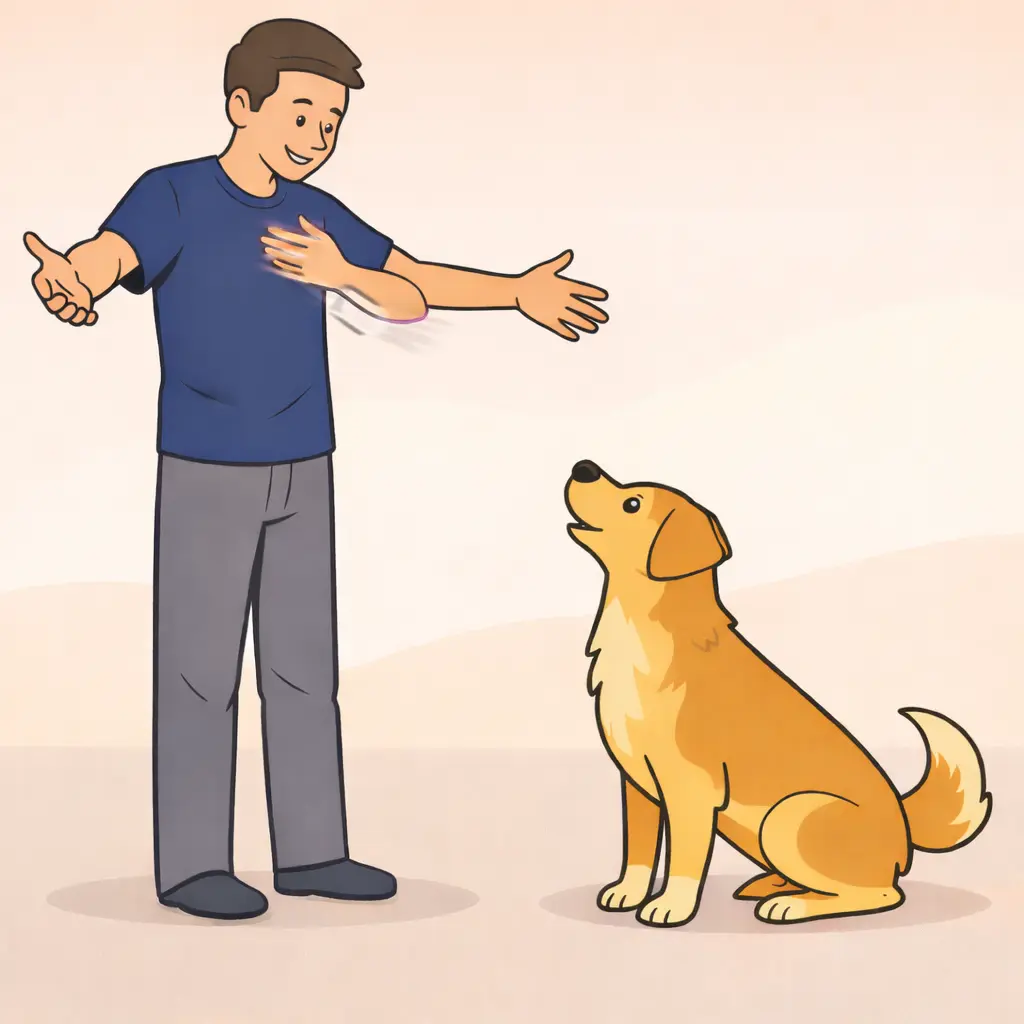
Hand Signal
Open both arms wide (like inviting a hug), then bring one hand to your chest. Some trainers slap their thigh. The key is making yourself look inviting and exciting, not threatening.
Step-by-Step Instructions
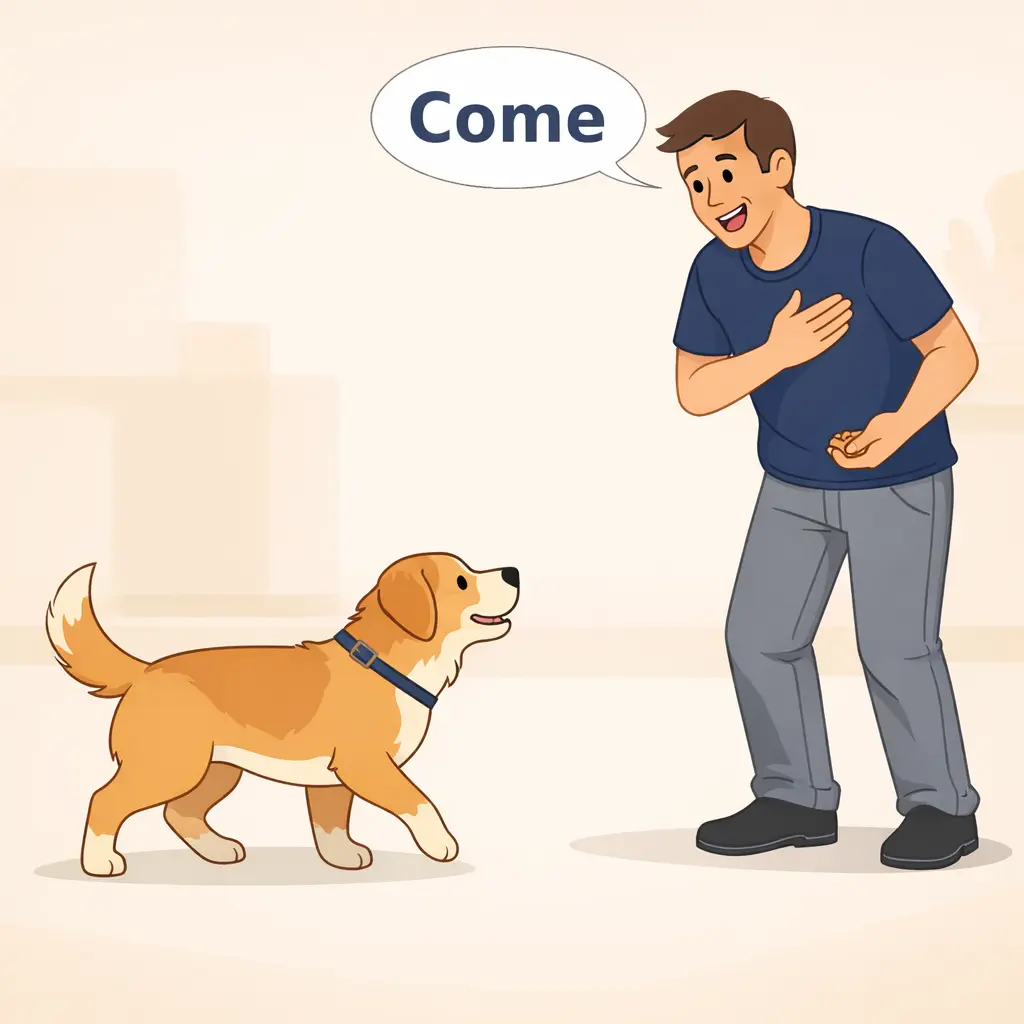
Start indoors with zero distractions
Stand a few feet from your dog. In an excited, happy voice say "Come!" (or their name + "come!"). When they move toward you, say "Yes!" and give them a big reward. Hand them 3 to 5 treats one at a time with lots of excited praise.

Build the "game": Call and reward, let them leave, repeat
After the big reward (3 to 5 treats in a row), toss a treat away from you so they walk off. Wait a beat, then call again. Say "Yes!" and give a handful of treats when they return. This becomes a game: go away, then get called, then come back, then big reward. Repeat 10 times.
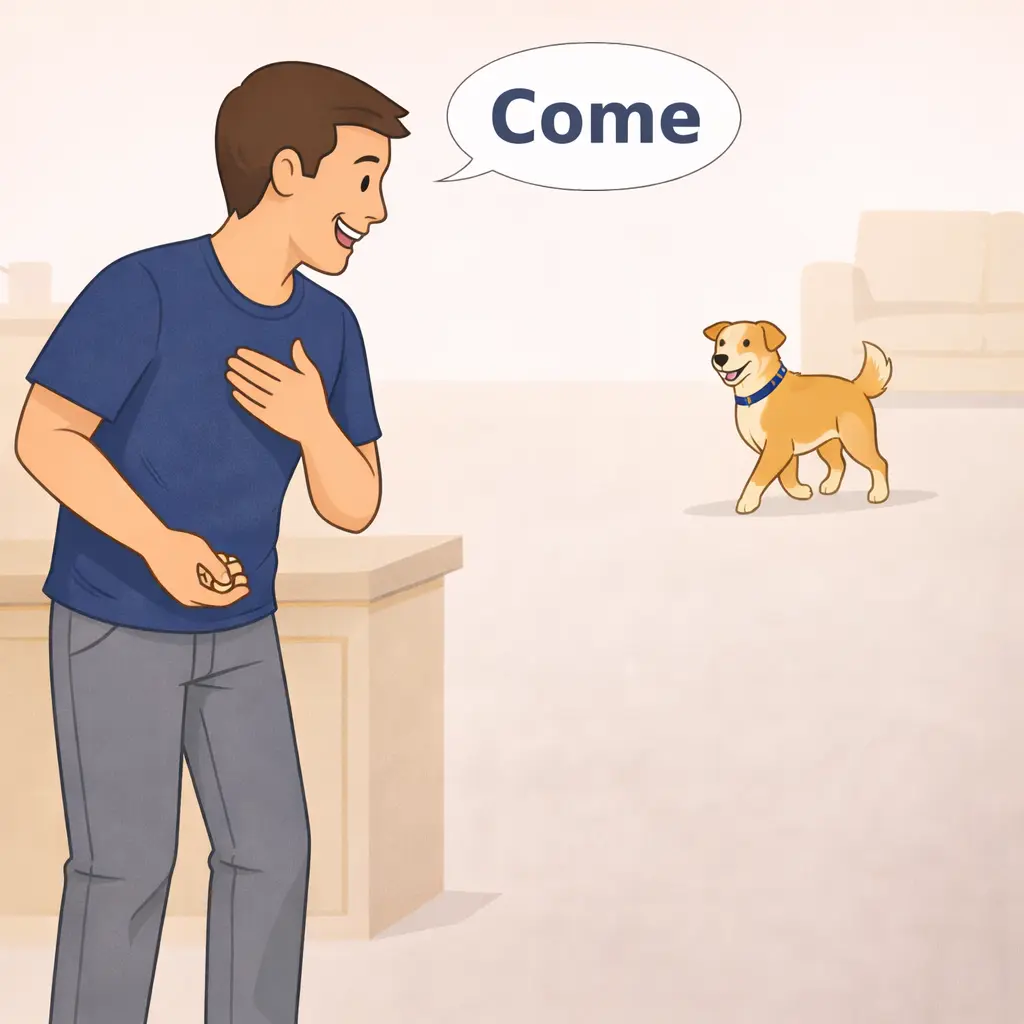
Add distance gradually
Move to different rooms. Call from the kitchen when they're in the living room. Then from upstairs. Then from the backyard when they're at the back fence. Every time they come, big reward (3 to 5 treats in a row).
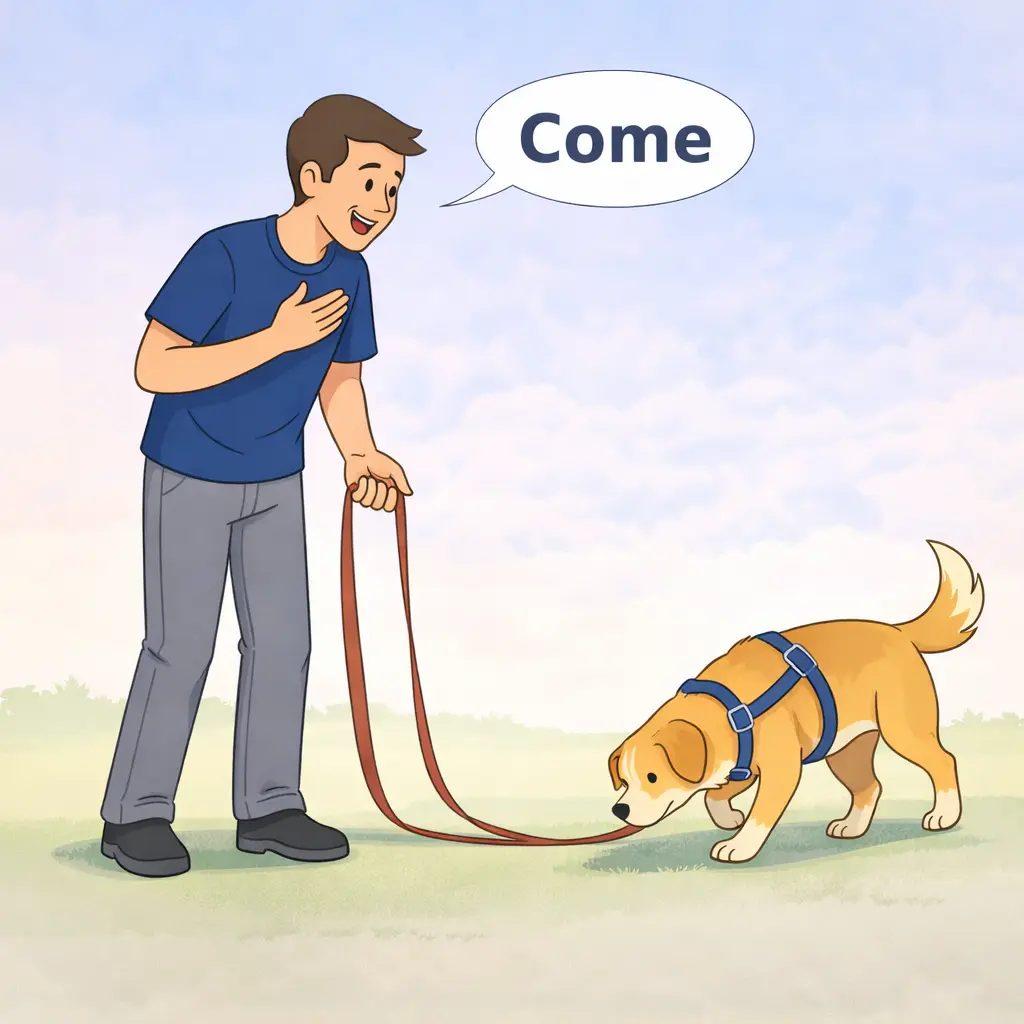
Practice with a long line outside
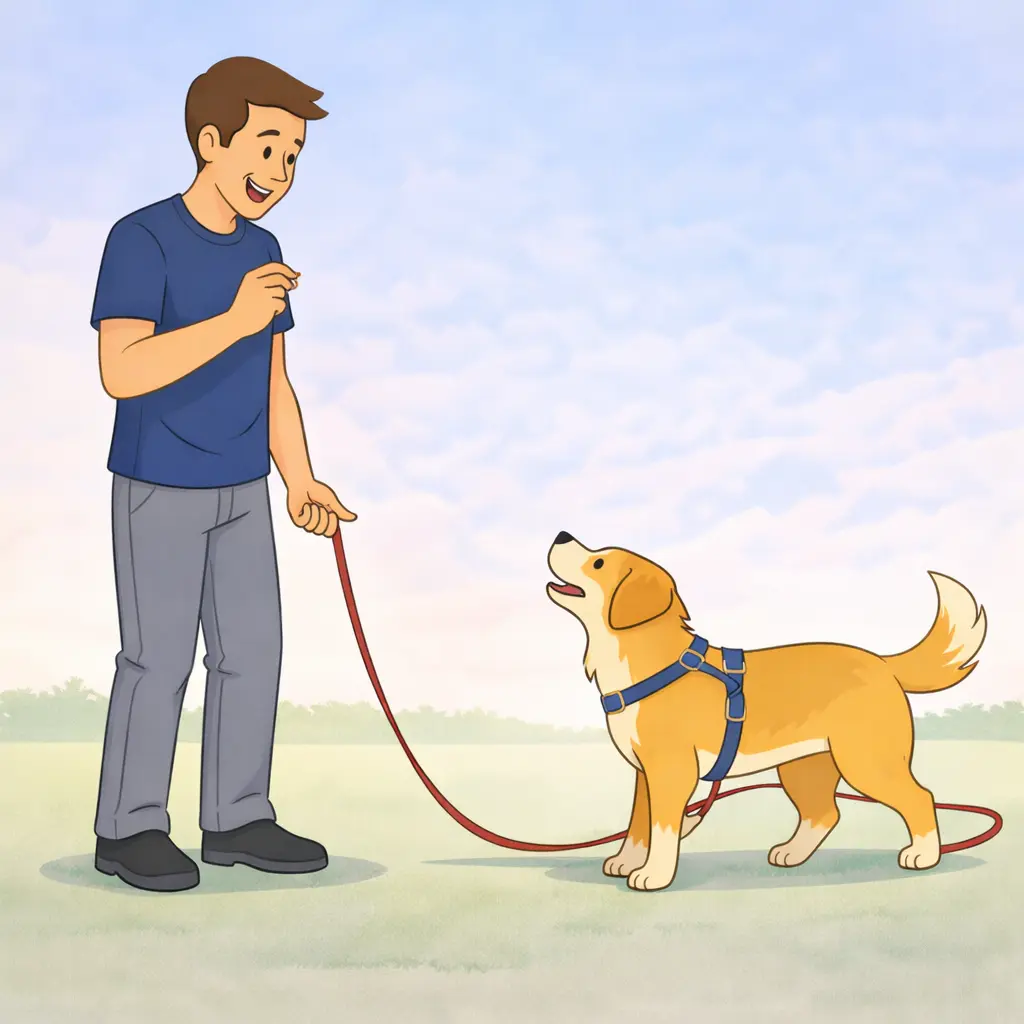
Clip a 15-30 foot long line to their harness (not collar). Let them sniff and explore in your yard or a quiet field. When they're mildly distracted, call them. If they come. Big party. If they don't, gently guide them in with the line. Never yank.
Practice with more distractions
Gradually practice near other dogs (at a distance first), near food on the ground, near squirrels. Each new distraction is a new challenge. Go back to higher value rewards when the distraction level increases.
Add a "check-in" game for off-leash prep
During long line walks, randomly reward your dog any time they look at you voluntarily. This builds a habit of checking in. Which makes recall way easier because they're already paying attention.
Recommended Practice
5-10 minutes, 2-3 times daily. Indoor basics take about 1 week. Yard recall takes another 1-2 weeks. Reliable outdoor recall in moderate distractions takes 1-3 months of consistent practice. Don't rush this one.
Common Mistakes
Calling "come" and then doing something the dog hates (leaving the park, bath time)
The #1 recall killer. If you need to end the fun, go get them. Only call them for good things. The word "come" must ALWAYS equal positive outcomes.
Chasing your dog when they don't come
Chasing teaches them that running away starts a fun game. Instead, run the OTHER direction. Most dogs will chase you. When they catch up, reward big.
Using an angry or frustrated tone
If your dog takes 30 seconds to come, reward them anyway. They don't understand "you took too long." They only understand "I came and got yelled at. Not doing that again."
Practicing recall only at the dog park
That's like learning to drive on a highway. Start at home, then the yard, then quiet streets, then a park with dogs far away, THEN a busy dog park.
Troubleshooting
"My dog looks at me but doesn't come"
Your treats aren't good enough for the distraction level. Upgrade to real meat, cheese, or something truly irresistible. Also try running backward while calling. Movement triggers chase instinct.
"They come inside but not outside"
The outdoors is a completely different environment with thousands of new smells competing for attention. Go back to basics outside. Short distances, really good rewards, long line for safety. Don't rush off-leash freedom.
"My rescue flinches or cowers when I call"
Their previous owner may have used "come" punitively. Start fresh with a completely new recall word. Try "here," "with me," or a whistle. Build only positive associations with the new word. Be patient. This takes time but it works.
Pro Tips
Use a unique recall word you'll ONLY use for this purpose. Many trainers use a whistle because it's consistent and carries further than voice.
Practice the big reward at home for a week before adding any difficulty. The foundation matters more than the progression speed.
If your dog has zero recall, don't let them off-leash. Use a long line for months if needed. It's boring but it's safe.
Play "recall ping-pong" with a partner: two people at opposite ends of a hallway, taking turns calling the dog back and forth. Dogs love this game.
📍 Calgary Training Tip
Sue Higgins Park (Southland Dog Park) has fenced sections that are great for long-line recall practice. Nose Hill's wide open spaces work for advanced recall but start at quieter access points like the Berkshire Blvd entrance. In winter, use indoor hallways or a rented training facility. Calgary Pet Training Centre offers space rentals.