Pulling on the leash is the number one complaint from dog owners. Walks become a battle, your shoulder aches, and eventually you stop enjoying them altogether. Heel fixes that. It teaches your dog to walk beside you calmly. Not because they're being controlled, but because staying close to you is more rewarding than lunging ahead.
Why This Command Matters
A dog that pulls is a dog that's hard to walk, hard to control near traffic, and hard to enjoy. Leash pulling also puts stress on their neck and trachea (if using a collar) and makes reactive behavior worse. Good leash manners mean more walks, more adventures, and more freedom for both of you.
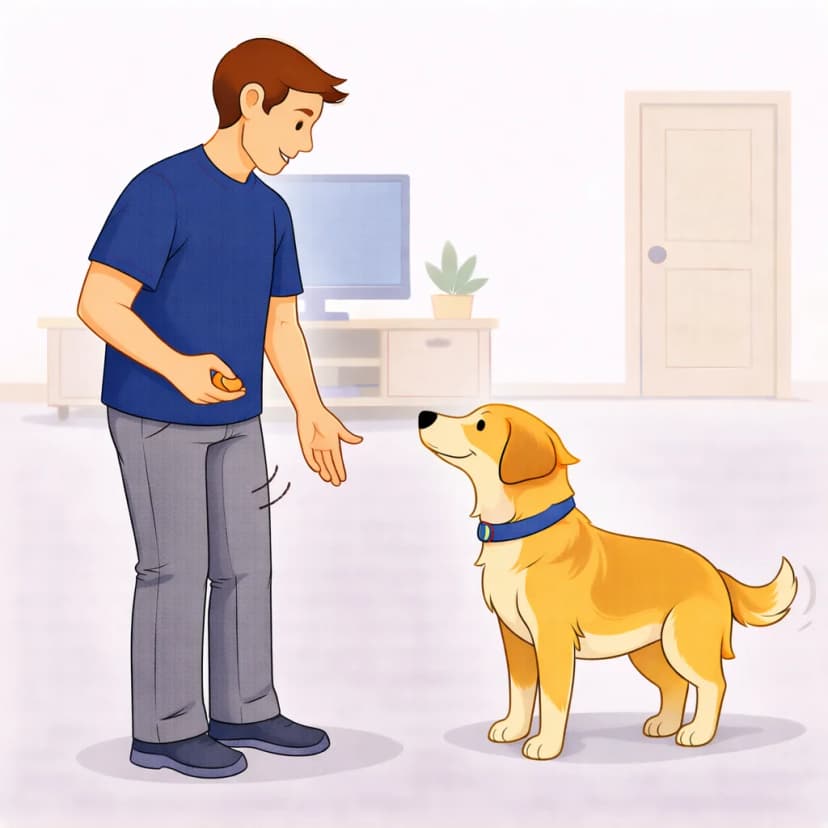
Hand Signal
Pat your left thigh twice. This tells the dog "come to my side." Over time, they'll default to walking at your left hip.
Step-by-Step Instructions
Start indoors with treats at your left hip
Hold treats in your left hand at your hip. Guide your dog with a treat to your left side. The moment they're in position, give them a treat. Take one step, reward again if they stay with you. Then two steps.
Build up to 5-10 steps between treats
Gradually increase the number of steps between rewards. Two steps, treat. Three steps, treat. Five steps, treat. If they drift away, guide them back with a treat and shorten the interval.
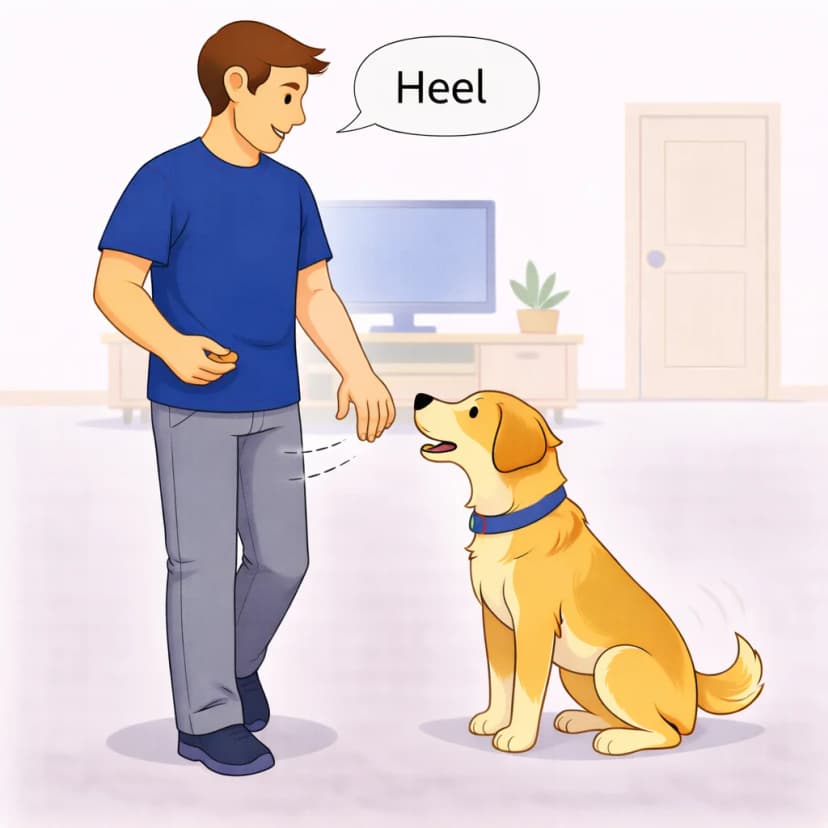
Add the command "Heel"
Once they're walking beside you reliably indoors, add the word. Say "Heel," pat your thigh, start walking. Reward them for staying in position. Keep sessions short. About 2 to 3 minutes of focused heeling is plenty.
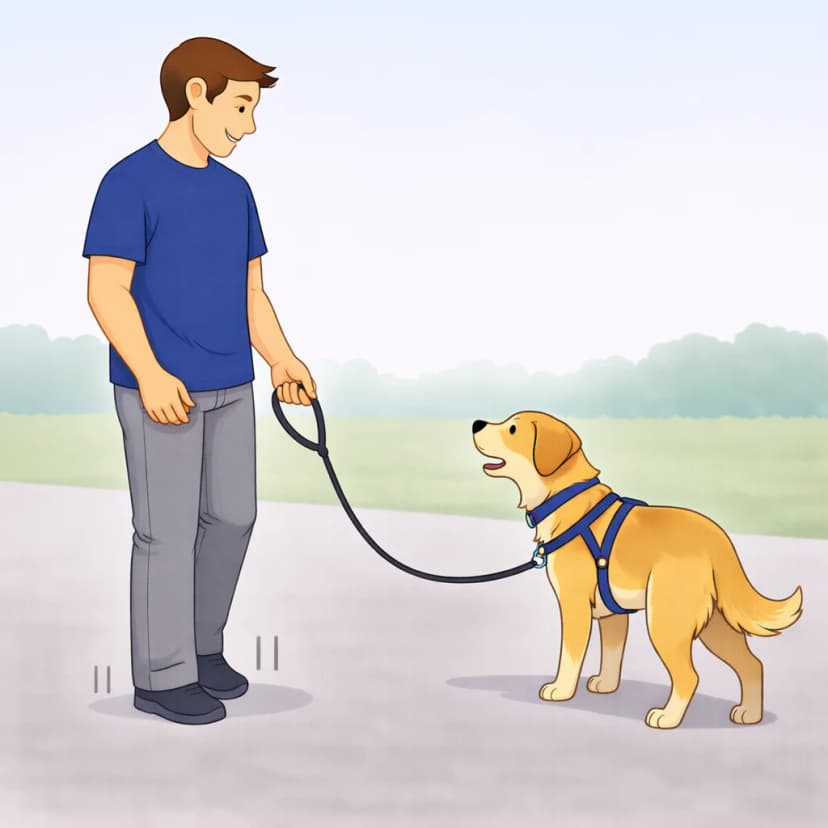
Practice the "penalty" for pulling
Outside, when your dog pulls, stop completely. Become a tree. Wait until the leash goes slack or they look at you, reward them and move forward. Pulling = we stop. Loose leash = we go. Be consistent every single time.
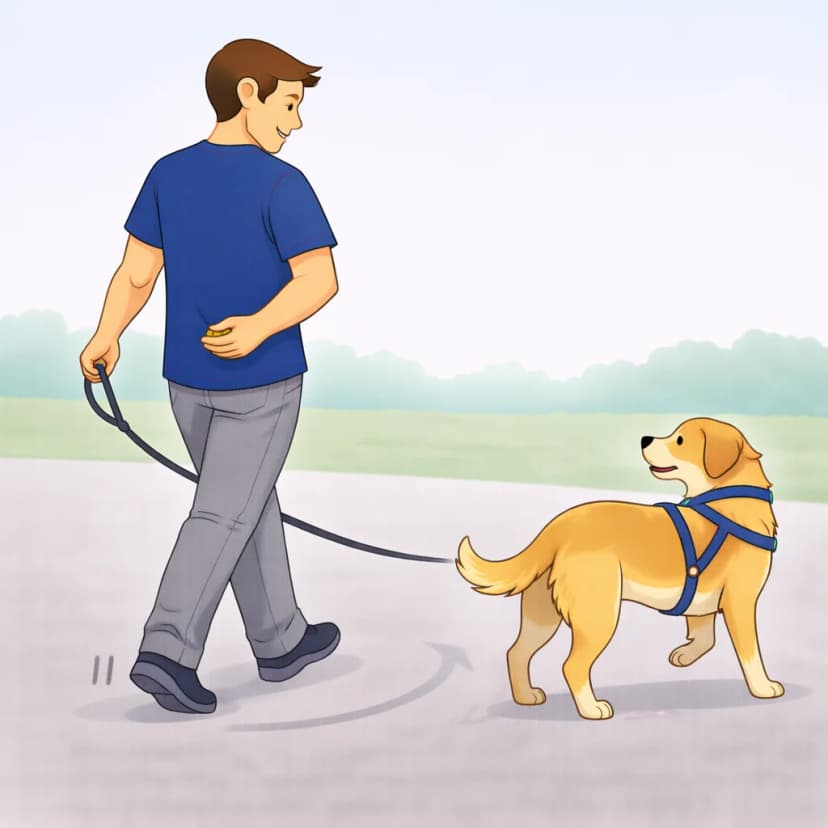
Use direction changes
When your dog forges ahead, turn and walk the opposite direction without warning. They'll hit the end of the leash and have to catch up to your new direction. When they reach your side. Treat. This teaches them to pay attention to where YOU'RE going.
Gradually reduce the treat frequency
Over weeks, space out rewards. Instead of every 5 steps, treat every 10, then every 20. Mix in verbal praise. Eventually a calm walk itself becomes the reward. But this takes time.
Recommended Practice
Two dedicated 10-minute heel sessions daily, plus consistent rules during all regular walks. Indoor basics take about 1 week. Outdoor walking without constant pulling takes 3-6 weeks. True off-leash heel takes months.
Common Mistakes
Jerking the leash when the dog pulls
Leash yanking creates anxiety and can damage the trachea. Just stop moving. The loss of forward progress is the consequence. No yanking needed.
Using a retractable leash for heel training
Retractable leashes teach pulling. The dog learns that pulling extends the leash. Use a standard 6-foot flat leash and a front-clip harness.
Only practicing heel and never allowing sniff time
Dogs need to sniff. It's their primary way of experiencing the world. Alternate between "heel" segments (structured walking) and "go sniff" segments (freedom on a loose leash). Both are important.
Troubleshooting
"My dog pulls so hard I can't even stop"
Get a front-clip harness (like the Freedom or Balance harness). It redirects their momentum sideways instead of forward. This gives you mechanical advantage while you train. A harness is a management tool, not a replacement for training. But it makes training possible.
"They heel perfectly with treats but ignore me without them"
You faded the treats too fast. Go back to treating frequently and reduce more slowly. Also make sure you're using real-life rewards. Heeling earns the right to go sniff, to greet another dog, to enter the park. The treat isn't the only reward.
"My dog lunges at other dogs on leash"
That's leash reactivity, not a heel problem. Heel training helps manage it, but reactivity needs separate training. Keep distance from triggers, reward calm behavior, and consider working with a trainer who specializes in dogs that overreact on leash.
Pro Tips
A front-clip harness is your best friend during training. It doesn't fix the problem but it makes walks manageable while you work on it.
Teach a "let's go" command for casual walking and "heel" for formal close walking. You don't need military precision on every walk.
Sniff walks are training too. Let your dog lead sometimes. It's mentally exhausting for them, which means calmer behavior at home.
Consistency is everything. If one family member lets the dog pull, the training breaks down. Everyone needs to follow the same rules.
📍 Calgary Training Tip
Start heel practice on quiet residential streets before hitting busy pathways. The Glenmore Reservoir pathway has long straight sections that are great for building heel duration. In winter, packed snow actually slows dogs down a bit. Use it to your advantage. Avoid Stephen Avenue and busy downtown sidewalks until your heel is solid.