Name recognition is the first thing to teach any new dog. Especially rescues who may have never had a consistent name, or whose old name carries negative associations. This isn't about obedience. It's about building a connection. When your dog hears their name and looks at you, that's the foundation for everything else.
Why This Command Matters
Every other command depends on your dog paying attention to you first. Without reliable name recognition, "sit," "come," and "stay" are just noise. For rescue dogs especially, learning a new name in a safe environment is a powerful bonding experience. It tells them: someone is paying attention to me.
Hand Signal
No formal hand signal needed. Simply say the name in a warm, upbeat tone. Some trainers point briefly to their own eyes to encourage eye contact.
Step-by-Step Instructions
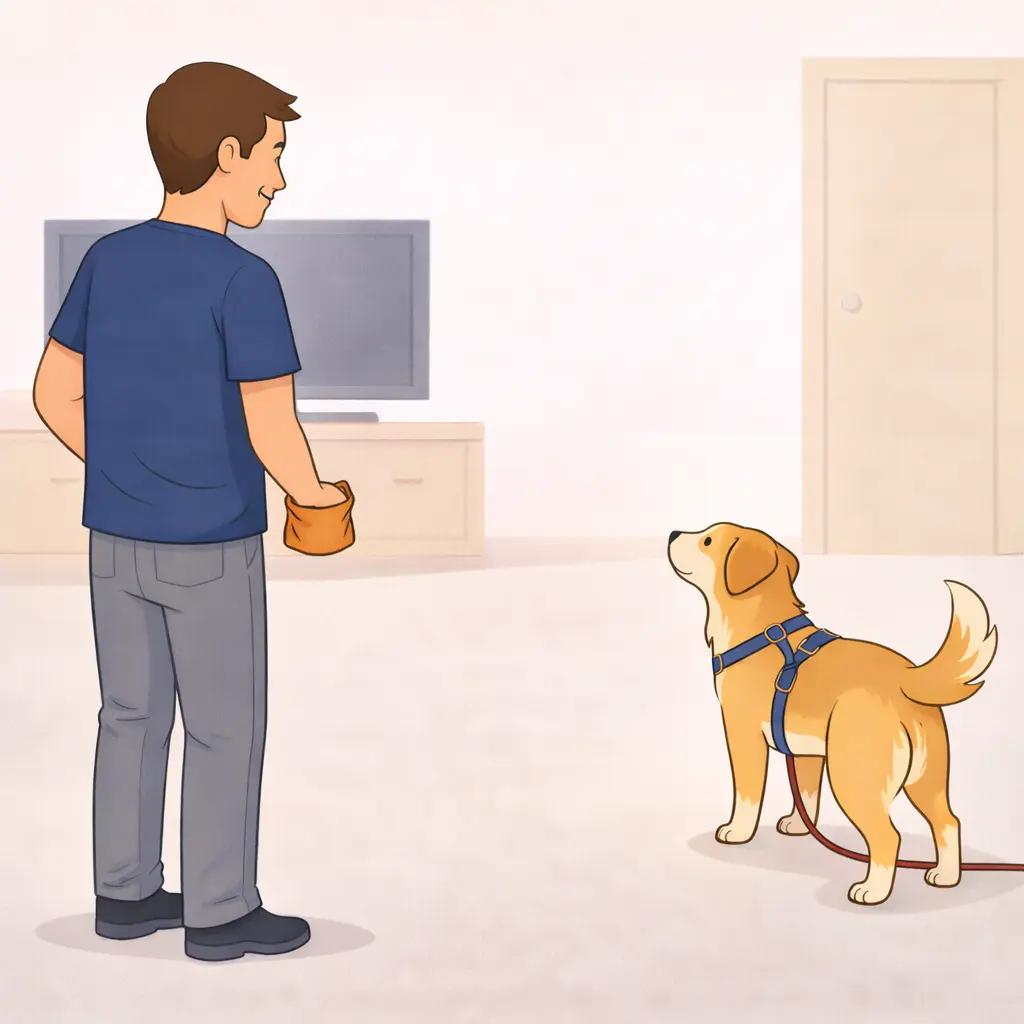
Start in a quiet room with really good treats
Remove distractions. Turn off the TV, other pets in another room. Have 10-15 small, soft treats ready (cheese, hot dog bits, or commercial training treats). Stand or sit a few feet from your dog.
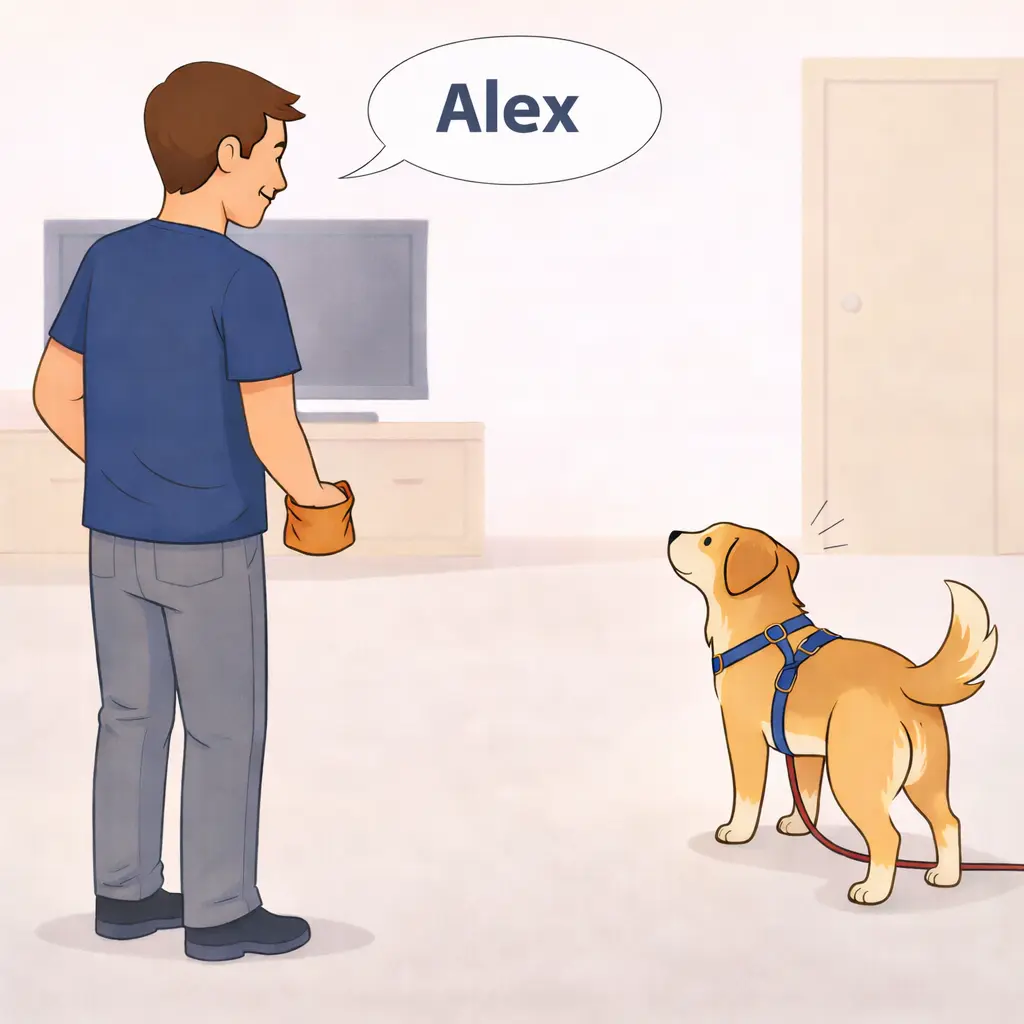
Say their name ONCE in a happy voice
Say their name clearly and cheerfully. Just once. Don't repeat it. Wait. Your dog might ignore you at first. That's normal.
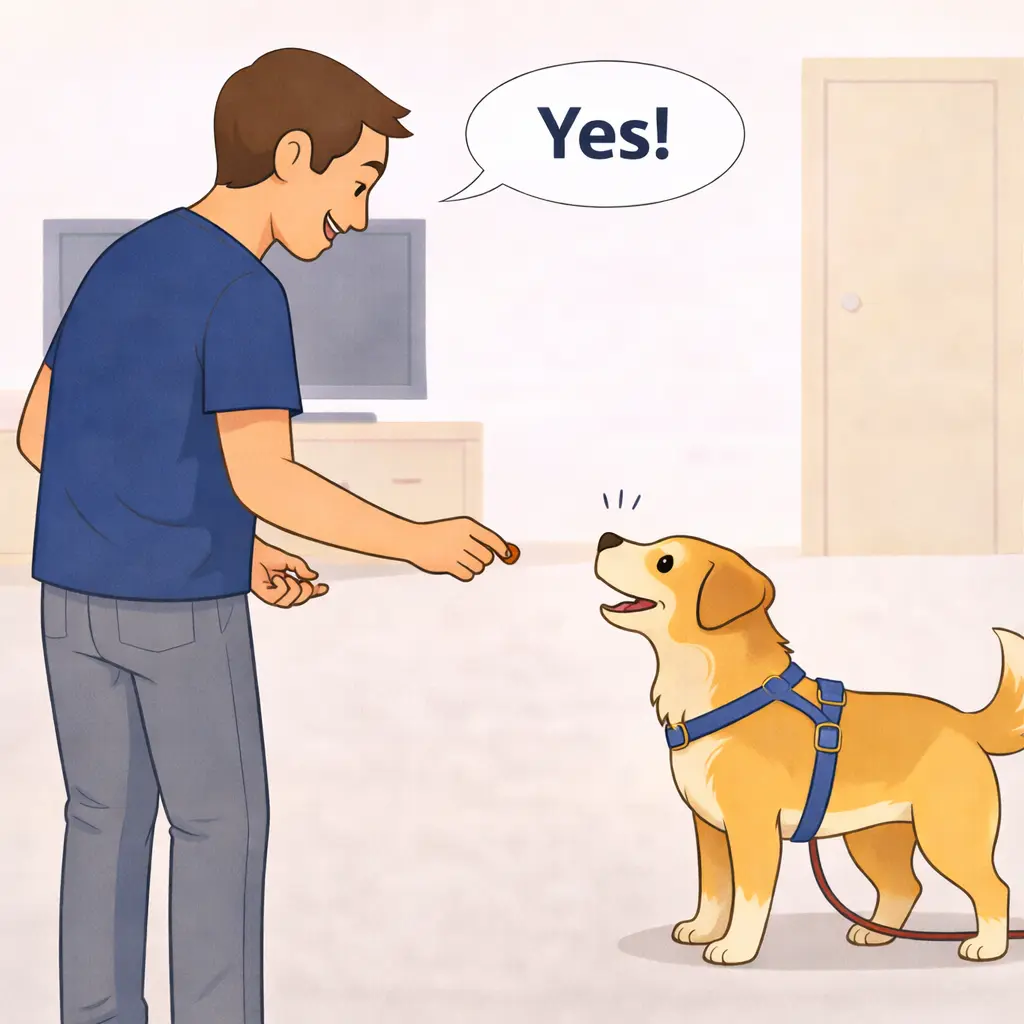
When they look at you, reward immediately
The moment they look at you, even a glance, give them a treat right away. The timing matters. You want them to connect "I heard my name, I looked, and something great happened."
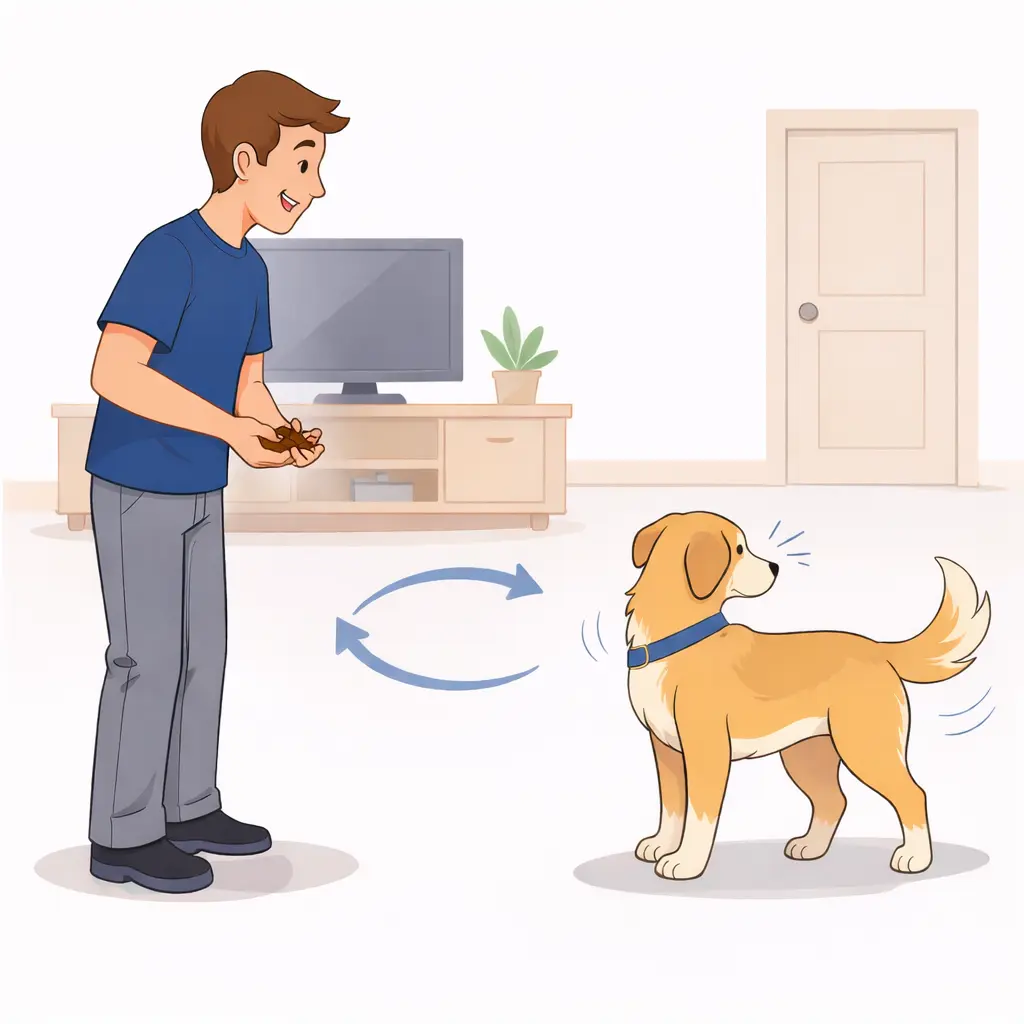
Repeat 5-10 times per session
Wait for your dog to look away, then say the name again. Reward them each time they look. Keep sessions short. About 2 to 3 minutes max. End while it's still fun.
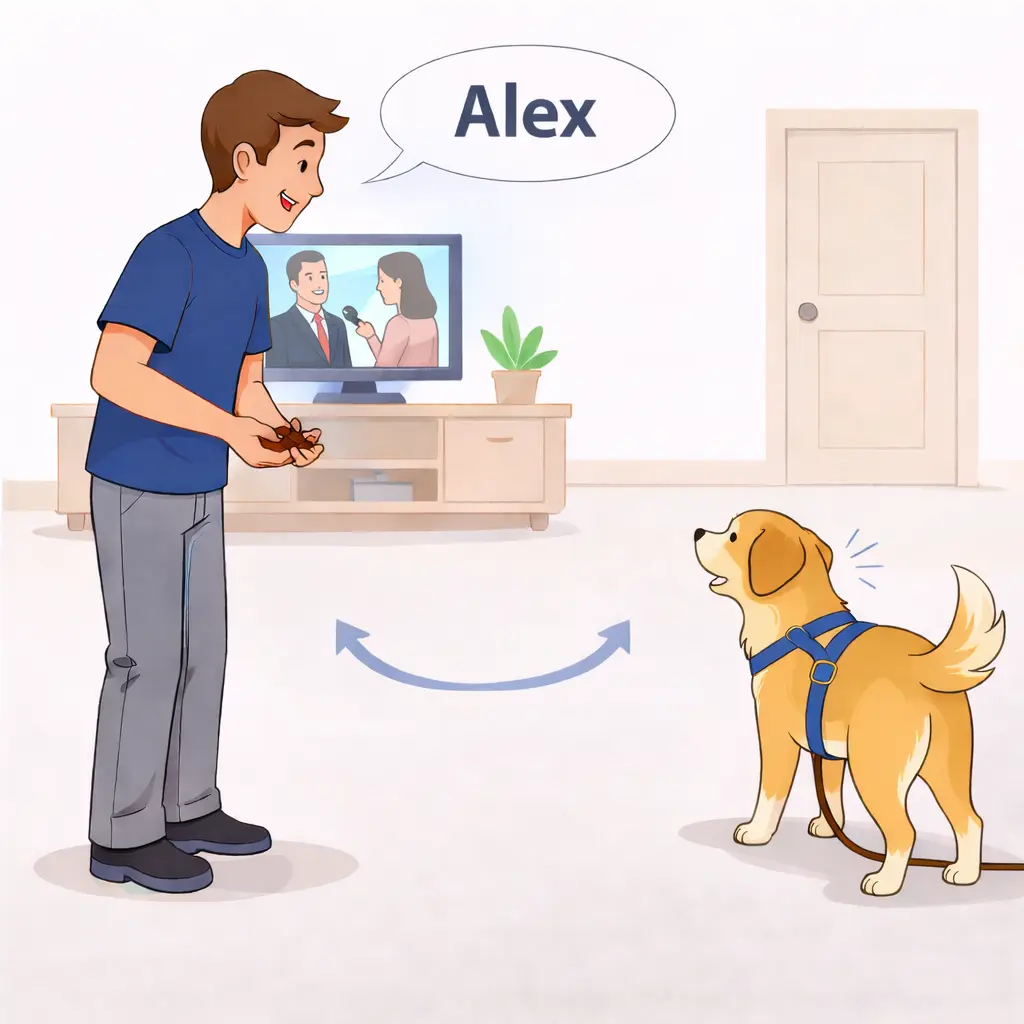
Gradually add mild distractions
Once they're nailing it in a quiet room (3-5 days), try it in the kitchen, hallway, or backyard. Then with the TV on. Then with another person nearby. Build up slowly.
Practice during daily life
Start saying their name before good things happen, like before meals, before walks, before play. This builds a powerful positive association: my name = something great is coming.
Recommended Practice
3-5 short sessions per day (2-3 minutes each) for the first week. Then 2-3 sessions daily for week two. Most dogs respond reliably within 7-14 days.
Common Mistakes
Repeating the name over and over ("Buddy! Buddy! BUDDY!")
Say it once and wait. Repeating teaches them to tune it out. One clear call, then reward the response.
Using the name for scolding ("Buddy, NO!")
Never pair the name with anything negative. The name should only mean good things. Use a neutral "ah-ah" when you need to redirect them.
Expecting immediate perfection with a rescue dog
Rescue dogs may have name baggage or may have never had one. Give them 1-2 weeks of consistent positive exposure. It'll click.
Troubleshooting
"My dog doesn't look at me at all"
Try making a kissy noise after saying the name. When they look, reward. Gradually phase out the extra noise over a few days. Also make sure your treats are good enough. Plain kibble won't cut it for this.
"They respond at home but not outside"
Outside is a whole different world of smells and stimuli. Start in your yard before trying a park. Use extra-special treats outdoors (real chicken, cheese). You're competing with squirrels. Bring your A-game.
"I just adopted and want to change their name"
Totally fine! Dogs don't have identity attached to names like humans do. They learn "when I hear this sound, good things happen." A new name with positive associations can actually help a rescue start fresh.
Pro Tips
Use their name before every meal for the first month. Free training reps every day.
Keep a treat pouch on you around the house during the first week. Reward random check-ins.
If your dog has a hard name to hear (ends in a vowel is best), consider a nickname for training.
Eye contact is the real goal. The name is just the command that triggers it.
📍 Calgary Training Tip
Start outdoor name practice in your backyard or a quiet side street before hitting busier spots. The Bow River pathway near Edworthy Park has some quieter stretches that work well for early distraction training.