The dog you adopt today is not the dog you'll have at month 6
Calgary rescue foster moms emphasize this constantly. Trauma-history GSDs need 3–6 months minimum to fully decompress + reveal real personality. Severe cases sometimes need 12–24 months. Patience + force-free training + predictable routine + Calgary professional support = magnificent rescue partnership. The first month is just the beginning of the journey.
The 333 rule for rescue GSDs
Canonical rescue dog community wisdom for adoption decompression timeline.
First 3 days — decompression: dog overwhelmed, sometimes shut down, sometimes hyper-vigilant. May not eat much, may sleep excessively, may seem “too good.” Real personality NOT showing yet.
First 3 weeks — learning routine: dog starts to settle, learns household schedule, may show some real personality, sometimes regression as “real” behaviours emerge.
First 3 months — feeling at home: real personality fully emerges. Bond deepens. True adjustment achieved.
Why it matters: many adopters expect immediate bonding + good behaviour. Reality is gradual adjustment. Premature judgments lead to returns. Patience essential.
Calgary GSD trauma history extension: some Calgary rescue GSDs need 6–12 months to fully decompress + bond. Severe trauma cases sometimes need years + ongoing support.
First 3 days protocol
- Quiet home, minimal visitors
- Established crate/safe space
- Predictable schedule
- Don't force interaction
- Let dog approach you
- NO baths, vet visits (unless emergency), grooming, training sessions
- Calm energy throughout home
- Limit family meetings (kids, partner, extended family) to brief calm encounters
- Do NOT introduce other pets yet
- Provide high-value food + water + comfortable bedding
How to build trust with an abused rescue GSD
Principles:
- Let the dog set the pace — never force interaction
- Predictability builds trust — same routine, same person feeding, same time
- Choice empowers fearful dogs — offer multiple options when possible
- Distance matters — respect dog's threshold
- Time is non-negotiable — trust isn't earned in days or weeks
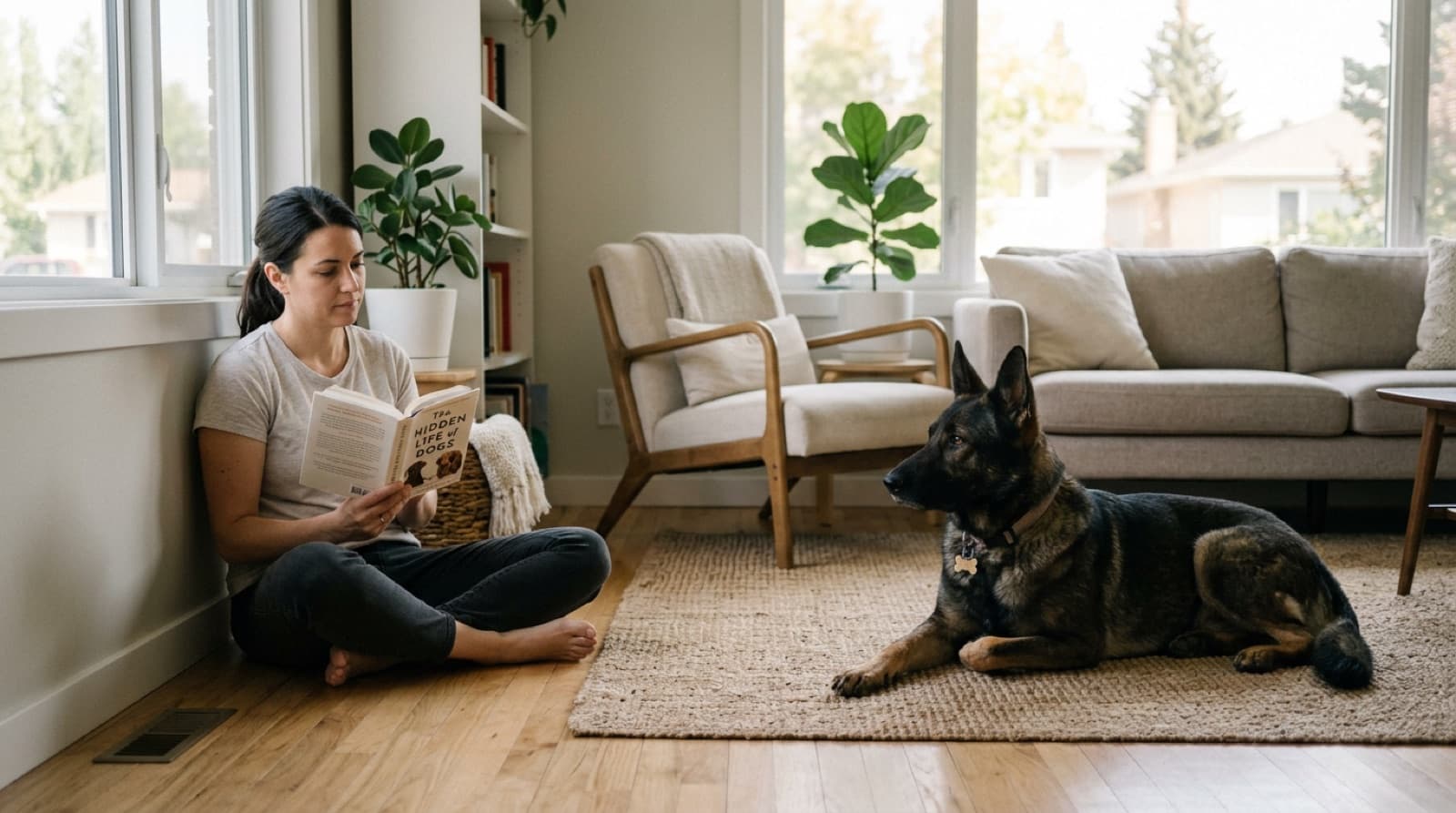
Early weeks protocol: sit on floor at distance, ignore dog, read book. Drop treats periodically without acknowledging. Speak quietly when needed. Avoid direct eye contact + reaching for dog. Avoid hugging + face-touching. Let dog approach + sniff freely. Walks with calm consistent route.
Eating together: feed in safe space initially. Don't hover during meals. Slowly transition to feeding with you in room. Sometimes hand-feeding builds bond (only if comfortable).
Handling: touch only when invited. Start with chest/chin, NOT head/back. Short sessions, end on positive note. Watch body language carefully. Build cooperative care for grooming/vet (cooperative care training).
What builds trust fastest: predictable routine, high-value food without pressure, quiet calm environment, patience over time, force-free training, respect for boundaries, family consistency.
What NOT to do
These mistakes derail Calgary rescue GSD bonding + recovery. Avoid all of them.
Avoid flooding: don't introduce too much too fast. Don't invite friends/family to meet immediately. Don't take to crowded places early. Don't force socialization. Don't bath in first week. Don't take to vet first 3–7 days unless emergency.
Avoid aversive training: NO alpha rolls or dominance methods. NO yelling, hitting, throwing things. NO shock collars or aversive corrections. NO leash jerks/corrections. NO punishment-based methods. Aversive methods ELEVATE aggression in trauma cases. Force-free essential for fearful dogs.
Avoid forced handling: NO hugging or kissing. NO face-touching unless invited. NO direct prolonged eye contact early. NO grabbing collar without preparation. NO restraining for grooming/vet without cooperative care training. NO forcing into baths or unfamiliar spaces.
Avoid emotional projecting: don't assume dog needs constant affection. Don't over-comfort fearful behaviour (sometimes reinforces fear). Don't treat as victim — treat as autonomous being. Don't rush bonding timeline. Don't take rejection personally.
Avoid inconsistency: different family members different rules. Sometimes furniture allowed sometimes not. Variable schedule. Inconsistent training cues. Family alignment essential.
When to get a Calgary force-free trainer
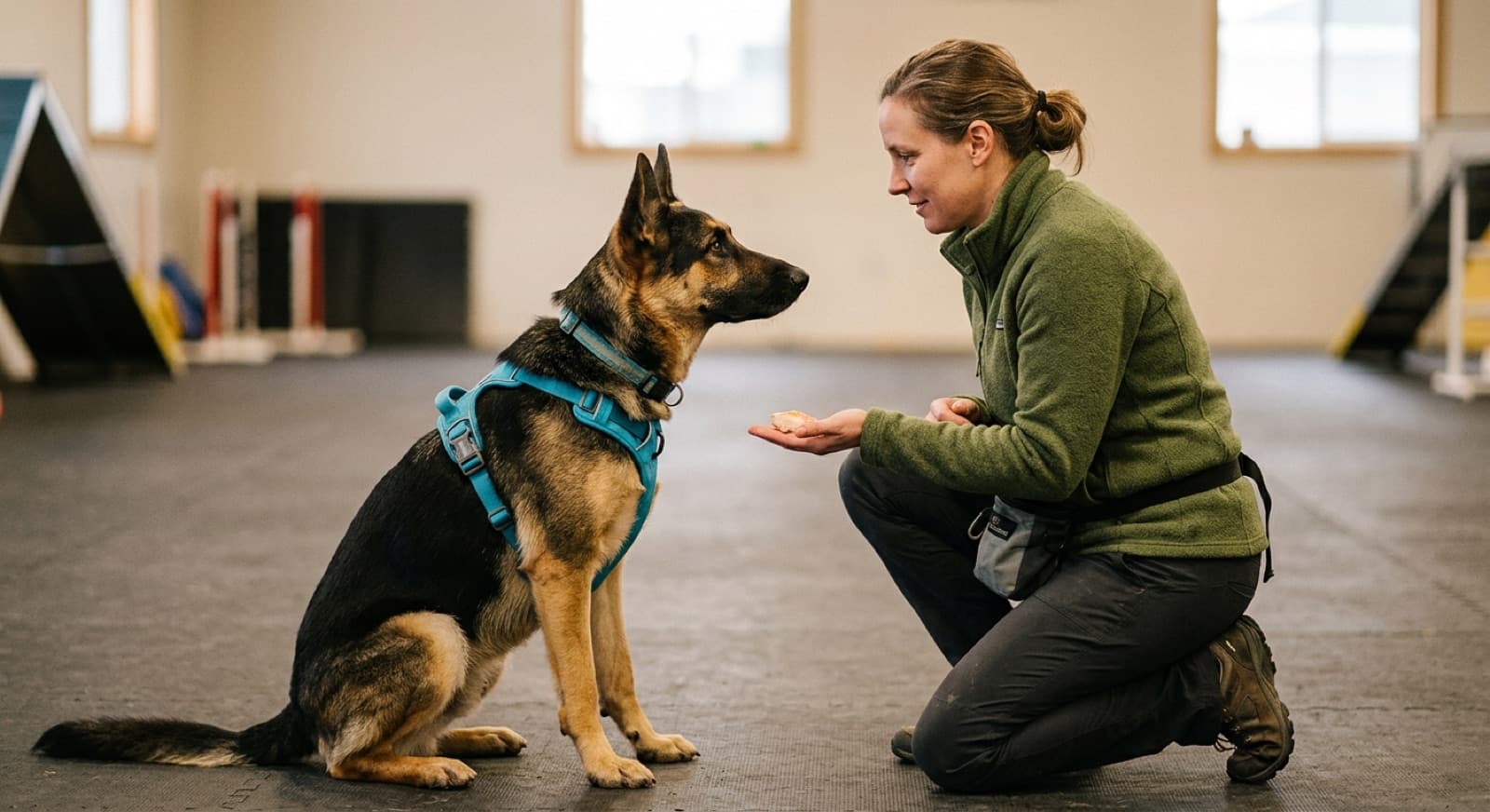
When to consult: immediately after adoption for proactive setup (sometimes), within first 3–4 weeks for foundation training, when concerning behaviours emerge (reactivity, fear, aggression), when severe trauma signs persist beyond 333 timeline, when family struggling with management, before introducing to other pets/kids.
Calgary force-free trainers for rescue GSDs:
- Raising Fido Calgary — reactive/anxiety specialty. EXCELLENT for trauma cases
- ImPAWSible Possible Calgary — fear-free certified
- Dogma Training Calgary — positive reinforcement
- Sit Happens Calgary — multiple locations
- Kindly K9 Calgary — boutique behavioural support
Certifications to look for: CCPDT (CPDT-KA, CBCC-KA), KPA (Karen Pryor Academy), IAABC (CDBC), Fear Free Certified, PMCT.
Red flags: recommends shock/prong collar, “alpha” or “dominance” language, promises rapid results, refuses to explain methodology, doesn't accommodate fearful dog, punishment-based corrections.
Investment: $80–$150/private session. Multi-session program $300–$2,000. Calgary veterinary behaviourist for severe cases (Dr. Karen van Haaften DVM Vancouver telehealth) $300–$500/session. Sometimes anti-anxiety medication helpful (fluoxetine, trazodone, sileo, clomipramine).
Adult vs puppy vs senior rescue GSD
Adult GSD adoption (3–7 years) pros: temperament KNOWN, past adolescent regression, sometimes house-trained already, energy level predictable, health status often known, often calmer + more grateful, sometimes less expensive ($300–$600), magnificent bond from adoption gratitude.
Adult GSD adoption cons: past trauma sometimes present, established habits sometimes need retraining, less time together (12–15 year lifespan), specific bonded preferences sometimes formed.
Puppy adoption pros: maximum time together, shape personality + training from start, often easier integration with kids/pets, no prior trauma typically.
Puppy adoption cons: personality unknown until adolescence, adolescent regression challenge (8–30 months), intense first year, higher initial costs, energy level intense, Calgary rescue puppy demand high (competitive applications).
Senior GSD adoption (8+ years) pros: calmest, most predictable temperament, often house-trained + well-mannered, less competitive applications, often deeply grateful + bonded, less exercise demand, magnificent 3–6 year companionship.
Senior GSD adoption cons: less time together (3–6 years typical), health concerns elevated, pet insurance challenging (pre-existing exclusions), sometimes mobility issues.
Calgary success patterns: adult adoption + force-free training + insurance + community support = highest first-time-GSD-owner success. Senior adoption for experienced owners seeking calm companion.
Senior rescue GSD — the underrated path
Why senior GSD adoption: calmest + most predictable temperament typically. Often house-trained + well-mannered. Foster evaluation comprehensive. Less competitive applications — often available. Often deeply grateful + bonded post-adoption. Less exercise demand. Magnificent 3–6 year companionship.
Senior GSD adoption reality: less time together (3–6 years typical). Health concerns elevated (DM, hip dysplasia, allergies). Pet insurance challenging (pre-existing exclusions). Sometimes mobility issues. End-of-life considerations + emotional preparation.
Calgary senior GSD adoption paths: Calgary Humane Society sometimes has seniors. AARCS, BARCS, Cochrane Humane sometimes. Calgary Animal Services. Pawsitive Match foster network. Thulani Senior GSD Rescue (US-based, sometimes Alberta-shipped) — specialty senior GSD rescue widely praised in the GSD community.
Senior GSD environment: single-floor preferred, soft bedding, easy access to water/food, calm household, predictable routine, sometimes traction rugs for hardwood.
Emotional framework: senior adoption = giving wonderful dog calm dignified final years. Bond with senior often profound + immediate. End-of-life journey emotionally challenging but meaningful. Many adopters become repeat senior adopters.
Bottom line: rescue GSD trauma case Calgary
Successful if: patience for 333-rule timeline (sometimes extended), force-free training commitment $200–$2,000 first year, pet insurance enrollment immediate, Calgary veterinary baseline + emergency fund $5K–$10K, family commitment to predictable routine + boundaries, Calgary force-free trainer relationship, emotional preparation for slow trust building, foster temperament evaluation + history known, long-term mindset.
Wrong if: refusing force-free methodology, aversive training tendency, impatient with slow progress, tight budget for $20K–$40K+ lifetime reality, severely reactive dog + family with young kids + working full-time.
Calgary rescue GSD trauma rewards: extraordinary loyalty post-trust, profound bond from adoption gratitude, magnificent 10–15 year partnership, family integration into Calgary GSD community, personal growth from compassionate adoption journey.
Key message: rescue GSD trauma adoption is committed journey but extraordinarily rewarding. Patience + force-free + Calgary professional support + community + financial preparation = magnificent rescue partnership. Many Calgary GSD adopters describe rescue trauma case as “most meaningful relationship of their lives.”
Browse adoptable German Shepherds in Calgary
Foster-evaluated rescue GSDs from 13+ Calgary rescues, including dogs with detailed temperament + history notes. Adult adoption + foster network = highest first-time + trauma-recovery success. Updated regularly.
See Available GSDs →Frequently Asked Questions
What is the 333 rule?
3 days decompress (dog overwhelmed, real personality not showing), 3 weeks learn routine (settle, real behaviours emerge), 3 months feel at home (real personality, bond deepens). GSD trauma history may extend timeline 6–12 months or more.
How to build trust with abused rescue GSD?
Let dog set pace, predictable routine, choice empowers fearful dogs, respect distance, time is non-negotiable. Sit at distance ignoring dog, drop treats, avoid direct eye contact + reaching, no hugging, let dog approach. Calgary force-free trainer essential.
What NOT to do with rescue GSD?
Avoid flooding (visitors, baths, vet, grooming early), aversive training (alpha rolls, shock collars, dominance), forced handling (hugging, face-touching, eye contact), emotional projecting (constant affection, over-comforting), inconsistency (variable rules across family).
When to get Calgary force-free trainer?
Within 3–4 weeks for foundation, when concerning behaviours emerge, when trauma signs persist beyond 333 timeline. Calgary trainers: Raising Fido (reactive specialty), ImPAWSible Possible, Dogma, Sit Happens, Kindly K9. $80–$150/session. Avoid aversive trainers.
Adult vs puppy adoption?
Adult: temperament known, past adolescent regression, often calmer + grateful, $300–$600. Puppy: max time together but personality unknown, adolescent regression 8–30 months, intense first year, competitive Calgary applications. Adult adoption often optimal first-time path.
Senior rescue GSD adoption Calgary?
Underrated path. Calmest + most predictable temperament. Often house-trained + grateful + magnificent 3–6 year companionship. Calgary paths: CHS, AARCS, BARCS, Cochrane Humane, Calgary Animal Services, Pawsitive Match, Thulani Senior GSD Rescue.
Decompression timeline for trauma rescue?
First 24-48 hours: overwhelmed. Days 3–7: beginning to learn home. Weeks 2–3: real personality emerging, sometimes “regression.” Months 3–6: real adjustment + bonding. Severe trauma: 12–24 months for full adjustment. Calgary vet behaviourist if needed.
Calgary rescue GSD with kids?
Foster temperament evaluation + kid-tested history essential. First week minimal interaction. Weeks 2–3 brief calm interactions. Months 3+ integrated supervised. NEVER unsupervised first 3–6 months. Force-free trainer for family integration. Foster-evaluated kid-friendly history critical.
Cost preparation for trauma case?
Adoption $300–$700. Initial setup $500–$1,500. Force-free trainer first year $200–$2,000. Annual care $2,000–$5,000. Lifetime $20K–$40K+ medical. Emergency fund $5K–$10K. Pet insurance immediate. Calgary veterinary baseline essential.
Bottom line: rescue GSD trauma case?
Successful: patience + force-free + insurance + emergency fund + Calgary trainer + emotional preparation + foster evaluation + long-term mindset. Wrong: aversive training, impatience, tight budget. Reward: extraordinary loyalty + magnificent 10–15 year partnership.
Adoptable German Shepherds in Calgary
Live listings of GSDs from 13+ Calgary rescues.
Got Denied Adopting a GSD?
Why rescues deny + how to strengthen application + alternative paths.
First Week with a Rescue Dog
Day-by-day guide to the decompression period for any breed.
The 3-3-3 Rule Explained
Generic 3-3-3 rule for any rescue dog adoption.
New dog? Start with these care guides
Everything a new adopter needs to set up a safe, happy home.