The Rottweiler-specific tradeoff
Most breeds: rescue saves money and a life; breeder buys known pedigree. For Rottweilers, the calculation is more experience-dependent than most breeds. The community leans more toward breeders for FIRST-TIME owners than they do for Boxer, GSD, or Lab, because a 100-lb under-socialised Rottweiler is a much higher-stakes proposition than a similarly under-socialised smaller breed. Experienced large-breed owners often thrive with adult rescue Rotties. Foster-to-adopt is the bridge for committed first-time owners who want the rescue path. Both paths legitimate; the wrong path is backyard breeder.
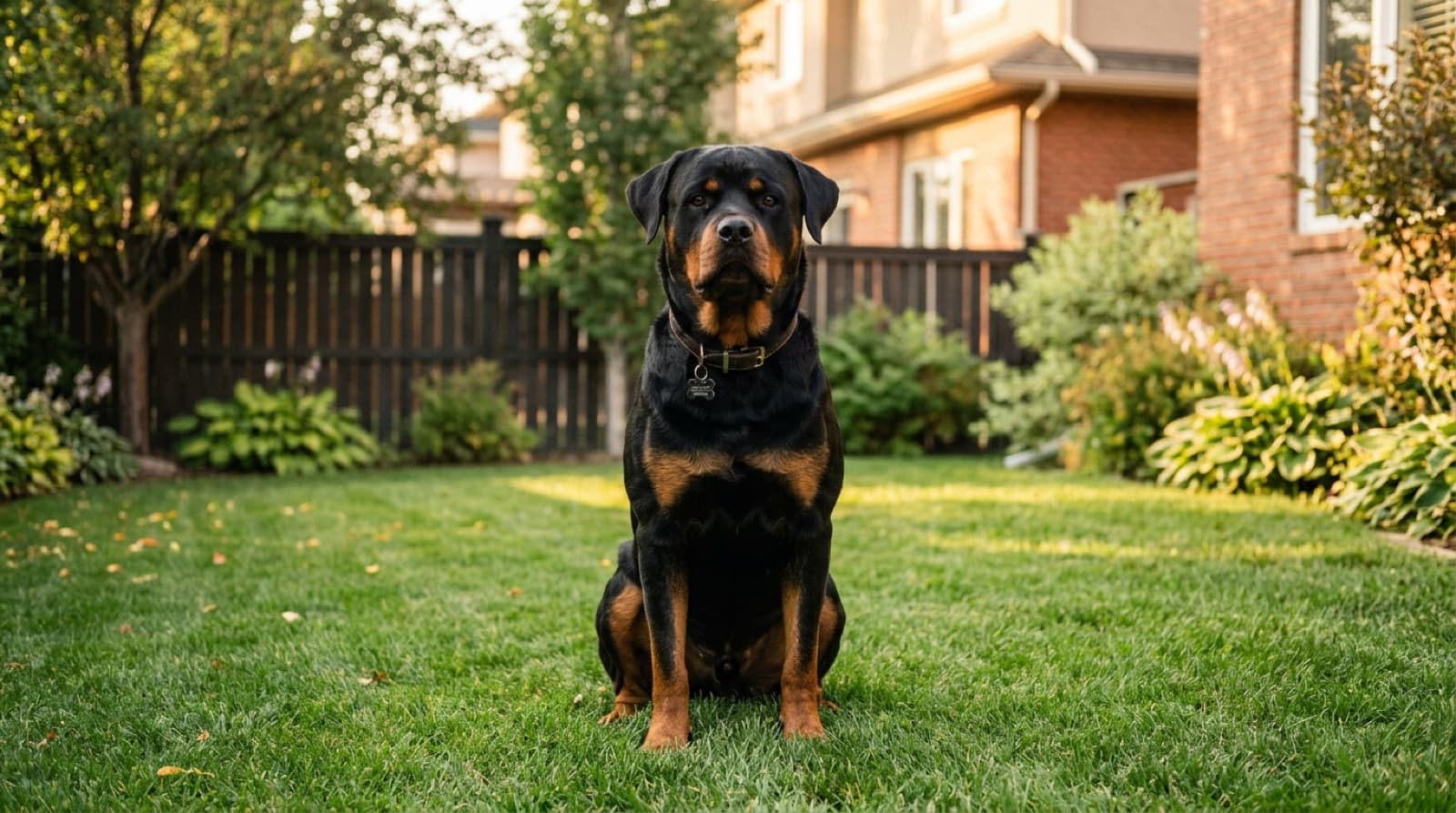
The cost comparison
Upfront cost:
- Rescue adoption: $300-$700 (Calgary Humane $135-$400, AARCS/BARCS/Pawsitive Match $400-$700)
- CKC-registered breeder: $2,500-$5,500 (Rottweiler Club of Canada verified)
- German import (ADRK pedigree): $4,000-$7,000+
- Working line: $2,800-$5,000
- Backyard breeder: $1,000-$2,000 (red flag, compounds breed health and reputation crisis)
Annual care (same regardless of source): nutrition $80-$120/month, pet insurance $80-$200/month, vet wellness $400-$800/year, joint supplements $50-$100/month, force-free trainer $200-$1,500 first year. Annual baseline $2,500-$5,000.
Lifetime medical reality: $25K-$50K typical for a healthy Rottweiler over 8-10 years. $40K-$80K with major medical events (osteosarcoma chemo $8.5K-$14K, lymphoma chemo $7K-$12K, hip dysplasia surgery $5K-$15K, CCL repair $4K-$7K per knee, bloat surgery $5K-$10K). Pet insurance is essential; enrol BEFORE diagnosis.
Calgary specialty vet care for Rottweiler health concerns: work with a Calgary specialty and emergency clinic experienced in oncology, cardiology, and large-breed orthopaedics. Your primary vet can refer to the appropriate specialist for cancer treatment, echocardiogram screening, or orthopaedic surgery.
Why the Rottweiler community leans toward breeders
The Rottweiler community is more breeder-leaning for first-time owners than the Boxer or GSD communities. The reason is consequence: a 100-lb under-socialized Rottweiler is much higher-stakes than a similarly under-socialized smaller breed.
Several factors drive the community lean:
- Size + strength = consequence. Downside risk of unknown rescue temperament is higher
- Fear-reactive tendency in some lines. Rotties can shut down + fear-bite under stress. Without known parent temperament + early socialization protocols, this risk is uncertain in rescue
- Breeder mentorship value. Reputable Rottie breeders typically maintain a multi-year mentorship relationship, coaching through socialisation, training, and breed challenges. Hard to replicate via rescue
- BSL + insurance complications. Undisclosed bite history + insurance denial is a high-stakes combination for Rottweiler owners
- Health-tested lineage matters more. Cancer (osteosarcoma 10-15%) + cardiac concerns + JLPP DNA testing
This is NOT to say rescue Rotties are bad. Many adult rescue Rottweilers are wonderful, well-evaluated by foster homes, and perfect for the right adopter. The community lean reflects: rescue is harder for first-time Rottweiler owners than for first-time Boxer/Lab/Golden owners, and the consequence of mismatch is higher.
Foster-to-adopt is widely recommended as middle ground. Adult rescue + experienced adopter is the success path most often cited.
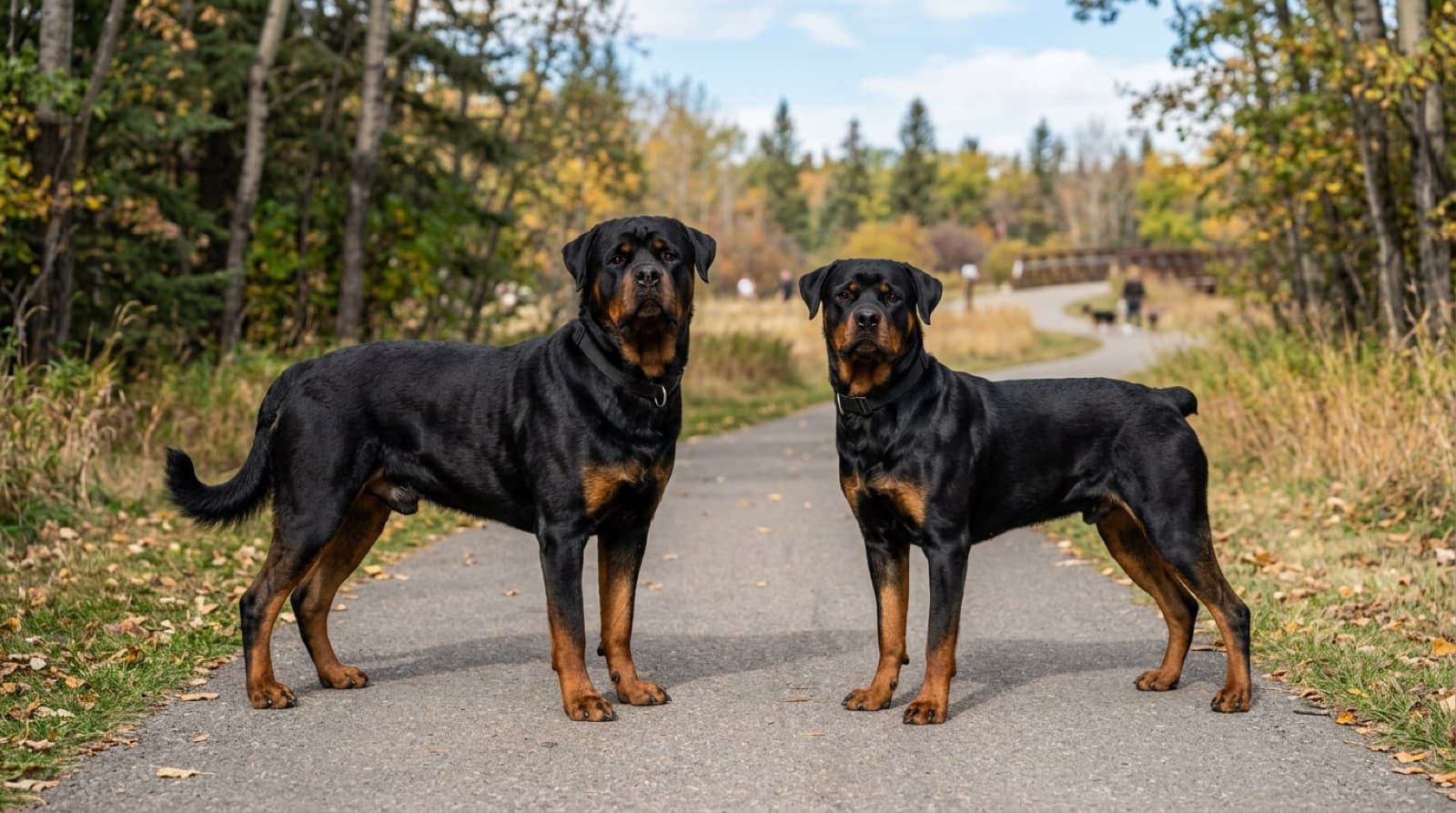
German vs American Rottweiler
German Rottweiler (ADRK-bred, often imported):
- Larger, blockier head + heavier bone
- ADRK (Allgemeiner Deutscher Rottweiler-Klub) has strict breeding requirements: health testing, temperament testing, working titles required
- Tail typically docked at birth (legal in Germany; verify Alberta tail-docking status)
- Often considered more “true to type” per breed standard
- Pricing $4,000-$7,000+ Calgary import puppy
- Verify ADRK pedigree
American Rottweiler (CKC/AKC bred):
- Slightly less extreme structure than German
- Tail status varies (Canada increasingly tail-intact)
- CKC + AKC standards similar but less rigorous breeding gatekeeping than ADRK
- Pricing $2,500-$5,500 Calgary
- Show line vs working line distinction within American breeding
Working line vs companion line (cuts across German/American):
- Working line: higher drive, sport-capable (IPO/IGP, Schutzhund, protection sport), more reactive temperament, NOT a family pet
- Companion/show line: calmer temperament, family-pet capable, better fit for first-time Rottweiler owners
Most Calgary family Rottweiler owners do best with companion-line American Rottweiler from a health-tested CKC breeder OR adult rescue Rottweiler with foster temperament evaluation.
Health testing: what reputable breeders document
Required documentation for reputable breeding parents:
- OFA hip + elbow clearances
- OFA cardiac clearance (echocardiogram by veterinary cardiologist)
- Eye CERF
- JLPP DNA test (Juvenile Laryngeal Paralysis and Polyneuropathy): Rottweiler-specific genetic test, both parents must be cleared
- Sometimes thyroid panel
- Working/conformation titles on parents
- Temperament test results on parents
What health testing reduces: hip + elbow dysplasia, cardiac disease (aortic stenosis), JLPP-affected puppies. What it doesn't reduce: osteosarcoma (10-15% breed-wide, no DNA test), lymphoma (no DNA test), bloat risk. Pet insurance essential regardless of source.
Red flags for breeders: no CKC/ADRK registration, “health checked” without specific OFA + cardiac + JLPP documentation, cash-only sales, multiple litters available simultaneously, “German Rottweiler” claims without ADRK pedigree, “King Rottweiler” or “Roman Rottweiler” marketing (oversized non-standard variations sometimes mixed-breed), sells under 8 weeks, no spay/neuter contract, refuses pedigree access, pressure tactics, no breeder mentorship offered.
Calgary Rottweiler-specific rescues
The Calgary Rottweiler rescue community is smaller + more cautious than Boxer/GSD rescue networks due to breed size + adoption risk.
Calgary/Alberta options: Calgary Humane Society, AARCS (foster-based), BARCS, Cochrane Humane, Pawsitive Match (foster network), Calgary Animal Services.
National/cross-provincial: Rottweiler Rescue Canada (verify current Alberta network), sometimes US Rottweiler rescues ship to Canada (long waitlists, transport coordination).
What to ask rescue before committing:
- Detailed foster temperament report
- Bite history: any incident with anyone, ever
- Stranger + visitor reaction
- Dog-dog reactivity history
- Kid tolerance history
- Resource guarding (food, toys, owner)
- Vet handling tolerance
- Crate behaviour
- Why dog was surrendered
- How long in foster + foster home composition
Red flags in rescue: vague temperament information, no foster placement (kennel-only evaluation insufficient for Rotties), pressure to adopt fast, refuses bite history disclosure, recommends Rottweiler for first-time owner without detailed match.
Mixed-line note: many Calgary “Rottweiler mix” listings are Rottie-Lab, Rottie-Pit, Rottie-Mastiff, Rottie-GSD crosses. Foster temperament evaluation matters more than purebred status. Sometimes mixed Rotties have lower drive than purebred + better fit for first-time Rottie-style owners.
When does buying make sense for Rottweilers?
For first-time Rottweiler owners, buying from a reputable breeder is often genuinely the right path, more so than for many breeds.
Buying makes sense if:
- First-time Rottweiler owner: breeder mentorship, structured socialisation, and known parent temperaments dramatically reduce adoption risk for the breed
- You specifically want a puppy AND no experienced adult Rottweiler in current Calgary rescues
- You want known-pedigree health testing (OFA hips/elbows, cardiac, JLPP DNA, eye CERF)
- You want specific lineage (German line for substantial body type, working line for sport, American show line for conformation)
- You want known parent temperaments + early socialization protocols
- You can budget $2,500-$5,500 puppy + $25K-$50K lifetime medical
- You're willing to wait 6-18 months on breeder waitlist
- You commit to spay/neuter contract + breeder mentorship relationship (typical 1+ year)
- BSL/insurance research COMPLETE before committing
Choose adoption instead if: experienced large-breed owner, adult dog acceptable, want to save a life directly, foster temperament evaluation valued, $300-$700 vs $2,500-$5,500 budget, willing to embrace some health-history uncertainty, comfortable with bite-history disclosure conversation.
Choose foster-to-adopt if: first-time owner who wants rescue path, willing to foster + build experience, want known temperament + saved life simultaneously.
Adult vs puppy adoption
Adult Rottweiler (3-7 years) adoption is often the right path for experienced large-breed owners but requires more caution than for Boxers/GSDs due to size + temperament risk.
Pros: past 8-24 month adolescent regression, temperament known via foster evaluation, energy level predictable, often house-trained, often calmer + more grateful, $300-$700 fee.
Caution: rescue temperament evaluation must be detailed and candid. The unknown-history factor is amplified by Rottweiler size and strength. Foster reports on stranger reaction, dog reactivity, food guarding, kid tolerance, and vet handling are essential. Some rescues do better at this than others, so verify a rescue's evaluation rigour before committing.
Senior Rottweiler (7+ years) adoption: often calmest + most predictable. 2-4 year companionship typical (shorter Rottweiler lifespan = senior adoption shorter than other breeds). Health concerns elevated (cancer + cardiac). Pet insurance challenging (pre-existing exclusions). Magnificent for Rottie-experienced adopters seeking calm dignified senior companion.
Calgary reality: most rescue Rotties are adult mixes (Rottie-Lab, Rottie-Pit, Rottie-Mastiff). Pure-bred adult rescues less common. Foster-evaluated dog matters MORE than purebred status for family pet success.
Bottom line
Adopt if: experienced large-breed owner, adult dog acceptable, $300-$700 budget upfront, foster temperament evaluation valued + you ask hard questions about bite history, comfortable with some health-history uncertainty, insurance + landlord research complete BEFORE adopting, want to save a life directly.
Buy if: first-time Rottweiler owner (community-recommended path), specifically want puppy, specific lineage needed (German line, working line, show line), health-tested parentage prioritized (OFA + cardiac + JLPP), want breeder mentorship relationship, $2,500-$5,500 budget, willing to wait 6-18 months on breeder waitlist.
Foster-to-adopt if: first-time owner who wants rescue path, willing to foster + build experience, want known temperament + saved life.
Wrong regardless of path: backyard breeder ($1,000-$2,000 with no health testing), “German Rottweiler” or “King Rottweiler” marketing without ADRK pedigree, adopting/buying without insurance + landlord research, adopting then surrendering when reality hits.
Key: for Rottweilers specifically, experienced owners often thrive with rescue while first-time owners often thrive with reputable breeder mentorship. Foster-to-adopt bridges the gap. The breed's size + temperament + insurance reality means commitment matters more than for most breeds.
Browse adoptable Rottweilers in Calgary
Foster-evaluated rescue Rotties + Rottie mixes from 13+ Calgary rescues. Adult adoption + experienced large-breed owner = highest first-time success path. Foster-to-adopt bridge available at multiple rescues. Updated regularly.
See Available Rottweilers →Frequently Asked Questions
Should I buy or adopt a Rottweiler?
Both legitimate but more experience-dependent than most breeds. Adopt if experienced large-breed owner + adult OK. Buy if first-time Rottweiler owner (community-recommended path). Foster-to-adopt bridges the gap for committed first-timers wanting rescue path. Wrong: backyard breeder regardless.
How much does a Rottweiler puppy cost?
CKC breeder $2,500-$5,500. German ADRK import $4,000-$7,000+. Working line $2,800-$5,000. Backyard breeder $1,000-$2,000 = red flag. Adoption $300-$700.
German vs American Rottweiler?
German (ADRK): larger, blockier, $4K-$7K+ import. American (CKC): less extreme, $2.5K-$5.5K. Working line: sport-capable, NOT family pet. Companion/show line: family-pet capable, better for first-timers. Most Calgary families = companion-line American or adult rescue.
Why does the community lean toward breeders?
Size + strength = consequence. Fear-reactive tendency in some lines. Breeder mentorship value. BSL + insurance complications. Health-tested lineage matters more. Rescue is harder for first-time Rottweiler owners than for first-time Boxer/Lab/Golden owners.
Lifetime cost of a Rottweiler in Calgary?
$25K-$50K typical for healthy Rottweiler over 8-10 years. $40K-$80K with major medical events (osteosarcoma chemo $8.5K-$14K, hip dysplasia surgery, CCL repair, bloat surgery). Pet insurance $80-$200/month essential.
Adult or puppy?
Adult (3-7) often best for experienced owners. Past adolescent regression, temperament known. Senior (7+) underrated, calmest, magnificent 2-4 year companionship for Rottie-experienced. Puppy (8-24 month phase intense): first-time owners best served by breeder plus structured socialisation.
How to verify a Calgary Rottweiler breeder?
Demand CKC registration + ADRK pedigree (for German) + 5-gen pedigree + OFA hip/elbow + cardiac echo + JLPP DNA + eye CERF + temperament test + breeder mentorship + references. Rottweiler Club of Canada + CKC directory + Calgary Kennel Club.
Calgary Rottweiler-specific rescues?
Calgary: CHS, AARCS, BARCS, Cochrane Humane, Pawsitive Match, Calgary Animal Services. National: Rottweiler Rescue Canada (verify Alberta network). Ask hard questions: bite history, foster evaluation, stranger/kid/dog tolerance.
When does buying make sense?
First-time Rottweiler owner (community-recommended), specifically want puppy, want known-pedigree health testing, want specific lineage, can budget $2,500-$5,500, willing to wait 6-18 months on breeder waitlist, want breeder mentorship relationship.
Bottom line: which path?
Experience-dependent decision. Experienced large-breed owners thrive with rescue. First-time Rottweiler owners thrive with reputable breeder mentorship. Foster-to-adopt bridges the gap. Wrong: backyard breeder, “King Rottweiler” scams, adopting without insurance/landlord research.
Sources and further reading
This guide cross-references the following sources for Rottweiler health, breed standard, and Canadian context:
- AKC Rottweiler breed profile (temperament, size, lifespan, health overview).
- American Rottweiler Club (recommended health testing protocols: OFA hips/elbows, cardiac, eye CERF, JLPP DNA).
- Canadian Kennel Club (CKC) Rottweiler breed page (Canadian breed standard, registered breeder directory).
- Humane Canada (national position on responsible adoption, surrender prevention, and shelter standards).
- National Animal Interest Alliance (NAIA) (responsible breeding and ownership policy context).
- City of Calgary Responsible Pet Ownership Bylaw (licence requirements for every dog 3+ months in Calgary).
Cost ranges in this guide are directional and based on cross-referencing Calgary rescue adoption-fee schedules and Canadian CKC-registered breeder pricing reported by adopters. Real quotes vary by individual rescue, breeder, vet clinic, and insurer.
Read next in the Rottweiler cluster
This page covers the buy-vs-adopt decision specifically. For deeper coverage of related Rottweiler topics, see these sibling guides:
- Rottweiler adoption in Calgary: where to adopt, fees by rescue, working vs show lines, common surrender drivers.
- Rottweiler adolescence in Calgary: the 8-24 month phase, training expectations, and why this is the highest-risk return window.
- Rottweiler health issues: osteosarcoma, aortic stenosis, GDV/bloat, hip dysplasia, and lifespan reality.
- Rottweiler insurance and landlord reality: Calgary insurer policies, condo/rental restrictions, BSL framing.
Adoptable Rottweilers in Calgary
Live listings of Rottweilers and Rottie mixes from 13+ Calgary rescues.
Rottweiler Adoption Calgary
Where to adopt, costs, working vs show lines, surrender drivers.
Rottweiler Adolescence Calgary
The 8-24 month phase, training plan, and return-risk reality.
Rottweiler Insurance and Landlord
BSL, Calgary insurer policies, and condo/rental restrictions reality.
Rottweiler Health Issues
Osteosarcoma 10-15%, aortic stenosis, GDV, hip dysplasia, lifespan.
New dog? Start with these care guides
Everything a new adopter needs to set up a safe, happy home.