Female vs Male GSD at-a-glance
| Female | Male | |
|---|---|---|
| Size | 50–70 lbs, 22–24″ | 65–90 lbs, 24–26″ |
| Maturation | 18–24 months | 24–36 months |
| Temperament | Independent, maternal | Goofy, openly affectionate |
| Protection | Discrete, thoughtful | Visibly imposing |
| Marking | Minimal | Significant if intact |
| Heat cycle | 1–2x/year if intact | N/A |
| Same-sex risk | High F-F | Moderate M-M |
| Spay/neuter timing | After 12–24 mo | After 18–24 mo |
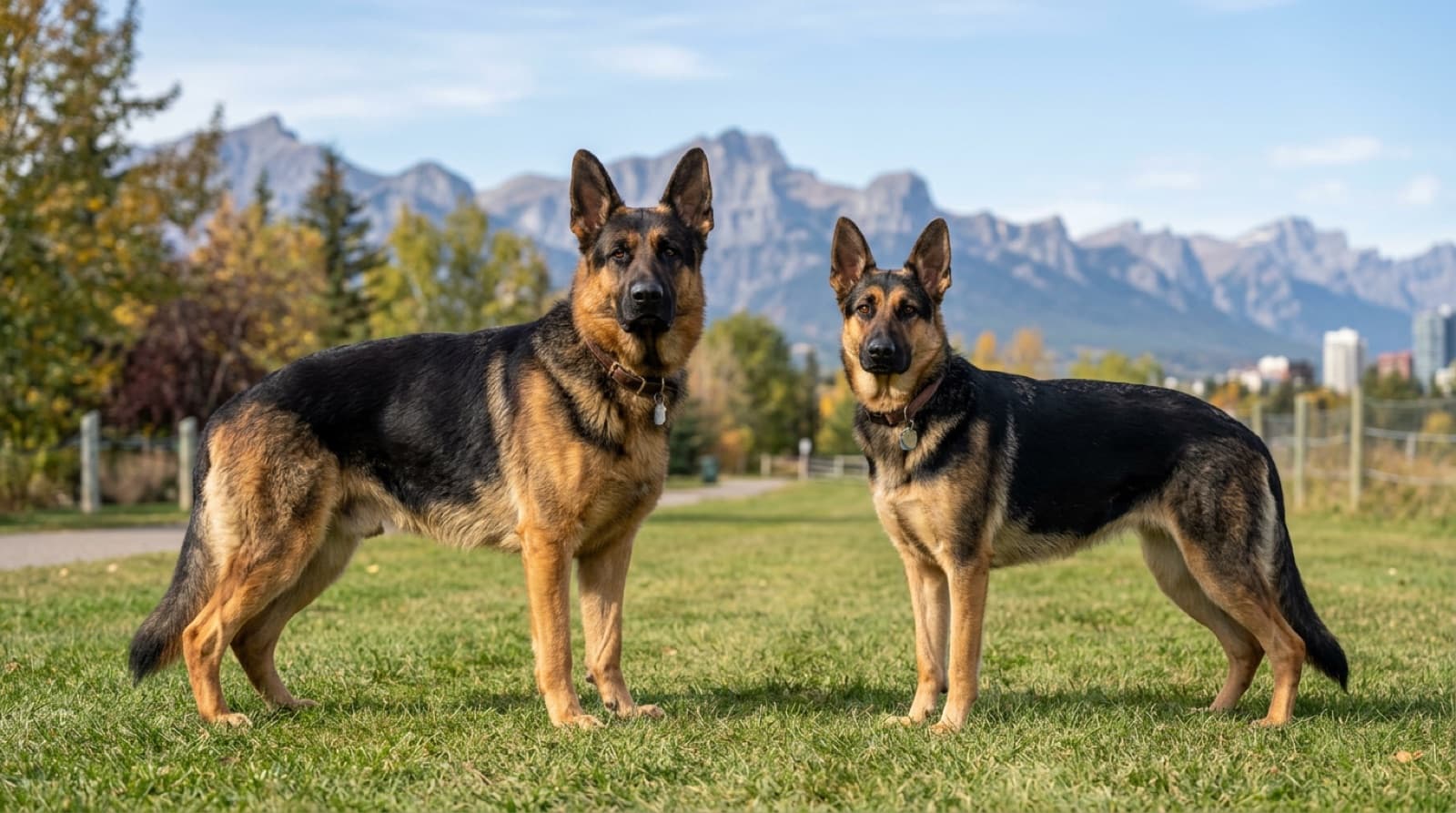
The honest reality: sex differences are real but overstated
Sex differences in GSDs exist but are FAR less predictive than most adopters assume. Individual temperament, line, upbringing, training, and socialization matter more than sex alone.
The internet is full of confident generalizations: “females are nicer,” “males are more loyal,” “females bond to one person,” “males are calmer.” Most of these are myths or apply to small subsets of dogs.
What IS reliably different: size, marking behavior (intact males), heat cycles (intact females), same-sex aggression risk, maturation timing.
What ISN'T reliably different: trainability, intelligence, protectiveness, loyalty, family bonding.
Size: the most reliable difference
Males: 65–90 lbs adult, 24–26 inches at shoulder, broader head + heavier bone.
Females: 50–70 lbs adult, 22–24 inches at shoulder, finer features + lighter bone.
Line variation: working/Czech line tend smaller (males 65–80 lbs, females 50–65 lbs). Show line tend bigger (WGSL males 75–90 lbs, females 60–75 lbs).
Calgary handling considerations:
- Senior owners/handlers sometimes prefer female smaller size
- Male larger presence sometimes desired for protection role
- Family with young kids sometimes prefer female slightly smaller body for accidental knockdown reduction
- Calgary winter walking + ice = larger male sometimes more stable, smaller female sometimes more agile
- Crate, harness, vehicle, equipment all sized differently
Pedigree + parents' sizes predict adult size more than sex generalization. Some females larger than some males.
Temperament: the overstated differences
Temperament generalizations to take with a large grain of salt:
Females often:
- More independent thinker
- Sometimes more bonded to one person
- Maternal-protective instincts
- Sometimes more cycle-driven mood swings if intact
- Earlier maturation (18–24 months)
Males often:
- Goofy/clownish, sometimes longer puppy mentality
- Openly affectionate with whole family
- Visually impressive (presence)
- Longer adolescent regression window (24–36 months)
Protection: both equally protective. Female more discrete + thoughtful in alert. Male more visibly imposing. Stranger response often similar.
Trainability: both equally trainable. Female sometimes faster initial training. Male sometimes longer focused work.
Loyalty: both intensely loyal when properly bonded. No reliable sex difference.
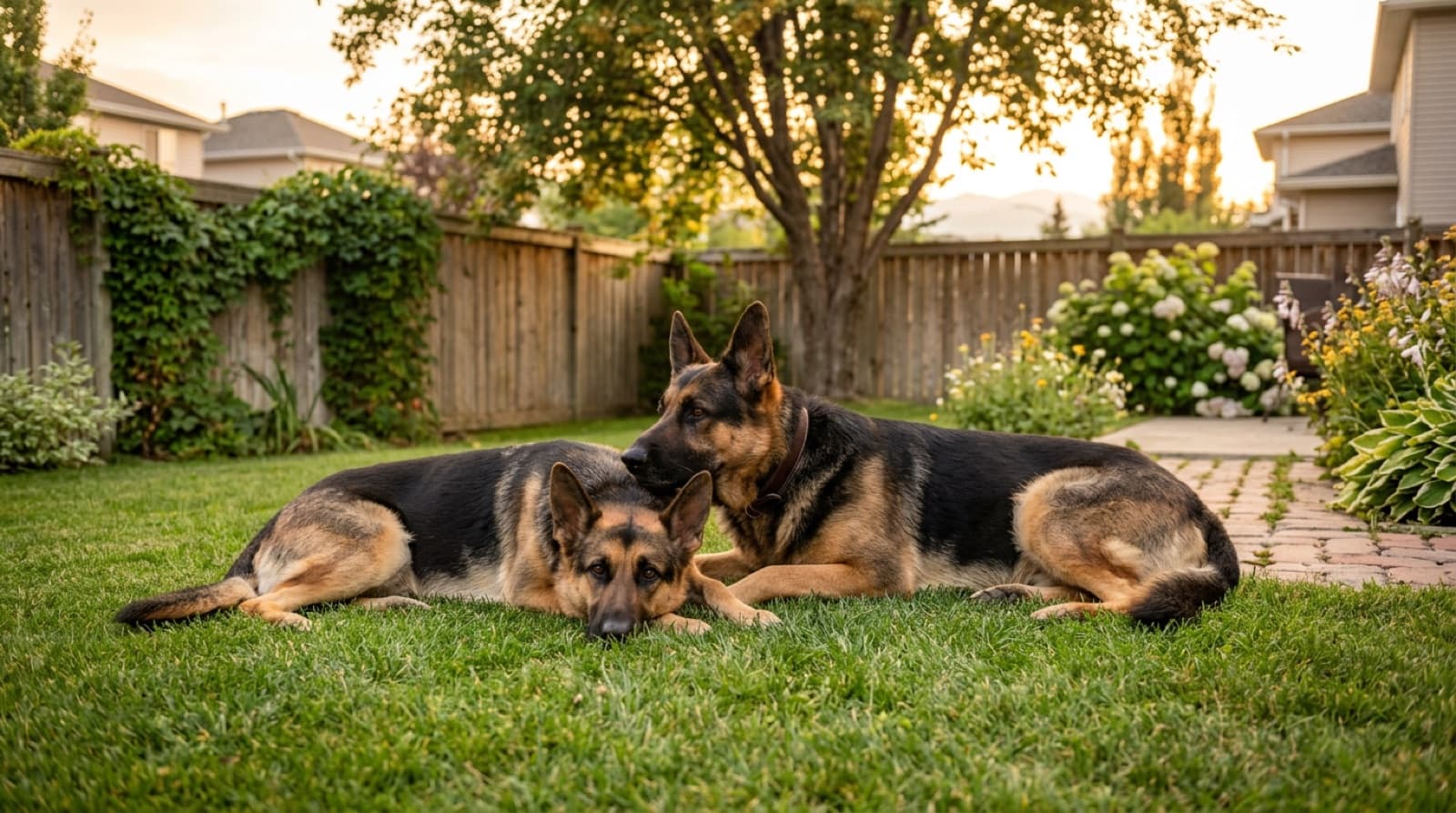
Multi-pet households: where sex matters most
Same-sex aggression is THE area where sex selection matters most.
- Female + female: HIGHEST risk of serious aggression. Two intact females especially risky. Sometimes catastrophic fights.
- Male + male: Moderate risk, especially intact males. Sometimes resolved with neuter + training.
- Female + male: LOWEST risk. Best pairing for multi-GSD households.
With cats: female sometimes more cat-tolerant (maternal instinct toward smaller animals). Male sometimes higher prey drive. Both depend heavily on individual temperament + early socialization.
With small dogs: both can coexist. Size mismatch always supervision concern. Female sometimes calmer. Male sometimes accidentally injures small dog through play.
With birds/small mammals: both can have prey drive concerns. Working/Czech line both sexes higher prey drive. Show line both sexes more tolerant.
Calgary multi-pet introduction protocol: scent swap 1 week, visual barrier 1–2 weeks, leashed meeting, never unsupervised first 3 months, force-free trainer if issues.
Marking + heat cycles
Male marking: intact males mark significantly — territorial behavior. Outdoor marking on every walk typical. Sometimes indoor marking (especially new home, new dog visit, anxious situations). Neutering reduces but doesn't eliminate. Adult-onset marking (post-3 years) sometimes harder to retrain. Calgary winter walking + marking = sometimes 30+ stops per walk.
Female heat cycles: intact females cycle 1–2x/year typically. Heat lasts 2–4 weeks per cycle. Discharge requires management (heat panties, indoor mats). Behavioral changes (sometimes more affectionate, sometimes more snappy). Male attention from any unaltered male within distance. Calgary off-leash + intact female = challenging during heat. Pyometra (uterine infection) lifetime risk if unspayed.
Calgary apartment management: intact male + apartment + frequent marking = challenging. Intact female + heat + apartment = manageable with planning. Spayed/neutered both = generally easier. Most Calgary rescue dogs come spayed/neutered.
Spay/neuter timing
Per Hart et al., UC Davis 2014 research on large breed dogs:
Females: spay AFTER 1 year of age preferred to reduce orthopedic risks. Some research suggests AFTER 2 years better for joint development. Pyometra (uterine infection) risk vs orthopedic risk tradeoff. Calgary spay cost $400–$700.
Males: neuter AFTER 18–24 months preferred to reduce orthopedic risks. Some research suggests delaying or NOT neutering for joint development. Reproductive cancer risk vs orthopedic risk tradeoff. Calgary neuter cost $300–$500.
Alternative protocols:
- Ovary-Sparing Spay (OSS) for females — removes uterus, retains ovaries. Maintains hormonal benefits without breeding capability. Sometimes available at specialty Calgary vets
- Vasectomy for males — sterilization without hormone elimination. Sometimes available at specialty Calgary vets
Rescue dog reality: most Calgary rescue dogs come spayed/neutered. Adoption fee includes typical surgery. Adult adoption = decision already made.
Bottom line: female or male for your Calgary home?
Choose female if: smaller size preferred, want maternal protective temperament, prefer earlier maturation, household has small kids (smaller knockdown risk), calmer companion lifestyle, household has another male dog (opposite-sex pair safest), Calgary apartment fit consideration.
Choose male if: larger size desired, want goofy/openly affectionate temperament, accept longer adolescent regression, household with active older kids, protection role with visible deterrence preferred, household has another female dog OR no other dogs, Calgary suburban house with yard.
Sex matters less if: adult adoption (3+ years — temperament known), foster-evaluated rescue dog, force-free training commitment, insurance + medical fund prepared.
Sex matters most when: multi-dog household (opposite-sex pair), specific family composition, apartment vs house, handler size/strength considerations.
Calgary key message: individual temperament + line + foster evaluation + training commitment matter MORE than sex selection. Many Calgary GSD success stories with both sexes.
Frequently Asked Questions
Real differences between female + male GSD?
Reliably different: size, marking (intact males), heat cycles (intact females), same-sex aggression risk, maturation timing. NOT reliably different: trainability, intelligence, protectiveness, loyalty, family bonding. Individual temperament + line + training matter more than sex.
Which is bigger?
Males 65–90 lbs, 24–26″. Females 50–70 lbs, 22–24″. Working/Czech line smaller. WGSL show line bigger. Pedigree predicts adult size more than sex generalization. Some females larger than some males.
Are females more protective?
Both equally protective. Female: discrete + thoughtful alert + maternal-protective instincts. Male: visibly imposing + demonstrative bark + presence deterrence. Choose protection-line dog (working/Czech) + appropriate training regardless of sex.
Better with kids?
Both can be excellent. Female: maternal, smaller (less knockdown risk), heat cycle management. Male: goofy, playful, larger (more knockdown risk for small kids), more marking. Foster-evaluated rescue + adult adoption + force-free trainer matter more than sex.
Training differences?
Both highly trainable. Female: earlier maturation (18–24mo), independent thinker, faster initial training. Male: longer adolescent regression (24–36mo), goofy/distractible, more demonstrative learning. Force-free training works for both. $200–$1,000 first year Calgary.
Spay/neuter timing?
Per UC Davis research: females after 12–24 months, males after 18–24 months for orthopedic protection. Calgary cost $300–$700. Alternative: Ovary-Sparing Spay (females), vasectomy (males). Most rescue dogs come spayed/neutered.
Multi-pet households?
Female-female = HIGHEST aggression risk. Male-male = moderate risk. Female + male = LOWEST risk (best pairing). With cats: female often more tolerant. With small dogs: supervision essential. Calgary force-free trainer for multi-dog management.
Marking + heat cycle?
Intact males: significant marking (sometimes 30+ stops per walk). Neutering reduces but doesn't eliminate. Intact females: heat cycle 1–2x/year, 2–4 weeks duration, requires management. Spaying eliminates heat. Pyometra risk if unspayed.
Calgary rescue sex preference reality?
Mixed availability of both sexes typically. Cannot guarantee specific sex preference. Foster temperament evaluation more important than sex. Adult adoption easier than puppy regardless of sex. Calgary Humane, AARCS, BARCS, Cochrane, Pawsitive Match.
Bottom line: female or male?
Female if: smaller, maternal, earlier maturing, multi-dog with male, smaller kids. Male if: larger, goofy/affectionate, longer adolescence OK, active older kids, protection deterrence, multi-dog with female. Individual temperament + line + training matter MORE than sex.
Adoptable German Shepherds in Calgary
Live listings of male + female GSDs from 13+ Calgary rescues.
German Shepherd Lines
Czech vs West German vs American show vs DDR vs Belgian.
German Shepherd Adoption Calgary
Where to adopt, costs, scams, why surrendered, mixes.
German Shepherd Training + Temperament
Force-free methods, working drive, family fit, Calgary trainers.