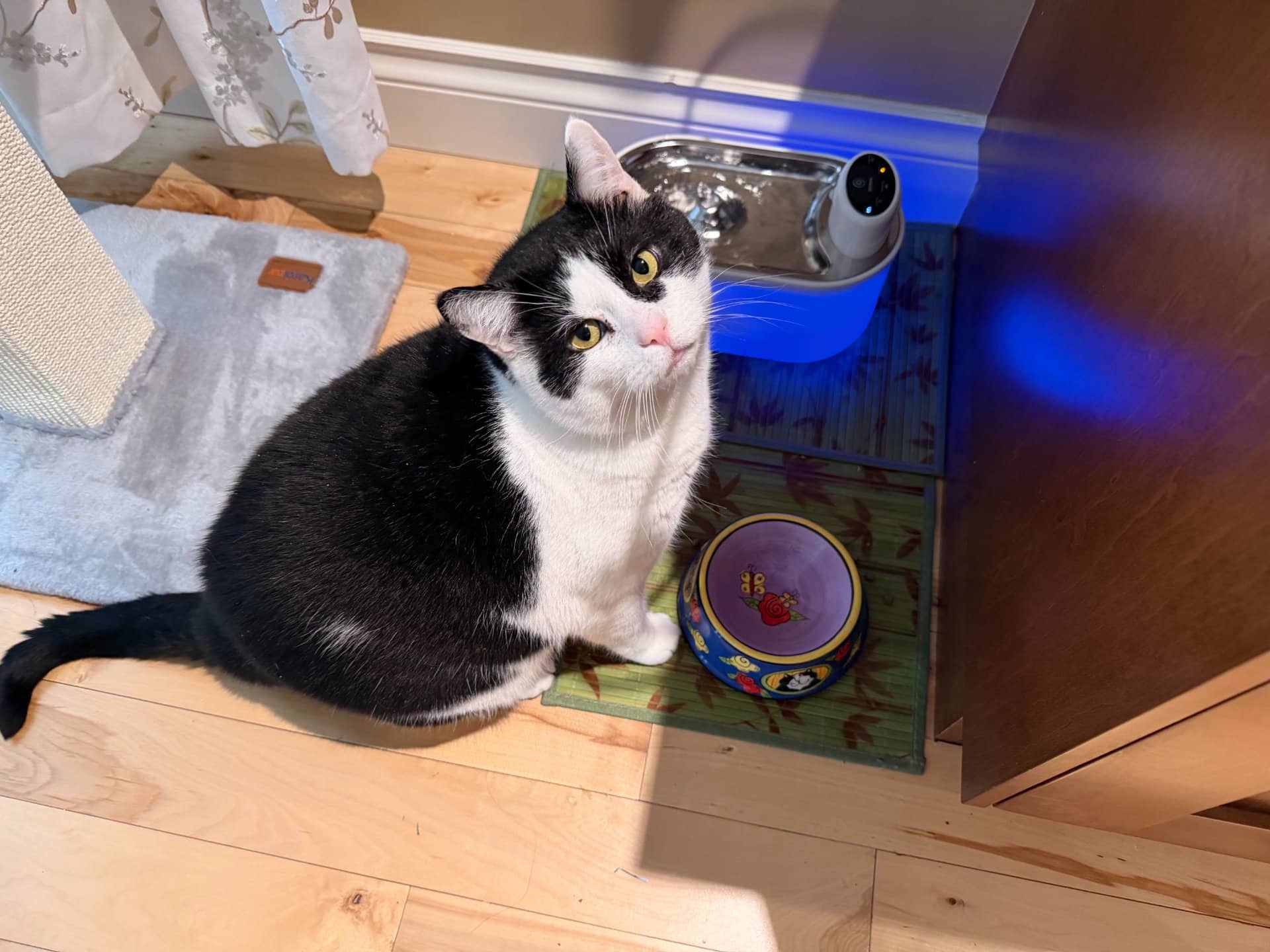
Almost every Victoria cat rescue requires their cats to live indoors only. Vancouver Island has one notable difference from the mainland: there are no coyotes here. The Salish Sea kept them out, and the local ecology never developed an urban coyote problem. That doesn't make outdoor life safe for cats, though — Vancouver Island has its own predator and traffic profile, and outdoor cats in Greater Victoria still typically live 3 to 5 years compared to 15 to 18 for indoor cats.
What kills outdoor cats in Greater Victoria is a different mix: cougars on the urban fringe near Sooke, Goldstream, Langford, and the western communities (regular sightings, occasional cat predation); bald and golden eagles taking small cats on the coast; raccoons at high urban density (and a leptospirosis vector); and arterial traffic on Douglas Street, Quadra, Pat Bay Highway, Blanshard, and the Trans-Canada through View Royal. Oak Bay adds an unusual hazard — the highest urban deer density in Canada means cats sharing yards with deer that will trample or kick when startled, plus higher traffic from drivers braking for deer.
The cats listed here are specifically flagged as indoor-only by their foster home — they're used to indoor living, often previously lived in apartments, condos, or quiet houses, and don't have outdoor habits to unlearn. That makes them especially well-suited for Victoria condo dwellers, James Bay and Fairfield apartment renters, and anyone living near the urban-fringe forests around Sooke, Goldstream, or the western communities where cougar risk is highest. Vancouver Island also has one of the strongest catio cultures in Canada — the mild coastal climate makes a screened balcony or backyard enclosure usable nearly year-round. The indoor vs outdoor cats in Victoria guide covers the trade-offs in depth. All cats listed here have indoor-only status confirmed by the rescue.
Why indoor-only is the Victoria standard (even without coyotes)
The BC SPCA Victoria Branch, Victoria Humane Society, Broken Promises Rescue, and Victoria Pet Adoption Society won't place a cat into an unsupervised outdoor home. Vancouver Island is coyote-free, but the rescue policy doesn't change because the other risks are real: cougar sightings are routine in Sooke, Goldstream, Langford, Metchosin, and the western communities, and cougars do take outdoor cats. Bald and golden eagles regularly snatch small cats on the coast and in the Saanich Peninsula. Raccoons are at high urban density and carry leptospirosis. Arterials like Douglas, Quadra, Pat Bay Highway, Blanshard, and the Trans-Canada are constant. Oak Bay's urban deer population creates trampling and traffic risks unique to Greater Victoria. Supervised outdoor time on a leash or in a catio is fine; free-roaming is not.
Indoor enrichment ideas for Victoria homes
The thing that makes indoor cats thrive is vertical space and engagement. A tall cat tree by a window overlooking the Inner Harbour, the Strait of Juan de Fuca, or a leafy Fairfield street doubles as a sunny nap spot and prime “cat TV” (gulls, crows, deer in Oak Bay, rain). Wall-mounted shelves let cats climb without taking floor space — useful in James Bay heritage flats and downtown Victoria condos where square footage is tight. Wand-toy play 10 to 15 minutes daily, puzzle feeders for kibble, and a rotating toy supply keep boredom low. Two cats are easier than one because they entertain each other through Victoria's long grey winters when daylight is short and humans are out less.
Vancouver Island's outdoor risks: cougars, eagles, Oak Bay deer traffic
The no-coyote thing trips people up — they assume Victoria is safer for outdoor cats than the mainland. It isn't. Cougar sightings happen weekly somewhere on south Vancouver Island, with Sooke, Goldstream Provincial Park, Langford, Metchosin, and the Highlands all reporting cat predation in recent years. Bald eagles are abundant year-round on the coast and the Saanich Peninsula and will take cats under 10 pounds. Oak Bay's urban deer (some of the highest urban deer densities in Canada) create two distinct hazards: cats getting trampled in territory disputes, and the much higher rate of drivers swerving or braking suddenly for deer, which raises cat traffic risk. The Pat Bay Highway, Douglas Street, and the Trans-Canada through Colwood and View Royal are constant. Outdoor cats here live 3 to 5 years; indoor cats live 15 to 18.
Victoria Indoor Cat FAQ
How many indoor cats are available for adoption in Victoria?▼
As of October 2026, 1 indoor cats are available for adoption in Victoria across 1 rescue on LocalPetFinder. Listings update regularly as pets are adopted and new ones arrive — browse them above and apply directly through the rescue.
Where can I find indoor cats for adoption near me in Victoria?▼
LocalPetFinder lists indoor-only cats from Victoria-area cat rescues including the BC SPCA Victoria Branch, Victoria Humane Society, Broken Promises Rescue Society, and Victoria Pet Adoption Society (VPAS). Most Vancouver Island rescues require indoor-only homes because of cougar risk on the urban fringe, eagle predation on the coast, raccoons, and arterial traffic. Coverage spans Victoria, Oak Bay, Saanich, Esquimalt, View Royal, Colwood, Langford, Sooke, and the Saanich Peninsula.
Vancouver Island has no coyotes — why are cats still indoor-only here?▼
True, the Salish Sea kept coyotes off the island and the local ecology never developed an urban coyote problem. But the rescue policy does not change because the other risks are real. Cougars take outdoor cats in Sooke, Goldstream, Langford, Metchosin, and the western communities. Bald and golden eagles regularly snatch small cats on the coast and the Saanich Peninsula. Raccoons are at high urban density and carry leptospirosis. Major arterials including Douglas, Quadra, Pat Bay Highway, Blanshard, and the Trans-Canada cut through Greater Victoria. Outdoor cats here still live 3 to 5 years versus 15 to 18 for indoor cats.
How long do indoor vs outdoor cats live in Victoria?▼
Indoor cats in Victoria typically live 15 to 18 years, with many reaching their early 20s. Outdoor cats average 3 to 5 years because of cougar predation on the urban fringe, eagle predation on the coast, raccoon attacks, vehicle strikes, fights with other cats, and outdoor parasites and infections like leptospirosis. The lifespan gap is dramatic and well-documented across Vancouver Island.
Can indoor cats be happy without going outside?▼
Yes, with adequate enrichment. Indoor cats need vertical space (cat trees, wall shelves), interactive wand-toy play 10 to 15 minutes daily, window perches for outdoor stimulation, puzzle feeders that make them work for kibble, and ideally a feline companion. Cats given those four things live longer, healthier, and less stressed lives than outdoor cats.
Are indoor cats good for Victoria apartments and condos?▼
They are ideal. Indoor cats use vertical space rather than horizontal, are quiet compared to dogs, do not need a yard, and most Greater Victoria apartment buildings welcome cats without the breed restrictions or extra pet rent that dogs face. Cats listed as indoor-only in this category are specifically suited to downtown Victoria, James Bay, Fairfield, Fernwood, and Oak Bay apartment and condo life.
What is a catio and are they popular in Victoria?▼
A catio is an enclosed outdoor cat patio that gives cats fresh air and sun without exposure to cougars, eagles, raccoons, traffic, or other risks. Vancouver Island has one of the strongest catio cultures in Canada, with several local builders specializing in screened balcony enclosures for condos and rental-friendly setups. A simple pressure-mounted balcony catio runs $500 to $1,500 in materials; a full custom backyard catio runs $1,500 to $3,500. Victoria's mild coastal climate means catios are usable nearly year-round — rainy winter days are the main downtime, not extreme cold.
How do I keep an indoor cat from getting bored?▼
Daily wand-toy play (10 to 15 minutes is plenty), puzzle feeders for kibble, vertical climbing space, a tall cat tree by a window overlooking the Inner Harbour, the Strait of Juan de Fuca, or a leafy Fairfield street, and rotating the toy supply weekly. Two cats keep each other entertained, which matters during Victoria's long grey winters when natural daylight is limited and humans are out less.
Can an indoor-only cat ever go outside in Victoria?▼
On a leash and harness with supervision, yes. In a catio, yes. Carrying them outside for short balcony visits, yes. Free-roaming, no. Vancouver Island rescues approve and even encourage leash training and catio access — the mild climate makes both especially viable here. The line is supervision: a cat that cannot escape and is not exposed to cougars, eagles, raccoons, or traffic is fine outdoors. A cat that can wander is not, and most Vancouver Island adoption contracts will be rescinded if the rescue discovers the cat is being let outside unsupervised.
Explore more Victoria cats
Adults, kittens, seniors, bonded pairs — everything currently available.
Cats under 12 months. Peak supply runs May through September.
Cats aged 10 and up. Often the calmest, most affectionate adoptions.
Full breakdown of the Vancouver Island indoor-only standard, cougar/eagle risk, and catio culture.