Showing 5 dogs
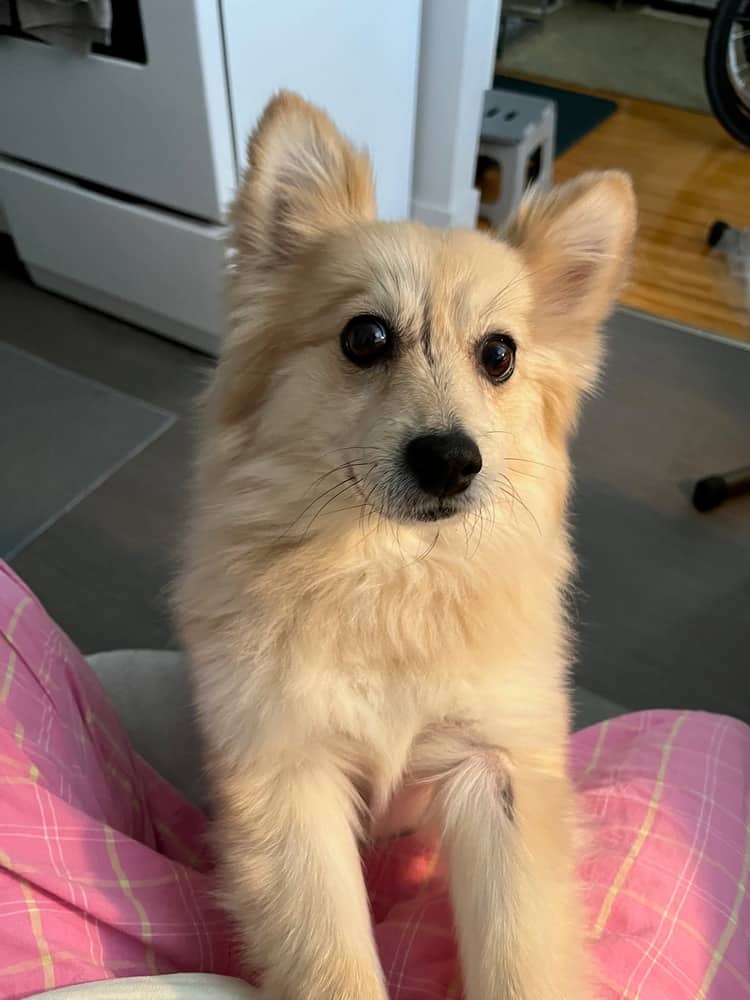
Teddy
5 years • Pomeranian
Furever Freed Dog Rescue

Ite
~5 years • Pomeranian
Furever Freed Dog Rescue
Get notified when a Pomeranian is listed
We will email you the moment a Pomeranian becomes available in British Columbia, from a rescue or an owner rehoming.
Adopting a Pomeranian in British Columbia
Pomeranians come through BC rescue at a slower pace than Chihuahuas or Shih Tzu but the pattern is steady. The Lower Mainland sees the most through BC SPCA branches and Loved at Last in Langley. Vancouver Island and the Okanagan see them less often. This page pulls every adoptable Pomeranian from the launched BC shelters into one searchable place, refreshed regularly.
A small-dog adopter should search province-wide. Foster homes will arrange a meet at their place wherever you live, and a video call before you commit to a Vancouver Island ferry or an Interior drive is usually fine to ask for.
Why Poms cycle through BC rescue
Two patterns explain most Pom surrenders. The first is the buyer who picked the dog for the fluff and got the temperament with it. Poms are alert, vocal, and ready to defend their household from the elevator, the hallway, and the neighbour's cat. In a Vancouver high-rise that becomes a strata complaint quickly. Renters who got noise complaints often surrender by month six.
The second is the coat. A Pom double coat needs weekly brushing, season-by-season shedding management, and an occasional professional bath. Owners who do not plan for it end up with mats around the rear and behind the ears that have to be shaved out. The dog goes to rescue, gets a clean-up, and starts fresh in a household that knew what it was signing up for.
A double coat in BC weather
Pomeranians are built for cold. That double coat handles a Whitehorse winter without complaint. In populated BC the coat is mostly a liability. Coastal Vancouver and Victoria stay mild, and a soaked double coat takes hours to dry; plan on a towel routine and avoid letting the dog sit damp. The bigger problem is summer in the Interior. Kelowna and Kamloops July routinely hits 35°C and a Pom can heat-stress quickly.
For both regions: walk early morning and after dark in summer, never midday. The "lion cut" some owners ask for in summer is not safe for double-coated breeds. It disrupts the insulation that keeps the dog cooler than it sounds. Talk to the groomer about a tidy, not a shave.
Health concerns worth asking the foster about
Pomeranians have a few breed-typical issues the foster will know about. Patellar luxation (sliding kneecaps), tracheal collapse (the honking cough when excited), dental disease, and alopecia X (the patchy coat-loss condition some Poms develop in middle age) come up most often. The foster will tell you if the dog is moving stiffly, has a honk that triggers on the leash, or is losing patches of fur. Older Poms with a known dental history are usually a safer bet than a stray-intake whose dental history is unknown.
What Poms are actually like to live with
Most adopters love the appealing parts of the breed: clever, bonded, photogenic, portable. The harder parts only show up at home:
- They alarm-bark. The Pom yap is sharp and sustained, and a high-rise neighbour notices.
- They shed. The double coat blows twice a year and you will find fluff on every couch.
- They are not lap dogs by default. Most Poms are active and want a real walk, not just a couch nap.
- They overheat fast. Okanagan summer needs careful planning; coastal weather is more forgiving.
- They live a long time. A healthy adopted Pom often means 12 to 14 more years together.
What the fee usually covers
Pomeranian adoption fees at BC rescues sit in the small-dog range. The fee covers the work the rescue already paid for: spay or neuter, core vaccinations, microchip, deworming, vet check at intake, and often a dental if the foster pushed for one. Confirm the exact number on the dog's own listing because age, dental work, and any tracheal-collapse or alopecia X workup all shift the number.
How to actually search
Use the filters to narrow by size (small), energy (most Poms land medium), good with kids (most prefer school-age and up because of the fragile size), and good with cats (often yes if introduced calmly). Apply the same day if a dog fits because small breeds move fast across BC. Foster homes will set up a video call so you can hear the bark and see the coat before you commit to a ferry or an Interior drive.
Looking more broadly? Browse every adoptable dog across the province on Dog Adoption British Columbia.
Pomeranian Adoption FAQ — British Columbia
Tap a question to expand
How many Pomeranians are available for adoption in British Columbia?▼
Where can I find Pomeranian adoption near me in British Columbia?▼
Are Pomeranians good for Vancouver condos?▼
Do Pomeranians do okay in BC heat?▼
How much does it cost to adopt a Pomeranian in British Columbia?▼
Is LocalPetFinder a Pomeranian rescue?▼
What colours do Pomeranians come in, and is a "teacup Pomeranian" a real thing?▼
Can I get a Pomeranian free to a good home in British Columbia?▼
Are these Pomeranians for sale in British Columbia?▼
Where can I buy a Pomeranian in British Columbia, and should I?▼
Are there free Pomeranians in British Columbia, or pomeranians under $500?▼
Are there Pomeranian puppies in British Columbia, or only adults?▼
Where can I find a Pomeranian near me in British Columbia?▼
Popular dog breeds in British Columbia
Pomeranian adoption by city in British Columbia
Each city page lists only the pomeranians available from rescues serving that city, with local adoption details.
Need to rehome a Pomeranian?
If you can no longer keep your Pomeranian, you can list them for free on LocalPetFinder. Your dog stays in your home until you find the right family, you screen who applies, and there is no surrender fee. Not sure yet? Our guide to surrendering a dog in Canada walks through every option first.
List your dog for free →