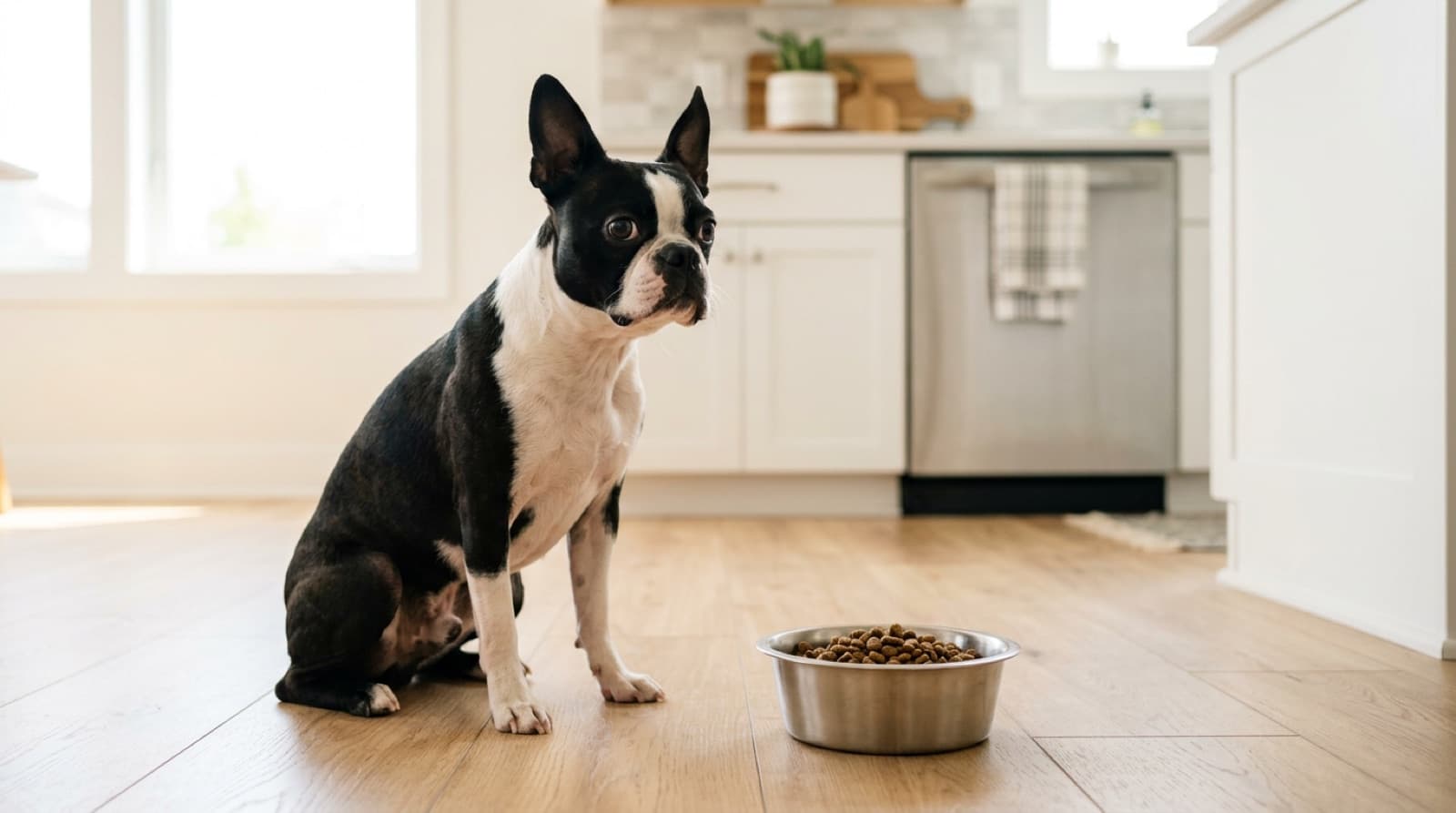
The short answer
Feed a Boston Terrier a complete, gentle diet from a nutritionist-backed brand, transition foods slowly, and keep the dog lean. Boston Terriers have sensitive stomachs and a well-earned reputation for gas, and a sensitive-skin-and-stomach line plus a slow-feeder bowl is often the right combination. Some of the gas is anatomical, not dietary, so do not expect any food to eliminate it. If your Boston is itchy, the cause is more often environmental than food. And keep the weight off, because on a flat-faced breed extra weight is a breathing problem.
What is the best food for a Boston Terrier?
There is no single best bag, and any site that names one is selling something. The standard most vets point to comes from the WSAVA global nutrition guidelines.
Pick a brand that does the science. Ask whether the company employs a full-time, board-certified veterinary nutritionist and runs feeding trials. The safe defaults are Purina Pro Plan, Hill's Science Diet, and Royal Canin.
Because Bostons run sensitive, a sensitive-skin-and-stomach formula is a good starting point. Then watch the dog: firm stool, a calm stomach, settled skin, and a lean body mean it is working. Whatever the brand, transition slowly, because an abrupt switch usually means loose stool with this breed.
The gas truth: part food, part anatomy
Get any group of Boston Terrier owners together and the jokes turn to gas. It is the breed's signature, and the honest explanation is that it is partly unfixable. Because Bostons are flat-faced, they gulp air while they eat and breathe, and that swallowed air has to leave somewhere. So even a spotless diet will not give you a gas-free Boston.
What does help: a slow-feeder bowl cuts the gulping, smaller and more frequent meals ease the load, a probiotic can settle the gut, and some dogs are far gassier on one food than another, so a food change can genuinely reduce it even if it will not eliminate it. Legume-heavy foods and certain proteins are common culprits. If the gas turns sudden, severe, or comes with loose stool, treat that as a stomach problem worth a vet visit rather than just an open window.
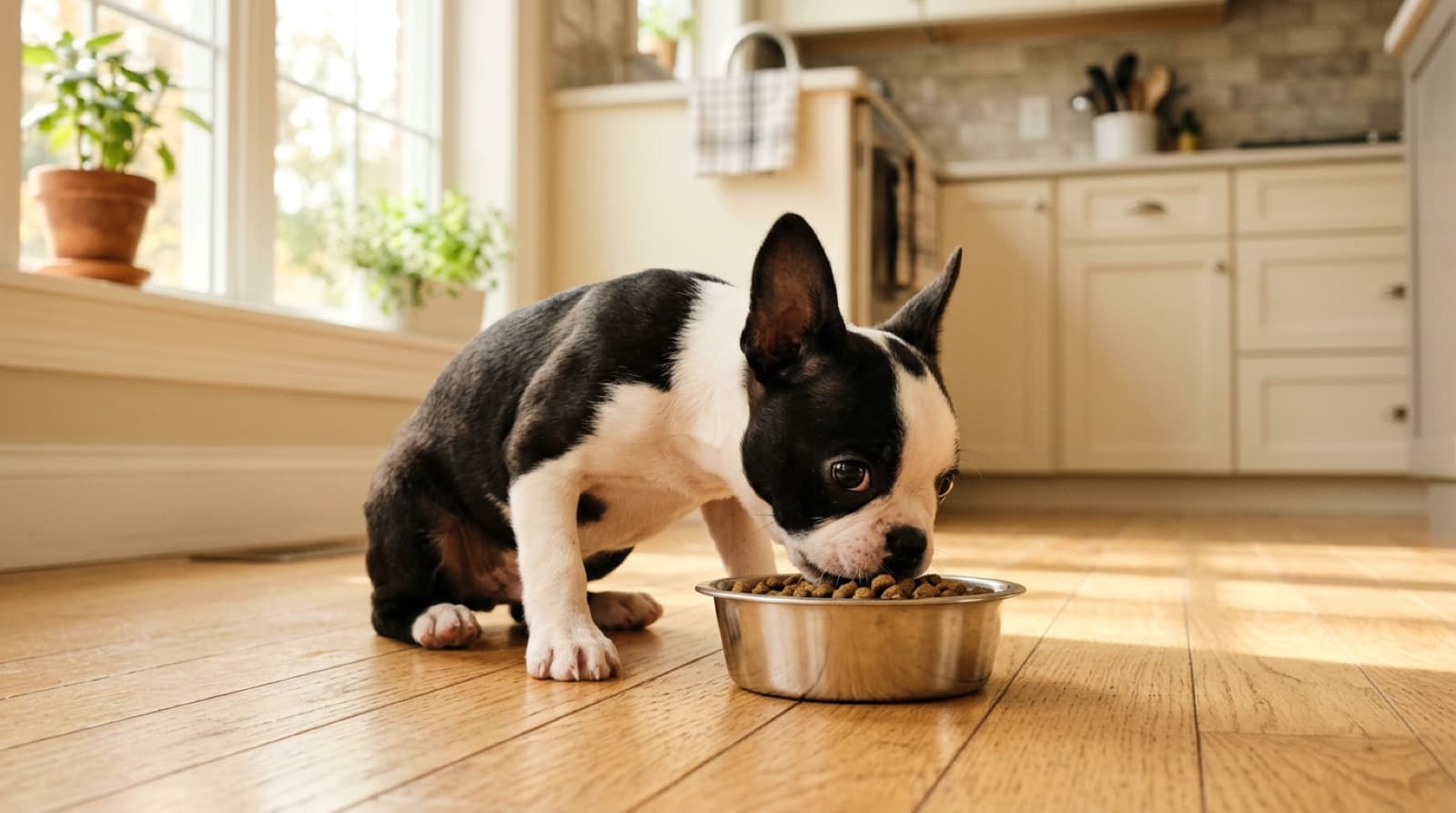
Sensitive stomachs and the allergy question
Sensitive stomach. Bostons get loose stool easily, almost always after an abrupt food change. Introduce any new food over one to two weeks, mixing a little more in each day. The owner reset for an upset stomach is reliable: a few days of plain boiled chicken and white rice with a spoon of canned pumpkin, then back to the regular food slowly. A probiotic helps. Diarrhea that lasts more than a day or two, or comes with vomiting or lethargy, is a vet visit.
Itchy skin. Bostons are allergy-prone, and the short coat makes redness on the face, paws, belly, and ears obvious. But environmental allergies (pollen, dust) are more common in the breed than true food allergies, and they look identical, so owners often chase food when the trigger is in the air. The only way to confirm a food allergy is a vet-run elimination diet, eight to twelve weeks on a single novel protein with no other treats; allergy blood panels are widely considered unreliable. One worthwhile aside: the breed's prominent eyes can develop corneal problems, but those are not diet-related, so do not confuse an eye issue with a food one. PetMD covers the breed's brachycephalic concerns.
How much to feed, and why weight is a breathing issue
For a Boston Terrier, keeping the weight off is not about looks. A flat-faced breed already works harder to breathe, and extra weight measurably worsens breathing, heat tolerance, and stamina.
A typical adult Boston eats roughly 1 to 1.5 cups of quality food a day split into two meals, but the bag overfeeds, so feed to body condition. Run your hands over the ribs and feel them easily under a thin layer, and look for a waist from above. If you cannot feel ribs, feed less.
The stakes are higher here than for most breeds. Brachycephalic airway problems mean a Boston's breathing has less room to spare, and an overweight Boston loses more of that room, which also worsens its heat intolerance. Count treats inside the daily total, and ask your vet to body-condition-score the dog at checkups so you catch creep early.
Grain-free, and foods to avoid
Skip grain-free unless your vet diagnoses a grain allergy. Most Boston food reactions are to a protein, not a grain, so grain-free rarely solves the itch or the gas, and legumes in grain-free foods can increase gas. The FDA grain-free investigation adds a further caution.
Keep these away from a Boston Terrier completely: chocolate, grapes and raisins, xylitol (in sugar-free gum, some peanut butters, and baking), onions and garlic, macadamia nuts, alcohol, caffeine, and cooked bones. Also skip the gas-producing extras owners learn to avoid: dairy, fatty scraps, and large amounts of broccoli, cauliflower, or beans. If your Boston eats something toxic, call your vet or a pet poison helpline right away.
Should I feed my Boston Terrier a raw diet?
Only with a vet or veterinary nutritionist involved. Some owners try raw or fresh diets to settle a sensitive stomach or itchy skin, and a well-built one can suit the breed. But raw meat carries a pathogen risk for the dog and the household, and a homemade raw diet without a professional recipe routinely runs short on key nutrients. For a sensitive breed, a complete, balanced diet matters more than the format. If you want to try fresh or raw, use a complete commercial product or a vet-formulated recipe, and transition slowly.
Looking to adopt a Boston Terrier?
Plan for a sensitive stomach and a slow-feeder bowl before day one. Browse Boston Terriers and Boston mixes available now from the rescues we track.
See Available Boston Terriers →Where to buy Boston Terrier food
Every brand worth feeding a Boston is easy to find in store and online:
- Pet specialty chains (Pet Planet, Tail Blazers, Tisol, and similar). Carry Pro Plan, Hill's, Royal Canin, and sensitive-stomach lines.
- Pet Valu and PetSmart. National chains that stock the major sensitive-skin-and-stomach and limited-ingredient formulas.
- Your vet clinic. The place for prescription GI and hydrolyzed diets used in allergy work-ups.
- Online. The same brands ship to your door, easy to set on a recurring delivery.
Once you find a food your Boston's stomach is happy on, stick with it rather than rotating. The major sensitive-stomach formulas are all available online.
Frequently Asked Questions
What is the best food for a Boston Terrier?
A complete formula from a brand that employs a veterinary nutritionist and runs feeding trials, like Purina Pro Plan, Hill’s Science Diet, or Royal Canin. Because Boston Terriers run to a sensitive stomach and gas, a sensitive-skin-and-stomach line is often the right starting point. The brand matters less than the food agreeing with your dog and keeping it lean. Transition slowly, because this breed has a touchy gut. Start with whatever the rescue was feeding, then change over seven to ten days.
Why is my Boston Terrier so gassy, and is it the food?
Partly the food and partly the dog. Boston Terriers are flat-faced, so they gulp air while eating and breathing, and that swallowed air has to come out somewhere. So even a perfect diet will not make a Boston gas-free. That said, food quality and eating speed make a real difference: a slow-feeder bowl reduces gulping, smaller more frequent meals help, a probiotic can settle the gut, and some dogs are far gassier on one food than another. If the gas turns sudden, severe, or comes with diarrhea, treat it as a stomach problem worth a vet visit.
What can I feed to firm up my Boston Terrier’s loose stool?
Start with the classic reset: a few days of plain boiled chicken and white rice with a spoon of canned pumpkin, then transition back to the regular food slowly. Boston Terriers have sensitive stomachs, and abrupt food changes are the usual cause of loose stool, so any new food should be introduced over one to two weeks. A probiotic can help. If diarrhea lasts more than a day or two, comes with vomiting or lethargy, or keeps recurring, see your vet to rule out parasites or a food intolerance.
My Boston Terrier licks his paws and is itchy. Is it a food allergy?
Maybe, but environmental allergies are more common in this breed than true food allergies. Boston Terriers are allergy-prone, and the short coat makes redness on the face, paws, belly, and ears very visible. The catch is that pollen and dust allergies look almost identical to a food allergy. A rough tell owners use: itching that flares with the seasons points toward the environment. The only reliable way to confirm a food allergy is a vet-run elimination diet, eight to twelve weeks on a single novel protein with no other treats. Allergy blood or saliva panels are widely considered unreliable, so the elimination diet is the real test.
How much should I feed a Boston Terrier, and why does weight matter so much?
Feed to keep the dog lean, because for a flat-faced breed weight is a breathing issue, not just a waistline one. A typical adult Boston eats roughly 1 to 1.5 cups of quality food a day split into two meals, but the bag tends to overfeed, so feed to body condition: feel the ribs easily and see a waist. Boston Terriers are brachycephalic, so their breathing already has less room to spare, and extra weight measurably worsens it along with heat and exercise tolerance. Count treats inside the daily total and have your vet body-condition-score the dog at checkups.
Should I feed my Boston Terrier grain-free?
Not unless your vet diagnoses a grain allergy. Most Boston food reactions, when they are real, are to a protein like chicken or beef, not to grain, so grain-free rarely fixes the itch or the gas, and legumes in grain-free foods can actually increase gas. On top of that, the FDA has been investigating a possible link between grain-free diets built on peas, lentils, and potatoes and a heart condition. A complete diet from a nutritionist-backed brand is the safer default.
What should I feed a Boston Terrier puppy?
A complete small-breed puppy food, fed three meals a day until about six months, then two. Keep meals modest and transition foods slowly, because Boston puppies have the same sensitive stomach as adults. Keep the puppy lean, and stay on puppy food until roughly twelve months before moving to an adult formula. A slow-feeder bowl is worth starting early, since it helps with both gulping and gas.
Boston Terrier Health Issues
Breathing, eyes, allergies, and the conditions weight and diet can affect.
Boston Terrier vs French Bulldog
How the two flat-faced breeds compare, including their similar feeding and breathing needs.
Boston Terrier Adoption
Where to find Bostons and Boston mixes, real costs, and what to expect from the breed.
Boston Terriers for Adoption
Live listings of Boston Terriers and Boston mixes from the rescues we track.