The short answer
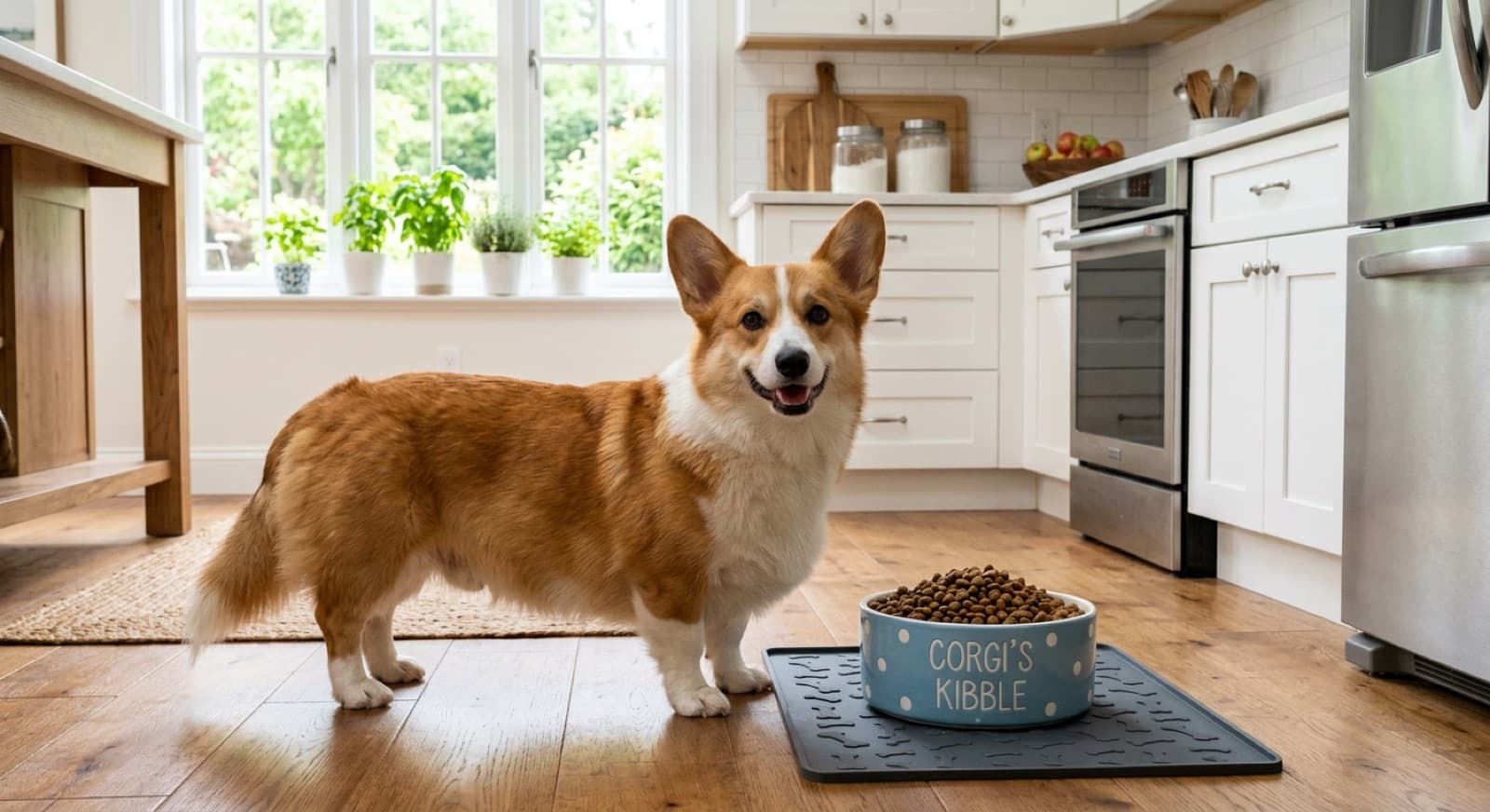
Feed a Corgi a complete food from a nutritionist-backed brand, measure every meal, and keep the dog lean. Obesity is the breed's number one health issue, because Corgis are intensely food-motivated and the bag chart overfeeds them. The reason it matters so much is the long back: extra weight loads the spine and raises the risk of back problems. Judge by body condition, not by how hungry the dog acts, and do not be talked into the round “chonky” look, which is overweight, not cute. Manage the begging with slow feeders, low-calorie veggies, and meal kibble as treats.
What is the best food for a Corgi?
There is no single best bag, and any site that names one is selling something. The standard most vets point to comes from the WSAVA global nutrition guidelines.
Pick a brand that does the science. Ask whether the company employs a full-time, board-certified veterinary nutritionist and runs feeding trials. The safe defaults are Purina Pro Plan, Royal Canin, and Hill's Science Diet.
Because weight is the whole ballgame for this breed, a small-breed or weight-management formula is worth considering. A reduced-calorie food lets a chow-hound eat a satisfying volume without the calories, which makes portion control much easier on everyone's nerves. Then judge the food by the dog: firm stool, good coat, and above all a lean body condition.
The chonky-Corgi problem
Corgis became internet famous partly for looking like a loaf of bread on legs, and that has quietly become a health problem. The “chonky” aesthetic normalizes overweight dogs, to the point that owners who keep their Corgi lean routinely get told the dog looks too skinny or “not as cute.”
It is worth being blunt about this. A round, loaf-shaped Corgi is not a well-fed Corgi, it is an overweight one. The healthy target is a body condition score of 4 to 5 on the 9-point scale: a visible waist when you look down from above, and ribs you can feel under a light cover without pressing hard. People will comment. Trust the body condition and your vet over the comments, because on this breed the cost of carrying the extra weight lands on the spine.
Why weight matters: the long back
Corgis are a dwarf breed with a long spine and short legs. Extra weight loads that spine and raises the risk of serious back problems, which is exactly why portion control is the most important part of feeding this breed.
The Corgi's shape is its charm and its weak point. The same long back that makes the breed look the way it does is vulnerable to intervertebral disc disease, and carrying excess weight increases the strain on the discs as well as the hips and joints. Keeping a Corgi lean is the single most useful thing diet does for the breed's long-term mobility.
This is a feeding article, so the deep dive on spine health, prevention, and what to watch for lives elsewhere: see our Corgi back and spine health guide. For feeding, the takeaway is simple: a lean Corgi is a kindness to its back, and any back or mobility concern is a prompt vet visit.
How much to feed, and managing the begging
A common adult range is roughly 0.75 to 1.5 cups a day split into two meals, but the bag chart overfeeds Corgis, so treat that as a ceiling, not a target. Feed to body condition and adjust down if the dog is gaining. The American Kennel Club breed guide flags the breed's tendency to overeat.
The catch is the begging. A Corgi will act starving no matter how well it is fed, and simply cutting the portion leaves the dog hungrier and more persistent, which wears owners down. The fix is to manage satiety, not just shrink the bowl:
- Slow-feeder bowl or puzzle toy to make the meal last and the dog feel like it ate more.
- Low-calorie filler veggies like baby carrots or plain green beans to add volume without calories.
- Use meal kibble as training treats by pulling it from the daily ration, so rewards do not add anything.
- Keep all treats under about 10 percent of daily calories, and remember “big boned” is not a thing. Structure is not fat.
Puppies, and the grain-free question
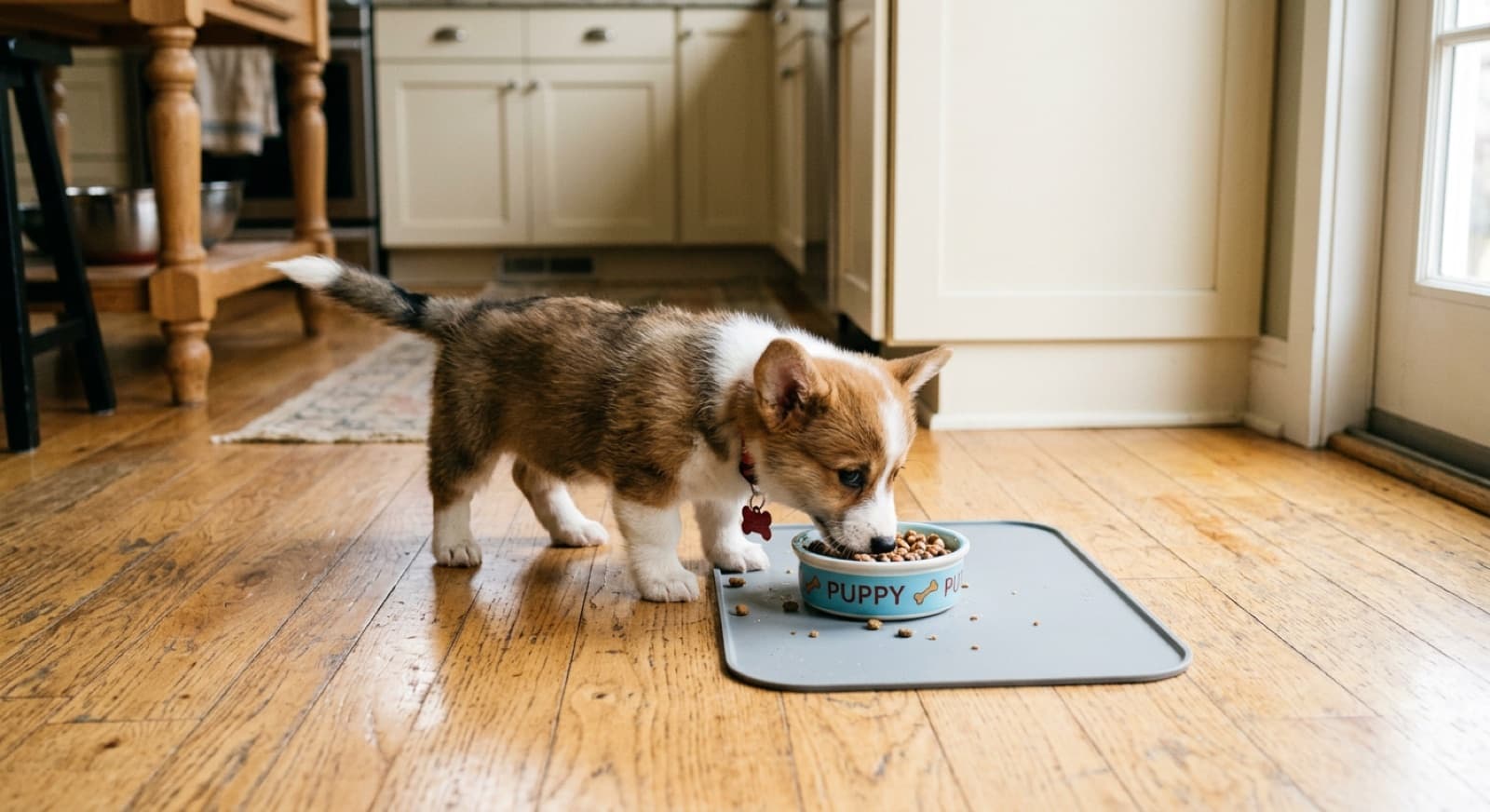
Feed a Corgi puppy a complete puppy or all-life-stages formula for a small-to-medium breed, three meals a day until about six months, then two. Keep the puppy lean even now, because excess weight on a growing, long-backed dog is the last thing it needs. Stay on puppy food until roughly twelve months, then transition to adult food over a week. Measure from the start, because a Corgi puppy will cheerfully train you to overfeed it.
On grain-free: skip it unless your vet diagnoses a grain allergy. The FDA has been investigating a possible link between grain-free diets built on peas, lentils, and potatoes and a heart condition called dilated cardiomyopathy. Grain-free is not automatically healthier, and a true food allergy is usually to a protein anyway.
Foods to avoid
Keep these away from a Corgi completely, and remember a chow-hound will try anything:
- Chocolate (darker is worse)
- Grapes and raisins (can cause kidney failure, even a few)
- Xylitol (in sugar-free gum, some peanut butters, and baking), which is rapidly fatal to dogs
- Onions, garlic, leeks, and chives
- Macadamia nuts
- Alcohol and caffeine
- Cooked bones (they splinter)
A motivated Corgi will counter-surf and raid a bin, so management beats willpower: keep food back and the bin lidded. If your Corgi does eat something toxic, call your vet, the nearest emergency clinic, or a pet poison helpline right away.
Should I feed my Corgi a raw diet?
Only with a vet or veterinary nutritionist involved. Some Corgis do well on a properly built raw diet, but raw meat carries a pathogen risk for the dog and the household, and a homemade raw diet without a professional recipe routinely runs short on key nutrients. For a weight-prone breed, the bigger practical issue is portion control, which a complete commercial diet makes easier to track. If you want to go raw, use a complete commercial product or a vet-formulated recipe and loop in your vet.
Looking to adopt a Corgi?
Sort the measuring cup and a slow-feeder bowl before day one. Browse Corgis and Corgi mixes available now from the rescues we track.
See Available Corgis →Where to buy Corgi food
Every brand worth feeding a Corgi is easy to find in store and online:
- Pet specialty chains (Pet Planet, Tail Blazers, Tisol, and similar). Carry Pro Plan, Royal Canin, and weight-management lines.
- Pet Valu and PetSmart. National chains that stock the major formulas, including reduced-calorie options.
- Your vet clinic. The place for prescription weight-loss diets if your Corgi needs to drop pounds.
- Online. The same brands ship to your door, easy to set on a recurring delivery.
Buying the largest bag your Corgi finishes before it goes stale, stored sealed, is the cheapest way to feed premium. The major adult formulas are all available online.
Frequently Asked Questions
What is the best food for a Corgi?
A complete formula from a brand that employs a veterinary nutritionist and runs feeding trials, like Purina Pro Plan, Royal Canin, or Hill’s Science Diet. Because obesity is the breed’s biggest health risk, many owners use a small-breed or weight-management formula so the dog can eat a satisfying volume without the calories. The brand matters less than the calorie count letting you keep a famously food-motivated dog lean. Start with whatever the rescue was feeding, then transition over seven to ten days.
How much should I feed a Corgi?
Less than the bag says, and to body condition. Corgis are intensely food-motivated and gain weight easily, and the manufacturer chart tends to overfeed them. A common adult range is roughly 0.75 to 1.5 cups a day split into two meals, but the real guide is the dog: you should feel ribs with light pressure and see a clear waist from above. Cardigan Welsh Corgis run a bit heavier than Pembrokes, so there is no single "right" number, only the right body condition.
My Corgi acts hungry all the time. Am I underfeeding?
Almost certainly not. Relentless begging is a breed trait, not a hunger signal. Corgis are chow-hounds who have perfected the art of looking starving five minutes after a full meal. Judge by body condition, not by how hungry the dog acts. If you want to take the edge off, do it without adding calories: a slow-feeder bowl, a puzzle toy, a few low-calorie veggies like carrot or green beans, and using part of the meal kibble as training treats.
Why does my Corgi’s weight matter so much?
Because of the long back. Corgis are a dwarf breed with a long spine and short legs, and extra weight loads that spine and raises the risk of back problems including intervertebral disc disease, along with hip and joint strain. Keeping a Corgi lean is the single biggest thing diet can do for the breed’s long-term comfort and mobility. Any back or mobility concern is a vet conversation, but weight is the part you control daily.
Is a chubby, round Corgi healthy?
No, even though the internet loves the look. The "chonky loaf" image that made Corgis famous has normalized overweight dogs, and owners of lean Corgis often get told their dog looks too skinny. The healthy target is a visible waist and ribs you can feel under a light cover, which is body condition score 4 to 5 out of 9. A round, loaf-shaped Corgi is carrying weight its back cannot afford. Trust body condition over the meme.
What should I feed a Corgi puppy?
A complete puppy or all-life-stages formula sized for a small-to-medium breed, fed three meals a day until about six months, then two. Keep the puppy lean even now, because excess weight on a growing, long-backed dog is not doing it any favours. Stay on puppy food until roughly twelve months, then transition to an adult formula over a week. Measure meals from the start, because a Corgi will happily teach you to overfeed it.
Should I feed my Corgi grain-free?
Not unless your vet diagnoses a grain allergy. The FDA has been investigating a possible link between grain-free diets built on peas, lentils, and potatoes and a heart condition called dilated cardiomyopathy, so most vets take the cautious line. Grain-free is not automatically healthier, and a true food allergy is usually to a protein, not a grain. A complete diet from a nutritionist-backed brand is the safer default.
Corgi Back & Spine Health
IVDD, protecting the long back, and why lean weight is the best prevention.
Corgi Health Issues
The back, hips, eyes, and the conditions weight makes better or worse.
Corgi Adoption Guide
Where to find Corgis and Corgi mixes, real costs, and what to expect from the breed.
Corgis for Adoption
Live listings of Corgis and Corgi mixes from the rescues we track.