The short answer
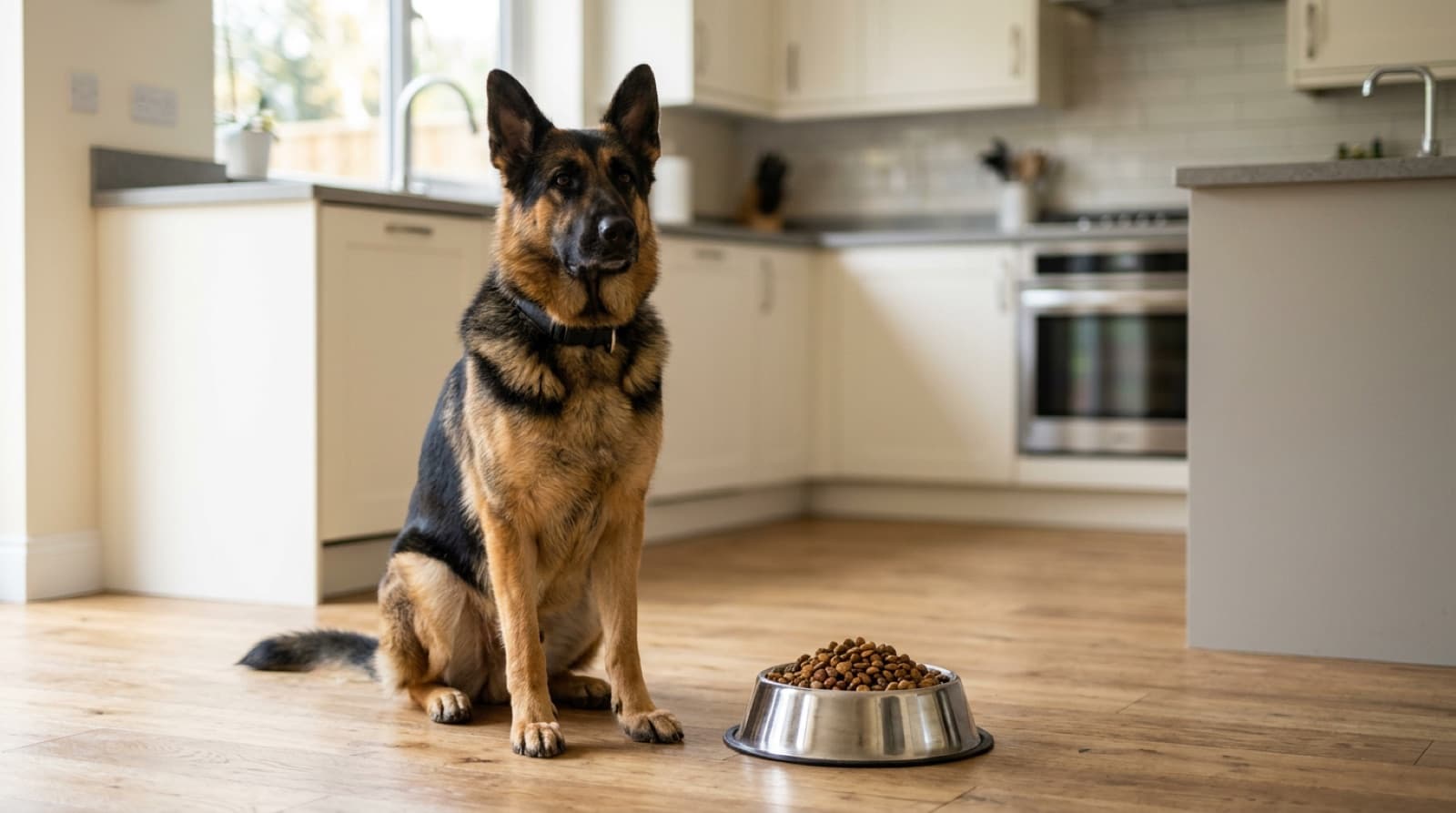
Feed an adult German Shepherd a complete large-breed formula, split into two meals, and keep it lean. The Shepherd is a large breed, so a large-breed adult food (moderated calories and calcium, often with joint support) suits its hip and elbow risk. Puppies need a large-breed puppy formula to grow slowly and protect their joints. Choose a brand with a real veterinary nutritionist behind it. Two breed-specific things to know: Shepherds are genuinely prone to sensitive stomachs and digestive disease, so transition food slowly and see your vet for chronic trouble. And because they are deep-chested, feed at floor level (never raised bowls), use a slow feeder, and keep exercise away from mealtimes to lower bloat risk.
How much should I feed a German Shepherd?
A typical adult eats roughly 3 to 5 cups of quality dry food a day, split into two meals. Treat that as a starting point. The real amount depends on the calories in your specific food and, with this breed especially, on the dog's job.
A working-line Shepherd in sport, protection, or herding burns far more than a calm companion of the same weight. Same breed, different life, different bowl. The breed standard puts males at 65 to 90 lb and females at 50 to 70 lb, so this is a big dog with a real appetite.
Feed to body condition, not to the bag. Use the WSAVA body condition score: aim for a 4 to 5 out of 9, where you feel the ribs easily, see a waist from above, and see a tuck from the side. Adjust the portion to hold that score. And split the day's food into two meals rather than one big one, which matters for bloat (more below).
What is the best food for a German Shepherd?
There is no single best bag, but there is a sound way to choose one, drawn from the WSAVA nutrition guidelines.
Choose a large-breed adult formula. A grown Shepherd is firmly a large-breed dog, and large-breed foods moderate calories and calcium and often add joint support, which fits a breed prone to hip and elbow problems. Look for a named animal protein first, adequate protein and moderate fat for an active dog, omega-3s for the skin and coat, and the AAFCO complete-and-balanced statement for adult maintenance (the version tested in feeding trials beats “formulated to meet”).
Then pick a brand that does the science. Ask whether the company employs a board-certified veterinary nutritionist, runs real feeding trials, owns its plants, and will share a full nutrient analysis. The big makers that meet this bar are the safe default: Purina Pro Plan, Royal Canin (which makes a breed-specific Shepherd line), Hill's Science Diet, and Eukanuba, with Acana a popular Canadian option.
What should I feed a German Shepherd puppy?
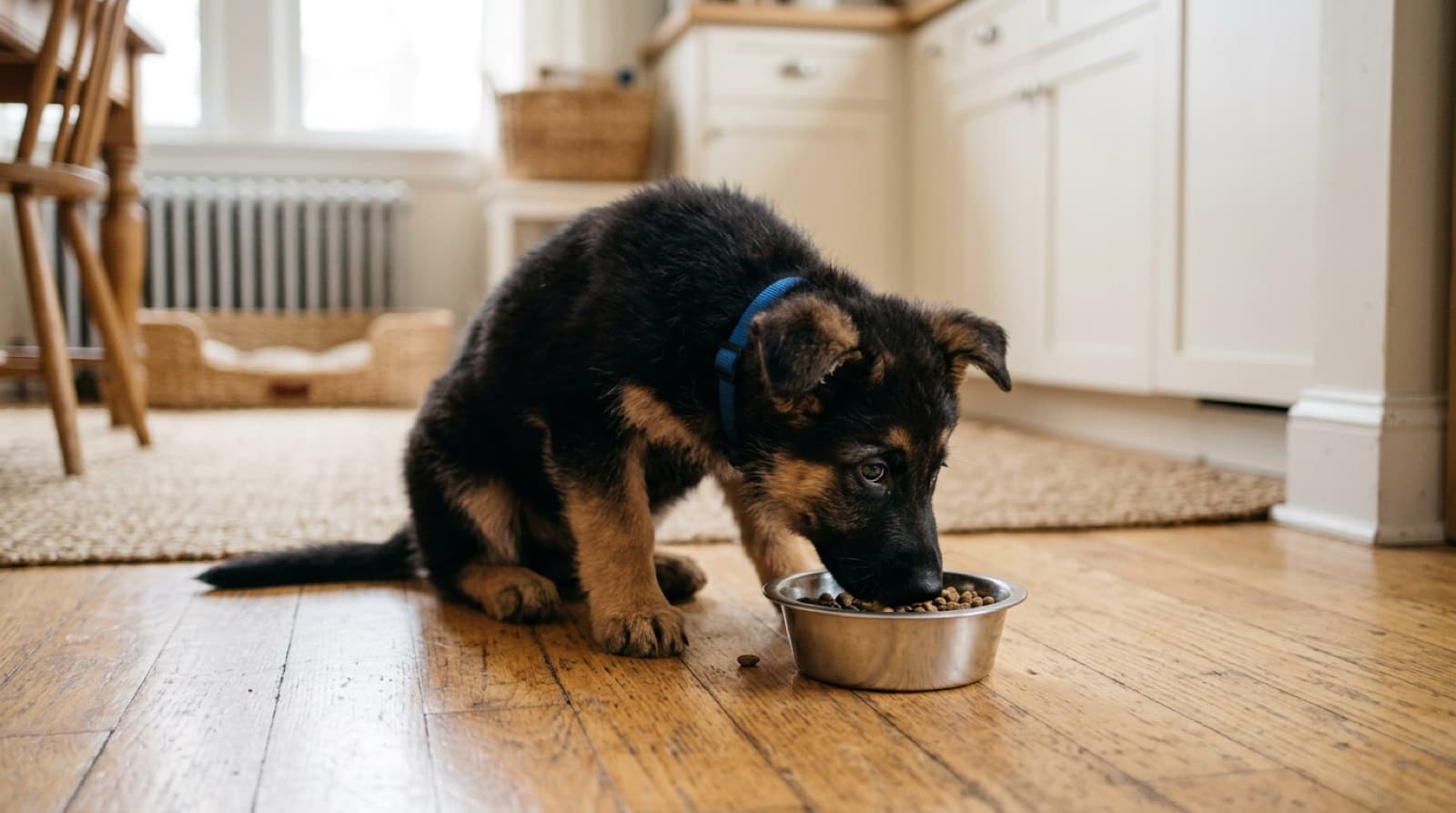
A large-breed puppy formula, not a regular puppy food. For this breed it is one of the most important feeding decisions you make, and it is genuinely about joints.
German Shepherds are prone to hip and elbow dysplasia. The predisposition is genetic, but growing too fast on calorie- and calcium-dense food can make it express worse. Large-breed puppy formulas control calcium and calories so a big puppy grows at a steady, healthy rate instead of shooting up. The AKC notes that puppies fed free-choice developed hip dysplasia at roughly double the rate of puppies fed measured meals, so portion the food and keep the puppy lean enough to feel the ribs.
Meal frequency: about four meals a day for a young puppy, dropping to three by a few months, then two by six to twelve months. Large breeds mature slowly, so stay on large-breed puppy food until roughly 12 to 24 months, with your vet helping you time the switch to adult food.
The sensitive German Shepherd stomach: what is real
The breed's reputation for a touchy gut has a real basis. German Shepherds are over-represented for chronic digestive problems, including EPI (next section) and inflammatory bowel disease. So a sensitive stomach in a Shepherd is more believable than in an average dog.
But be careful with the specifics. The exact percentages you see online, along with claims about a “longer gut” or “higher gut permeability,” come mostly from pet-food and supplement marketing and are not well-supported. Use them as a reason to be thoughtful, not as facts to act on.
For ordinary loose stool, transition foods slowly over 7 to 10 days or longer, and rule out the simple causes first (parasites, garbage-eating, a too-fast food change). For chronic itching or ongoing GI trouble, see your vet. A true food allergy is diagnosed with a vet-run elimination diet, not by switching brands and not by a blood or saliva “allergy test,” which is unreliable for food allergy.
EPI: when a Shepherd loses weight despite eating well
Unexplained weight loss in a German Shepherd that eats a lot is a vet flag, not a reason to change kibble brands.
German Shepherds are the breed most associated with exocrine pancreatic insufficiency (EPI). The pancreas stops making enough digestive enzymes, so the dog cannot absorb its food properly.
The classic signs: steady weight loss over weeks or months despite a big, even ravenous, appetite, plus large, pale, greasy, loose stools, and sometimes a greasy coat near the rear. It usually shows up between about six months and six years of age.
This is a vet diagnosis, not a food experiment. It is confirmed with a simple blood test (the TLI test), and vets usually check B12 at the same time. Once diagnosed, EPI is managed for life with enzyme supplements added to food, a highly digestible diet, and B12 as needed, and most dogs do well once it is controlled. The mistake to avoid: swapping kibble brand after brand chasing the weight loss, which only delays the diagnosis. If your Shepherd is eating well and still losing weight, ask your vet about a TLI test.
Bloat: feed at floor level, never raised
German Shepherds are deep-chested and at elevated risk of bloat (GDV), a true emergency. Do not use raised bowls.
Bloat, or gastric dilatation-volvulus, is a sudden twisting of the stomach that can kill a large dog within hours. Feeding choices lower the risk:
- Feed two to three smaller meals a day, not one big one
- Use a slow-feeder bowl if your Shepherd gulps its food
- Keep vigorous exercise away from mealtimes, about an hour on either side
- Feed at floor level. The well-known Purdue study found raised feeders were associated with a roughly doubled risk of bloat in large and giant breeds, so skip the elevated bowl unless your vet prescribes one for a specific condition
Active bloat is an emergency. Unproductive retching, a hard swollen belly, drooling, restlessness, and collapse mean you drive to an emergency vet right away. Ask your vet whether a preventive stomach-tacking surgery (gastropexy), often done at spay or neuter, makes sense for your dog.
The worst foods for a German Shepherd
Toxic foods aside, the “worst” everyday food for a Shepherd is a cheap, filler-heavy diet and constant brand-switching that upsets a sensitive gut.
Keep these toxic foods away from a Shepherd completely: chocolate, grapes and raisins, xylitol (in sugar-free gum, some peanut butters, and baking), onions and garlic, macadamia nuts, alcohol, and cooked bones. If your dog eats any of them, call your vet or a pet poison helpline right away.
What makes an everyday food a poor choice for this breed:
- Cheap fillers and vague ingredients (unnamed meat by-products, generic animal fat, artificial dyes) are more likely to upset a GI-sensitive Shepherd.
- Foods that fail AAFCO or come from brands that cannot answer the WSAVA nutritionist and quality-control questions.
- Constant brand-switching, a top cause of loose stool in this breed. Pick a good food and stay with it.
- Legume-heavy grain-free diets, with a caveat: the FDA has investigated a possible link to a heart condition (DCM) but has not proven it. There is no reason to feed grain-free unless your vet diagnoses a grain allergy.
- Antlers, bones, and very hard chews that a Shepherd's powerful jaws can crack teeth on.
Should I feed my German Shepherd a raw diet?
Make it a vet conversation, not a default. The AVMA, the WSAVA, and the Canadian Veterinary Medical Association all discourage feeding raw or undercooked animal protein, because of the pathogen risk to both the dog and the people in the home, and there is no documented evidence it outperforms a balanced cooked or commercial diet.
Two cautions are specific to this breed. A Shepherd's sensitive stomach makes an abrupt switch to raw riskier, so any change has to be slow. And a Shepherd with EPI needs a vet-managed, highly digestible, enzyme-supplemented diet that a do-it-yourself raw plan will not provide. If you still want to feed raw, use a complete commercial product or a recipe from a board-certified veterinary nutritionist, handle it with strict hygiene, and avoid it in homes with young children or anyone immune-compromised.
Looking to adopt a German Shepherd?
Sort the large-breed food and the slow feeder before day one. Browse Shepherds and Shepherd mixes available right now from the rescues we track.
See Available German Shepherds →Where to buy German Shepherd food
Every brand worth feeding a Shepherd is easy to find in store and online:
- Pet specialty chains (Pet Planet, Tail Blazers, Tisol, and similar). Carry Pro Plan, Royal Canin, Acana, and most premium lines.
- Pet Valu and PetSmart. National chains that stock the major large-breed and sensitive-stomach formulas.
- Your vet clinic. The place for therapeutic GI, allergy, and EPI-appropriate prescription diets.
- Costco. Kirkland Signature large-breed is a solid everyday budget option.
A Shepherd goes through food faster than a smaller dog, so buy a bag size you will finish reasonably fresh and keep it sealed in a storage bin. Online, the same brands ship to your door, and the large-breed adult formulas are easy to set on a recurring delivery.
Frequently Asked Questions
How much should I feed a German Shepherd?
A typical adult German Shepherd eats roughly 3 to 5 cups of quality dry food a day, split into two meals, but the exact amount depends on the food’s calories and the dog’s job. A working-line Shepherd doing sport or protection burns far more than a sedentary companion of the same size. Feed to body condition rather than the bag: aim to feel the ribs easily and see a waist from above. Adjust up or down to hold that, and split the daily amount into two meals to help lower bloat risk.
What is the best food for a German Shepherd?
A complete large-breed adult formula from a company that does real nutrition science. A Shepherd is a large breed (males 65 to 90 lb), so a large-breed adult food, which moderates calories and calcium and often adds joint support, fits the breed’s hip and elbow risk. Use the WSAVA approach: choose a brand that employs a board-certified veterinary nutritionist, runs feeding trials, and will share a full nutrient analysis. Added omega-3s help the breed’s skin and coat. The brand name matters less than the science behind it and keeping the dog lean.
What should I feed a German Shepherd puppy?
A large-breed puppy formula, not a regular puppy food. This is a genuine, vet-backed difference for the breed. German Shepherds are prone to hip and elbow dysplasia, and growing too fast on calorie- and calcium-dense food can make that worse. Large-breed puppy formulas control calcium and calories so the puppy grows steadily. The AKC notes puppies fed free-choice developed hip dysplasia at about double the rate of those fed measured meals, so feed set portions and keep the puppy lean. Stay on large-breed puppy food until roughly 12 to 24 months, timed with your vet.
Why does my German Shepherd have a sensitive stomach or loose stool?
The sensitive-Shepherd-gut reputation has a real basis: the breed is over-represented for chronic digestive problems, including EPI and inflammatory bowel disease. That said, the specific percentages floating around online are marketing, not established science, so do not take them as fact. For ordinary loose stool, transition food slowly (over 7 to 10 days or longer) and rule out parasites and dietary indiscretion. For chronic itching or ongoing GI trouble, see your vet for a proper workup rather than swapping brands and guessing. True food allergy is diagnosed by an elimination diet, not by a store-shelf hunch.
My German Shepherd is losing weight but eats a lot. Why?
Have your vet check for EPI (exocrine pancreatic insufficiency). German Shepherds are the breed most associated with it: the pancreas stops making enough digestive enzymes, so the dog loses weight over weeks to months despite a ravenous appetite, and passes large, pale, greasy, loose stools. The key point: this is a vet diagnosis, made with a simple blood test (TLI), and managed for life with enzyme supplements, a digestible diet, and B12 as needed. Do not try to fix unexplained weight loss by changing kibble brands, which only delays the diagnosis.
What is the worst food for a German Shepherd?
The worst choices are foods built on cheap fillers and vague ingredients (unnamed meat by-products, generic animal fat, artificial dyes), anything that fails the AAFCO complete-and-balanced standard, and constant brand-switching, which is a top cause of GI upset in this sensitive breed. Be cautious with legume-heavy grain-free diets too: the FDA has investigated a possible link to a heart condition (DCM) but has not proven it, so there is no reason to feed grain-free unless your vet diagnoses a grain allergy. Also keep antlers and very hard chews away from a Shepherd’s powerful jaws, since they crack teeth.
Should I feed my German Shepherd a raw diet?
Make it a vet conversation. The AVMA, WSAVA, and the Canadian Veterinary Medical Association all discourage raw or undercooked animal protein because of the pathogen risk to pets and people, and there is no documented evidence it beats a balanced cooked or commercial diet. Two breed-specific cautions: a Shepherd’s sensitive stomach makes an abrupt raw switch riskier, and a dog with EPI needs a vet-managed, highly digestible, enzyme-supplemented diet that DIY raw does not provide. If you still want raw, use a complete commercial product or a vet-formulated recipe, handle it safely, and skip it in homes with young kids or immune-compromised people.
How much does it cost to feed a German Shepherd per month?
Roughly $70 to $130 a month for an adult German Shepherd on a quality large-breed kibble, more than a medium breed because a Shepherd eats more. Budget kibble runs lower, and therapeutic or prescription diets (for EPI, IBD, or allergies) plus supplements can push past $150 a month. Raw or fresh-cooked diets for a dog this size often run higher still. Treat these as approximate ranges that vary with brand, food type, and your dog’s size and activity.
German Shepherd Health Issues
Hips, elbows, EPI, bloat, and the conditions diet can help or worsen.
Raising a German Shepherd Puppy
Growth, socialization, and the first-year plan for a large-breed pup.
German Shepherd Adoption
Where to find Shepherds and Shepherd mixes, real costs, and what the breed needs.
German Shepherds for Adoption
Live listings of Shepherds and Shepherd mixes from the rescues we track.