The short answer
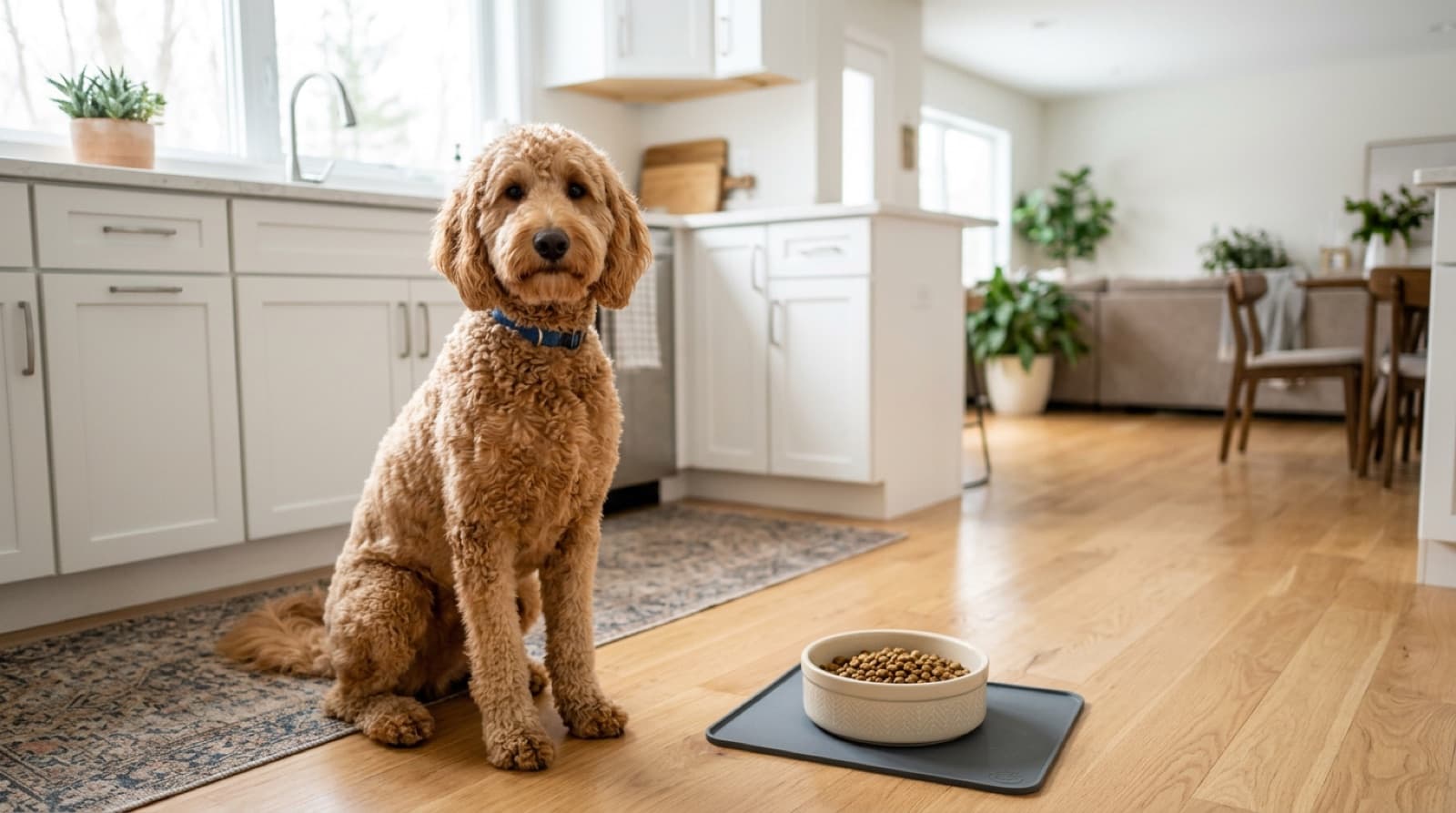
Feed a Goldendoodle a complete diet from a nutritionist-backed brand, portioned to the dog's size, and transition foods slowly. Despite the “hypoallergenic” label, Goldendoodles are allergy-prone, so itchy skin and ear infections are common and worth working through with a vet. Portion to size, since a doodle can be a 20-pound toy or a 65-pound standard, and judge weight by feeling the ribs, not by eye, because the coat hides body condition. Skip grain-free unless your vet diagnoses an allergy, especially given the Golden Retriever parent's heart-condition predisposition.
What is the best food for a Goldendoodle?
There is no single best bag, and any site that names one is selling something. The standard most vets point to comes from the WSAVA global nutrition guidelines.
Pick a brand that does the science. Ask whether the company employs a full-time, board-certified veterinary nutritionist and runs feeding trials. The safe defaults are Purina Pro Plan, Royal Canin, and Hill's Science Diet.
Then match the formula to the dog's size and gut. A standard Goldendoodle is effectively a large breed; a toy or mini does well on a small-breed food. Because doodles run allergy-prone with sensitive stomachs, a sensitive-skin-and-stomach line is a good start. Then watch the dog: firm stool, settled skin, and a lean body mean it is working.
“Hypoallergenic” does not mean allergy-proof
The “hypoallergenic” in Goldendoodle marketing is about the human, not the dog. Goldendoodles themselves are unusually allergy-prone, and many new owners are blindsided by it.
The label means the coat sheds less of the dander that bothers allergic people, and even that is overstated. It says nothing about the dog's own allergies, and here the news is the opposite of what owners expect: a Goldendoodle can inherit the Poodle's tendency to food sensitivities and the Golden Retriever's skin issues at the same time, a double inheritance that makes the breed more allergy-prone than many. So an itchy, paw-licking, ear-scratching doodle is common, not a sign that you bought the wrong dog.
The honest version of managing it: food can be a trigger (chicken is the usual suspect), but environmental allergies look identical and are at least as common, so itching that flares with the seasons points toward the environment. The only way to confirm a food allergy is a vet-run elimination diet, eight to twelve weeks on a single novel protein with no other treats. If a proper trial does not help, that points toward environmental allergies and a vet or veterinary dermatologist.
The recurring ear infections
Chronic ear infections are one of the most frustrating Goldendoodle complaints, and owners often pin them entirely on food. The truth is layered: the breed's floppy, hairy ears trap moisture, which breeds yeast and bacteria regardless of diet, and a food allergy can add inflammation on top. Some owners do clear recurring infections by identifying and removing a food trigger, but the ear itself needs a vet to diagnose and treat, plus a regular cleaning-and-drying routine.
So work the diet angle properly with your vet, but treat the ears as their own job. Expecting a food change alone to cure recurring ear infections is the common mistake.
How much to feed: it depends on size
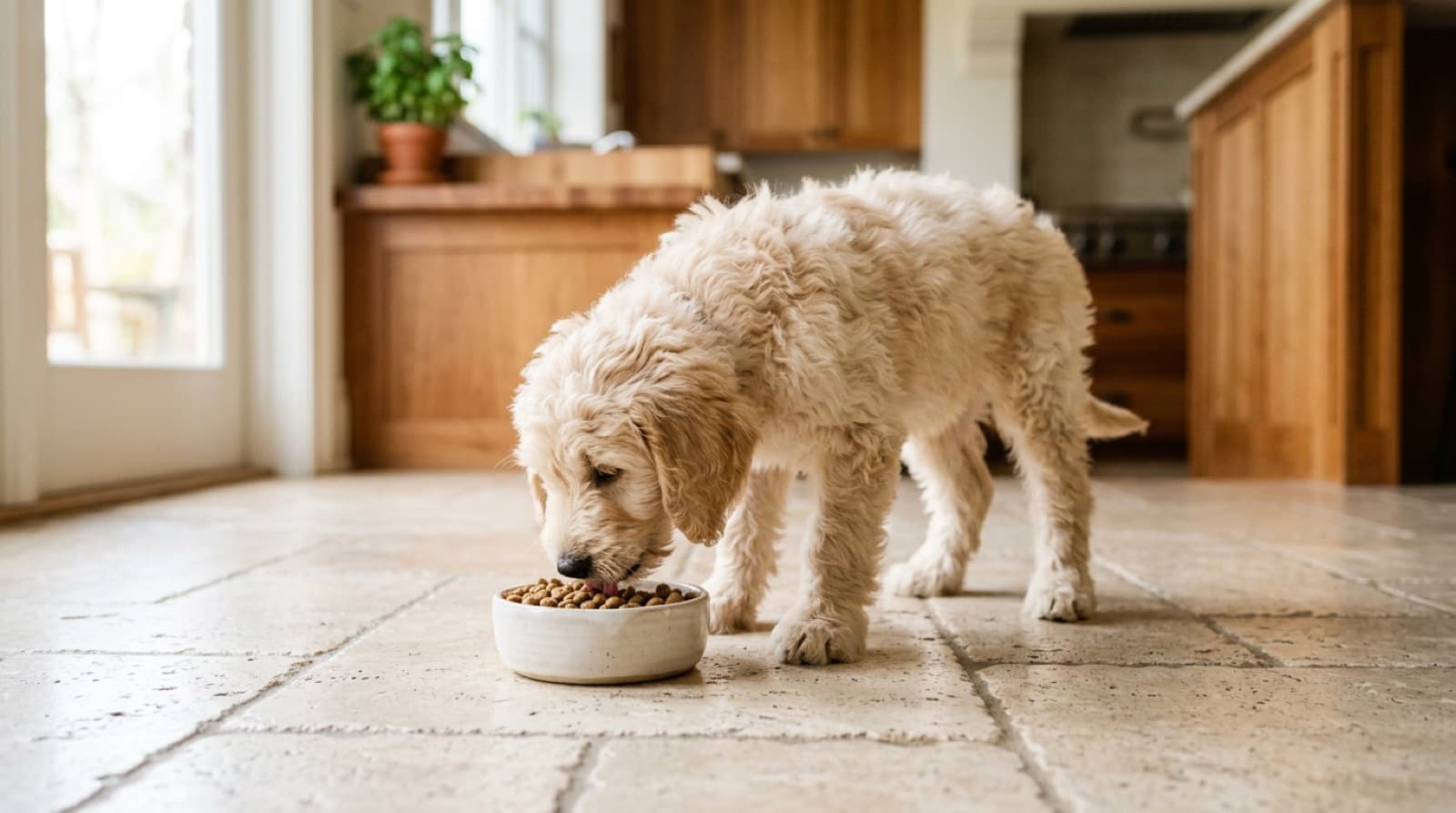
This is where generic feeding charts fail Goldendoodles, because the breed ranges from a toy or mini (roughly 15 to 35 pounds) to a standard (50 to 70-plus pounds). One “cups per day” number cannot serve a 20-pound and a 65-pound dog.
- Toy and mini: small, calorie-dense portions; as puppies they need more frequent meals because of a faster metabolism and a small stomach.
- Medium: standard adult feeding, adjusted to activity.
- Standard: follows large-breed feeding, including a large-breed puppy formula while growing.
Whatever the size, feed to body condition, not the chart, and check by feel. Run your hands over the ribs and feel them under a light cover, and look for a waist. The thick doodle coat hides body condition, so a dog can look heavier or leaner than it is. Rib-check by feel, not by eye, and count treats inside the daily total.
Grain-free and the Golden Retriever heart concern
Skip grain-free unless your vet diagnoses a grain allergy. The caution is stronger here because the Golden Retriever parent is genetically predisposed to a diet-related heart condition.
The FDA has been investigating a possible link between grain-free diets built on peas, lentils, and potatoes and dilated cardiomyopathy (DCM). Golden Retrievers appear genetically prone to a taurine-related form of DCM, and the Golden Retriever Club of America has published on diet-associated heart disease in the breed. Because a Goldendoodle carries that Golden inheritance, most vets steer doodle owners toward established, feeding-trial brands rather than boutique grain-free. And grain-free rarely solves the itch anyway, since the trigger is almost always a protein.
Foods to avoid
Keep these away from a Goldendoodle completely: chocolate, grapes and raisins, xylitol (in sugar-free gum, some peanut butters, and baking), onions and garlic, macadamia nuts, alcohol, caffeine, and cooked bones. If your Goldendoodle eats something toxic, call your vet, the nearest emergency clinic, or a pet poison helpline right away.
Looking to adopt a Goldendoodle?
Plan for a sensitive stomach and a size-appropriate food before day one. Browse Goldendoodles and doodle mixes available now from the rescues we track.
See Available Goldendoodles →Where to buy Goldendoodle food
Every brand worth feeding a doodle is easy to find in store and online:
- Pet specialty chains (Pet Planet, Tail Blazers, Tisol, and similar). Carry Pro Plan, Royal Canin, and sensitive-skin lines in small and large-breed sizes.
- Pet Valu and PetSmart. National chains that stock the major sensitive-stomach and limited-ingredient formulas.
- Your vet clinic. The place for prescription hydrolyzed and limited-ingredient diets used in allergy work-ups.
- Online. The same brands ship to your door, along with the fresh-food subscriptions popular with doodle owners.
Match the bag to your dog's size (small-breed for toys and minis, large-breed for standards). The major doodle-suitable formulas are all available online.
Frequently Asked Questions
What is the best food for a Goldendoodle?
A complete formula from a brand that employs a veterinary nutritionist and runs feeding trials, like Purina Pro Plan, Royal Canin, or Hill’s Science Diet. Because Goldendoodles are allergy-prone and have sensitive stomachs, a sensitive-skin-and-stomach or, if needed, a vet-directed limited-ingredient diet is often the right starting point. Size matters too: a standard Goldendoodle is effectively a large breed and benefits from a large-breed formula, while a toy or mini does well on a small-breed food. The brand matters less than the food agreeing with your dog. Start with whatever the breeder or rescue was feeding, then transition over seven to ten days.
Are Goldendoodles hypoallergenic, and does that make them allergy-proof?
No on both counts, and this surprises a lot of owners. "Hypoallergenic" refers to the dog shedding less dander that bothers allergic humans; it says nothing about the dog’s own allergies, and the claim itself is overstated. In fact Goldendoodles are unusually allergy-prone, because they can inherit the Poodle’s food sensitivities and the Golden Retriever’s skin issues at the same time. So an itchy, paw-licking Goldendoodle is common, not a sign you bought the wrong dog. Confirming a food allergy means a vet-run elimination diet; many itches are environmental rather than dietary.
My Goldendoodle keeps getting ear infections. Is it the food?
It can be one factor, but it is rarely the whole story. Goldendoodles have floppy, hairy ears that trap moisture, which breeds yeast and bacteria regardless of diet, and food allergies can add inflammation on top. Owners do sometimes clear chronic infections by identifying and removing a food trigger (chicken is the usual suspect), but the ear itself needs a vet to diagnose and treat, plus a regular cleaning-and-drying routine. So work the diet angle with your vet, but do not expect a food change alone to fix recurring ear infections.
How much should I feed a Goldendoodle?
It depends heavily on size, because Goldendoodles range from toy and mini (around 15 to 35 pounds) to standard (50 to 70-plus pounds). A toy or mini needs a small, calorie-dense portion and, as a puppy, more frequent meals; a standard follows large-breed feeding. Generic "cups per day" charts mislead because one number cannot serve a 20-pound and a 65-pound dog. Feed to body condition: feel the ribs and look for a waist. And do not judge weight by eye, because the thick coat hides body condition, so a doodle can look heavier or leaner than it is. Rib-check by feel, not by sight.
Should I feed my Goldendoodle grain-free?
No, and the caution is stronger for this breed. The FDA has been investigating a possible link between grain-free diets built on peas, lentils, and potatoes and dilated cardiomyopathy (DCM), a heart condition, and Golden Retrievers (a parent breed) appear genetically predisposed to a taurine-related form of DCM. That inheritance is exactly why doodle owners are steered away from grain-free unless a vet diagnoses a grain allergy. And grain-free rarely fixes allergies anyway, because the trigger is almost always a protein, not a grain. Choose a complete diet from a nutritionist-backed brand.
When do I switch my Goldendoodle from puppy to adult food?
It depends on size. A toy or mini Goldendoodle can usually move to adult food around twelve months. A standard is effectively a large breed and should stay on a large-breed puppy formula longer, often until roughly fifteen to eighteen months and sometimes up to twenty-four, because switching too early can affect controlled growth and the joints. Feed a standard puppy a large-breed puppy food to manage calcium and growth rate. Your vet can confirm the right timing for your dog’s size.
Is fresh or raw food worth it for a Goldendoodle?
Only with a vet or veterinary nutritionist involved. Fresh-food subscriptions (gently cooked, complete-and-balanced) are popular with doodle owners and can be a reasonable, if pricier, choice for a sensitive stomach or a picky eater. Raw is more complicated: it carries a pathogen risk for the dog and the household, and a homemade raw diet without a professional recipe routinely runs short on key nutrients. A complete cooked or kibble diet from a nutritionist-backed brand delivers the same results for most Goldendoodles. If you go fresh or raw, use a complete commercial product or a vet-formulated recipe.
Goldendoodle Health Issues
Allergies, ears, hips, and the heart-condition considerations the Golden line brings.
Goldendoodle Grooming
The coat that hides body condition, and the ear care that diet alone will not replace.
Goldendoodle Adoption
Where to find Goldendoodles and doodle mixes, real costs, and what to expect.
Goldendoodles for Adoption
Live listings of Goldendoodles and doodle mixes from the rescues we track.