The short answer
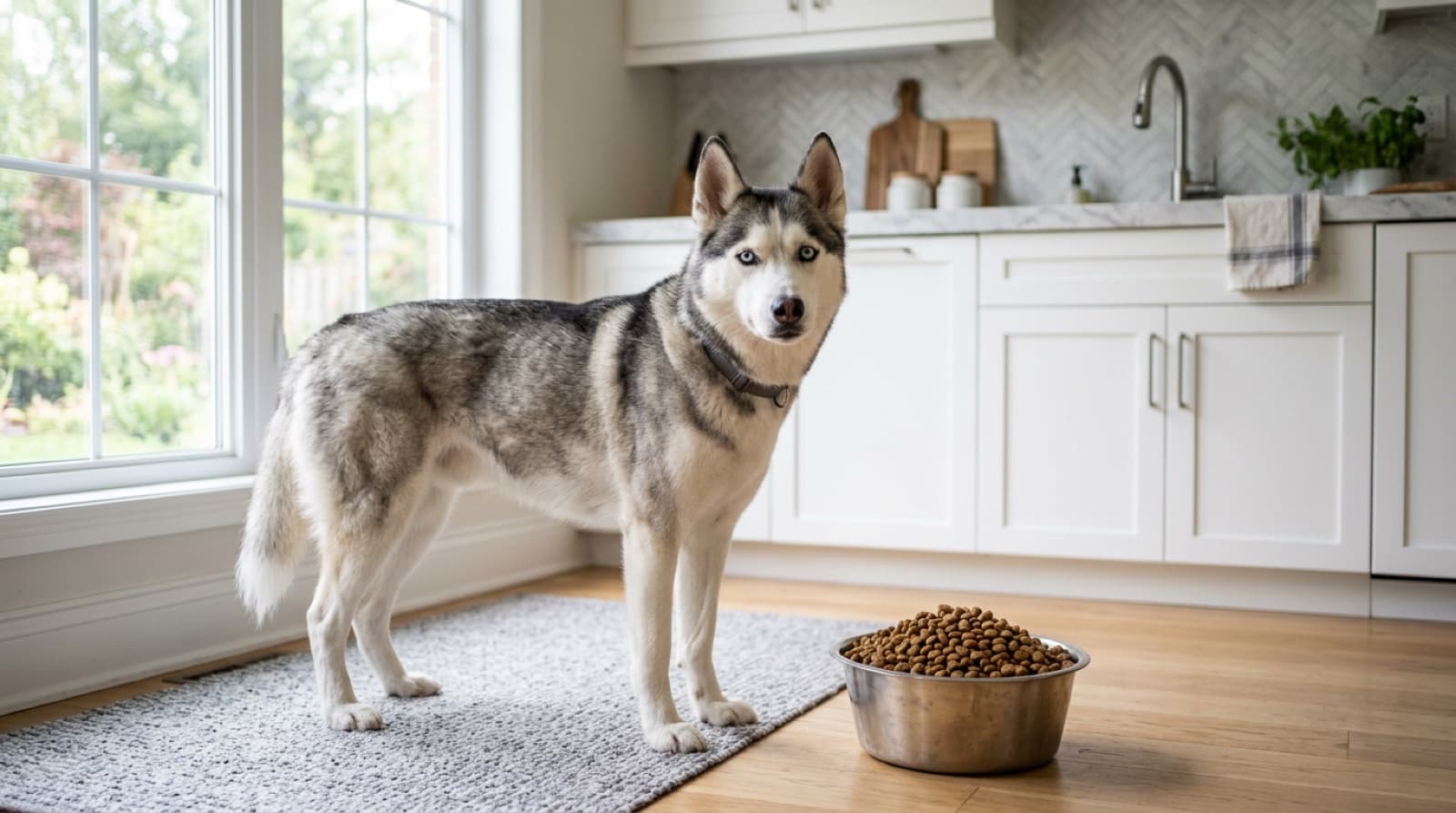
Feed a Husky less than you would expect, and keep it lean. Huskies were bred to run all day on very little food, so they are efficient, naturally slim, and often light eaters. They are a medium breed (35 to 60 lb), so they need an adult medium or all-life-stages formula, not a large-breed food. Pick a brand with a real veterinary nutritionist behind it, feed scheduled meals instead of leaving food down, and judge portions by body condition. Raw diets have a big Husky following, but the veterinary consensus is cautious, so make it a vet conversation. And if your Husky gets crusty skin around the eyes and muzzle, that may be zinc-responsive dermatosis, a vet issue, not a reason to switch foods.
How much should I feed a Husky?
Roughly 1.5 to 3 cups of quality dry food a day, split into two meals, with active dogs at the top of that range. Treat it as a starting point and adjust to the dog.
Here is the part that surprises new owners: a Husky eats less than an athletic 50 lb dog seems like it should. The breed is famously an “easy keeper.” The American Kennel Club quotes the Siberian Husky Club of America describing the breed as exceptionally efficient, bred by the Chukchi people to travel day after day on small amounts of food. That efficiency is still in the modern dog.
Feed to body condition, not to the bag. Use the WSAVA body condition score: aim for a 4 to 5 out of 9, where you feel the ribs easily, see a waist from above, and see a tuck from the side. A fit Husky genuinely looks leaner than most breeds, and that is correct.
One honest caveat: lean by nature does not mean immune to weight gain. Because a Husky needs so few calories, it is easy to overfeed by portioning for the big athletic dog it looks like. Vets warn that a free-fed Husky can put on weight, so measure meals and skip the all-day buffet.
What is the best food for a Husky?
There is no single best bag. There is a good way to choose one, and it is the same standard most vets point to from the WSAVA nutrition guidelines.
Pick a medium-breed adult formula, not a large-breed one. A Husky tops out around 60 lb, below the large-breed threshold. Large-breed foods exist to manage giant-breed growth and joints, which is the wrong job for a Husky. An adult medium or all-life-stages food, carrying the AAFCO complete-and-balanced statement, is the right base. An active, working-type Husky does well with adequate protein and fat.
Choose a brand that does the science. Ask whether the company employs a qualified, board-certified veterinary nutritionist, runs real feeding trials, owns its plants, and will share a full nutrient analysis. The big makers that meet this bar are the safe default: Purina Pro Plan, Royal Canin, Hill's Science Diet, and Eukanuba, with Acana a popular Canadian option.
One myth to set aside: the idea that every Husky has a delicate stomach that needs a special grain-free or boutique diet. That framing comes mostly from pet-food marketing, not from veterinary consensus. A genuinely sensitive or itchy dog is a vet conversation, not a guess at the store shelf.
What should I feed a Husky puppy?
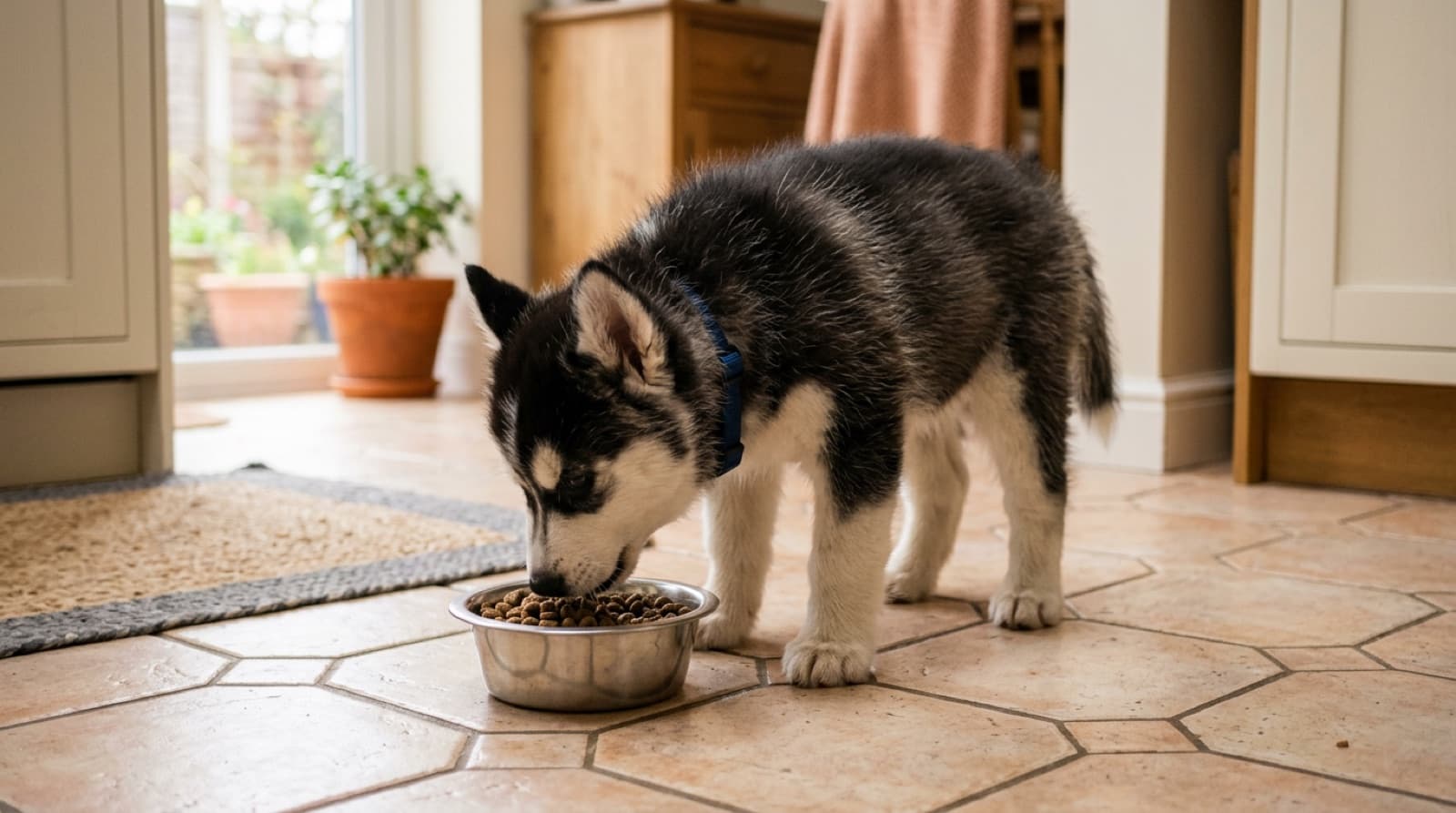
A standard puppy or all-life-stages food, not a large-breed puppy formula. This trips up a lot of new owners who assume a working sled dog needs the big-dog version.
Large-breed puppy foods control calcium and calories to slow the growth of dogs that will pass roughly 70 lb, which protects giant-breed joints. A Husky matures well under that weight, so it does not need, and should not get, the large-breed growth qualifier on the label. Look instead for the AAFCO statement for “growth” or “all life stages.”
Feed frequent small meals when the puppy is very young, settle to about three meals a day by four months, then move to twice daily. Keep the puppy lean enough to feel the ribs. A pudgy puppy is not a healthy one. Your vet will help you time the switch to adult food.
Is my Husky a picky eater, or is something wrong?
Both things are true at once, and telling them apart matters. A Husky that is mildly disinterested in food, leaves a little in the bowl, or skips the occasional meal is often just being an efficient Husky. That is the breed's working heritage showing up.
The fix for ordinary picky behaviour is structure, not a fancier food. Feed scheduled meals and pick the bowl up after about 15 minutes. The AKC notes vets generally do not recommend free-feeding. Do not let a healthy dog train you into adding toppers and extra meals to chase its appetite, which usually makes a picky eater pickier.
Know the line between picky and sick. A sudden or sustained loss of appetite is a different thing. VCA notes that a drop in appetite is strongly associated with illness. If your Husky goes off food for more than a day or two, or stops eating along with vomiting, diarrhea, lethargy, or signs of pain, that is a vet visit, not pickiness.
Should I feed my Husky a raw diet?
Raw feeding is more popular with Husky owners than almost any other breed, so this deserves an honest answer rather than a slogan. The short version: it can be done, but the mainstream veterinary position is cautious, so treat it as a decision you make with your vet, not against them.
Why owners are drawn to it: a shinier coat (especially appealing on a heavy-coated breed), the “ancestral” appeal, managing a picky or sensitive eater, and smaller stools. Worth knowing: the WSAVA says there is no documented evidence that raw diets are healthier than balanced commercial or cooked food. Coat improvements usually trace to fat and omega content, which a good cooked or kibble diet can match. Smaller stools are real, from higher digestibility, but they are not a health benefit.
The real risks, stated plainly:
- Pathogens. An FDA study of commercial raw pet food found Salmonella and Listeria far more often than in processed food, and dogs can shed these bacteria without looking sick, contaminating the home. The highest-risk people are infants, young children, pregnant women, the elderly, and anyone immune-compromised.
- Nutritional imbalance. Homemade raw without a vet-formulated recipe commonly gets the calcium-to-phosphorus ratio wrong, which is dangerous, especially for a growing puppy.
- Cost and effort. Raw is pricier and more labour-intensive, and a large active Husky amplifies both.
The AVMA discourages feeding raw or undercooked animal protein for exactly these reasons. One Husky-specific note: if your reason for going raw is a dull coat or crusty skin, that may be zinc-responsive dermatosis (below), which needs a vet, not a new diet.
If you still choose raw, do it with your vet or a board-certified veterinary nutritionist, use a complete commercial raw rather than a homemade recipe, keep strict kitchen hygiene, and avoid it entirely in homes with young children or immune-compromised people, in puppies, and in a newly adopted dog still settling in.
Husky skin and coat: zinc-responsive dermatosis
This is a vet diagnosis, not a food swap, and you should never start zinc supplements on your own.
Huskies and other Arctic breeds are prone to a condition called zinc-responsive dermatosis. It shows up as crusting and scaling skin, classically around the eyes and muzzle, and also on the paw pads, ears, and pressure points, often with a dull coat and sometimes a secondary infection.
The crucial point for feeding: in Huskies this is an absorption defect, not a diet shortfall. The dog cannot take up zinc properly even on a complete, good-quality food. That means you cannot fix it by buying a better bag, and switching to raw will not help either.
It also means do-it-yourself is dangerous. Too much zinc is toxic and can cause anemia, and excess zinc blocks copper absorption. The condition is diagnosed with a skin biopsy and managed with a carefully dosed zinc supplement under veterinary supervision, often for life. Facial crusting can also point to other conditions entirely, which is another reason this needs a vet rather than a guess. The reassuring part: it is breed-associated, not universal, and most Huskies never develop it.
Foods to avoid, and the Husky scavenger problem
Huskies are escape artists and scavengers, so toxic-food safety is mostly about securing the trash and the counters.
Keep these toxic foods away from a Husky completely:
- Chocolate (darker is worse), coffee, and caffeine
- Grapes and raisins (can cause kidney failure)
- Xylitol (in sugar-free gum, some peanut butters, and baking)
- Onions, garlic, leeks, and chives
- Macadamia nuts, alcohol, and cooked bones
Nothing on that list is Husky-specific. The breed-specific risk is behaviour. Huskies are champion escape artists, diggers, and counter-surfers with a strong food and prey drive, so they find trouble by raiding the bin, the garden, or a dropped piece of gum. Lid the trash, push food to the back of the counter, and watch the yard. If your Husky does eat something toxic, call your vet or a pet poison helpline right away.
Should I feed my Husky grain-free?
Not as a default. Grain-free is a marketing trend, and there is an open safety question around it.
Since 2018 the FDA has been looking into a possible link between grain-free diets high in peas, lentils, and potatoes and a heart condition called dilated cardiomyopathy. A correlation turned up in the reports, but causation has not been established, and the FDA has not issued a major update since late 2022.
Huskies are not a wheat-allergic breed by default, so there is no breed reason to reach for grain-free. The sensible line most vets take: do not switch reactively, and if you think your dog has a true food allergy, work it out with your vet rather than guessing at the shelf.
Looking to adopt a Husky?
Sort the food and the gear before day one. Browse Huskies and Husky mixes available right now from the rescues we track.
See Available Huskies →Where to buy Husky food
Every brand worth feeding a Husky is easy to find in store and online:
- Pet specialty chains (Pet Planet, Tail Blazers, Tisol, and similar). Carry Pro Plan, Royal Canin, Acana, and most premium lines.
- Pet Valu and PetSmart. National chains that stock the major medium-breed and active-dog formulas.
- Your vet clinic. The place for prescription diets that need authorization.
- Costco. Kirkland Signature is a solid everyday budget option.
Because a Husky eats relatively little, a bag lasts a while, so buy a size you will finish before it goes stale and keep it sealed in a storage bin. Online, the same brands ship to your door, and the medium-breed adult formulas are easy to set on a recurring delivery.
Frequently Asked Questions
How much should I feed a Husky?
Less than you would guess for an athletic dog this size. A typical adult Husky eats roughly 1.5 to 3 cups of quality dry food a day split into two meals, with active dogs at the higher end. Huskies were bred to travel long distances on very little food, so they are efficient and naturally lean. Feed to body condition, not the bag: you should feel the ribs easily and see a waist from above. A fit Husky looks leaner than most breeds, and that is correct, not underweight.
Why does my Husky eat so little?
It is in the breed. The Siberian Husky Club of America describes the breed as exceptionally efficient, built by the Chukchi people to work day after day on small amounts of food. A Husky that skips the odd meal or seems uninterested in food is usually self-regulating, not sick. That said, a sudden or lasting drop in appetite, especially with vomiting, diarrhea, lethargy, or pain, is a warning sign, not pickiness. When in doubt, see your vet.
What is the best food for a Husky?
A complete adult food for a medium, active breed from a company that does real nutrition science. A Husky is a medium dog (35 to 60 lb), so it does NOT need a large-breed formula. Use the WSAVA approach: pick a brand that employs a qualified nutritionist, runs feeding trials, and will share a full nutrient analysis. Look for the AAFCO complete-and-balanced statement on the label for the right life stage. Active working-type Huskies do well on adequate protein and fat. The brand name matters less than the science behind it and keeping your dog lean.
What should I feed a Husky puppy?
A standard puppy or all-life-stages food, NOT a large-breed puppy formula. Large-breed puppy foods exist to slow the growth of dogs that will top about 70 lb, and a Husky matures well below that, so the controlled-calcium large-breed formula is the wrong tool. Feed frequent small meals when very young, around three meals a day by four months, then settle into twice daily. Look for the AAFCO statement for growth or all life stages, and keep the puppy lean rather than letting it clean every bowl.
Should I feed my Husky a raw diet?
Raw has a big following among Husky owners, but the mainstream veterinary position is cautious, so treat it as a vet conversation. The AVMA discourages feeding raw or undercooked animal protein because of the risk to both pets and people, and the WSAVA says there is no documented evidence that raw beats a balanced commercial or cooked diet, while the risks are well documented. An FDA study found Salmonella and Listeria far more often in raw food than in processed food, and dogs can spread those bacteria around the home. If you still want to feed raw, do it with your vet or a board-certified nutritionist, use a complete commercial raw rather than a homemade recipe, keep strict hygiene, and skip it in homes with young kids, pregnant or immune-compromised people, puppies, or a newly adopted dog still settling in.
My Husky has crusty skin around its eyes and nose. Is it the food?
Possibly, but probably not in the way you think, and this is a vet visit, not a food swap. Huskies and other Arctic breeds are prone to zinc-responsive dermatosis, where the dog cannot absorb zinc properly even on a good diet. It shows up as crusting and scaling around the eyes, muzzle, paw pads, and pressure points. The key point: in Huskies this is an absorption defect, not a diet shortfall, so you cannot fix it by buying a better food, and you should not start zinc supplements on your own (too much zinc is toxic and blocks copper). Your vet diagnoses it with a skin biopsy and manages it with the right dose of zinc, often for life.
What foods are toxic to a Husky?
The same foods toxic to any dog: chocolate, grapes and raisins, xylitol (in sugar-free gum, some peanut butters, and baking), onions and garlic, macadamia nuts, alcohol, and cooked bones. The Husky twist is behaviour, not biology. Huskies are escape artists, scavengers, and counter-surfers with a strong food and prey drive, so they get into trouble by raiding the trash, the garden, or a dropped piece of gum. Secure the bin and the counters, and call your vet or a pet poison helpline right away if your Husky eats something on this list.
How much does it cost to feed a Husky per month?
Roughly $50 to $90 a month for an adult Husky on quality dry food, and often toward the lower end because Huskies eat less than their size suggests. Budget kibble runs lower, premium runs higher, and raw or fresh-cooked diets often pass $150 a month. The figure varies with brand, food type, and your dog’s size and activity, so treat it as a ballpark, not a quote.
Husky Health Issues
Eyes, hips, skin, and the conditions worth knowing before and after you adopt.
Husky Shedding & Grooming
The coat blow, what actually helps, and why you never shave a Husky.
Husky Adoption
Where to find Huskies and Husky mixes, real costs, and what the breed is like to live with.
Huskies for Adoption
Live listings of Huskies and Husky mixes from the rescues we track.