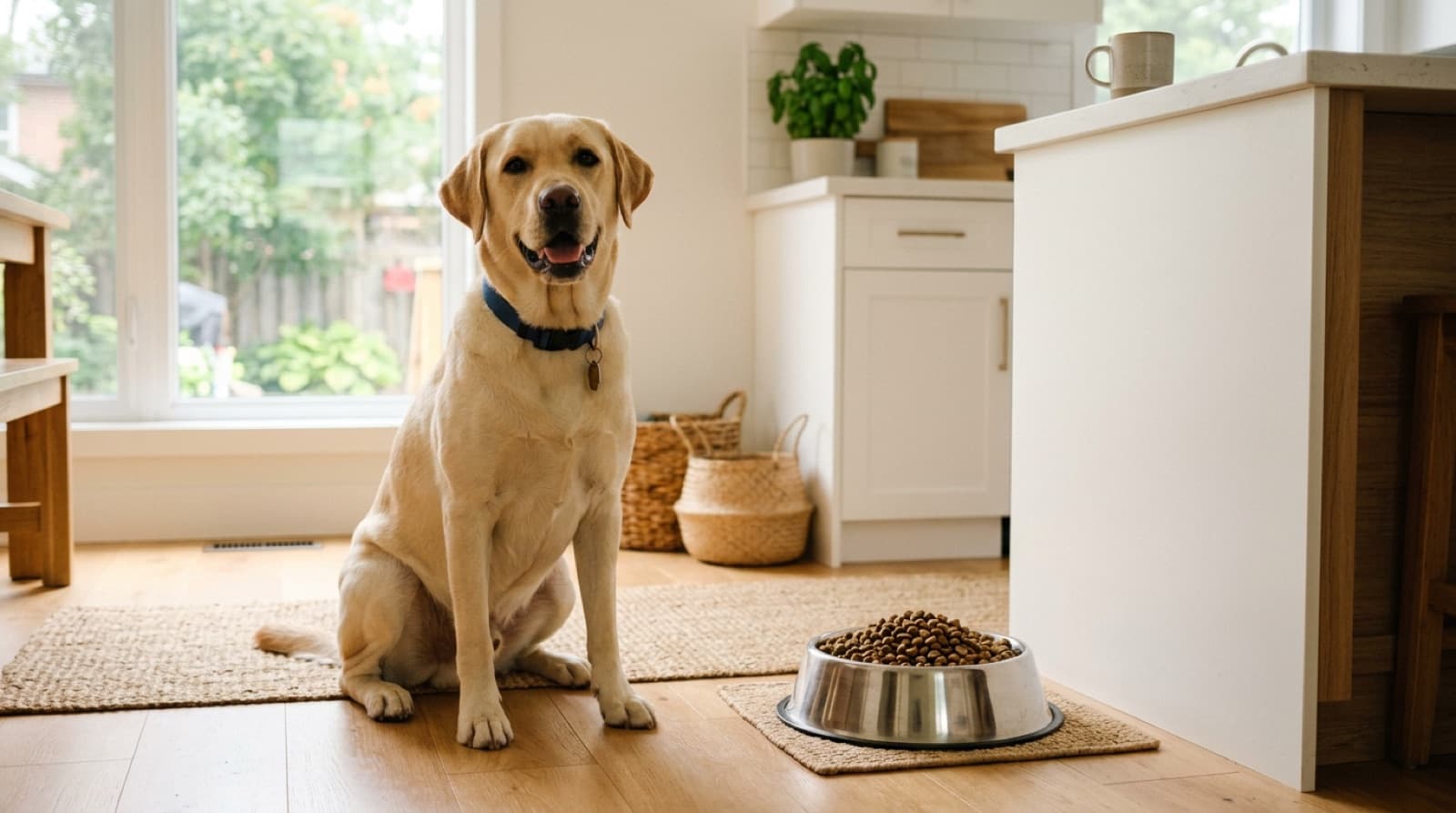
The short answer
Feed an adult Labrador a complete large-breed formula and measure every meal. The brand on the bag matters less than two things: it comes from a company with a veterinary nutritionist on staff (Purina Pro Plan, Royal Canin, Hill's, Eukanuba, or Acana in Canada), and you feed to keep the dog lean, not full. Labs are the most obesity-prone breed in the country and a Lab is hungry by design, so most Labs need less than the bag says. Puppies need a large-breed puppy food to grow slowly and protect their joints. Skip grain-free unless your vet diagnoses an allergy, and keep chocolate, grapes, xylitol, and the kitchen bin out of reach. Every brand worth feeding is sold at the major pet chains and online.
What is the best food for a Labrador?
There is no single best bag, and any site that names one is selling something. What there is, is a way to choose well. The standard most Calgary vets point to comes from the WSAVA global nutrition guidelines, and it is refreshingly practical.
Pick a brand that does the science. Ask one question: does the company employ a full-time, board-certified veterinary nutritionist and run real feeding trials? A handful of large makers do, and they are the safe default for a healthy Lab: Purina Pro Plan, Royal Canin, Hill's Science Diet, and Eukanuba. Acana is a popular Canadian-made option. The expensive boutique bag with the prettiest label is often the one with the least nutrition science behind it.
Choose the large-breed adult formula. A grown Lab is a large-breed dog. Large-breed adult foods are built around joint support and a calorie density that does not pile on weight. This single choice does more for a Lab than any superfood ingredient on the front of the bag.
Then ignore the marketing and watch the dog. The right food is the one your Lab digests well (firm stool, no constant gas), keeps a glossy coat on, and lets you hold a lean body condition. If those three are true, you have the right food, whatever the price tier.
Should I feed my Labrador grain-free?
Not unless your vet diagnoses a grain allergy. Grain-free is a marketing trend, not a Lab need.
The FDA has been investigating a possible link between grain-free diets, especially ones built on peas, lentils, and potatoes, and a serious heart condition called dilated cardiomyopathy. The research is still unfolding and not every grain-free food is implicated, but most veterinary cardiologists now take the cautious line: skip grain-free in a dog without a diagnosed grain allergy.
Labs are not a wheat-allergic breed by default. True food allergies in dogs are usually to a protein, not a grain, and they need a vet-run elimination diet to confirm. If your Lab itches or has chronic ear or stomach trouble, that is a vet conversation, not a reason to grab the grain-free bag off the shelf and guess.
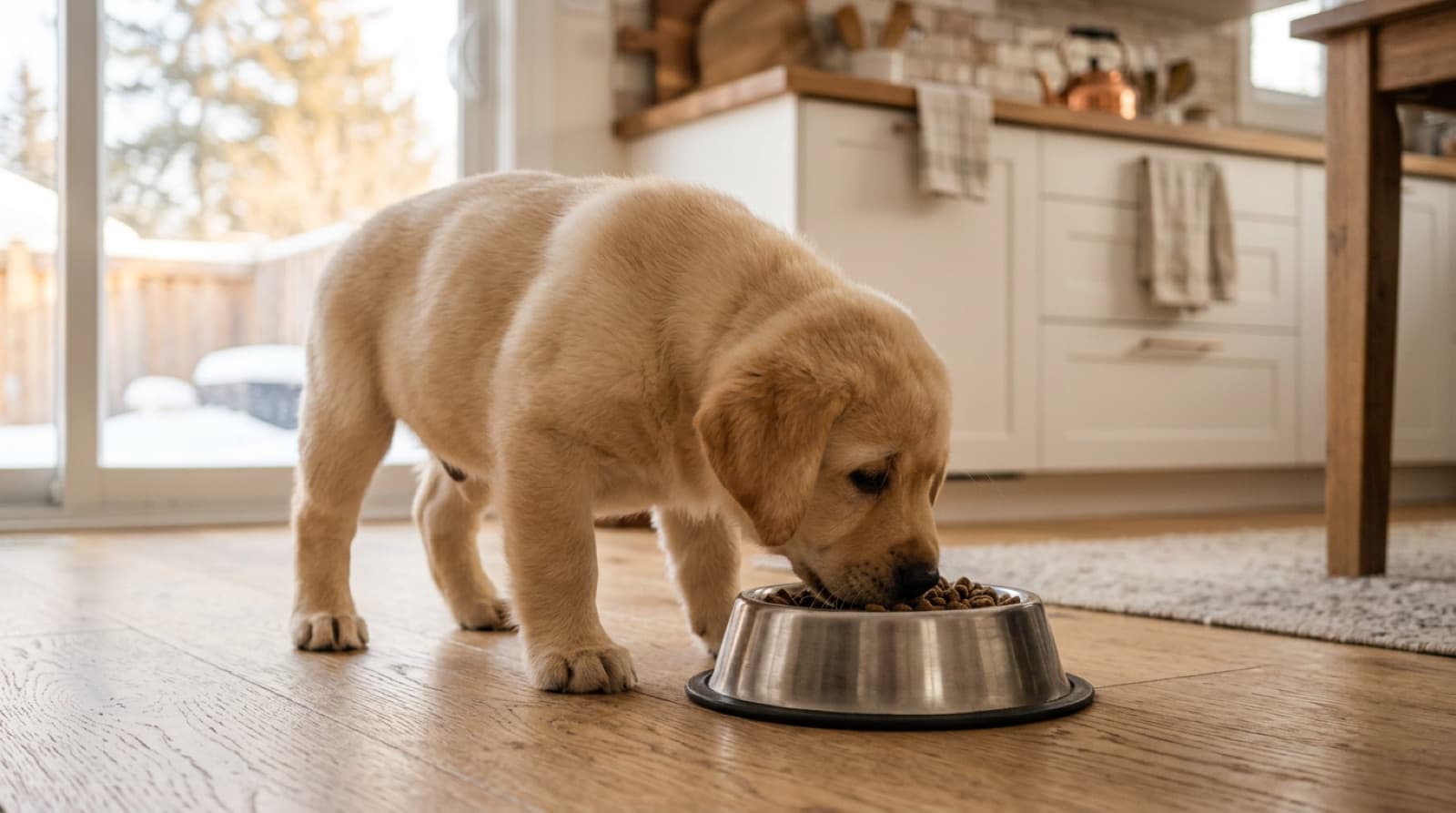
What should I feed a Labrador puppy?
A food labelled for large-breed puppies, not regular puppy food. This is the one feeding choice for a Lab puppy that genuinely changes outcomes, and a lot of new owners miss it.
Regular puppy foods are calorie- and calcium-dense to fuel fast growth. For a small dog that is fine. For a Lab, fast growth is the problem. A Lab is already genetically prone to hip and elbow dysplasia, and growing too quickly loads soft, developing joints and raises the odds of lifelong orthopedic trouble. Large-breed puppy formulas, like these large-breed puppy diets, control calcium and calories so the puppy grows slowly and evenly. The American Kennel Club's Labrador breed guide echoes the same caution about a Lab puppy growing too fast.
Feed three meals a day until about six months, then drop to two. Keep the puppy lean enough that you can feel the ribs. The roly-poly Lab puppy people coo over is carrying weight its joints cannot afford. Stay on a large-breed puppy formula until 12 to 18 months, then transition to large-breed adult food. Your vet will help you time the switch.
How much should I feed a Labrador?
A typical adult Lab eats around 2.5 to 3.5 cups of quality kibble a day, split into two meals. Treat that as a starting point, not gospel. The right amount depends on the dog's age, activity, and the calorie density of your specific food.
Feed the dog in front of you, not the chart on the bag. Run your hands over the ribs: you should feel them easily under a thin layer, like the back of your hand. Look down from above: there should be a visible waist behind the ribs. If you cannot feel ribs, feed less. Because Labs are the most obesity-prone breed in the country, most Labs need below what the bag suggests, and the begging eyes are lying to you.
Seasons add a twist. A long cold winter cuts daily exercise, so a Lab still eating its summer portion through the dark months quietly gains weight. A Lab that swims and runs all summer burns more. Portions are a moving target across the year, not a number you set once.
Weight is the single biggest health lever you control for this breed, and it deserves its own playbook. We wrote one: see the Labrador weight-management guide for body condition scoring, the 10% treat rule, and exactly how to slim a heavy Lab.
Foods to avoid: the Labrador problem
A Lab eats first and thinks never. With this breed, toxic-food safety is about management, because you cannot out-train an appetite this strong.
Keep these away from a Labrador completely:
- Chocolate (darker is worse)
- Grapes and raisins (can cause kidney failure, even a few)
- Xylitol (in sugar-free gum, some peanut butters, baking) which is rapidly fatal to dogs
- Onions, garlic, leeks, and chives
- Macadamia nuts
- Alcohol and caffeine
- Cooked bones (they splinter)
The Lab twist is behaviour. A Lab will counter-surf, open a bin, raid a backpack, and swallow things whole before you have crossed the room. So the rule is environmental: lid the bin, push food to the back of the counter, zip the bags, and assume an unattended Lab plus unattended food equals no food. If your Lab does eat something on this list, call your vet or the nearest emergency clinic right away, or a pet poison helpline. Speed matters more than waiting to see what happens.
Should I feed my Labrador a raw diet?
Only with a vet or veterinary nutritionist involved, and not in the first weeks after adoption. Raw feeding has a passionate following, and plenty of Labs do fine on a properly built raw diet. But the honest version has caveats worth knowing before you commit.
Three real concerns. A newly adopted dog's stomach is already unsettled, and a sudden switch to raw makes that worse. Raw meat carries a pathogen risk (salmonella, listeria) for the dog and for the people handling the bowl, which matters more in a home with young kids or anyone immune-compromised. And a homemade raw diet built without a professional recipe very commonly runs short on calcium and other nutrients, which is especially risky for a growing puppy.
For most Labs, a complete cooked or kibble diet from a nutritionist-backed brand matches raw on the outcomes that actually show up at the vet. If you still want to go raw, do it later (not during the adjustment weeks), transition slowly, use a complete commercial raw or a vet-formulated recipe rather than guessing, and loop in your vet. This is a YMYL topic for a reason: get the recipe wrong and the dog pays for it.
Looking to adopt a Labrador?
Get the food and the slow feeder sorted before day one. Browse Labs and Lab mixes available right now from the rescues we track.
See Available Labradors →Where to buy Labrador food
Every brand worth feeding a Lab is easy to find in store and online:
- Pet specialty chains (Pet Planet, Tail Blazers, Tisol, and similar). Carry Pro Plan, Royal Canin, Acana, and most premium lines.
- Pet Valu and PetSmart. National chains that stock the major large-breed and sensitive-stomach formulas.
- Your vet clinic. The place for prescription diets (weight, allergy, GI) that need authorization.
- Costco. Kirkland Signature large-breed is a solid everyday budget option, though it lacks the prescription and specialty lines.
Buying the largest bag your Lab will finish before it goes stale, and keeping it sealed in a storage bin, is the cheapest way to feed premium. Online, the same brands ship to your door, and the large-breed adult formulas are easy to set on a recurring delivery so you never run out mid-week.
Frequently Asked Questions
What is the best food for a Labrador?
A complete large-breed adult formula from a brand that employs a full-time veterinary nutritionist and runs feeding trials. By the WSAVA framework that points to Purina Pro Plan, Royal Canin, Hill’s Science Diet, and Eukanuba, with Acana as a Canadian option. The brand name on the bag matters less than the protein source agreeing with your dog and the calorie count letting you keep the dog lean. Start with whatever the rescue or breeder was feeding for the first one to two weeks, then transition over seven to ten days.
How much should I feed a Labrador?
A typical adult Lab eats roughly 2.5 to 3.5 cups of quality kibble a day split into two meals, but the bag is a starting point, not a rule. Feed to the dog’s body condition, not the chart: you should feel the ribs easily and see a waist from above. Labs are the most obesity-prone breed in the country, so most Labs need less than the bag suggests. Measure every meal with an actual cup and count treats inside the daily total.
What should I feed a Labrador puppy?
A food labelled for large-breed puppies, not regular puppy food. Large-breed puppy formulas control calcium and calories so a fast-growing Lab grows slowly and evenly, which protects the hips and elbows it is already genetically prone to damaging. Feed three meals a day until about six months, then two. Keep a Lab puppy lean. A roly-poly Lab puppy is not healthy, it is a future orthopedic bill.
Is there a different food for a black, yellow, or chocolate Lab?
No. Coat colour does not change nutritional needs. A black Lab, yellow Lab, and chocolate Lab all eat the same large-breed formula. Chocolate Labs have a slightly shorter average lifespan in one large UK study, but that is linked to skin and ear issues, not diet, and it does not call for a special food. Feed the dog, not the colour.
What foods are toxic to Labradors?
The same foods toxic to any dog, and Labs are dangerous here because they eat first and think never. Keep chocolate, grapes and raisins, onions and garlic, xylitol (in sugar-free gum, peanut butter, and baking), macadamia nuts, alcohol, and cooked bones away from a Lab completely. A Lab will counter-surf, raid the bin, and swallow things whole, so management beats training. If your Lab eats something toxic, call your vet or the nearest emergency clinic right away, or a pet poison helpline.
Should I feed my Labrador a raw diet?
Only with a vet or veterinary nutritionist involved, and not in the first weeks after adoption. Raw appeals to a lot of Lab owners, but a sudden switch upsets a new dog’s stomach, raw carries a real pathogen risk (salmonella, listeria) for the dog and the household, and homemade raw without a professional recipe routinely runs short on calcium and other nutrients. A complete cooked or kibble diet from a WSAVA-aligned brand matches raw on outcomes for most Labs. If you still want to switch, do it later, slowly, and with your vet.
How much does it cost to feed a Labrador?
Budget roughly $70 to $110 a month for premium large-breed kibble for an adult Lab, more for prescription or fresh-cooked diets. Stockists include the pet specialty chains (Pet Planet, Tail Blazers), Pet Valu, PetSmart, and Costco’s Kirkland Signature large-breed as a cheaper everyday option. Buying the big bag and storing it in a sealed bin works out cheaper per cup. Add a few dollars a month for a slow-feeder bowl if your Lab inhales meals, which most do.
Why is my Labrador always hungry?
Because it is a Labrador. The breed carries a genetic quirk (a POMC gene change) that blunts the feeling of being full, so a Lab acting starving five minutes after dinner is normal, not under-fed. Do not answer the begging with more food. Answer it with a slow feeder, a puzzle toy, scattered kibble in the yard, and a firm no to table scraps. Our full Labrador weight-management guide covers the daily protocol.
Labrador Weight Management
The daily protocol for the #1 obesity-prone breed: body condition, the 10% treat rule, slimming a heavy Lab.
Labrador Health Issues
Hips, elbows, eyes, and the conditions diet and weight can make better or worse.
Labrador Adoption Calgary
Where to find Labs and Lab mixes, real costs, and what to expect from the breed.
Labradors for Adoption
Live listings of Labradors and Lab mixes from Calgary-area rescues.