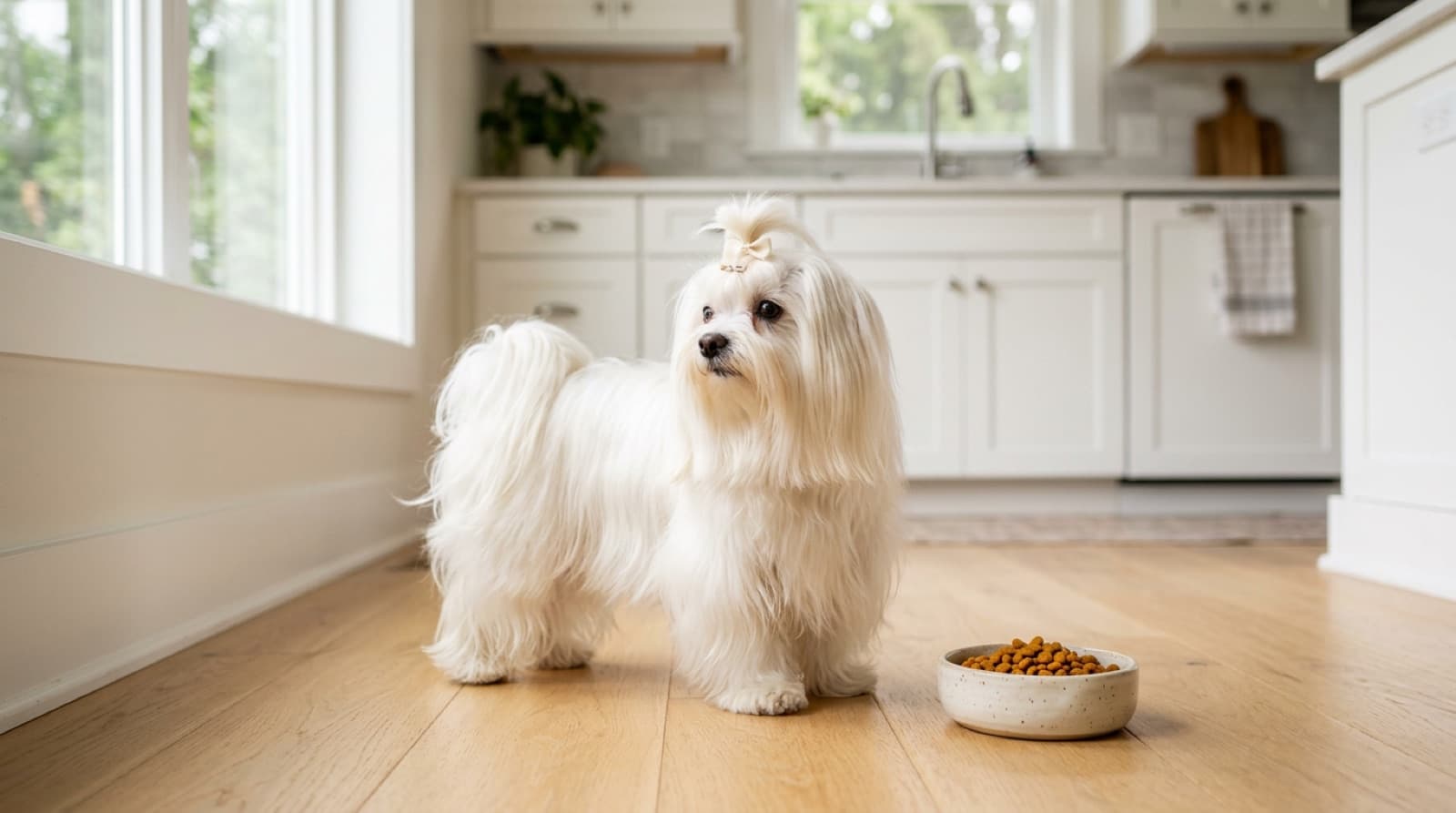
The short answer
Feed a Maltese a complete small-breed formula in small, measured portions, and feed to keep the dog lean. The right amount looks alarmingly small, which is why owners often mistake a full dog for a picky one. Real pickiness is usually a learned habit from treats and table food, fixed by a consistent schedule. Puppies need frequent meals to avoid a dangerous blood-sugar drop. No food reliably erases tear stains, which are mostly a medical or structural eye issue. And if your Maltese ever has a liver shunt, the diet is vet-directed, not a shelf choice.
What is the best food for a Maltese?
There is no single best bag, and any site that names one is selling something. The standard most vets point to comes from the WSAVA global nutrition guidelines.
Pick a brand that does the science. Ask whether the company employs a full-time, board-certified veterinary nutritionist and runs feeding trials. The safe defaults for a healthy Maltese are the small-breed lines from Royal Canin, Hill's Science Diet, and Purina Pro Plan.
Choose a small-breed formula with small kibble. A Maltese has a tiny mouth, and a kibble it can actually pick up and chew matters. Then judge the food by the dog: firm stool, a healthy coat, and a lean body condition mean you have the right food.
How much to feed, and the picky-eater truth
A typical adult Maltese eats only about a quarter to a third of a cup per meal, roughly half to three-quarters of a cup a day. It is a startlingly small amount, and this is the source of most “my Maltese won't eat” worry: the correct portion is so tiny that a full, satisfied dog looks like it is refusing food. Feed to body condition, feel the ribs easily under a light cover, and look for a slight waist.
Real pickiness, when it exists, is usually taught. A Maltese is smart, and when turning up its nose reliably produces chicken or a hand-fed snack, holding out becomes the clever move. The saying among owners is that a Maltese will be as picky as it is allowed to be. The fix is consistency: scheduled meals, food picked up after fifteen to twenty minutes, and no between-meal extras.
One caution: the wait-it-out approach is for healthy adults, never tiny puppies (see the next section). And a sudden new refusal in a dog that always ate well is more likely dental pain or illness than fussiness, so book a vet check before deciding it is attitude.
The Maltese puppy warning: hypoglycemia
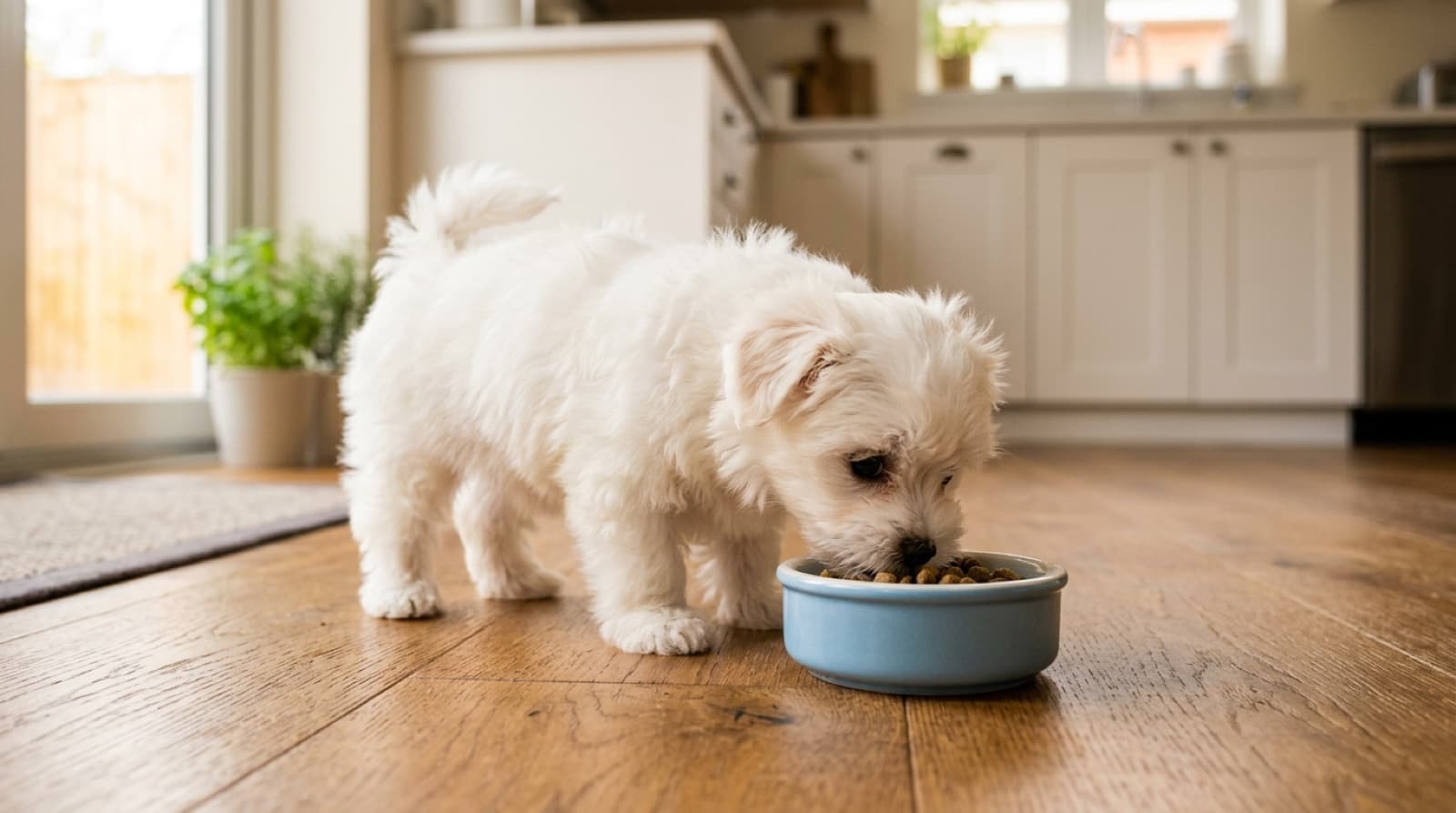
A very small Maltese puppy can drop into a dangerous low-blood-sugar state from a single missed meal plus stress, cold, or hard play. This is a genuine emergency. Read it before you bring a puppy home.
Toy-breed puppies, and teacup-size Maltese most of all, carry almost no reserve of stored sugar. When a tiny puppy skips a meal, gets chilled, plays to exhaustion, or is stressed by a long car ride home, blood sugar can fall fast. The American Kennel Club and most vets describe the same signs: shaking or trembling, weakness, a wobbly or drunk-looking walk, a glassy or distant stare, pale gums, and in a severe case collapse or a seizure.
Prevention is simple: feed small meals often. Feed a Maltese puppy three to four times a day, keep food available for very young pups, keep it warm, and do not let play tip into exhaustion.
If you see the warning signs, act fast. Rub a little corn syrup or honey on the gums (it absorbs through the gums, so the puppy does not need to swallow), keep the puppy warm, and get to a vet immediately. This is first aid to buy time on the way to the clinic, not a treatment that ends there. And do not dose a healthy puppy with sugar gel every day “to be safe,” because routine sugar can spike and then crash blood sugar. Frequent real meals are the prevention. Sugar on the gums is the rescue.
Tear stains and liver shunt: two vet-first topics
Tear stains. On a white breed they are glaring, and owners chase a food fix. Diet can be one factor, since a food intolerance can increase tearing, but staining is more often caused by blocked or shallow tear ducts, inward-rolling eyelids, extra lashes, or eye irritation, none of which a food change fixes. Before you swap bags chasing stains, have your vet examine the eyes and tear ducts for a medical cause. If a food intolerance is genuinely suspected, work it as a vet-guided elimination diet, not a guess.
Liver shunt. Maltese are prone to a liver shunt, a blood vessel that bypasses the liver, and it changes the diet completely. These dogs usually need a vet-directed modified-protein diet that favours dairy and egg protein over muscle and organ meat. The Tufts veterinary nutrition team stresses that diet is one tool in a full treatment plan, not a substitute for it. Do not attempt protein restriction on your own, because too little protein is also harmful. This is managed with your vet.
Teeth, grain-free, and foods to avoid
Dental disease is common in the breed's tiny, crowded jaw. Do not count on kibble to clean teeth, that is mostly a myth, and brushing does the real work. One surprising detail: the dental kibbles that genuinely help are intentionally large, because the tooth has to sink into the piece for the mechanical cleaning to work, which cuts against the instinct to buy the smallest kibble. Soft or soaked food is the right call for a senior Maltese with missing teeth.
Skip grain-free unless your vet diagnoses a grain allergy. The FDA has been investigating a possible link between grain-free diets and a heart condition. Keep these away from a Maltese completely: chocolate, grapes and raisins, xylitol (in sugar-free gum, some peanut butters, and baking), onions and garlic, macadamia nuts, alcohol, caffeine, and cooked bones. On a tiny dog the harmful dose is small, so if your Maltese eats something toxic, call your vet or a pet poison helpline right away.
Looking to adopt a Maltese?
Sort the small-breed food and a shallow bowl before day one. Browse Maltese and Maltese mixes available now from the rescues we track.
See Available Maltese →Where to buy Maltese food
Every brand worth feeding a Maltese is easy to find in store and online:
- Pet specialty chains (Pet Planet, Tail Blazers, Tisol, and similar). Carry Royal Canin, Pro Plan, and small-breed lines.
- Pet Valu and PetSmart. National chains that stock the major small-breed formulas.
- Your vet clinic. The place for prescription diets, including the modified-protein diets used for liver shunts.
- Online. The same brands ship to your door, handy for the small bags this breed needs.
Because a Maltese eats so little, buy a bag size your dog finishes within a few weeks so the food stays fresh. A small-breed formula on a recurring delivery means you never run out mid-week.
Frequently Asked Questions
What is the best food for a Maltese?
A complete small-breed formula from a brand that employs a veterinary nutritionist and runs feeding trials, with a kibble small enough for a tiny mouth. By the WSAVA framework that points to Royal Canin, Hill’s Science Diet, and Purina Pro Plan small-breed lines. The brand matters less than the small kibble size, the food agreeing with the dog, and a calorie count that keeps a four to seven pound dog lean. Start with whatever the rescue was feeding, then transition over seven to ten days.
How much should I feed a Maltese, and why does it seem like so little?
A typical adult Maltese eats only about a quarter to a third of a cup per meal, roughly half to three-quarters of a cup a day, and that genuinely surprises new owners. It looks alarmingly small, which is exactly why so many owners think their Maltese is sick or starving when the dog is simply full. Feed to body condition: you should feel the ribs easily and see a slight waist. On a four to seven pound dog, a couple of extra treats is a big share of the daily calories, so count everything.
Why is my Maltese such a picky eater?
Two reasons, and neither is usually the food. First, the correct portion is so tiny that normal fullness reads as refusal, so the dog is not picky, it is satisfied. Second, Maltese are smart, and when refusing kibble reliably produces chicken, cheese, or a hand-fed snack, holding out becomes the smart move. A Maltese will be as picky as it is allowed to be. The fix is consistency: scheduled meals, food picked up after fifteen to twenty minutes, no table scraps, no caving. One caution: a sudden new refusal in a dog that always ate well can be a dental or medical problem, so see a vet before assuming it is attitude.
How do I prevent hypoglycemia in my Maltese puppy?
Feed small meals often. A Maltese puppy, especially a very small or teacup-size one, has almost no stored sugar and can drop into a dangerous low-blood-sugar state from one missed meal plus stress, cold, or hard play. Feed three to four times a day, keep food available for very young pups, and keep the puppy warm. Warning signs are shaking, weakness, a wobbly or drunk-looking walk, a glassy stare, and pale gums. If you see them, rub a little corn syrup or honey on the gums, keep the puppy warm, and get to a vet immediately. That is first aid to buy time, not a cure, and it is a true emergency.
Will a special food get rid of my Maltese’s tear stains?
Probably not on its own, and the most important step is to rule out a medical cause first. On a white breed, tear stains are glaring, and owners blame food and water. Diet can be one factor, since a food intolerance can increase tearing, but staining is more often caused by blocked or shallow tear ducts, inward-rolling eyelids, extra lashes, or eye irritation, none of which a food change fixes. Before you swap bags chasing the stains, have your vet examine the eyes and tear ducts. If a food intolerance is genuinely suspected, work it as a vet-guided elimination diet.
My Maltese has a liver shunt. What should I feed?
A liver shunt (a blood vessel that bypasses the liver) is a condition Maltese are prone to, and the diet is genuinely different and entirely vet-directed. These dogs usually need a modified, often lower or special-protein diet that favours dairy and egg protein over muscle and organ meat, with attention to copper and added fibre. Do not attempt protein restriction on your own, because too little protein is also harmful. This is a condition managed with your vet, often alongside medication, and the therapeutic diet is part of a full treatment plan, not something to choose off a shelf.
What should I feed a Maltese puppy?
A complete small-breed puppy food, fed three to four times a day. Small-breed puppy formulas put more calories into a small, easy-to-chew kibble that suits a tiny mouth, and the frequent meals guard against hypoglycemia. Keep the puppy lean, and transition foods slowly to avoid loose stool. Stay on puppy food until roughly nine to twelve months, then move to a small-breed adult formula. Your vet can confirm a healthy adult weight, usually around four to seven pounds.
Maltese Health Issues
Liver shunt, dental disease, luxating patella, and the conditions diet can affect.
Maltese Grooming
The white coat, the face, and the tear-stain area that diet alone will not fix.
Maltese Adoption Guide
Where to find Maltese and Maltese mixes, real costs, and what to expect.
Maltese for Adoption
Live listings of Maltese and Maltese mixes from the rescues we track.