The short answer
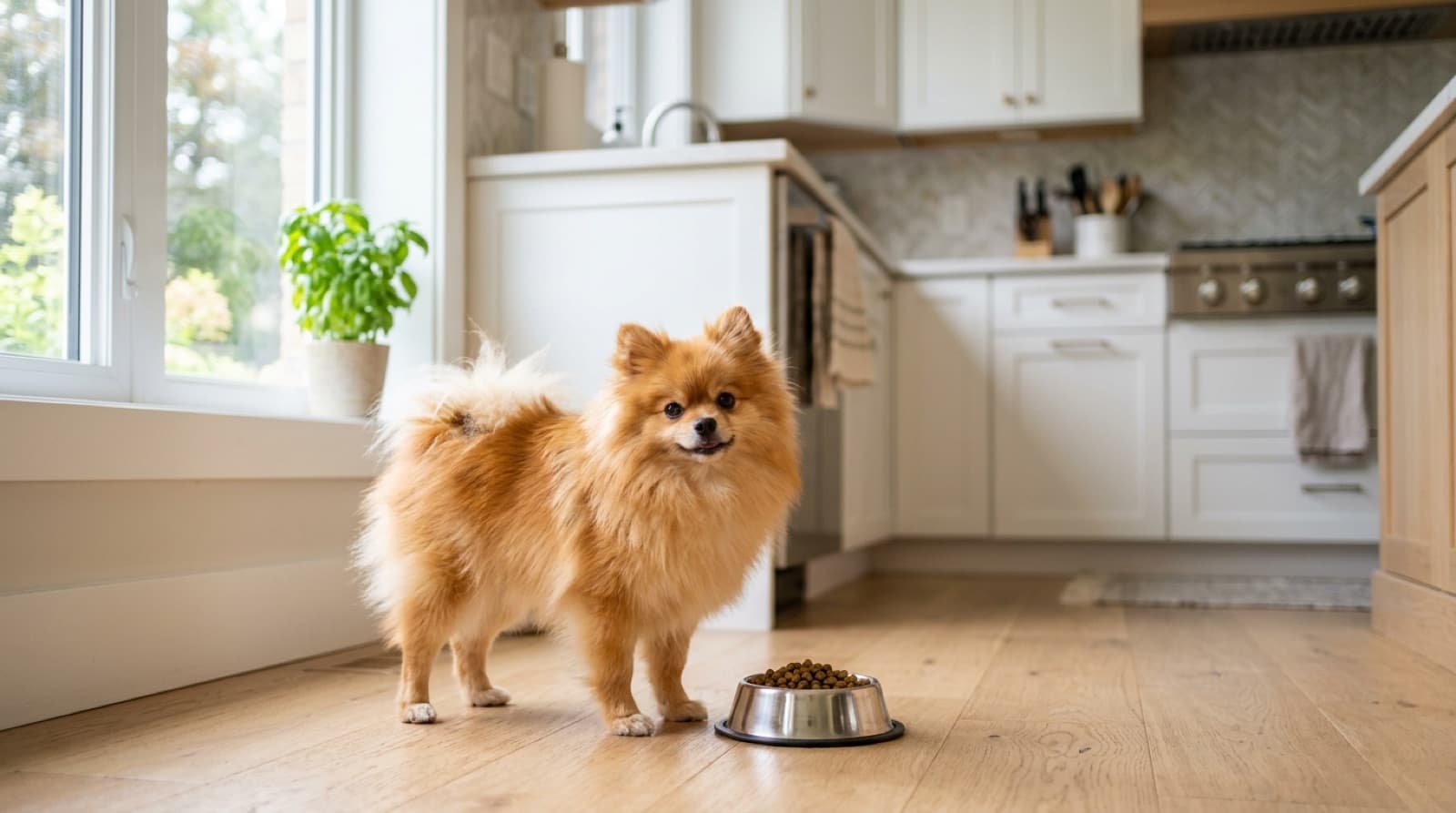
Feed a Pomeranian a small amount of a complete small-breed formula, and feed it on a schedule. A Pom weighs only 3 to 7 lb, so it eats a fraction of a cup a day, and a small-breed kibble is sized for a tiny mouth. Two toy-breed safety points matter more than the brand. Puppies can develop low blood sugar if they go too long without eating, so feed small, frequent meals and never let a young Pom skip a meal. And dental disease is the breed's biggest health issue, so a dry diet plus tooth-brushing beats an all-soft diet. Pick a food with a real veterinary nutritionist behind it, judge portions by feel (the coat hides weight), and keep toxic foods well away, since a tiny dog gets a big dose from a small amount.
How much should I feed a Pomeranian?
Roughly a quarter to a half cup of quality small-breed food a day, split into two or more meals. The exact amount tracks the calories in your food and your dog's size, so the 3 to 7 lb Pomeranian needs very little.
Judge by feel, not by look. A thick double coat hides the body underneath, so a Pom can quietly gain weight while still looking like a fluffball. Use the WSAVA body condition score: run your hands under the coat and you should feel the ribs easily and find a slight waist.
Obesity is a real risk even in a tiny dog, and the math is unforgiving. A single treat that is nothing to a Labrador can be a big share of a 5 lb dog's daily calories. Measure meals, count treats inside the daily total, and skip the table scraps.
What is the best food for a Pomeranian?
There is no single best bag, but there is a sound way to choose one, from the WSAVA nutrition guidelines.
Pick a small-breed adult formula. Small-breed foods do two things that suit a Pom: the kibble is small enough for a tiny mouth and crowded teeth to manage, and the food is more calorie-dense, so a small stomach gets what it needs in a small volume. Look for the AAFCO complete-and-balanced statement and some omega-3s, which support the breed's heavy coat.
Then choose a brand that does the science. Ask whether the company employs a board-certified veterinary nutritionist, runs feeding trials, and will share a full nutrient analysis. The big makers that meet this bar are the safe default: Purina Pro Plan, Royal Canin, Hill's Science Diet, and Eukanuba, with Acana a popular Canadian option.
Feeding a Pomeranian puppy: the blood-sugar warning
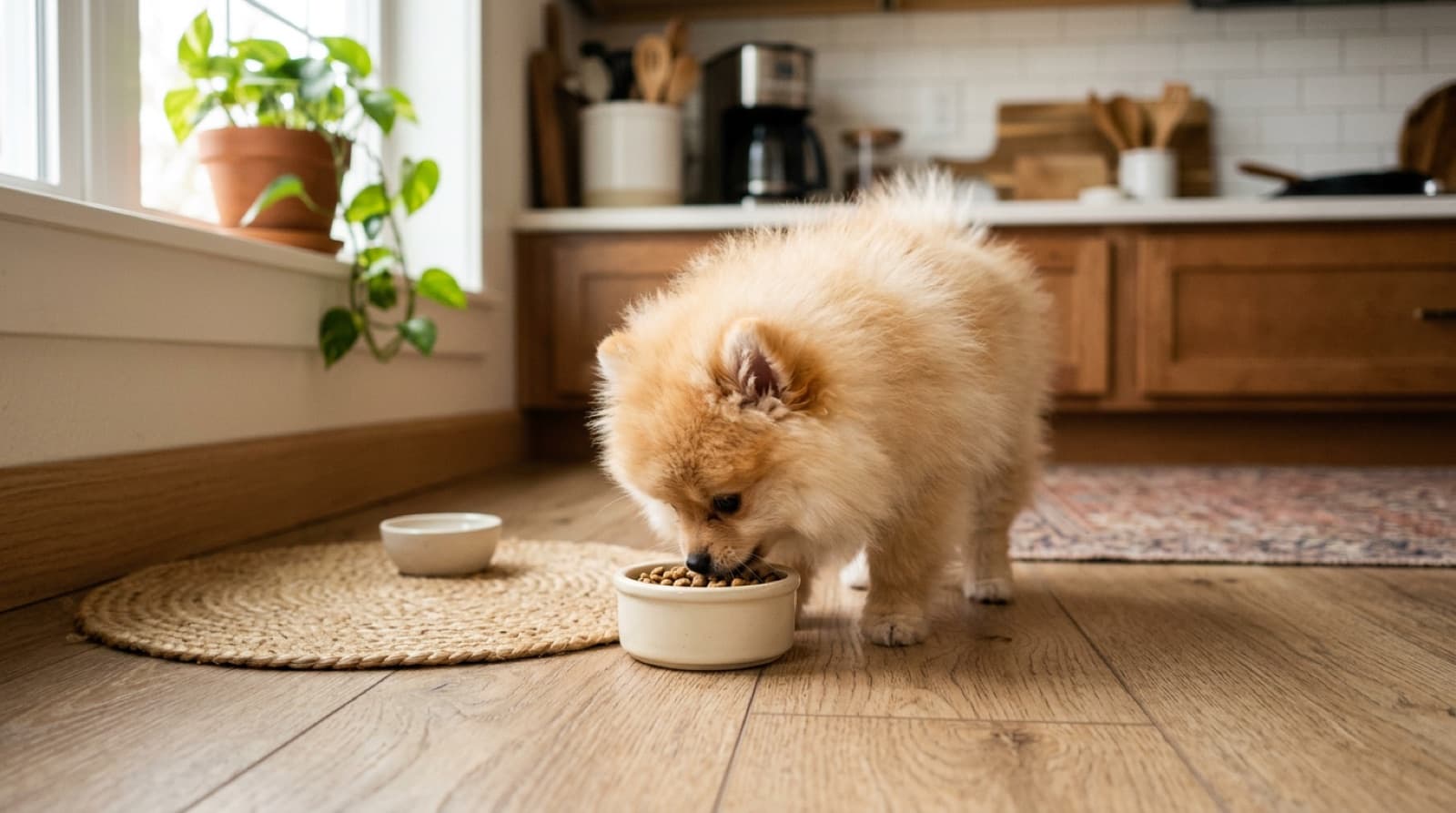
Toy-breed puppies can develop dangerously low blood sugar if they go too long without eating. Feed small, frequent meals, and never let a young Pom skip a meal.
Feed a small-breed puppy formula in three to four small meals a day. The reason is not just nutrition, it is safety. Very small puppies have tiny energy reserves, and a Pomeranian puppy that misses meals, gets chilled, or is stressed by a big day can drop into hypoglycemia (low blood sugar).
Know the signs: wobbliness, weakness, a glazed or distant look, trembling, and in a serious case collapse or seizures. This is an emergency. Get the puppy to a vet right away. Vets commonly advise rubbing a little honey or corn syrup on the gums as a stopgap on the way to the clinic, but that buys time, it does not replace the vet.
The good news: most puppies grow out of the risk as they get bigger, and the prevention is simple. Keep meals small and frequent, keep the puppy warm, and ask your vet for a feeding schedule for your specific dog. As the puppy matures, move toward three meals a day, then two.
Dental health: the Pomeranian's biggest feeding-related issue
Dental disease is the most common health problem in small dogs, and the Pomeranian is squarely in the firing line. A Pom carries the same 42 teeth as a big dog, crammed into a jaw the size of your thumb, so the teeth crowd, trap food, and build tartar quickly. It can start young.
Food helps at the margins. A dry kibble gives a little more mechanical cleaning than an all-soft diet, and vet-approved dental chews can help, but neither one replaces real dental care. The things that actually protect the teeth are tooth-brushing a few times a week and professional cleanings on your vet's schedule.
One thing to watch: bad breath in a young dog is not normal. It is usually the first sign of dental disease, and it is worth a vet visit rather than a breath-freshening treat. Healthy teeth also keep a Pom eating comfortably, which matters for a breed that can already be a fussy eater.
Is my Pomeranian a picky eater?
Probably, and the fix is structure rather than a fancier food. Toy breeds are well known for holding out for something better, and a Pom can afford to. It needs so few calories that skipping a meal does it no harm, which quietly teaches the dog that waiting pays off.
Feed scheduled meals and pick the bowl up after about 15 minutes. Do not let a healthy Pom train you into a rotation of toppers and hand-feeding to chase its appetite, which usually makes a picky eater pickier.
Know the line, though. A small dog has less reserve than a big one, so a sudden loss of appetite, especially with low energy, vomiting, or any weakness, is not pickiness and deserves a prompt vet visit. In a toy breed, going off food can tip into the low-blood-sugar territory above faster than in a large dog.
Foods to avoid: small dog, big dose
Toxic foods are more dangerous for a Pomeranian than a big dog, because a tiny body gets a big dose from a small amount.
Keep these toxic foods completely away from a Pomeranian. The amounts that would barely register in a Labrador can be an emergency in a 5 lb dog:
- Chocolate (a small piece is a real dose for a tiny dog)
- Grapes and raisins (can cause kidney failure)
- Xylitol (one stick of sugar-free gum can be enough)
- Onions, garlic, macadamia nuts, alcohol, and cooked bones
Beyond toxins, skip cheap filler-heavy foods, and avoid large or very hard kibble and chews that a tiny mouth and crowded teeth cannot handle safely. If your Pomeranian eats something on this list, do not wait to see what happens. Call your vet or a pet poison helpline right away.
Looking to adopt a Pomeranian?
Sort the small-breed food and the gear before day one. Browse Pomeranians and Pom mixes available right now from the rescues we track.
See Available Pomeranians →Where to buy Pomeranian food
Every brand worth feeding a Pom is easy to find in store and online:
- Pet specialty chains (Pet Planet, Tail Blazers, Tisol, and similar). Carry Pro Plan, Royal Canin, Acana, and most premium small-breed lines.
- Pet Valu and PetSmart. National chains that stock the major small-breed formulas.
- Your vet clinic. The place for any prescription or dental-support diet.
- Costco. Kirkland Signature small-breed is a budget option, though the kibble can run a little large for the tiniest Poms.
Because a Pom eats so little, buy the smallest bag that still gives you a fair price, so the food stays fresh, and keep it sealed. Online, the same brands ship to your door, and the small-breed adult formulas are easy to set on a recurring delivery.
Frequently Asked Questions
How much should I feed a Pomeranian?
Very little, by big-dog standards. A typical adult Pomeranian weighs only 3 to 7 lb and eats roughly a quarter to a half cup of quality small-breed food a day, split into two or more meals. The exact amount depends on the food’s calories and your dog’s size, so use the bag as a starting point and feed to body condition: you should feel the ribs easily and see a slight waist under the coat. A fluffy coat hides weight gain, so judge by feel, not by look. Even a tiny dog can become obese, and a few extra treats are a lot of calories for a 5 lb dog.
What is the best food for a Pomeranian?
A complete small-breed adult formula from a brand that does real nutrition science. Small-breed foods use a smaller kibble that a tiny mouth can actually chew, and they pack more calories into less volume, which suits a small stomach. Use the WSAVA approach: pick a brand that employs a board-certified veterinary nutritionist, runs feeding trials, and will share a full nutrient analysis. Look for the AAFCO complete-and-balanced statement and some omega-3s, which help the Pomeranian’s famous double coat. The brand name matters less than the science behind it.
What should I feed a Pomeranian puppy?
A small-breed puppy formula, fed in small, frequent meals. This matters more for a toy breed than most owners realize, because tiny puppies can develop low blood sugar (hypoglycemia) if they go too long without eating, especially when young, stressed, or chilled. Feed three to four small meals a day for a young Pomeranian puppy, never let it skip meals, and ask your vet for a feeding plan. Signs of low blood sugar (wobbliness, weakness, glazed eyes, trembling, collapse) are an emergency. Most puppies grow out of the risk, but small frequent meals are the prevention.
Why does my Pomeranian have bad breath and tooth problems?
Because toy breeds have terrible dental odds. A Pomeranian fits 42 teeth into a tiny jaw, so the teeth crowd together, trap food, and build tartar fast. Dental disease is the most common health problem in small dogs, and it can start young. Feeding helps a little (a dry kibble and vet-approved dental chews beat an all-soft diet), but the real answer is dental care: tooth-brushing a few times a week and professional cleanings on your vet’s schedule. Bad breath is not normal in a young dog. It is usually the first sign of dental disease, and it is a vet conversation.
Is my Pomeranian a picky eater?
Often, yes, and the fix is structure, not a fancier food. Toy breeds are famous for holding out for something better, and because they need so few calories, a Pomeranian can skip a meal and be perfectly fine, which teaches it that waiting works. Feed scheduled meals, pick the bowl up after about 15 minutes, and resist the urge to keep adding toppers. That said, a sudden loss of appetite, especially with low energy, vomiting, or any sign of weakness, is different from pickiness and warrants a vet visit, since small dogs have less reserve to coast on.
What foods should a Pomeranian avoid?
The same toxic foods as any dog, but the danger is higher because a tiny dog gets a big dose from a small amount: chocolate, grapes and raisins, xylitol (in sugar-free gum, some peanut butters, and baking), onions and garlic, macadamia nuts, alcohol, and cooked bones. A single piece of chocolate or one stick of xylitol gum can be an emergency for a 5 lb dog. Beyond toxins, skip cheap filler-heavy foods and large or very hard kibble and chews that a tiny mouth cannot handle. If your Pomeranian eats something toxic, call your vet or a pet poison helpline right away.
Should I feed my Pomeranian a raw diet?
Make it a vet conversation. The AVMA and WSAVA discourage raw or undercooked animal protein because of the pathogen risk to pets and people, and there is no documented evidence it beats a balanced cooked or commercial diet. For a toy breed there is an extra wrinkle: getting a raw diet correctly balanced in such tiny portions is harder, and a small dog has little margin for error. If you still want to feed raw, use a complete commercial product or a recipe from a board-certified veterinary nutritionist, and keep strict hygiene, especially in homes with young children or anyone immune-compromised.
How much does it cost to feed a Pomeranian per month?
Very little. A Pomeranian eats so small an amount that a bag of premium small-breed kibble lasts a long time, often only $15 to $35 a month for an adult. The real costs of a toy breed are dental care (brushing supplies and periodic professional cleanings) and routine vet visits, not the food itself. Because the food bill is so low, this is a breed where there is no reason to cut corners on quality.
Pomeranian Health Issues
Teeth, trachea, luxating patella, and the toy-breed conditions to watch.
Pomeranian Grooming
The double coat, the lion cut debate, and why you never shave a Pom.
Pomeranian Adoption
Where to find Pomeranians and Pom mixes, real costs, and what the breed is like.
Pomeranians for Adoption
Live listings of Pomeranians and Pom mixes from the rescues we track.