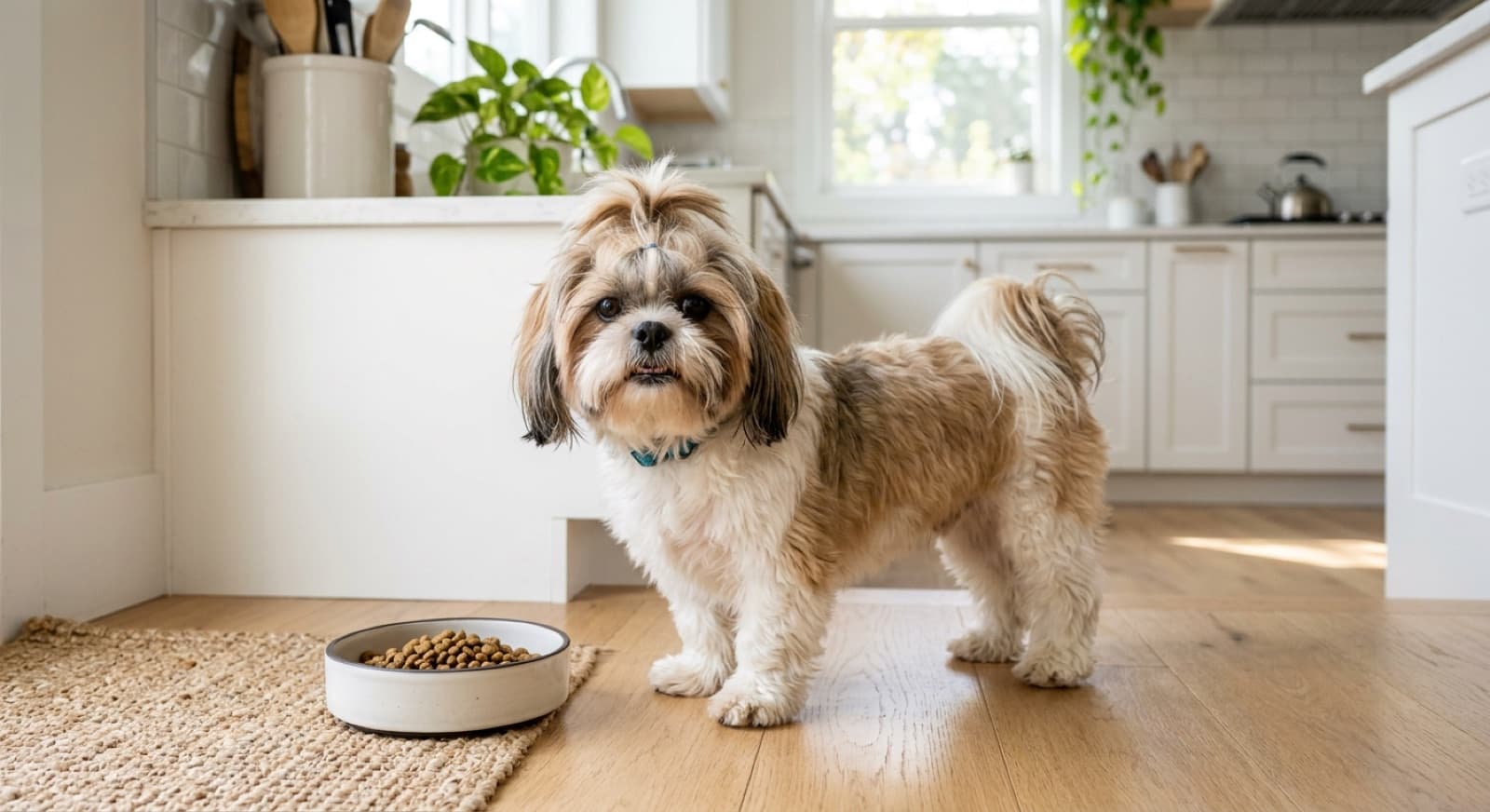
The short answer
Feed a Shih Tzu a complete small-breed food with a kibble small enough for its little jaw, in a shallow flat-face-friendly bowl, and keep the dog lean. If yours is “picky,” the cause is usually a learned habit from toppers and table food, and the fix is a predictable schedule, not a tastier bag. A sudden refusal, though, is more likely dental pain than fussiness, so check the mouth and the vet. No special food reliably erases tear stains. Skip grain-free unless your vet diagnoses an allergy.
What is the best food for a Shih Tzu?
There is no single best bag, and any site that names one is selling something. The standard most vets point to comes from the WSAVA global nutrition guidelines.
Pick a brand that does the science. Ask whether the company employs a full-time, board-certified veterinary nutritionist and runs feeding trials. The safe defaults are Royal Canin (which makes a breed-specific Shih Tzu formula shaped for the short muzzle), Purina Pro Plan Small Breed, and Hill's Science Diet.
Choose a small-breed formula with small kibble. A Shih Tzu has a small jaw, often with an underbite, so a kibble it can actually pick up and chew matters. Then judge the food by the dog: firm stool, a healthy coat, settled skin, and a lean body condition.
The picky eater, and the refusal that is not pickiness
Shih Tzus have a reputation for approaching the food bowl like a food critic, and most of the time that fussiness is something the household taught. The dog refuses kibble, a worried owner adds a topper or some chicken, the dog eats it, and a clever animal learns that holding out pays. The cure is rarely a better food, it is predictability: feed on a schedule, allow fifteen to twenty minutes, pick up what is not eaten, and stop the between-meal extras. Most healthy Shih Tzus settle into eating their own food within a day or two.
Important exception: a Shih Tzu that always ate well and suddenly refuses food is more likely in pain than being fussy. Dental disease is common in the breed's crowded little jaw, and a sore mouth is a frequent hidden cause. Look in the mouth and call your vet rather than waiting it out.
One overlooked cause of a turned-up nose: stale food. A small bag that has been open for weeks can go rancid and smell off to a scent-driven dog, so buy a size your Shih Tzu finishes quickly and keep it sealed.
The flat-face bowl fix
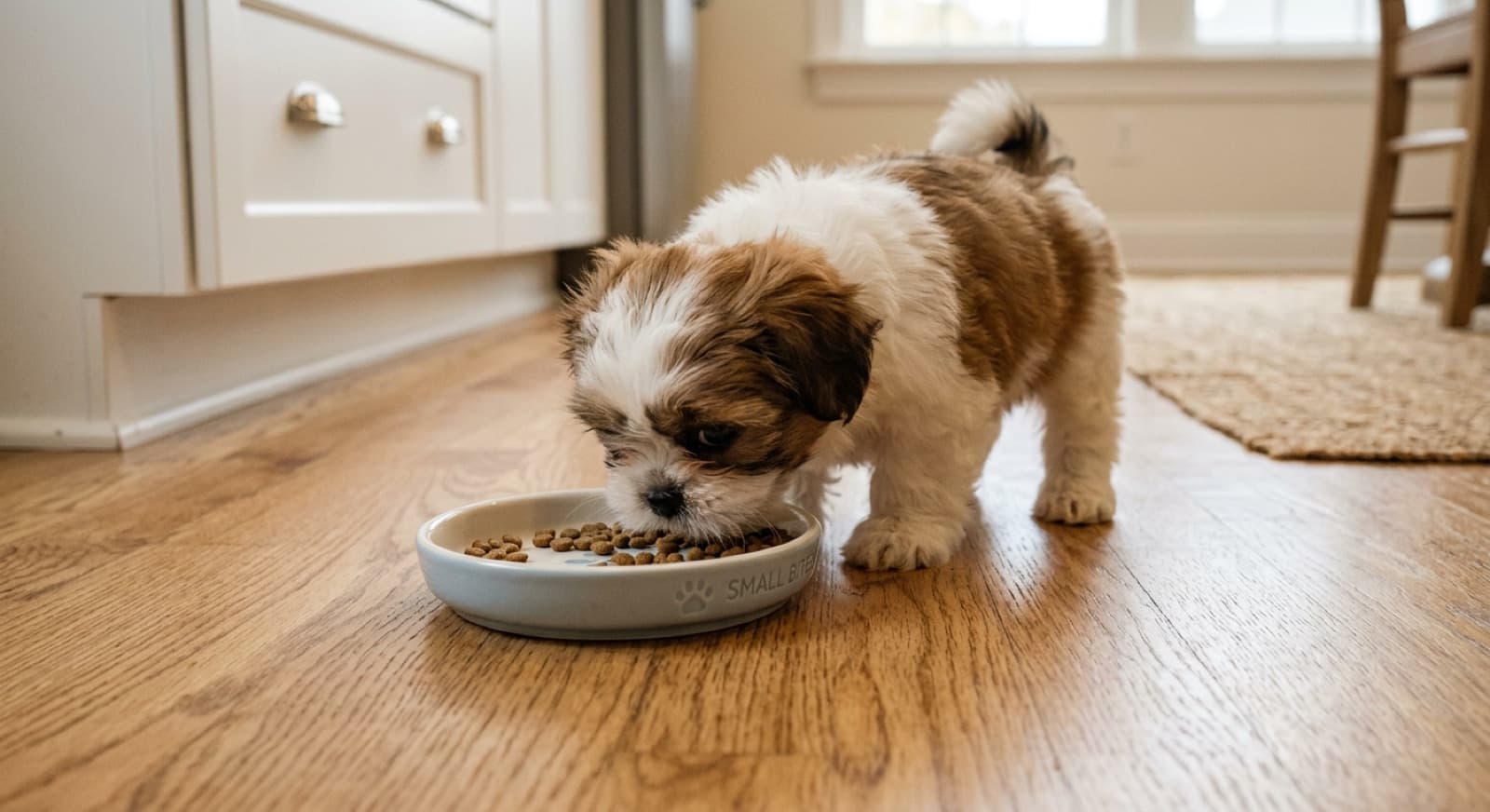
Here is a fix most owners never think of. As a flat-faced breed, a Shih Tzu can physically struggle with a deep bowl or oversized kibble, and a dog that finds the food awkward to pick up may simply give up and look picky. A shallow, wide bowl and a small-breed kibble often solve an apparent eating problem on their own. Royal Canin even shapes its Shih Tzu kibble specifically for the short muzzle and underbite. It is the cheapest experiment you can run before assuming the food is the problem.
Food and tear stains: the honest version
Tear staining is a Shih Tzu obsession, and owners often hope a food change will clear it. The honest answer is mixed. Diet can be a factor for some dogs, because a food intolerance can increase tearing, and a few owners do see improvement after a vet-guided change. But tear staining is driven much more by the flat-faced conformation, shallow eye sockets, and blocked or abnormal tear ducts, plus environmental irritants. There is no reliable “tear-stain food.”
So before you start swapping bags chasing the stains, get your vet to check the eyes and tear ducts, because a structural or medical cause will not respond to a diet change. If a food intolerance is suspected, work it as an elimination diet with your vet rather than guessing.
How much to feed, and the puppy plan
A typical adult Shih Tzu eats roughly half a cup to a cup of quality kibble a day split into two meals, but the bag chart tends to overstate it for a small dog, so feed to body condition. Feel the ribs easily under a light cover and look for a waist. Obesity strains a small frame and raises the risk of joint and other problems, so count treats inside the daily total.
For puppies, feed a complete small-breed puppy food three meals a day until about six months, then two, and transition foods slowly to avoid loose stool. The American Kennel Club breed guide is a good general reference. Stay on puppy food until roughly nine to twelve months, then transition to a small-breed adult formula. Your vet can confirm the timing and a healthy weight.
Allergies, grain-free, and foods to avoid
Shih Tzus can be prone to itchy skin and allergies. Food can be a cause, but environmental allergies look similar, so confirming a food allergy means a vet-run elimination diet, not a bag swap. And skip grain-free unless your vet diagnoses a grain allergy: the FDA has been investigating a possible link between grain-free diets and a heart condition, and a true food allergy is usually to a protein anyway.
Keep these away from a Shih Tzu completely:
- Chocolate (darker is worse)
- Grapes and raisins (can cause kidney failure, even a few)
- Xylitol (in sugar-free gum, some peanut butters, and baking), which is rapidly fatal to dogs
- Onions, garlic, leeks, and chives
- Macadamia nuts, alcohol, caffeine, and cooked bones
If your Shih Tzu eats something on this list, call your vet, the nearest emergency clinic, or a pet poison helpline right away.
Should I feed my Shih Tzu a raw diet?
Only with a vet or veterinary nutritionist involved. Some Shih Tzu owners like raw or fresh diets, and a well-built one can suit the breed. But the Merck Veterinary Manual notes that most homemade and raw diets are not nutritionally complete unless formulated by a professional, and raw meat carries a pathogen risk for the dog and the household. A complete cooked or small-breed kibble diet from a nutritionist-backed brand delivers the same results for most Shih Tzus. If you want to go fresh or raw, use a complete commercial product or a vet-formulated recipe.
Looking to adopt a Shih Tzu?
Sort the small-breed food and a shallow bowl before day one. Browse Shih Tzus and Shih Tzu mixes available now from the rescues we track.
See Available Shih Tzus →Where to buy Shih Tzu food
Every brand worth feeding a Shih Tzu is easy to find in store and online:
- Pet specialty chains (Pet Planet, Tail Blazers, Tisol, and similar). Carry Royal Canin, Pro Plan, and small-breed lines.
- Pet Valu and PetSmart. National chains that stock the major small-breed formulas, including the breed-specific Royal Canin Shih Tzu food.
- Your vet clinic. The place for prescription diets that need authorization.
- Online. The same brands ship to your door, handy for the smaller bags this breed needs.
Because a Shih Tzu eats little, buy a bag size your dog finishes within a few weeks so the food stays fresh, and keep it sealed. A small-breed formula on a recurring delivery means you never run out mid-week.
Frequently Asked Questions
What is the best food for a Shih Tzu?
A complete small-breed formula from a brand that employs a veterinary nutritionist and runs feeding trials, with a kibble small enough for a small, often-undershot jaw. By the WSAVA framework that points to Royal Canin (which makes a breed-specific Shih Tzu formula shaped for the short muzzle), Purina Pro Plan Small Breed, and Hill’s Science Diet. The brand matters less than the small kibble size, the food agreeing with the dog, and keeping it lean. Start with whatever the rescue was feeding, then transition over seven to ten days.
Why is my Shih Tzu such a picky eater?
Usually because the picky habit has been built at home. Shih Tzus are smart, and when refusing kibble reliably produces a topper, chicken, or table food, holding out becomes the smart move. The cure is rarely a tastier bag; it is predictability. Feed on a schedule, give fifteen to twenty minutes, pick up what is not eaten, and stop the extras. Most healthy Shih Tzus will settle into eating their food within a day or two. One important exception: a dog that always ate well and suddenly stops may have a dental or medical problem, so that warrants a vet check, not tough love.
My Shih Tzu suddenly stopped eating. What does that mean?
In a Shih Tzu, a sudden refusal to eat is more likely dental pain or illness than fussiness. The breed crams a full set of teeth into a small, often misaligned jaw, so dental disease is common and painful, and a sore mouth is a frequent hidden reason a good eater quits. Other possibilities include an upset stomach or a more serious illness. Rather than assuming the dog is being picky, look in the mouth and call your vet, especially if the refusal lasts more than a day or comes with lethargy.
Does the bowl or kibble size matter for a Shih Tzu?
Yes, more than people expect. As a flat-faced (brachycephalic) breed, a Shih Tzu can struggle with a deep bowl or large kibble, and a dog that finds the food hard to pick up may simply give up and look picky. A shallow, wide bowl and a small-breed kibble (Royal Canin even shapes its Shih Tzu kibble for the short muzzle and underbite) make eating easier. It is one of the simplest, cheapest fixes for an apparently fussy eater.
Will a special food get rid of my Shih Tzu’s tear stains?
Probably not on its own. Diet can be a factor for some dogs, since a food intolerance can increase tearing, and a few owners do see improvement after a vet-guided diet change. But tear staining in Shih Tzus is driven heavily by the flat-faced conformation, shallow eye sockets, and blocked or abnormal tear ducts, plus the environment. There is no reliable "tear-stain food." Before making drastic diet changes chasing stains, get a vet to check the eyes and tear ducts.
What should I feed a Shih Tzu puppy?
A complete small-breed puppy food, fed three meals a day until about six months, then two. Small-breed puppy formulas put more calories into a small, easy-to-chew kibble that suits a tiny mouth. Keep the puppy lean, and transition foods slowly to avoid the loose stool a small dog is prone to. Stay on puppy food until roughly nine to twelve months, then move to a small-breed adult formula over a week. Your vet can confirm the timing and a healthy weight, usually around 9 to 16 pounds for the breed.
Should I feed my Shih Tzu grain-free?
Not unless your vet diagnoses a grain allergy. The FDA has been investigating a possible link between grain-free diets built on peas, lentils, and potatoes and a heart condition called dilated cardiomyopathy, so most vets take the cautious line. Grain-free is not automatically healthier, and a true food allergy is usually to a protein rather than a grain. A complete small-breed diet from a nutritionist-backed brand is the safer default.
Shih Tzu Health Issues
Dental disease, eyes, breathing, and the conditions weight and diet can affect.
Shih Tzu Grooming
The coat, the face, and the tear-stain area that diet alone will not fix.
Shih Tzu Adoption Guide
Where to find Shih Tzus and Shih Tzu mixes, real costs, and what to expect.
Shih Tzus for Adoption
Live listings of Shih Tzus and Shih Tzu mixes from the rescues we track.