
The short answer
You cannot tell a rescue dog's breed by looking, and shelter labels are wrong more often than not, so the only reliable answer is a cheek-swab DNA test. Use one of the two established brands, Embark or Wisdom Panel, which have the large reference databases that make the result trustworthy, and skip the cheap brands, which can be wildly inaccurate. A test tells you the breed mix, predicts a puppy's adult size, hints at behaviour, and can flag health risks.
Why the shelter's guess is usually wrong
Here is the thing almost every new adopter learns eventually: the breed on the kennel card was a guess, and guesses from appearance are wrong far more often than people assume. A shelter assigns a breed by looking at a dog on intake, with no pedigree and usually no history, and even experienced staff cannot reliably read a mixed dog's ancestry from its face and coat. Research backs this up. A University of Florida study found shelter staff frequently mislabelled dogs' breeds in both directions when checked against DNA, and other work has found the majority of dogs labelled a given breed did not genetically match it.
The surprises are the fun part. Adopters routinely test a dog the shelter called one thing and get back something they would never have guessed: a scruffy little terrier that comes back mostly Poodle and Husky, a supposed “Husky mix” that turns out to be entirely German Shepherd, a street dog assumed to be a mystery mutt that reads as a near-purebred of a breed nobody at the shelter had in mind. None of this means the shelter did anything wrong. It just means a label written in five seconds at intake is not the same thing as a genetic answer, and if you actually want to know, you have to look at the DNA.
How a DNA test actually answers the question
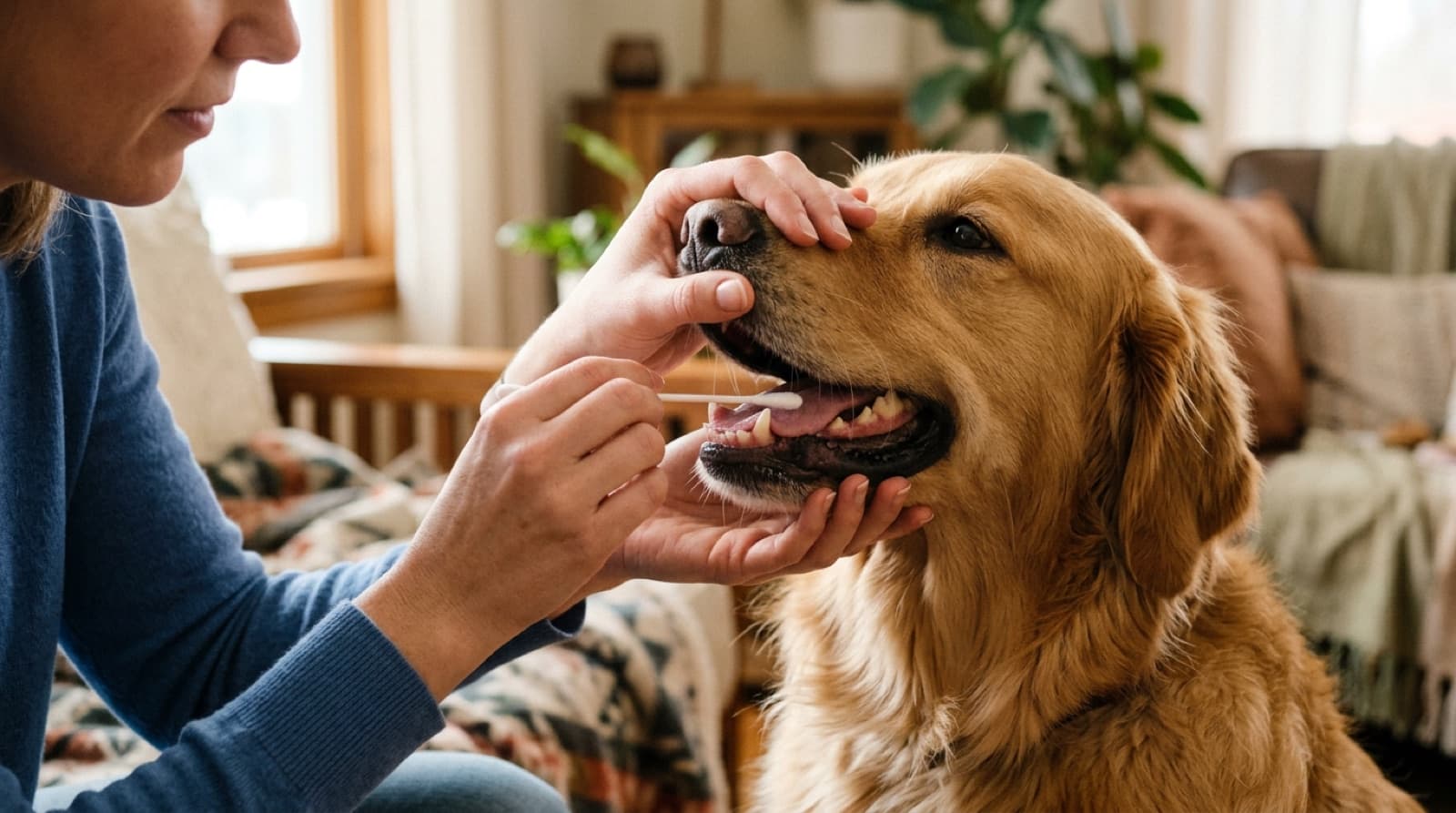
A dog DNA test is refreshingly simple to do. You rub a cotton swab inside your dog's cheek for a minute or so to collect cells, seal it in the tube, and mail it back in the prepaid envelope. A few weeks later you get a breakdown of the breeds in your dog, usually as percentages that add up to roughly one hundred, along with a family-tree estimate and, depending on the test, trait and health information.
Two concepts are worth knowing before your results land, because they come up constantly with rescues. Supermutt is the label a test gives to distant ancestry that has been mixed so many generations back that the DNA fragments are too small to assign to a single breed. It does not mean the test failed; it means your dog is genuinely, deeply mixed. Village dog is different again: a distinct free-breeding population that is not descended from modern breeds at all, with its own genetic signature, which is exactly what you would expect from a street rescue in some parts of the world. Both are honest answers, and both are common in the rescue population.
What you learn beyond the breed
The breed reveal is the headline, but for a rescue owner the test usually earns its keep on the practical extras.
If you have adopted a puppy of unknown parentage, the adult-size prediction is the most useful number in the whole report. The genes that drive adult size are well understood, so a DNA estimate of how big your mystery pup will get is far more reliable than guessing from paw size, and it helps you plan for the crate, the car, and the apartment weight limit before the dog outgrows all three. On behaviour, a breed breakdown gives you context rather than destiny: “part herding breed” explains the nipping and the pacing, “part scent hound” explains why recall evaporates the moment a nose hits the ground. It describes tendencies across a breed, not a promise about your individual dog.
Then there is health. The breed-plus-health versions of the major tests screen for genetic conditions, which matters most for a rescue that arrived with no medical history. The single most useful health result is MDR1, a drug-sensitivity variant common in herding breeds and their mixes that changes which medications are safe, and it is genuinely worth knowing before a spay, neuter, or any surgery. Health results are a screening flag to discuss with your vet, not a diagnosis, and we cover them properly in a dedicated guide, but they are a real reason many adopters choose the health tier.
Ready to find out what your dog is?
The two tests worth buying are Embark and Wisdom Panel. Our Canada buying guide breaks down which to pick, what it costs, and when to buy on sale.
Best Dog DNA Test in Canada →Which test, and where to buy it
Two brands are worth your money: Embark and Wisdom Panel. In short, Embark tends to win for the largest breed database, the deepest health panel, and a relative finder that can turn up your dog's genetic siblings, while Wisdom Panel tends to be cheaper and faster. Either one gives a trustworthy breed answer; the choice is about health depth and budget, which we walk through in the Embark versus Wisdom Panel comparison.
The one firm warning: skip the bargain-basement brands. Canadian consumer testing has found budget kits producing nonsense, including a giant breed mislabelled as a tiny one and even a human sample returned as dog breeds, which is covered in our guide to how accurate dog DNA tests really are. For Canadians, the practical route is to buy on Amazon.ca, where pricing is in Canadian dollars and duties are handled at checkout, and to wait for a sale, since these kits drop meaningfully around Black Friday and Prime Day.
Some links on this page are Amazon affiliate links — we may earn a small commission at no extra cost to you. It never changes which tests we recommend, and we don't quote prices here because DNA-kit prices change constantly with sales; check the current price on Amazon.ca.
Frequently Asked Questions
How can I tell what breed my rescue dog is?
You cannot tell reliably by looking, and neither can most shelters. The only dependable way to find out is a dog DNA test, which reads your dog's genetic markers and compares them to a reference database of hundreds of breeds. A good test identifies the major breeds in a mixed dog and, on the health tiers, screens for genetic conditions. Guessing from appearance, even by experienced staff, is wrong far more often than people expect.
Are shelter breed labels accurate?
Usually not. Shelters assign a breed by looking at the dog, and research has found that visual breed guesses match a dog's actual DNA only a fraction of the time, with one university study finding the majority of shelter dogs labelled a certain breed did not genetically match it. Labels are an honest best guess made quickly with no pedigree, not a genetic fact, so a dog stamped "Lab mix" or "pit bull mix" at intake is often something quite different.
What is the best way to find out my dog's breed?
A cheek-swab DNA test from one of the two established brands, Embark or Wisdom Panel. You rub a swab inside your dog's cheek, mail it to the lab, and get a breed breakdown in a few weeks. These two have the large reference databases that make the result trustworthy; budget brands are cheap for a reason and can be wildly inaccurate.
Can a DNA test tell how big my rescue puppy will get?
Yes, and it is the most reliable size predictor for a mystery-breed puppy. DNA-based adult-size and weight estimates are far better than guessing from paw size or the shelter's ballpark, because the genes that drive adult size are well understood. For an adopter who has taken on a puppy of unknown parentage, this is often the single most useful thing a test reveals.
Will a DNA test explain my dog's behaviour?
It can suggest tendencies, but it does not predict your individual dog. A result like "part Border Collie" helps explain why a dog herds the kids or never stops moving, and "part hound" explains a nose that overrides recall. But breed ancestry describes probabilities across a whole breed, not a promise about your specific dog, whose personality is shaped by far more than genetics.
What does "Supermutt" or "village dog" mean in my results?
Supermutt means your dog has distant ancestry from several breeds, mixed so many generations back that the DNA fragments are too small to name confidently, which is very common in rescues. Village dog refers to a distinct free-breeding population that is not descended from modern breeds and has its own genetic signature, also common in rescues from certain regions. Neither is an error; both are real, honest answers about a deeply mixed dog.
Is finding out my rescue dog's breed worth it?
For most adopters, yes, both for the answer itself and for what comes with it: a size prediction for a puppy, context for behaviour, a heads-up on breed-linked health risks, and sometimes even genetic relatives in the database. If you only want the breed reveal, the breed-only test is inexpensive on sale; if you also want the health screening, the breed-plus-health version is usually the better buy for a rescue with no medical history.
Best Dog DNA Test in Canada
Which test to buy, what it costs, where to get it, and when to catch a sale.
Embark vs Wisdom Panel
The two trustworthy tests compared head-to-head for rescue and mixed-breed dogs.
How Accurate Are Dog DNA Tests?
What the science and Canadian consumer testing say about trusting the results.
Explore Dog Breeds
Once you know the mix, read up on each breed's care, grooming, and temperament.