The short answer
The adoption process has a clear shape, even though the details vary by rescue. First you find an animal through a shelter, a foster-based rescue, or a listing site. Then you submit an application about your home and lifestyle, which helps the rescue match the right pet to you. Next comes a meet-and-greet, sometimes with everyone in the household and any current pets. Many rescues also do a quick reference or vet check, or a short call or virtual home check, especially foster-based groups. Once approved, you pay the adoption fee, which usually includes spay or neuter, vaccines, and a microchip, sign an adoption contract, and bring your pet home. Start to finish is commonly a few days to two weeks. It feels like a lot, but every step exists to make the match stick.
Where to adopt: shelters, rescues, and foster homes
There are three main places to adopt, and they feel a little different. Municipal shelters and humane societies usually have a physical building you can visit, the animals are on-site, and the process tends to be quicker and more walk-in friendly. Foster-based rescues have no central building. Their animals live in volunteer foster homes, which means the foster can tell you a great deal about how the pet behaves in a real house, but visits are arranged rather than drop-in.
Listing sites and aggregators are where a lot of people start, because they pull adoptable animals from many local rescues into one place you can search. That is the role this site plays: you browse current listings, then apply through the rescue that has the animal. Wherever you start, the actual adoption is always handled by the shelter or rescue that has the pet, so the exact steps follow their process.
The application: what they ask and why
The application is where adoption differs most from buying, and it can feel surprisingly personal. Expect questions about your housing, whether you rent or own, whether there is a landlord or a fenced yard, who lives in the home, whether there are children or other pets, how many hours the animal would be alone, and your experience with pets. Some rescues ask for a veterinary reference if you have had pets before, or a couple of personal references.
None of this is the rescue being nosy or difficult. Every question is aimed at one thing: making a match that lasts so the animal does not end up back in rescue. Answer honestly, even about the imperfect parts of your life, because the goal is the right fit, not a perfect-looking form. A rescue would far rather place a calm older cat with someone who works long hours than force a high-energy young dog into the same home. Honesty gets you the right pet, not just any pet.
The meet-and-greet
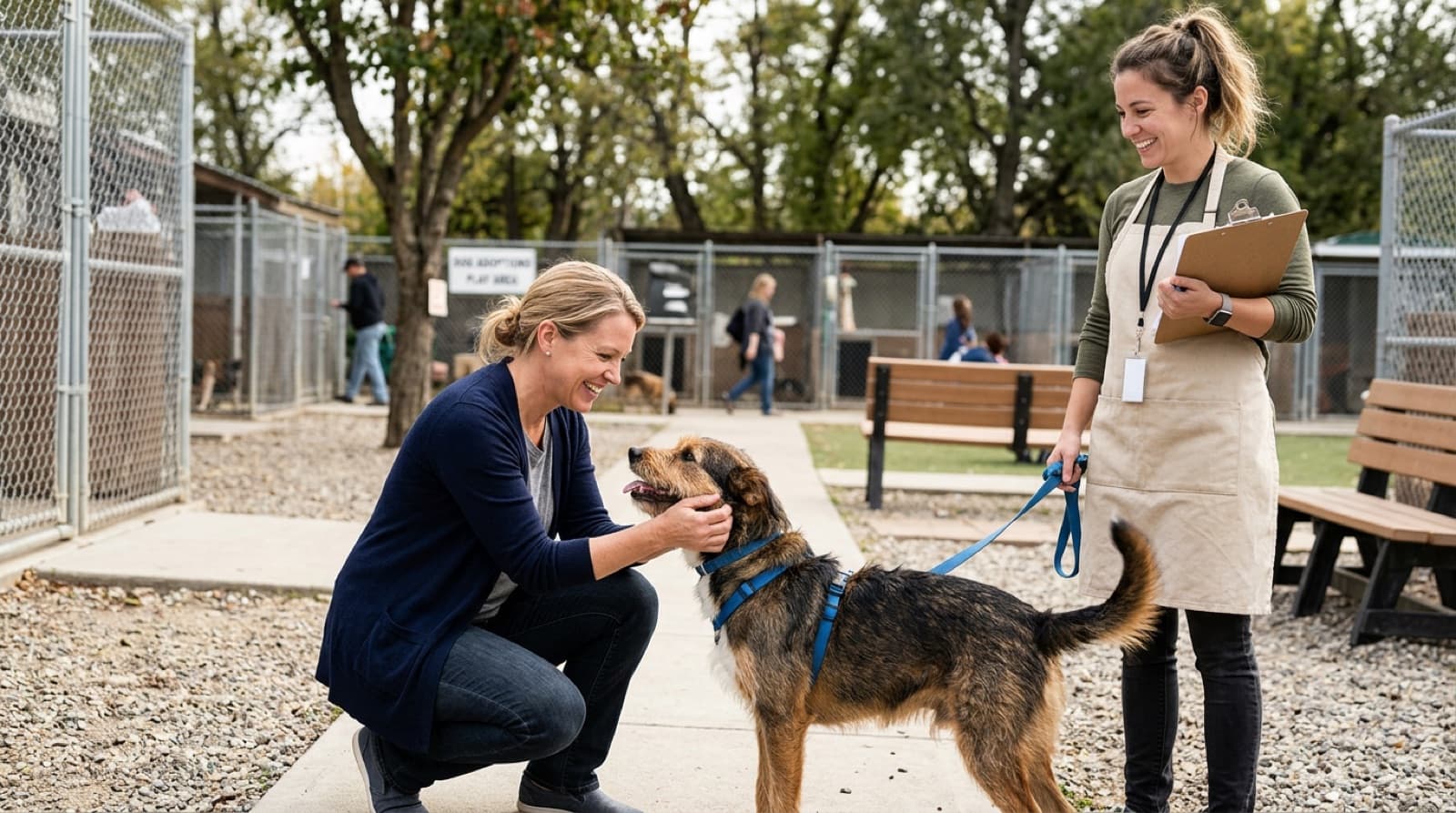
Once your application looks like a possible fit, you meet the animal. For a shelter that is often a visit to the building. For a foster-based rescue it is usually arranged at the foster home or a neutral spot. This is the heart of the process, and it goes both ways: you are seeing whether you connect with the pet, and the rescue or foster is watching how you interact.
Many rescues ask that everyone who lives in the home comes to the meet-and-greet, and if you have a resident dog, they will often want a careful introduction between the animals before approving the match. Come ready with questions. Ask about the pet's routine, energy level, history, how they are with strangers, kids, or other animals, and any medical or behaviour notes. A good rescue wants you to ask, because an informed adopter is a lasting one.
Checks and approval
After the meet-and-greet, some rescues do a final layer of checks before approving. This varies a lot. A busy municipal shelter may approve on the spot, while a small foster-based rescue may do a quick reference call, confirm with your vet that current pets are up to date, or arrange a short home check. Home checks today are frequently a video call or a few photos rather than an in-person inspection, and they are about safety and fit, not judging your housekeeping.
If you rent, expect to confirm that your lease allows pets, and sometimes that means providing landlord contact details. None of these steps are meant to trip you up. They are the rescue closing the loop on the questions from your application. If you have been honest from the start, approval is usually a formality, and the rescue will tell you clearly what, if anything, is still outstanding.
The adoption fee and the contract
Once approved, you pay the adoption fee and sign an adoption contract. The fee usually surprises people in a good way, because it bundles in a lot of veterinary work: spay or neuter, core vaccines, deworming, and a microchip are commonly all included, and sometimes a starter bag of food or a vet-check voucher too. Compared with paying for those services separately, the fee is doing real work, and it goes straight back into the rescue's care for the next animal.
The contract is standard and worth reading. It typically confirms you will provide proper care, keep the pet as a companion rather than rehome or sell it, and, importantly, that you will return the animal to the rescue if it ever does not work out rather than passing it on or surrendering it elsewhere. That return clause is there to protect the animal for life. Sign it knowing it is a commitment, not paperwork.
Bringing your new pet home
Then comes the best part and the part people most often rush. Your new pet has just lost everything familiar, so the first days should be calm and quiet, not a parade of friends and excitement. Set up a small, safe space that is theirs, keep introductions slow, and let them come to you. A common rule of thumb is the idea of three days, three weeks, three months: roughly three days to start decompressing, three weeks to settle into a routine, and three months to truly feel at home.
Have the basics ready before they arrive: food, bowls, a bed or crate, a litter box for a cat, a collar with an ID tag, and a leash for a dog. Book a get-to-know-you vet visit in the first week or two. Most of all, give it time. The frightened, shut-down animal of the first few days is rarely the real pet. Patience in the early weeks is what turns a nervous newcomer into a settled member of the family.
What if it doesn't work out?
Sometimes, despite everyone's best effort, a match is not right, and a responsible rescue plans for that. Most adoption contracts include a return clause, and many offer a short adjustment window with support if you hit early bumps. The expectation is simple and important: if it truly is not working, you bring the animal back to the rescue rather than rehoming it yourself or surrendering it elsewhere.
Reaching out early is the right move, not a failure. A good rescue would much rather hear from you in week one about a problem they can help with than learn months later that things fell apart. They know their animals, they have seen most issues before, and helping the match succeed is exactly what they are there for. Adoption is a relationship with the rescue, not just a transaction, and that support is part of what you are signing up for.
Further reading: the ASPCA on adoption tips, Humane Canada.
Not sure what to adopt yet?
Start with the species that fits your life, then the rest of the process follows.
Take the dog-or-cat quiz →FAQ
Tap a question to expand