The short answer
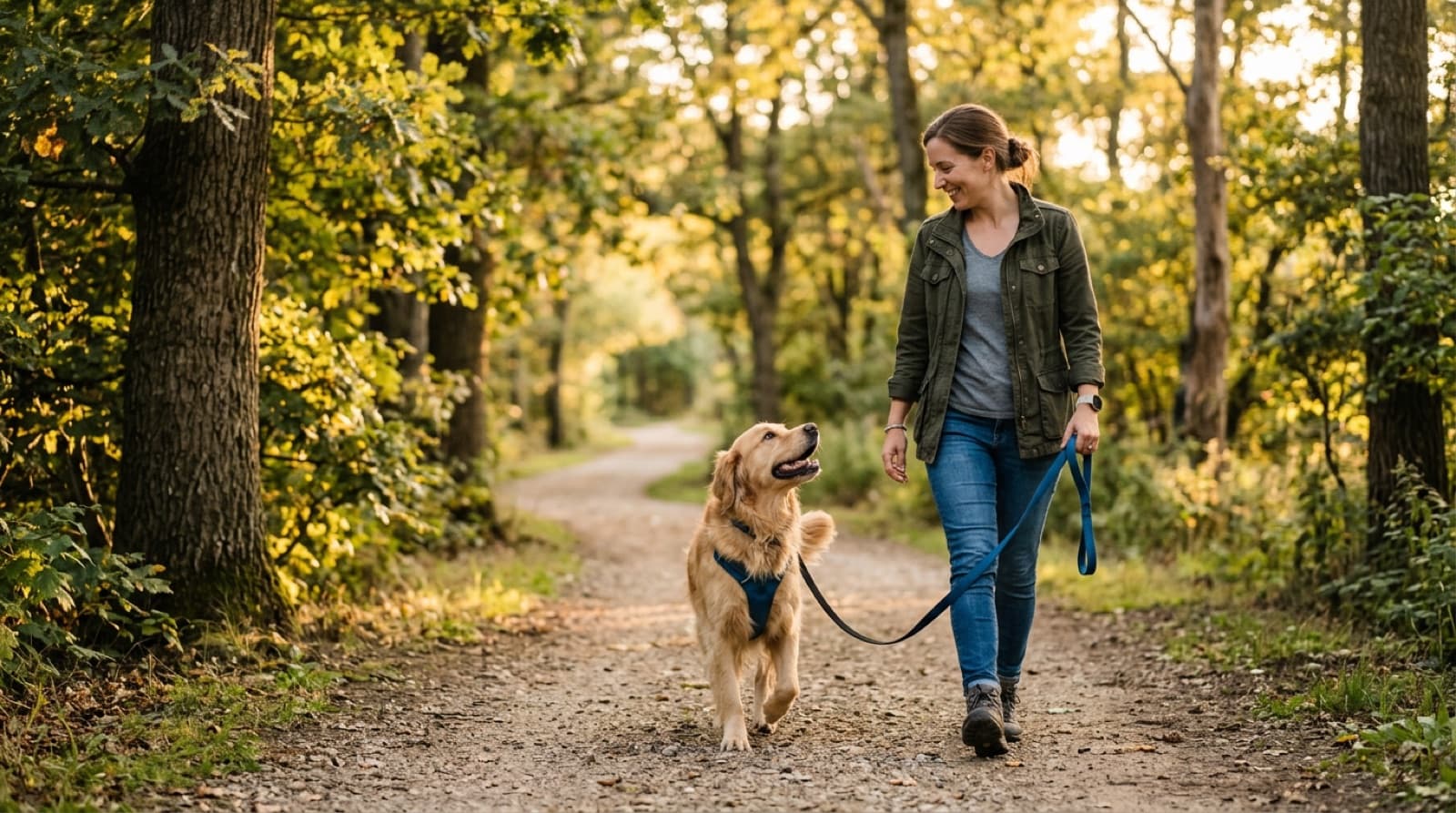
Dogs pull on the leash because it is rewarding and because they naturally walk faster than we do. Every time pulling gets the dog closer to something interesting, it learns that pulling works, so the fix is to make sure it never does. The core method is simple: the moment the leash goes tight, stop walking and stand still, and only move forward again once the dog puts slack back in the line, so pulling stops the walk and a loose leash keeps it going. At the same time, reward the dog heavily for walking near you, so being by your side becomes the best place to be. A front-clip harness reduces a dog's pulling power and gives you control while you train, but it is a management tool, not a substitute for teaching. Start in boring, low-distraction places where success is easy, then slowly add difficulty. Loose-leash walking is one of the slower skills to build, so keep sessions short and expect it to take weeks of consistent practice.
Why dogs pull
Pulling is not a sign of a stubborn or dominant dog, it is just a behaviour that pays off. Dogs walk faster than people and are eager to get to all the interesting smells, dogs, and sights around them. When a dog pulls and the walk continues in the direction it wants, or it reaches the thing it was straining toward, the pulling is rewarded, and rewarded behaviour repeats. Over many walks this hardens into a strong habit, which is why so many dogs pull like little freight trains.
Understanding that makes the solution obvious. If pulling keeps working because it gets the dog where it wants to go, then the key is to make sure pulling no longer works, while making the alternative, walking on a loose leash, the thing that pays. You are not fighting the dog, you are changing the rules of the game so that a slack leash is what moves the world forward.
The stop-and-go method
The most widely used approach is beautifully simple: pulling stops the walk. The instant the leash goes tight, stop moving and stand still, like a tree. Do not yank back or scold, just stop and wait. The dog quickly learns that a tight leash gets it nowhere. The moment the dog eases the tension, by turning back to you, taking a step toward you, or simply stopping pulling, praise it and start walking again. Forward motion, which is what the dog wants, becomes the reward for a loose leash.
Expect this to feel slow and stop-start at first, because it is. You may barely make it down the block in the early sessions, and that is normal and fine, since you are building a habit, not covering distance. Be patient and consistent, because the lesson only lands if pulling reliably ends progress every single time. An alternative on the move is to turn and walk the other way when the dog forges ahead, so it has to come back to you, which teaches the same thing: pulling does not get you there.
Reward walking close
Stopping pulling is only half the picture. You also want to actively teach the dog that staying near you is wonderful, so reward it generously when it does. Whenever the dog is walking with a loose leash near your side, mark it and pay it with a treat or warm praise. Many people deliver the treat right at their leg, which encourages the dog to stay in that position to earn more. The dog learns that the place beside you is where all the good things happen.
Be generous early and fade later. In the beginning, reward loose-leash walking often so the new habit gets a strong foundation, then gradually space out the treats as it becomes reliable, while still praising. You are competing with a very rewarding environment full of smells and sights, so your rewards need to be worth it at first. Over time, walking nicely becomes its own habit and you will not need to pay every step.
The right gear
Equipment will not train your dog for you, but the right tool makes training easier and the walk safer in the meantime. A front-clip harness, which attaches the leash at the dog's chest, reduces pulling power and gently redirects the dog toward you when it pulls, giving you more control without putting pressure on the neck. A well-fitted harness or a head halter, introduced gradually and paired with rewards, can take the strain out of walks while the loose-leash habit is still forming.
Avoid tools that work through pain or fear. Choke chains, prong collars, and slip leads that tighten on the neck can cause injury and create fear or aggression, and they treat the symptom rather than teaching the dog what to do. The most reliable, humane path is a comfortable front-clip harness plus reward-based training. Think of the gear as management that buys you control and safety while the training does the real, lasting work.
Build it up slowly
Set your dog up to succeed by starting where it is easy. Practise loose-leash walking first in low-distraction places, like a quiet hallway, your yard, or a calm street, where there is little competing for the dog's attention and a loose leash is achievable. Keep sessions short and frequent, because a few minutes of focused practice done often beats one long, frustrating slog. End while things are still going well.
Only once the dog is reliably walking nicely in easy settings should you gradually add difficulty: busier streets, more smells, other dogs at a distance. If the dog struggles when you raise the challenge, you have simply moved up too fast, so drop back to an easier level and build again. Loose-leash walking is genuinely one of the harder skills to make reliable because the whole world is pulling against you, so be patient, stay consistent, and let it come together over weeks rather than days.
Further reading: the American Kennel Club training library, the ASPCA on common dog behaviour issues.
Want walks you both enjoy?
Loose-leash walking is a month-two skill. The free training roadmap shows what to build first.
See the first-90-days plan →FAQ
Tap a question to expand