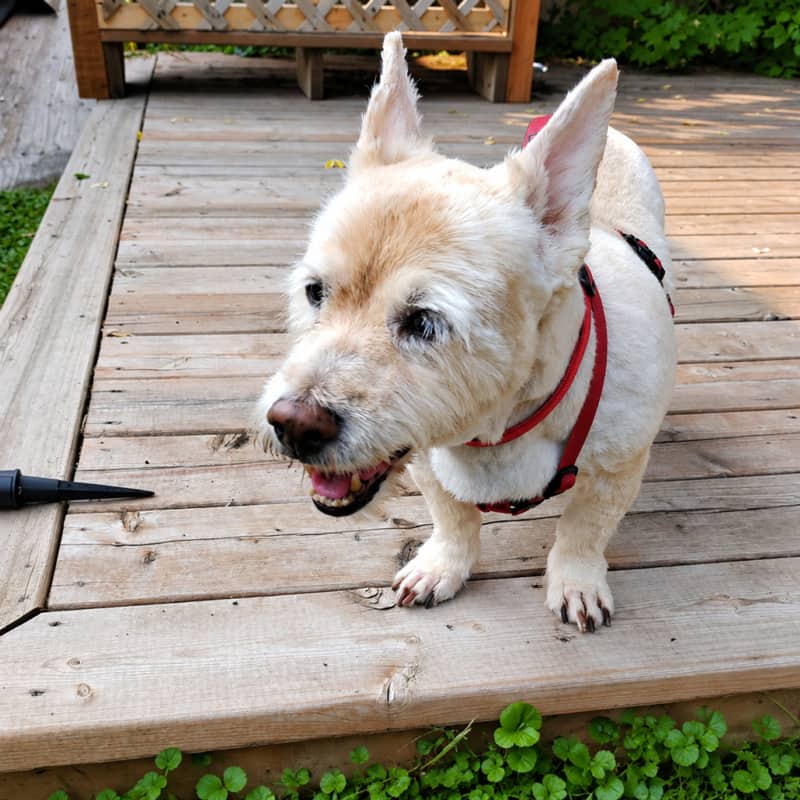
Corgis in Winnipeg, right now
We're currently tracking 1 adoptable Corgi in southern Manitoba, listed by 1 rescue including Before the Bridge. Listings update regularly, and most Corgis in Winnipeg get adopted within days of being posted — if one catches your eye, reach out fast.
Adopting a Corgi in Winnipeg
Pembroke Welsh Corgis are uncommon but present in Winnipeg rescue. The Winnipeg Humane Society on Hurst Way, Manitoba Mutts foster network, D'Arcy's ARC on Century Street and Hull's Haven Border Collie Rescue all see Corgis and Corgi crosses through the year. The pattern is recognisable. A first-time owner picked up a Corgi puppy because of the Queen Elizabeth II social media bump, underestimated the herding-breed exercise need, the heavy shedding, the vocal nipping at heels, and the dog ended up in rescue at 1 to 3 years old.
This page pulls every adoptable Corgi from the Winnipeg shelters we cover into one searchable place, refreshed regularly. Demand is consistently high — listings move within 24 to 48 hours. Winnipeg rescues place Corgis with applicants who understand the long-back stair-management routine, the herding-breed energy, and the daily brushing. Pembroke Welsh Corgi is the more common variant; Cardigan Welsh Corgis (with the long tail) are rarer in rescue.
IVDD and the long-back stair-management problem
Intervertebral disc disease (IVDD) is the breed-defining medical concern. The long spine and short legs that define the Corgi silhouette put extreme load on the lumbar discs, and herniation risk climbs with every jump from a couch, every flight of stairs taken at speed, and every extra pound of bodyweight. An Exchange District or downtown high-rise Corgi using elevators is at lower IVDD risk than a Wolseley walk-up Corgi facing 3 flights of stairs daily, or a Charleswood bungalow Corgi jumping in and out of the family SUV. Surgery at Winnipeg specialty practices for a herniated disc runs $5,000 to $8,000, with longer rehab — tertiary neurology routes to the Western College of Veterinary Medicine in Saskatoon, a five-hour drive each way, when local workup is not enough.
Practical prevention: ramps off couches and beds, a stair-gate at the top and bottom of any flight, no jumping in and out of vehicles (use a ramp or lift the dog), and strict weight management. Obesity is the single biggest IVDD trigger — feed to body condition, not the bag's recommendation. The Winnipeg Humane Society and Manitoba Mutts will flag back history specifically on intake; ask the foster directly about jumping habits and stair confidence.
Degenerative myelopathy and the Pembroke-specific genetic load
Degenerative myelopathy (DM) is a late-onset progressive paralysis disease affecting the Pembroke Welsh Corgi at elevated rates. Onset is typically 8 to 14 years old, beginning with hindlimb weakness and progressing to full paralysis over 6 to 36 months. The disease is incurable. A DNA test ($60 to $120) identifies clear, carrier, and at-risk dogs — ask the rescue if the dog has been tested or if parentage is known. The test is not a guarantee of clinical disease but at-risk dogs benefit from physiotherapy and hydrotherapy referrals earlier.
Beyond DM and IVDD, the breed carries elevated rates of hip dysplasia, progressive retinal atrophy (PRA), and von Willebrand disease (vWD — a bleeding disorder relevant before any surgery). A 12 to 13 year lifespan is realistic for a healthy Corgi. Pet insurance taken out the week of adoption is essential — IVDD claims alone justify the premium. Specialty referrals in Winnipeg go to MVMA neurology practices, with tertiary work routing to the Western College of Veterinary Medicine in Saskatoon.
Herding-breed energy and a Winnipeg winter undercoat advantage
Corgis are not the couch dogs Instagram suggests. The breed was developed to drive cattle, and the working-breed energy in a 25 to 30 lb body produces a dog that needs an hour or more of real activity daily, year-round, plus mental work. Without it, Corgis develop nuisance barking, heel-nipping at family members (a herding behaviour, not aggression), and destructive chewing. Kilcona Park off-leash, the fenced area at Maple Grove Dog Park, La Barriere Park, or sniff-driven leash walks through Wolseley and Osborne Village all work.
The double coat does handle Winnipeg cold reasonably well — better than the toy breeds — but the short legs put the belly on the snow. Belly-drag on deep snow from November through March means a longer towel-down at the door and a watch for ice balls in the belly fur. The short legs in deep snow also limit the walking pace; Corgis happily plough through but tire faster than a tall dog. Summer humidex in the high 30s is the harder season — the dense double coat traps heat. Walk dawn or after 9 PM in July and August.
The nipping at heels is the most-misunderstood breed trait. A Corgi nipping a running toddler's ankles is doing the job it was bred for — moving the herd. Redirect with herding-style toys (flirt poles, herding balls) and structured training, not punishment. Good with kids past toddler age once the herding instinct is redirected. The Winnipeg force-free training community handles Corgi nipping routinely.
What Corgis are actually like to live with
A well-matched Corgi in Winnipeg is one of the most charismatic, smart, and stubbornly funny small-medium dogs in any rescue. The realistic parts to plan for:
- IVDD risk. No jumping from couches or beds, ramps and stair-gates, strict weight management.
- High exercise needs. An hour or more of real activity daily — not a couch dog.
- Heavy shedding. Double coat blows seasonally — brushing 3 to 5 times weekly, daily through coat blow.
- Vocal. Bark at squirrels, elevator strangers, delivery drivers — Exchange District or downtown high-rise neighbours notice.
- Heel-nipping. Herding-breed behaviour, redirect with training — not aggression.
- Stubborn but smart. Highly trainable with positive methods, ignores corrections it disagrees with.
- Good with kids past toddler age. Watch the nipping with running children under 4.
- Winter belly-drag in deep snow. Towel-down at the door, watch for ice balls in fur. Summer humidex is the harder season.
- 12 to 13 year lifespan. Senior years bring DM risk and IVDD watchfulness.
What the fee usually covers
Corgi adoption fees at Winnipeg rescues typically run $500 to $900 for an adult dog, $700 to $1,200 for puppies under 1 year. The fee covers spay or neuter, core vaccinations, microchip, deworming, and a vet check before placement. Some rescues include DM DNA testing in the fee; confirm on the dog's own listing.
How to actually search
Apply the same day a Corgi appears. Demand in Winnipeg is consistently high and listings move within 24 to 48 hours. Use the filters above to narrow by energy (medium-high), size (small-medium, 25 to 30 lbs), compatibility, and shelter. Read foster notes on stair confidence, nipping behaviour, vocalisation, and back history. Foster homes will set up a video call before in-person meet across the city.
Looking more broadly? Browse every adoptable dog across the province on Dog Adoption Manitoba.
The rescues that most often list Corgis across Manitoba are Winnipeg Humane Society, Manitoba Mutts Dog Rescue, D'Arcy's ARC, and Hull's Haven Border Collie Rescue. For breed-specific background, the Canadian Kennel Club is a useful reference.
Corgi guides for Winnipeg adopters
Corgi Adoption Winnipeg: Rescues, Costs, Reality
Where to adopt a Corgi in Winnipeg: rescue costs vs breeders, Pembroke vs Cardigan, the fluffy and mini Corgi myths, Corgi crosses, and why they land in rescue.
12 min read readCorgi Health Issues Winnipeg
Back and disc disease, hip dysplasia, degenerative myelopathy, obesity, and the Corgi health issues Winnipeg owners should plan for. Consult your vet.
12 min read readCorgi Temperament and Training Winnipeg
How to raise a Corgi in Winnipeg: the herding drive, heel-nipping, real exercise needs, barking, back-safe activity, and force-free training.
12 min read readCorgi Adoption FAQ — Winnipeg
How many Corgis are available for adoption in Winnipeg?
As of September 2026, Corgis are rare in Winnipeg rescue — only 1 is listed right now across 1 rescue on LocalPetFinder. They tend to get adopted fast, so setting an alert is the most reliable way to find one.
Where can I adopt a Corgi near me in Winnipeg?
The major sources are the Winnipeg Humane Society on Hurst Way, Manitoba Mutts Dog Rescue's foster network, D'Arcy's ARC on Century Street, and Hull's Haven Border Collie Rescue. Pembroke Welsh Corgi is the more common variant in rescue; Cardigan Welsh Corgis are rarer. Demand is consistently high — set up an alert and apply within 24 to 48 hours of a dog appearing. Winnipeg rescues place Corgis with applicants who understand the herding-breed energy and the long-back stair-management routine.
Is a Corgi a good condo dog in Winnipeg?
Conditionally. Size fits Exchange District and downtown high-rise weight caps comfortably (25 to 30 lbs is under most declarations). The catch is two-fold: IVDD risk climbs with daily stair climbing (use the elevator, not stairs, especially at speed — a Wolseley walk-up Corgi facing 3 flights daily is at higher risk than a high-rise elevator Corgi), and herding-breed energy demands an hour or more of real exercise daily that a small condo balcony does not substitute for. Ramps off couches and beds are essential. A condo Corgi with a committed off-leash routine at Kilcona Park or Maple Grove fenced area works; a condo Corgi expected to be a couch dog will develop nuisance barking and destructive chewing.
What is degenerative myelopathy in Corgis?
A late-onset progressive paralysis disease affecting the Pembroke Welsh Corgi at elevated rates. Onset is typically 8 to 14 years old, beginning with hindlimb weakness and progressing to full paralysis over 6 to 36 months. The disease is incurable but a DNA test ($60 to $120) identifies clear, carrier, and at-risk dogs. Ask the rescue if the dog has been tested or if parentage is known. At-risk dogs benefit from earlier physiotherapy and hydrotherapy referrals — specialty referrals in Winnipeg go to MVMA neurology practices, with tertiary work routing to the Western College of Veterinary Medicine in Saskatoon.
How does a Corgi handle Winnipeg winter?
Reasonably well — the double coat handles prairie cold better than the toy breeds — but the short legs put the belly on the snow. Belly-drag on deep snow from November through March means a longer towel-down at the door and a watch for ice balls in the belly fur. The short legs in deep snow also limit walking pace; Corgis happily plough through but tire faster than a tall dog. Summer humidex in the high 30s is actually the harder season for the breed — the dense double coat traps heat. Walk dawn or after 9 PM in July and August.
Why do Corgis nip at heels?
It is a herding behaviour, not aggression. Corgis were developed to drive cattle by nipping at heels and dodging kicks — the instinct is hardwired. A Corgi nipping a running toddler or a fast-moving family member is doing the job it was bred for. Redirect with herding-style toys (flirt poles, herding balls) and structured force-free training, never punishment. Good with kids past toddler age once the instinct is redirected. The Winnipeg force-free training community handles Corgi nipping routinely.
What is the difference between a Pembroke and a Cardigan Welsh Corgi?
They are two separate breeds. The Pembroke Welsh Corgi is the more common one, usually tailless or docked, with smaller pointed ears and red, sable, or tricolour coats. The Cardigan Welsh Corgi is a bit larger and heavier-boned, always has a long fox-like tail, has bigger rounded ears, and comes in more colours including blue merle and brindle. Both share the long back that makes IVDD (spinal disc disease) a real risk, so keep either one lean and limit jumping on and off furniture.
How much does it cost to adopt a Corgi in Winnipeg?
Adopting a Corgi in Winnipeg typically costs $300 to $600, and puppies usually carry a premium at $500 to $900. The exact fee varies by rescue, and older dogs are often reduced. That fee is not a purchase price. It covers work already done on the dog: spay or neuter, vaccinations, deworming, microchip, and a basic vet workup, which would cost several hundred dollars more if you arranged it yourself after buying. Buying the same breed from a registered breeder generally runs well over $1,000, usually with a waitlist. Ask the rescue what is included before you apply, since a few include extras like a starter bag of food or a first-month insurance trial.
Are these Corgis for sale in Winnipeg?
Not for sale, for adoption, which is usually the better deal. Every Corgi here comes from a Winnipeg rescue or shelter, not a breeder, pet store, or classified seller. Adoption fees are typically $300 to $600, with puppies at $500 to $900 and already include vaccinations, deworming, microchip and spay or neuter when age-appropriate, versus roughly $2,000 to $5,000 or more to buy a Corgi from a breeder. If you searched "corgi for sale winnipeg" or "corgi puppies for sale," adopting gets you a healthy, vetted dog for a fraction of the price.
Where can I buy a Corgi in Winnipeg, and should I?
You can buy from a registered breeder, but it is worth weighing against adoption first. A reputable Corgi breeder typically charges $2,000 to $5,000 or more and often has a waitlist, while a rescue Corgi costs $300 to $600, with puppies at $500 to $900 fully vetted and may be available now. Be cautious of cheap corgi-for-sale ads on classified sites and marketplaces, which are frequently backyard breeders or puppy-mill resellers with unvetted, sometimes sick animals and no health guarantee. If you do buy, insist on seeing where the puppies were raised and getting vet records. For most families in Winnipeg, adopting a rescue Corgi is cheaper, faster, and gives a dog in need a home.
Are there free Corgis in Winnipeg, or corgis under $500?
Adoption is the closest honest answer, and it is not free. A rescue Corgi in Winnipeg typically costs $300 to $600, with puppies at $500 to $900, so the lower end lands under the "$500" people search for and the rest does not. What the fee buys is work already done, the vaccinations, deworming, microchip and spay or neuter, which would cost more than the fee itself if you arranged it yourself, and it is still far below breeder prices. Be wary of genuinely free corgi listings. An animal advertised free to a good home has usually not been vetted, and free rehoming ads are the route flippers and unregistered breeders use to move animals with no health guarantee and no recourse. Paying a rescue fee buys you a dog someone has already examined, treated, and been honest with you about.
Are there Corgi puppies in Winnipeg, or only adults?
Both, but adults far outnumber puppies, and it is worth knowing that before you start looking. Most Corgis arriving in Winnipeg rescue are adolescents and adults, because that is the age at which first homes tend to give up. Puppies do come through, usually as accidental litters or with a surrendered mother, and they are typically spoken for quickly. Setting an alert beats refreshing the page. It is also worth asking whether you actually want one: an adult arrives with a temperament a foster has already observed and described, where a Corgi puppy is a prediction, and for this breed in particular knowing what you are getting is the more useful thing.
Where can I find a Corgi near me in Winnipeg?
Start with the listings on this page, which pull from Winnipeg rescues and shelters and are refreshed regularly, so what you see is what is genuinely available rather than a stale directory. If nothing suits today, that is normal for this breed: rescue intake is intermittent rather than steady, and a breed with none listed this week often has several next month. Setting an alert beats checking back, and it is worth widening to nearby towns, since most rescues serving Winnipeg will adopt out across a reasonable driving distance rather than only inside one municipality.
Have a dog to rehome?
Rehoming a Corgi in Winnipeg?
List your dog free. Local adopters browsing Winnipeg see owner listings first: no shelter, no fees, you choose the home.
List your pet free →Takes 3 minutes. You stay in control of who adopts.
Not seeing one yet?
Get notified when a Corgi is listed in Winnipeg
We'll email you the moment a Corgi is listed in Winnipeg on LocalPetFinder, from a rescue or an owner rehoming.
One email when there's a match. Unsubscribe anytime.
For rescues & shelters
Are you a Winnipeg-area rescue? List your adoptable dogs free.
Free shelter account: your dogs appear here and across LocalPetFinder, with analytics and adoption applications included.