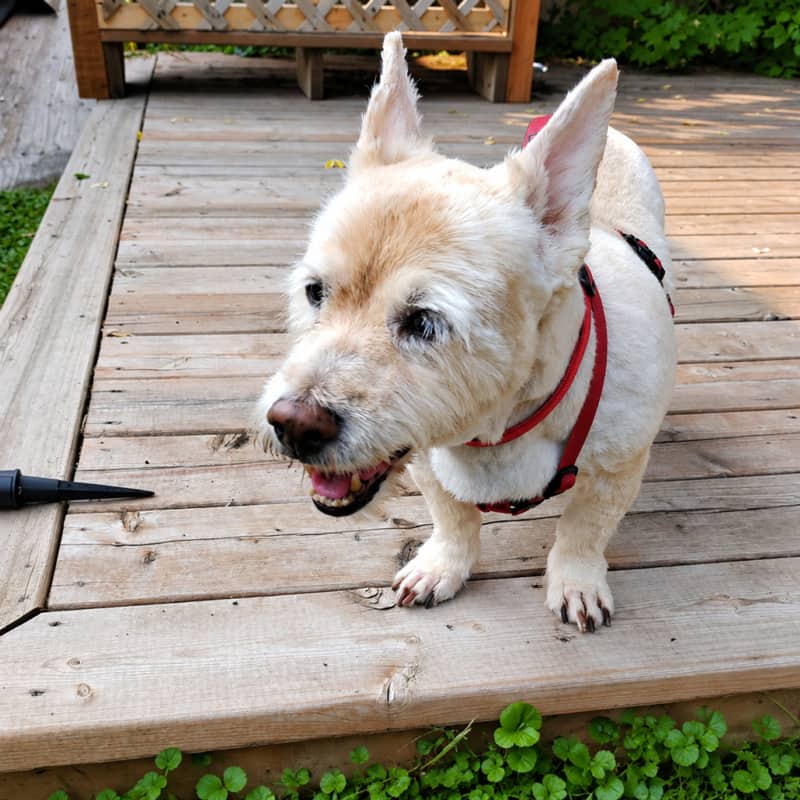
Corgi Mixs in Winnipeg, right now
We're currently tracking 1 adoptable Corgi Mix in southern Manitoba, listed by 1 rescue including Before the Bridge. Listings update regularly, and most Corgi Mixs in Winnipeg get adopted within days of being posted — if one catches your eye, reach out fast.
Adopting a Corgi-mix in Winnipeg
Corgi-mix is a catch-all category in Winnipeg rescue covering any dog where Pembroke or Cardigan Welsh Corgi parentage is the visible dominant identification. Common Manitoba crosses include Corgador (Corgi + Labrador), Horgi (Corgi + Husky, more common via northern intake), Corgi + Australian Shepherd, Corgi + Shepherd, and various Corgi + small terrier crosses. The Winnipeg Humane Society on Hurst Way, Manitoba Mutts Dog Rescue foster network, D'Arcy's ARC on Century Street and Hull's Haven Border Collie Rescue see Corgi-mixes more often than purebred Corgis through the year.
This page pulls every adoptable Corgi-mix from the Winnipeg shelters we cover into one searchable place, refreshed regularly. The cross category is genuinely a good family-fit option in many cases — the herding-nip behaviour, vocalisation and intensity that drives purebred Corgi surrenders is often softened in crosses, and the IVDD risk reduces somewhat with longer-legged co-parents. But the Corgi genetics carry through enough that adopters need to understand spinal disease risk and the herding behavioural tendency before applying.
IVDD risk — Corgi long-back genetics carry through
The single most important medical reality for Corgi-mix adopters is IVDD (intervertebral disc disease) risk inherited from the Corgi parent. Pembroke and Cardigan Corgis are chondrodystrophic (achondroplastic) breeds — their elongated spine relative to short legs predisposes them to disc herniation. Any cross carrying Corgi ancestry inherits some level of IVDD risk; severity varies by how much of the long-back, short-leg conformation passes through. Corgi + Lab or Corgi + Husky crosses with longer legs reduce the risk meaningfully. Corgi + small terrier crosses can retain almost full Corgi spinal risk.
IVDD presents as sudden weakness, dragging hind limbs, yelping when picked up, or full paralysis. Acute presentation is a surgical emergency — referral to WCVM Saskatoon neurology (a five-hour drive each way for tertiary referral) for MRI ($1,500 to $2,500) and decompressive surgery ($7,000 to $12,000). Manitoba pet insurance taken at adoption is essential — IVDD episodes can happen at any age and recur. Daily management is weight control (obesity is the single biggest IVDD trigger), no stair-climbing, no jumping on or off furniture (ramps and steps), and harnesses not neck collars for leash walks.
Herding redirect, vocalisation and obesity
Corgi-mixes retain varying amounts of herding drive depending on the cross. Pure herding crosses (Corgi + Shepherd, Corgi + Aussie, Corgi + Border Collie via Hull's Haven intake) carry significant herding instinct — nipping at heels of children, chasing joggers and bicycles, circling family members. The instinct is genetic, not aggressive — Manitoba owners need to redirect into structured outlets (basic obedience, scent work, food puzzles) rather than punish. Corgi + Lab or Corgi + Husky crosses are typically less herding-driven but more food-motivated and prey-driven respectively.
Obesity is the recurring Corgi-mix health issue across all crosses. The breed parent is intensely food-motivated and accumulates weight quickly — obesity directly accelerates IVDD onset and severity. Realistic Manitoba feeding is measured portions twice daily (not free-feeding), lean body condition score 4 to 5 of 9, and treats counted into daily caloric intake. Vocalisation varies — Corgi + Husky crosses can be very vocal; Corgi + Lab crosses are typically quieter. Foster notes will indicate the specific dog's noise level.
DNA testing — identify what you actually have
Rescue Corgi-mixes often arrive with limited or no parentage information. Embark or Wisdom Panel DNA testing ($150 to $200) identifies the actual breed composition and surfaces breed-specific genetic risks. Degenerative myelopathy (DM) is a Pembroke Corgi-line concern — DNA testing identifies SOD1 mutation carriers and at-risk dogs. Progressive retinal atrophy (PRA) is breed-specific in some Corgi lines. Hip dysplasia risk varies by cross. Cardiac concerns are minimal in most Corgi crosses unless the co-parent breed carries cardiac load.
Manitoba DNA testing is increasingly common in rescue placements — the Winnipeg Humane Society sometimes funds testing on intake dogs with unclear parentage to better match them to adopters. Annual veterinary screening from age 5 is reasonable for Corgi-mixes given the IVDD load and breed-specific concerns surfaced through DNA. Lifespan typically 12 to 14 years, sometimes longer in lighter-build crosses. Pet insurance taken at adoption is essential given the IVDD and orthopaedic risk profile.
Exercise and Winnipeg climate fit
Corgi-mixes generally need 45 to 60 minutes daily exercise — more than purebred Corgis if the co-parent is a high-energy breed (Husky, Aussie, Lab). The double coat from the Corgi parent (often retained in crosses) handles Winnipeg winter well — most adults tolerate -25°C to -30°C with reasonable session limits, though puppies and seniors need shorter outdoor exposure and coat protection below -30°C. Off-leash work at Kilcona Park, La Barriere Park, Maple Grove Park and Bonnycastle Off-Leash Dog Park suits the breed, though high prey-drive crosses need long-line work until recall is reliable.
Summer heartworm and tick prevention is essential — Manitoba's humid summer carries elevated heartworm risk via mosquito vectors. Monthly preventives ($25 to $50/mo seasonally) are standard at all MVMA-affiliated Winnipeg vets. Apartments and condos in Exchange District, Osborne Village and Wolseley can work for smaller Corgi-mixes (Corgi + small terrier, 18 to 30 lbs) with committed daily exercise, but the working-cross variants (Corgi + Shepherd, Corgi + Border Collie) want suburban or rural space and a fenced yard.
What Corgi-mixes are actually like to live with
A well-matched Corgi-mix in Winnipeg is one of the most versatile, family-friendly, trainable cross categories in any Manitoba rescue. The Corgi temperament softens through crossing and the working-breed co-parents add useful trainability. The honest parts to plan for:
- IVDD spinal risk inherited from Corgi parent. Severity varies by cross.
- Weight control is critical. Obesity directly accelerates IVDD.
- Herding redirect behaviour varies by cross. Plan structured outlets.
- DNA testing recommended to identify the cross and surface genetic risks.
- 45 to 60 minutes daily exercise typical, more for working-cross variants.
- Manitoba winter tolerance generally good with double coat.
- Pet insurance essential at adoption given IVDD and orthopaedic load.
- 12 to 14 year lifespan typical. 25 to 55 lbs depending on cross.
- Heartworm and tick prevention essential through summer mosquito season.
What the fee usually covers
Corgi-mix adoption fees at Winnipeg rescues typically run $400 to $700 for an adult dog, $500 to $900 for puppies. The fee covers spay or neuter, core vaccinations, microchip, deworming and a vet check before placement. Some rescues include initial Embark or Wisdom Panel DNA testing on intake dogs with unclear parentage; ask specifically. Confirm the exact number on the dog's own listing. Manitoba breeder pricing for purebred Corgi puppies runs $2,000 to $3,500 — Corgi-mix rescue is materially cheaper and crosses often produce better family pets than purebreds for first-time owners.
How to actually search
Apply within 5 to 7 days when a Corgi-mix matches your household. Use the filters above to narrow by size (25 to 55 lbs typical), energy, compatibility and shelter. Read foster notes on the suspected cross, IVDD-relevant body conformation (long-back severity), herding behaviour observations, child compatibility and exercise tolerance. Ask the rescue whether DNA testing has been completed — it materially changes care planning. Foster homes will set up a video call before in-person meet and many Manitoba rescues prefer adopters who understand IVDD management.
Looking more broadly? Browse every adoptable dog across the province on Dog Adoption Manitoba.
The rescues that most often list Corgi Mixs across Manitoba are Winnipeg Humane Society, Manitoba Mutts Dog Rescue, D'Arcy's ARC, and Hull's Haven Border Collie Rescue. For breed-specific background, the Canadian Kennel Club is a useful reference.
Corgi Mix Adoption FAQ — Winnipeg
How many Corgi Mixes are available for adoption in Winnipeg?
As of September 2026, Corgi Mixes are rare in Winnipeg rescue — only 1 is listed right now across 1 rescue on LocalPetFinder. They tend to get adopted fast, so setting an alert is the most reliable way to find one.
Where can I adopt a Corgi Mix near me in Winnipeg?
Corgi-mixes appear in Winnipeg rescue more often than purebred Corgis. The major sources are the Winnipeg Humane Society on Hurst Way, Manitoba Mutts Dog Rescue's foster network, D'Arcy's ARC on Century Street and Hull's Haven Border Collie Rescue. Common Manitoba crosses include Corgador (Corgi + Lab), Horgi (Corgi + Husky), and various Corgi + Shepherd or Corgi + small terrier mixes. Set up an alert and apply within 5 to 7 days. Adoption fees run $400 to $700 for adults, $500 to $900 for puppies. Manitoba rescues sometimes include DNA testing on intake dogs with unclear parentage.
Do Corgi-mixes inherit IVDD spinal risk in Manitoba?
Yes, at varying severity. Pembroke and Cardigan Corgis are chondrodystrophic breeds — their elongated spine predisposes them to disc herniation, and any cross carrying Corgi ancestry inherits some IVDD risk. Severity varies by how much of the long-back, short-leg conformation passes through. Corgi + Lab or Corgi + Husky crosses with longer legs reduce risk meaningfully. Corgi + small terrier crosses can retain near-full Corgi spinal risk. Manitoba daily management is weight control (obesity is the biggest IVDD trigger), no stair-climbing, no jumping on or off furniture, and harnesses not neck collars. Acute IVDD presentation is a surgical emergency — MRI plus decompressive surgery at WCVM Saskatoon runs $7,000 to $12,000. Pet insurance is essential.
Is DNA testing worth doing for a Corgi-mix in Winnipeg?
Yes. Rescue Corgi-mixes often arrive with limited or no parentage information, and Embark or Wisdom Panel testing ($150 to $200) identifies actual breed composition and surfaces breed-specific genetic risks. Degenerative myelopathy (DM) is a Pembroke Corgi-line concern — testing identifies SOD1 mutation carriers and at-risk dogs. Co-parent breed concerns (cardiac load from Cavalier crosses, MDR1 from Aussie crosses, hip dysplasia patterns from Shepherd crosses) all become visible through DNA. The Winnipeg Humane Society and Manitoba Mutts sometimes fund testing on intake dogs with unclear parentage — ask specifically before applying.
Are Corgi-mixes better than purebred Corgis for first-time owners?
Often yes. Purebred Corgis carry intense herding-nip behaviour, vocalisation and working drive in a small body — surrender rates among first-time Manitoba owners are notable. Crosses tend to soften these traits depending on the co-parent. Corgi + Lab crosses are typically more relaxed and family-friendly. Corgi + Husky crosses retain vocalisation but with reduced herding. Corgi + small terrier crosses can be condo-suitable. The IVDD spinal risk does carry through to some degree in all crosses, so adopters still need weight control discipline and no-jump household rules. First-time owners with a fenced yard and willingness to do basic obedience work generally succeed with Corgi-mixes more readily than with purebreds.
Are Corgi crosses better than purebred Corgis for first-time owners?
Often yes. Crosses tend to soften the working drive, herding-nip instinct, and vocalisation that can be challenging in purebreds. The IVDD risk also reduces in crosses with longer-legged breeds.
How big do Corgi crosses get?
Varies by cross. Corgi-Lab ranges 30 to 50 lbs. Corgi-Husky (Horgi) ranges 30 to 55 lbs. Foster homes can give you an adult-size estimate based on body proportions at intake.
How much does it cost to adopt a Corgi Mix in Winnipeg?
Adopting a Corgi Mix in Winnipeg typically costs $300 to $600, and puppies usually carry a premium at $500 to $900. The exact fee varies by rescue, and older dogs are often reduced. That fee is not a purchase price. It covers work already done on the dog: spay or neuter, vaccinations, deworming, microchip, and a basic vet workup, which would cost several hundred dollars more if you arranged it yourself after buying. Buying the same breed from a registered breeder generally runs well over $1,000, usually with a waitlist. Ask the rescue what is included before you apply, since a few include extras like a starter bag of food or a first-month insurance trial.
Are these Corgi Mixes for sale in Winnipeg?
Not for sale, for adoption, which is usually the better deal. Every Corgi Mix here comes from a Winnipeg rescue or shelter, not a breeder, pet store, or classified seller. Adoption fees are typically $300 to $600, with puppies at $500 to $900 and already include vaccinations, deworming, microchip and spay or neuter when age-appropriate, versus roughly $2,000 to $5,000 or more to buy a Corgi Mix from a breeder. If you searched "corgi mix for sale winnipeg" or "corgi mix puppies for sale," adopting gets you a healthy, vetted dog for a fraction of the price.
Where can I buy a Corgi Mix in Winnipeg, and should I?
You can buy from a registered breeder, but it is worth weighing against adoption first. A reputable Corgi Mix breeder typically charges $2,000 to $5,000 or more and often has a waitlist, while a rescue Corgi Mix costs $300 to $600, with puppies at $500 to $900 fully vetted and may be available now. Be cautious of cheap corgi mix-for-sale ads on classified sites and marketplaces, which are frequently backyard breeders or puppy-mill resellers with unvetted, sometimes sick animals and no health guarantee. If you do buy, insist on seeing where the puppies were raised and getting vet records. For most families in Winnipeg, adopting a rescue Corgi Mix is cheaper, faster, and gives a dog in need a home.
Are there free Corgi Mixes in Winnipeg, or corgi mixes under $500?
Adoption is the closest honest answer, and it is not free. A rescue Corgi Mix in Winnipeg typically costs $300 to $600, with puppies at $500 to $900, so the lower end lands under the "$500" people search for and the rest does not. What the fee buys is work already done, the vaccinations, deworming, microchip and spay or neuter, which would cost more than the fee itself if you arranged it yourself, and it is still far below breeder prices. Be wary of genuinely free corgi mix listings. An animal advertised free to a good home has usually not been vetted, and free rehoming ads are the route flippers and unregistered breeders use to move animals with no health guarantee and no recourse. Paying a rescue fee buys you a dog someone has already examined, treated, and been honest with you about.
Are there Corgi Mix puppies in Winnipeg, or only adults?
Both, but adults far outnumber puppies, and it is worth knowing that before you start looking. Most Corgi Mixes arriving in Winnipeg rescue are adolescents and adults, because that is the age at which first homes tend to give up. Puppies do come through, usually as accidental litters or with a surrendered mother, and they are typically spoken for quickly. Setting an alert beats refreshing the page. It is also worth asking whether you actually want one: an adult arrives with a temperament a foster has already observed and described, where a Corgi Mix puppy is a prediction, and for this breed in particular knowing what you are getting is the more useful thing.
Where can I find a Corgi Mix near me in Winnipeg?
Start with the listings on this page, which pull from Winnipeg rescues and shelters and are refreshed regularly, so what you see is what is genuinely available rather than a stale directory. If nothing suits today, that is normal for this breed: rescue intake is intermittent rather than steady, and a breed with none listed this week often has several next month. Setting an alert beats checking back, and it is worth widening to nearby towns, since most rescues serving Winnipeg will adopt out across a reasonable driving distance rather than only inside one municipality.
Have a dog to rehome?
Rehoming a Corgi Mix in Winnipeg?
List your dog free. Local adopters browsing Winnipeg see owner listings first: no shelter, no fees, you choose the home.
List your pet free →Takes 3 minutes. You stay in control of who adopts.
Not seeing one yet?
Get notified when a Corgi Mix is listed in Winnipeg
We'll email you the moment a Corgi Mix is listed in Winnipeg on LocalPetFinder, from a rescue or an owner rehoming.
One email when there's a match. Unsubscribe anytime.
For rescues & shelters
Are you a Winnipeg-area rescue? List your adoptable dogs free.
Free shelter account: your dogs appear here and across LocalPetFinder, with analytics and adoption applications included.