Get notified when a Ragdoll is listed
We will email you the moment a Ragdoll becomes available in Nova Scotia, from a rescue or an owner rehoming.
Adopting a Ragdoll in Nova Scotia
Ragdolls are uncommon in Nova Scotia rescue. The breed is popular and pricey, with breeder kittens commonly running fifteen hundred to three thousand dollars, so most stay in the homes that bought them and few reach the rescue system. When a Ragdoll or Ragdoll cross does turn up at the Nova Scotia SPCA or a foster-based Maritime cat rescue, it is rarely because of a problem with the cat; the breed is sound and gentle, and surrenders usually follow a move, an allergy in the household, or a change in family circumstances.
This page pulls every adoptable Ragdoll across the NS rescues we cover into one searchable place, refreshed regularly. Because the breed is rare in rescue, searching province-wide pays off. The Nova Scotia SPCA spans branches from Metro Halifax and Dartmouth out to Cape Breton, Colchester, Kings, and Yarmouth, so a Ragdoll cross in any of those areas is worth the drive when the match is right. Adopters open to a Ragdoll cross, a cat with the breed's size and laid-back temperament but mixed ancestry, will find options far sooner than those holding out for a verified purebred.
The floppy lap cat that suits a quiet home
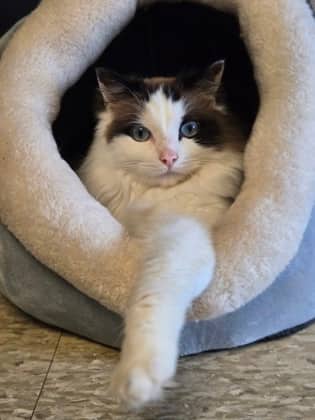
The Ragdoll gets its name from the way it goes limp and relaxed when picked up, and that easygoing nature defines the breed. Ragdolls are large, slow-maturing cats that take three to four years to reach a full size of ten to twenty pounds, with males at the top of the range. They are placid, people-oriented, and notably tolerant, which makes them one of the better breeds for homes with respectful children or a calm resident dog. Many follow their people around and greet them at the door, but they are not high-energy athletes; a Ragdoll wants company and a soft place to be near you more than it wants a frantic chase.
The semi-long, silky coat lacks much undercoat, so it mats less than a Persian's but still needs a brush two or three times a week, more during seasonal sheds. That coat copes well with a Nova Scotia winter, though like every cat in NS rescue the Ragdoll is placed indoor-only. The breed is a poor candidate for the outdoors anyway: Ragdolls are trusting to a fault and have little street sense, which makes Maritime hazards like coyotes at the edges of Halifax Regional Municipality, heavy tick season, and Nor'easter cold all the more dangerous. A warm, settled indoor home is exactly where this cat thrives.
Looking more broadly? Browse every adoptable cat across the province on Cat Adoption Nova Scotia.
The rescues that most often list Ragdolls across the province are Nova Scotia SPCA. For breed-specific background, the Canadian Cat Association is a useful reference.
Ragdoll Adoption FAQ — Nova Scotia
Tap a question to expand
How many Ragdolls are available for adoption in Nova Scotia?▼
Where can I adopt a Ragdoll near me in Nova Scotia?▼
Are Ragdolls good with children and dogs?▼
How much grooming does a Ragdoll need?▼
Why should a Ragdoll be kept indoors in Nova Scotia?▼
How much does it cost to adopt a Ragdoll in Nova Scotia?▼
Popular cat breeds in Nova Scotia
Ragdoll adoption by city in Nova Scotia
Each city page lists only the ragdolls available from rescues serving that city.