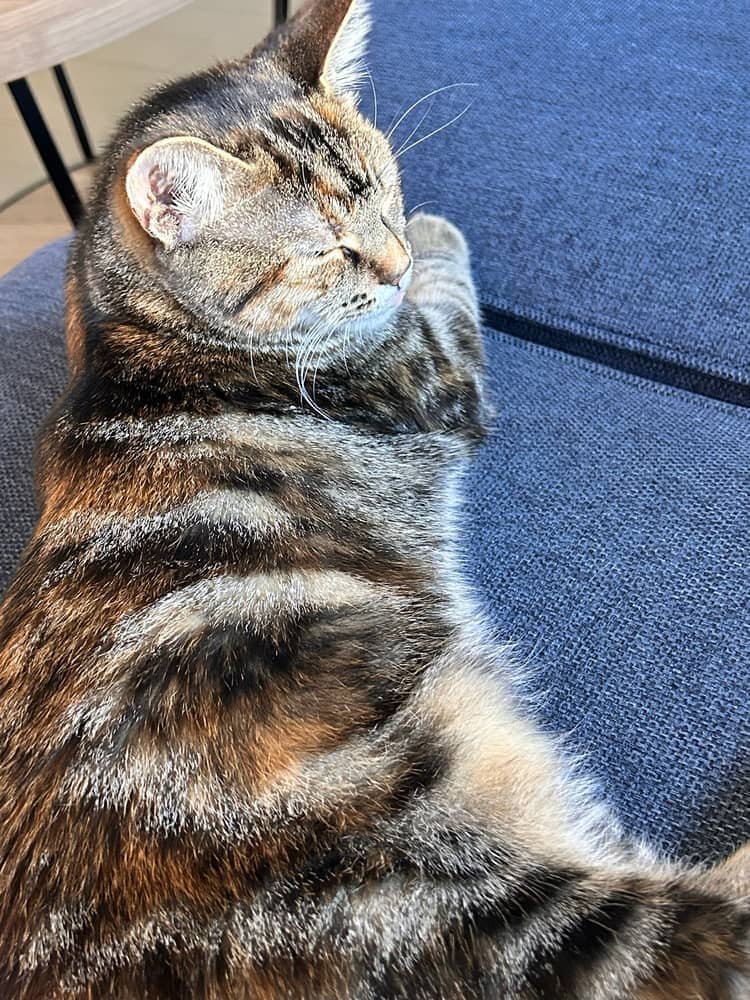
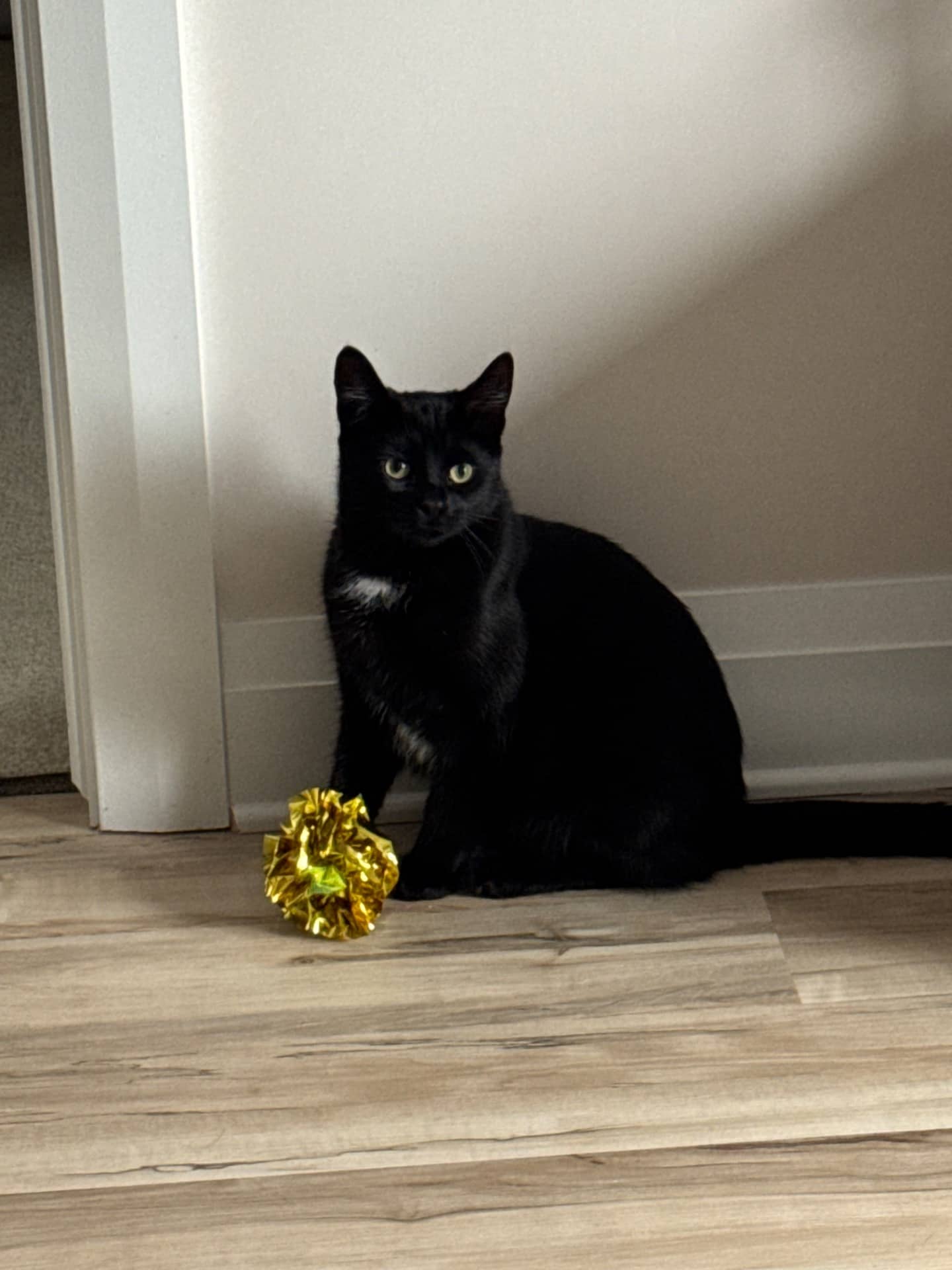
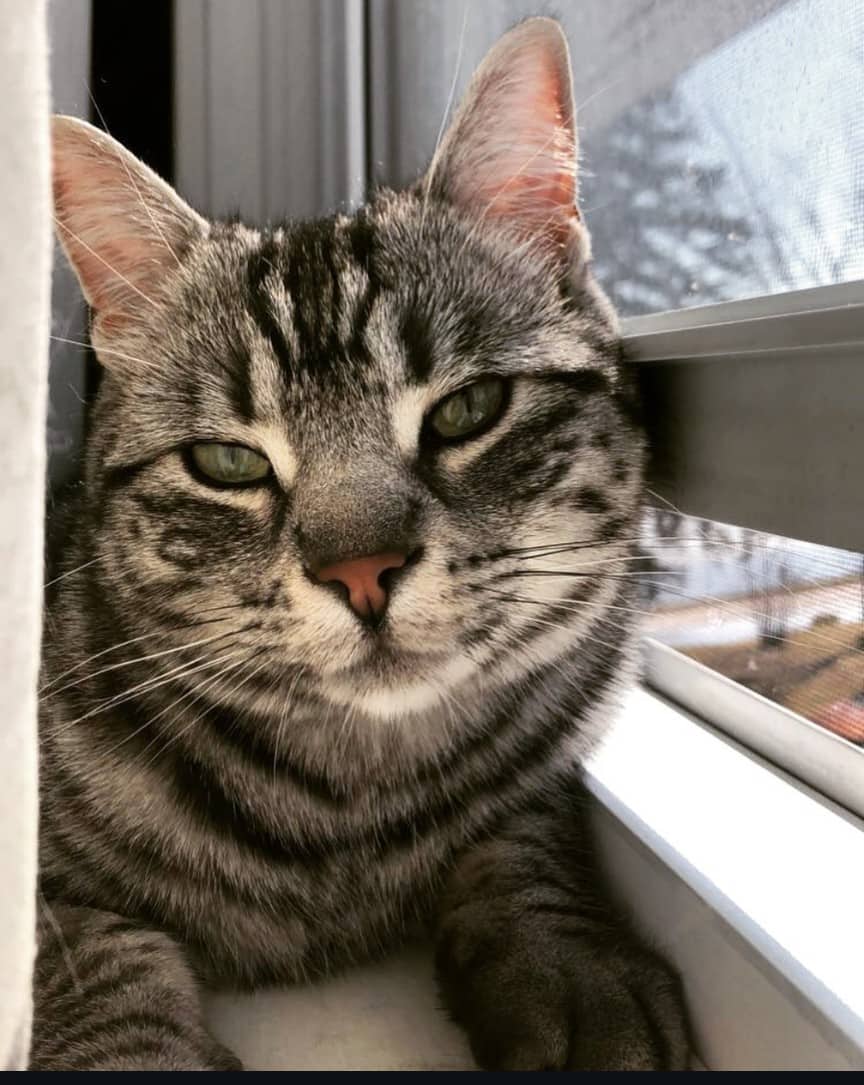
Almost every Ottawa cat rescue requires their cats to live indoors only. The risk profile here is concrete: brutal winter cold pins outdoor cats against -25 to -30°C overnight lows from December through February, coyotes patrol Greenbelt corridors and Gatineau Park edges year-round, fishers and raptors take small cats in wooded suburban edges like Kanata and Manotick, and arterial roads like Bank, Bronson, Carling, and the Queensway cut through every neighbourhood. Outdoor cats in Ottawa typically last 3 to 5 years; indoor cats routinely make 15 to 20.
The cats listed here are specifically flagged as indoor-only by their foster or shelter caretaker. They're used to indoor living, often previously lived in apartments, condos, or quiet houses, and don't have outdoor habits to unlearn. That makes them especially well-suited for Ottawa condo dwellers in Centretown, the ByWard Market, and the Glebe, apartment renters in Hintonburg and Westboro, and anyone living near Greenbelt and rural-edge corridors in Kanata, Manotick, Barrhaven, and Orleans where predator risk is highest.
Indoor cats need more enrichment from their humans — cat trees, window perches with street or backyard views, daily interactive play, and ideally a feline companion. Ottawa has a growing catio culture, with several local builders specializing in screened balcony enclosures for condos and rental-friendly setups. All cats listed here have indoor-only status confirmed by the rescue.
Why Ottawa rescues are strict about indoor-only
Ottawa Humane Society, Ottawa Stray Cat Rescue, and essentially every reputable Ottawa-area cat rescue won't place a cat into an unsupervised outdoor home. The reasons are concrete: Ottawa winters routinely hit -25 to -30°C overnight, which kills outdoor cats from cold exposure and frostbite; coyote packs work the Greenbelt and Gatineau Park edges year-round; fishers and raptors take cats in wooded suburban corridors; and arterial traffic in every neighbourhood adds vehicle-strike risk. Supervised outdoor time on a leash or in a catio is fine; free-roaming is not.
Are declawed cats common in Ottawa rescue intake?
Declawing is still legal in Ontario (unlike Nova Scotia, BC, and several other provinces where the practice is banned by veterinary regulators), so a small share of Ottawa surrenders are declawed cats — usually older cats given up by previous owners who chose declaw years ago. Declawed cats need indoor-only homes as a hard rule because they've lost their primary defense and climbing ability. Ottawa rescues note declaw status on every listing where it applies. If you're considering adopting a declawed cat, plan for soft litter (Yesterday's News-style pelleted litter is easier on declawed paws than clay) and watch for chronic paw pain or biting habits that sometimes follow declaw surgery.
Indoor enrichment for Ottawa apartments and condos
The thing that makes indoor cats thrive is vertical space and engagement. A tall cat tree by a window overlooking Ottawa rooftops, the canal, or a backyard doubles as a sunny nap spot and prime “cat TV” (squirrels, sparrows, snow). Wall-mounted shelves let cats climb without taking floor space — useful in Centretown and ByWard Market condos where square footage is tight. Wand-toy play 10 to 15 minutes daily, puzzle feeders for kibble, and a rotating toy supply keep boredom low. Two cats are easier than one because they entertain each other through Ottawa's long winters when humans are out less.
Catios for Ottawa: supervised outdoor done right
If you have a balcony, deck, or small yard, a catio (enclosed outdoor cat patio) gives your cat fresh air and supervised outdoor time without coyote, raptor, or traffic risk. Ottawa has a growing catio culture, with several local builders specializing in screened balcony enclosures and renter-friendly pressure-mounted designs starting around $500 to $1,500 in materials. Full custom backyard catios run $1,500 to $3,500. Use is seasonal: late spring through early fall is comfortable; deep winter usually keeps cats inside since most catios aren't insulated for -25°C.
Ottawa Indoor Cat FAQ
How many indoor cats are available for adoption in Ottawa?▼
As of October 2026, 3 indoor cats are available for adoption in Ottawa across 1 rescue on LocalPetFinder. Listings update regularly as pets are adopted and new ones arrive — browse them above and apply directly through the rescue.
Where can I adopt an indoor-only cat near me in Ottawa?▼
LocalPetFinder lists indoor-only cats from Ottawa-area cat rescues including the Ottawa Humane Society on West Hunt Club Road and Ottawa Stray Cat Rescue. Most Ottawa rescues require indoor-only homes because of brutal winter cold, coyote risk along the Greenbelt and Gatineau Park edges, fishers and raptors in wooded suburban corridors, and arterial traffic. Coverage spans Centretown, the Glebe, Westboro, Hintonburg, Sandy Hill, ByWard Market, and the suburban communities of Kanata, Orleans, Barrhaven, Nepean, and Manotick.
Why are Ottawa rescues strict about indoor-only adoptions?▼
Four concrete reasons: Ottawa winters pin outdoor cats against -25 to -30°C overnight from December through February, which causes cold exposure and frostbite; coyote packs hunt year-round along Greenbelt corridors and Gatineau Park edges; fishers and raptors take small cats in wooded suburban areas like Kanata and Manotick; and arterial roads (Bank, Bronson, Carling, the Queensway, plus Highway 174 and 417 access routes) cut through every neighbourhood. Outdoor cats in Ottawa typically live 3 to 5 years; indoor cats live 15 to 20.
Are declawed cats common in Ottawa rescue intake?▼
Some, but not most. Declawing is still legal in Ontario (unlike Nova Scotia, British Columbia, and several other provinces where the practice is banned by veterinary regulators), so a small share of Ottawa surrenders are older cats who were declawed by previous owners years ago. Ottawa rescues note declaw status on every listing where it applies. Declawed cats need indoor-only homes as a hard rule because they have lost their primary defense and climbing ability. Plan for softer litter (pelleted litter is easier on declawed paws than clay) and watch for chronic paw pain or biting habits that sometimes follow the surgery.
Can indoor cats thrive in an Ottawa downtown apartment?▼
Yes, with adequate enrichment. Indoor cats need vertical space (cat trees, wall shelves), interactive wand-toy play 10 to 15 minutes daily, window perches for outdoor stimulation, puzzle feeders that make them work for kibble, and ideally a feline companion. Centretown, ByWard Market, the Glebe, and Sandy Hill condos and apartments all work fine for indoor cats — in fact, condo cats often have richer indoor lives than house cats because owners invest more in vertical and enrichment when floor space is limited.
How long do indoor vs outdoor cats live in Ottawa?▼
Indoor cats in Ottawa typically live 15 to 20 years, with many reaching their early 20s. Outdoor cats average 3 to 5 years because of winter cold exposure, coyote and raptor predation, fisher attacks in wooded suburbs, vehicle strikes, fights with other cats, and outdoor parasites and infections. The lifespan gap is dramatic and well-documented across the National Capital Region.
Can indoor cats be happy without going outside?▼
Yes, with adequate enrichment. Indoor cats need vertical space (cat trees, wall shelves), interactive wand-toy play 10 to 15 minutes daily, window perches for outdoor stimulation, puzzle feeders that make them work for kibble, and ideally a feline companion. Cats given those four things live longer, healthier, and less stressed lives than outdoor cats.
What is a catio and are they popular in Ottawa?▼
A catio is an enclosed outdoor cat patio that gives cats fresh air and sun without exposure to coyotes, raptors, traffic, or other risks. Ottawa has a growing catio culture, with several local builders specializing in screened balcony enclosures for condos and rental-friendly setups. A simple pressure-mounted balcony catio runs $500 to $1,500 in materials; a full custom backyard catio runs $1,500 to $3,500. Use is seasonal: late spring through early fall is comfortable. Deep winter usually keeps cats inside since most catios are not insulated for -25°C.
Can an indoor-only cat ever go outside in Ottawa?▼
On a leash and harness with supervision, yes. In a catio, yes. Carrying them outside for short balcony visits, yes. Free-roaming, no. Ottawa rescues approve and even encourage leash training and catio access. The line is supervision: a cat that cannot escape and is not exposed to coyotes, raptors, or traffic is fine outdoors. A cat that can wander is not, and most Ottawa adoption contracts will be rescinded if the rescue discovers the cat is being let outside unsupervised.
Explore more Ottawa cats
Adults, kittens, seniors, indoor-only — everything currently available.
Cats under 12 months. Peak supply runs May through October.
Cats aged 10 and up. Often the calmest, most affectionate adoptions.
Maine Coons, Ragdolls, Persians, and Domestic Longhairs from Ottawa rescues.