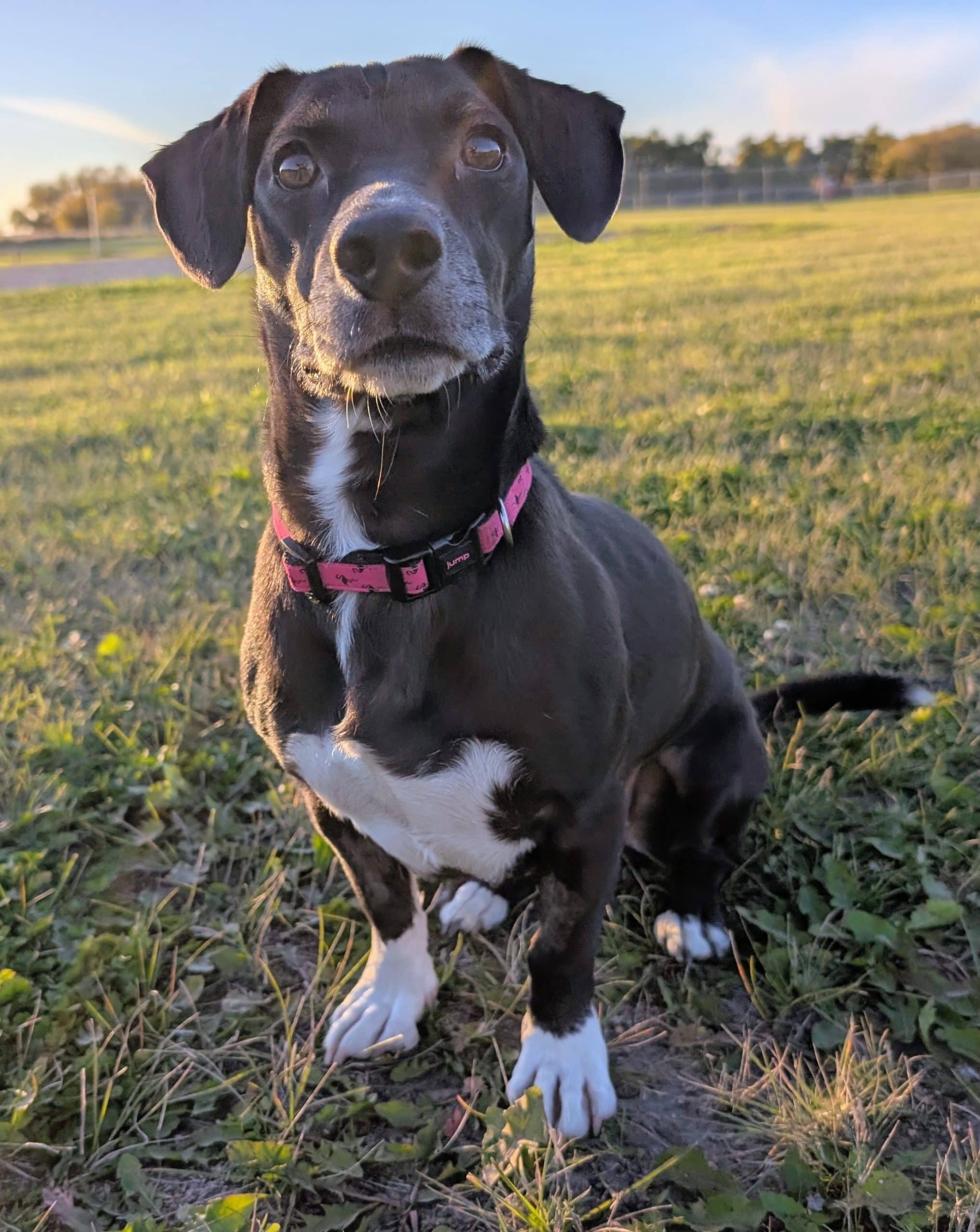
Get notified when a Dachshund is listed
We will email you the moment a Dachshund becomes available in Saskatchewan, from a rescue or an owner rehoming.
Adopting a Dachshund in Saskatchewan
Dachshunds turn up in SK rescue periodically — less often than mid/large breeds because small dogs are usually rehomed privately, but consistently enough through Saskatoon SPCA and Regina Humane Society. Most rescue Dachshunds are adult dogs (3 to 8 years) surrendered when the owner couldn't manage the breed's vocalisation, prey drive, or back problems.
This page pulls every adoptable Dachshund or Doxie cross from the SK shelters we cover into one searchable place, refreshed regularly.
Standard vs Miniature — what you usually get in rescue
You'll see both in SK rescue. Standard Dachshunds are 16 to 32 pounds; Miniatures are 11 pounds or less. Both have the same long-spine body and the same back-problem vulnerability. Temperament is similar across both sizes — playful, vocal, prey-driven, intensely bonded to family. The smaller body fits a condo better; the brain and drive are the same.
IVDD is the breed-defining health risk
Intervertebral Disc Disease (IVDD) is the single biggest health concern in Dachshunds — roughly 1 in 4 Dachshunds will experience some form of back problem in their lifetime, and severe cases can lead to paralysis. Prevention matters: no jumping on or off furniture (use a ramp), no climbing stairs (carry the dog), maintain ideal body weight (a single extra pound matters in this breed), and avoid high-impact play.
A rescue Dachshund should come with a basic spinal exam in the intake vet check. Ask the rescue whether the dog has shown any back pain, hesitation on stairs, or weakness in the rear during the foster period — these are early signs of disc problems.
Cold tolerance and SK winter
Dachshunds have short legs and minimal ground clearance, which means belly contact with cold snow on every winter walk. The breed needs an insulated coat that covers the chest and belly (not just the back) plus booties below minus 10°C in SK. Limit outdoor walks to 15 minutes at minus 25°C and below — the body is too close to the cold ground for longer exposure.
Health concerns worth asking the foster about
Beyond IVDD: dental disease (small mouths overcrowded with teeth — daily brushing needed), obesity (huge appetites + small bodies = easy weight gain that makes IVDD worse), patellar luxation, hypothyroidism, and progressive retinal atrophy. The rescue's intake vet check should flag major concerns. Lifespan averages 12 to 16 years.
What Dachshunds are actually like to live with
The traits that make Dachshunds rewarding when matched well:
- Bond intensely with family — Dachshunds are one-person or one-couple dogs. Aloof or snappy with strangers.
- Prey-driven. The breed was bred to hunt badgers and small game; gophers, squirrels, and small dogs trigger chase. Cats are a coin flip — depends on socialisation.
- Vocal. Dachshunds bark at the door, bark at strangers, bark at squirrels. Bothers neighbours in dense condo buildings.
- Modest exercise needs (30 to 45 minutes daily of walking + indoor play — but no high-impact running or jumping that stresses the back).
- Lives 12 to 16 years. A Doxie adopted at age 4 means roughly 8 to 12 years together.
Looking more broadly? Browse every adoptable dog across the province on Dog Adoption Saskatchewan.
The rescues that most often list Dachshunds across the province are Saskatoon SPCA, Regina Humane Society, and Saskatoon Dog Rescue. For breed-specific background, the Canadian Kennel Club is a useful reference.
Dachshund Adoption FAQ — Saskatchewan
Tap a question to expand
How many Dachshunds are available for adoption in Saskatchewan?▼
Where can I find Dachshund adoption near me in Saskatchewan?▼
What is IVDD and why does it matter for Dachshunds?▼
What does a Dachshund adoption fee include in SK?▼
Can a Dachshund handle Saskatchewan winters?▼
What are the Dachshund sizes and coat types?▼
Can I get a Dachshund free to a good home in Saskatchewan?▼
Are these Dachshunds for sale in Saskatchewan?▼
Where can I buy a Dachshund in Saskatchewan, and should I?▼
Are there free Dachshunds in Saskatchewan, or dachshunds under $500?▼
Are there Dachshund puppies in Saskatchewan, or only adults?▼
Where can I find a Dachshund near me in Saskatchewan?▼
Popular dog breeds in Saskatchewan
Dachshund adoption by city in Saskatchewan
Each city page lists only the dachshunds available from rescues serving that city, with local adoption details.
Need to rehome a Dachshund?
If you can no longer keep your Dachshund, you can list them for free on LocalPetFinder. Your dog stays in your home until you find the right family, you screen who applies, and there is no surrender fee. Not sure yet? Our guide to surrendering a dog in Canada walks through every option first.
List your dog for free →