True cat emergencies. Go now.
- • Male cat straining to urinate, producing nothing
- • Ate string, ribbon, dental floss, or tinsel
- • Ate any part of a lily plant (even pollen)
- • Sudden hindlimb paralysis (saddle thrombus)
- • Difficulty breathing, blue/purple gums
- • Trauma (fall, hit by car, attack)
- • Seizure or collapse
- • 36+ hours of total food refusal
- • Severe bleeding
- • Suspected toxin ingestion (Tylenol, antifreeze)
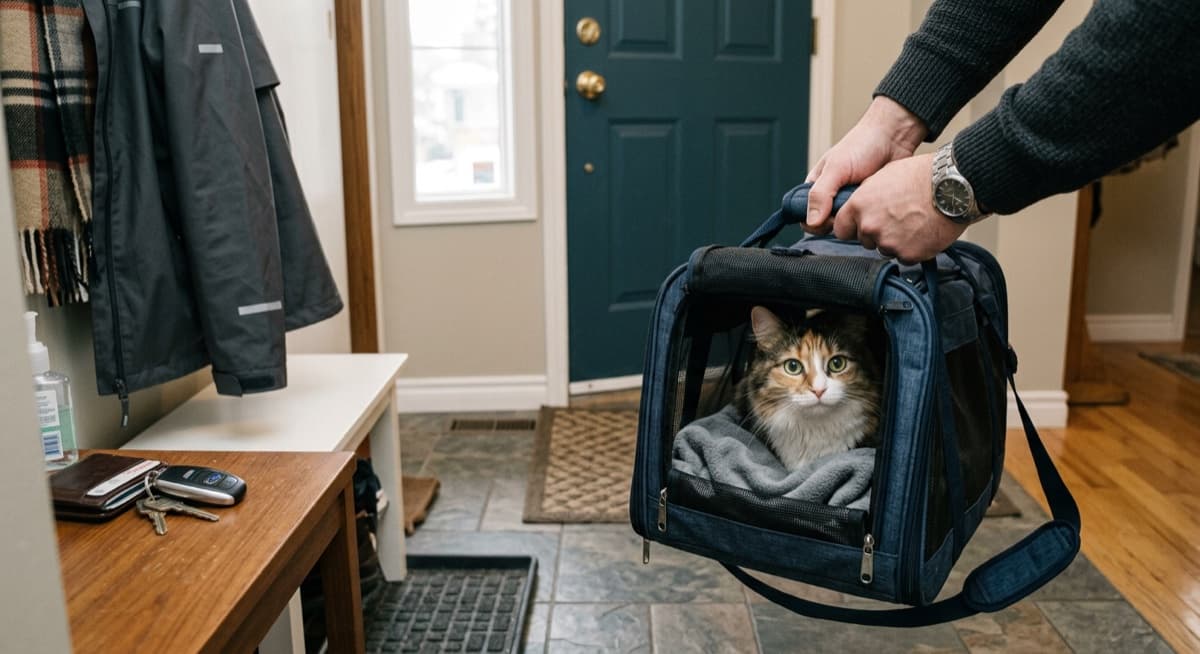
Cats hide illness better than any other domestic species. By the time a Calgary owner notices something is wrong, the cat is often hours away from a serious emergency. This guide covers the cat-specific emergencies that are easy to miss, how to find a 24-hour cat emergency centre in Calgary at 2am, and what a typical Calgary ER visit costs. It is for symptom recognition and the decision to go in. It is not a substitute for veterinary advice on treatment, doses, or prognosis. When in doubt, call a vet.
Cat-Specific Emergencies (Easy to Miss)
This guide is for symptom recognition and when to go. We do not list drug doses or treatment protocols. Decisions about catheterisation, surgery, fluids, or medication belong to the vet examining your cat. If you are not sure whether what you are seeing is an emergency, that uncertainty is itself a reason to call.
Urinary blockage (the #1 male cat emergency)
Male cats have a narrow urethra that can be blocked by crystals, mucus, or stones. Signs: straining in the litter box producing little or nothing, crying out in pain, vomiting, hiding, lethargy. Fatal in 24 to 72 hours if untreated due to kidney failure and bladder rupture. The American Association of Feline Practitioners classifies obstructive FLUTD as a true emergency requiring immediate veterinary care. Do not wait. ER now. Female cats can block too but it is much rarer.
Linear foreign body (string, ribbon, floss, tinsel)
String saws through the intestines as the gut tries to move it through, causing fatal perforation. Never pull visible string from the mouth or anus. Go to ER. A common holiday emergency: tinsel and ribbon from gifts. The Cornell Feline Health Center documents linear foreign bodies as one of the most serious gastrointestinal emergencies in cats.
Lily ingestion
All true lilies (Easter lily, tiger lily, day lily, Asiatic lily) are highly toxic to cats. Even chewing a leaf, drinking the water from a vase, or grooming pollen off the fur can cause acute kidney failure. ER immediately, even if the cat seems fine. The ASPCA Animal Poison Control Center lists true lilies among the most dangerous household plants for cats. Do not bring lilies into homes with cats. Period.
Saddle thrombus (aortic thromboembolism)
Sudden hindlimb paralysis caused by a blood clot from undiagnosed heart disease. The cat will be screaming in pain, hindlimbs cold and limp. ER immediately. This is often the first sign of underlying heart disease.
Hepatic lipidosis (fatty liver)
Cats that go 24 to 48 hours without eating, for any reason, can develop fatal liver disease. Overweight cats are at highest risk. If your cat has not eaten in 36+ hours, go to the ER, even with no other obvious symptoms.
Tylenol and acetaminophen poisoning
One tablet can kill a cat. Cats lack the liver enzyme to process acetaminophen. Symptoms appear in hours: lethargy, brown gums, vomiting. ER immediately. The same applies to ibuprofen, aspirin, and naproxen. All are highly toxic to cats. The AVMA lists human pain relievers among the leading household hazards for cats.
How to Find a Calgary 24-Hour Cat Emergency Centre
Calgary has several 24-hour emergency vet clinics that see cats. Coverage runs across the NW, NE, Beltline/downtown, and south quadrants, with additional after-hours options in surrounding neighbourhoods. We deliberately do not name specific clinics here because hours, ownership, and 24/7 coverage shift, and a wrong name on an emergency page can cost a cat its life. Use the steps below to find the right centre tonight.
1. Call your regular vet's after-hours line first
Most Calgary daytime clinics have a recorded message that names the emergency clinic they refer to overnight. This is the fastest way to find a centre that already knows your cat's history through shared records.
2. Search “24 hour emergency vet Calgary” and call before driving
Capacity changes nightly. Some nights one Calgary clinic refers out to another because the ICU is full. A two minute phone call confirms the clinic is open, has a vet on shift, and can take a cat tonight. Ask whether they have a separate cat-only intake room. The calmer setup lowers stress for an already frightened cat.
3. Use the Alberta Veterinary Medical Association directory
The ABVMA “Find a Vet” tool lists licensed Alberta practices and filters by city. Cross-reference with phone calls. A clinic in the directory is registered with the provincial regulator, which is one defence against fake or unlicensed operations.
4. Know your neighbourhood's nearest option in advance
Save 2 to 3 Calgary 24-hour emergency clinic phone numbers in your phone before you ever need them. NW, downtown, south. A cat in a urinary blockage at 2am is not the moment to be searching for directions.
For the dog version of this directory, see our Calgary emergency vet guide.
What Cat ER Visits Cost in Calgary
| Visit Type | Calgary Range |
|---|---|
| Door fee (consult) | $200 to $400 |
| Basic ER (consult + diagnostics + treatment) | $800 to $2,500 |
| Urinary blockage unblocking + 24h hospitalisation | $2,500 to $5,000 |
| Perineal urethrostomy surgery (PU, recurrent blockers) | $3,500 to $6,500 |
| Foreign body removal (linear or solid) | $3,000 to $7,000 |
| Trauma (HBC) full workup + treatment | $3,000 to $10,000+ |
| Lily toxicity treatment (24 to 48h IV fluids + monitoring) | $2,000 to $4,000 |
Ranges reflect typical 2026 Calgary emergency invoices reported by adopters in our network. Your actual cost depends on the clinic, diagnostics needed, and overnight hospitalisation length. Get an estimate in writing before treatment begins.
Most clinics require a 50 to 75% deposit upfront. Care Credit and ScratchPay are widely accepted in Calgary and can bridge the gap when the door fee lands in the middle of the night. Pet insurance is the strongest protection. Cat insurance premiums are typically lower than dog insurance, often $25 to $50 per month for accident + illness cover. The best month to sign up is the month before you need it.
When the Symptom Isn't a Full Emergency
Not every concerning cat behaviour needs a 2am ER trip. The sibling articles below cover the cases that look like emergencies but usually are not, and the populations (FIV+, seniors) whose normal baselines differ.
- Sudden litter box accidents. For a cat peeing outside the box without other illness signs, see our cat litter box problems guide. (If your male cat is straining and producing nothing, that is the urinary blockage emergency above. Vet first, training second.)
- Senior cat changes. Eating less, drinking more, hiding, or weight loss in older cats can signal kidney disease, hyperthyroidism, or arthritis rather than acute emergency. See our senior cat care guide for what is normal aging versus what needs a vet visit this week.
- FIV+ cats and infection risk. An FIV+ cat with a minor wound, mild gum inflammation, or a small fever needs faster vet review than a healthy cat with the same symptoms. Our FIV+ cat guide covers the threshold differences.
- New rescue cat first week. A newly adopted cat hiding under the bed for 48 hours, refusing food the first day, or having soft stool from stress is usually not an emergency. Our cat adoption guide covers what is normal adjustment behaviour and the line where it crosses into a vet call.
When in doubt, call. Calgary daytime clinics will tell you on the phone whether the symptom can wait until morning or needs an ER trip tonight.
Frequently Asked Questions
My male cat can't pee. Is this an emergency?
Yes. Urinary blockage in male cats is the #1 true cat emergency, fatal in 24 to 72 hours if untreated. Straining in the litter box producing nothing, crying, vomiting, or hiding all signal a possible blockage. Go to the ER now. Female cats can block too, but their wider urethra makes it much rarer.
My cat ate string, ribbon, or floss. What do I do?
Treat linear foreign bodies as emergencies even when the cat seems fine. Do not pull on visible string from the mouth or anus. You can saw through the intestine pulling. Go to the ER immediately and let imaging confirm whether surgery is needed.
Which Calgary vets see cat emergencies 24/7?
Calgary has several 24-hour emergency vet centres covering the NW, NE, Beltline, and south quadrants. Always call before driving. Capacity changes nightly and some nights one clinic refers out to another. Your daytime vet's after-hours message usually names the clinic they refer to overnight. The ABVMA Find a Vet tool can also help confirm a clinic is licensed.
My cat is hiding and won't eat. Is something wrong?
Cats hide pain better than almost any other species. 24+ hours without eating combined with other symptoms (vomiting, hiding, lethargy) earns a vet call. 36+ hours of total food refusal earns an ER trip because of hepatic lipidosis (fatty liver) risk. Overweight cats are especially vulnerable.
How much does cat emergency vet cost in Calgary?
Expect a $200 to $400 door fee, $800 to $2,500 typical visit, and $2,500 to $5,000+ for urinary blockage. Most Calgary clinics require a 50 to 75% deposit upfront. Care Credit and ScratchPay are widely accepted and can bridge the gap overnight. Get an estimate in writing before treatment begins.
What are the most common cat emergencies?
Urinary blockage (especially male cats), toxin ingestion (lilies and Tylenol top the list), trauma (hit by car, falls from balconies), respiratory distress, foreign body ingestion (string, hair ties, small toys), saddle thrombus, and seizures. Indoor cats face much lower overall risk. Outdoor cats account for the majority of trauma and toxin cases at Calgary ERs.
Can I give my cat human medications?
Almost never, and not without veterinary direction. Tylenol/acetaminophen is fatal at one tablet because cats lack the liver enzymes to process it. Ibuprofen, aspirin, and naproxen are equally toxic. Even “safer” options like Pepcid (famotidine) need a cat-specific dose your vet sets. When in doubt, call the ASPCA Animal Poison Control Center (1-888-426-4435) or the Pet Poison Helpline (1-855-764-7661) before treating.
Cat Litter Box Problems
Sudden litter box changes can signal urinary problems. Vet first, training second.
Indoor vs Outdoor Cats Calgary
Why outdoor cats account for most trauma cases.
Calgary Dog Emergency Vet Guide
Same Calgary clinics; dog-side symptom triage.
Adoptable Cats in Calgary
All available rescue cats across 7+ Calgary shelters.
New cat? Start with these care guides
Everything a new adopter needs to set up a safe, happy home.