The short answer
Step 1: vet check. Sudden litter avoidance is medical until proven otherwise (UTI, crystals, FLUTD, kidney disease). For a male cat that is straining, that is a same-day emergency. Step 2: setup audit. One box per cat plus one extra, unscented clumping clay, scoop daily, replace fully monthly, in quiet low-traffic spots. Step 3: behavioural. Identify stress sources (multi-cat conflict, household changes, new pets) and address them.
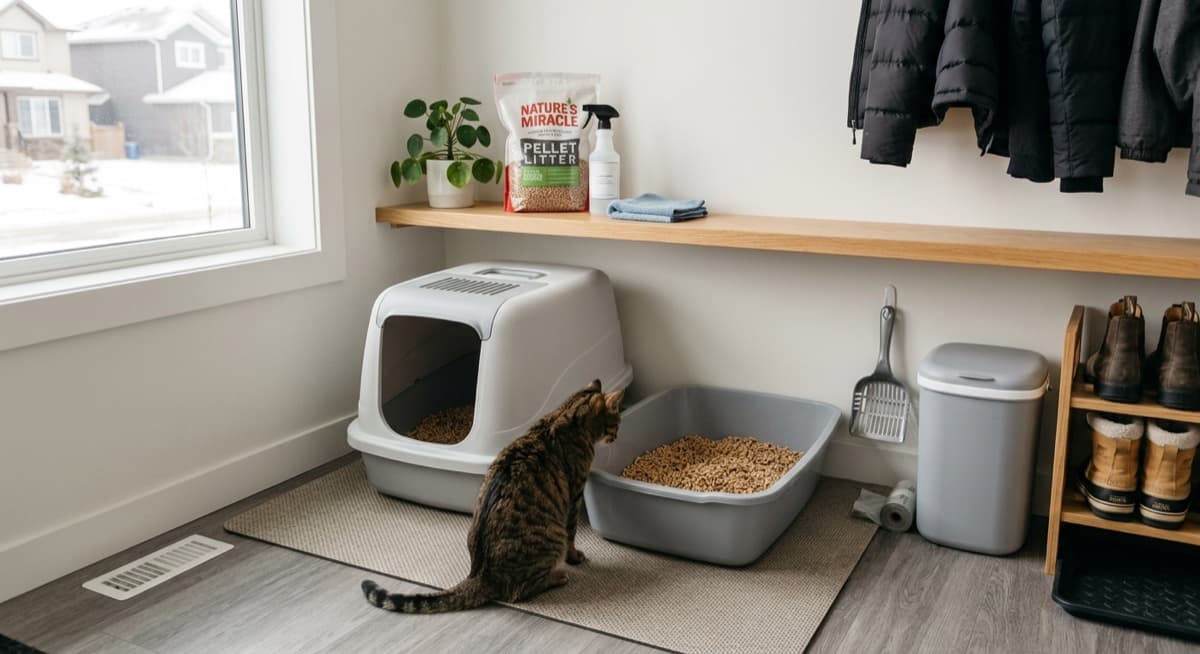
Why this matters
Inappropriate elimination is one of the most common reasons cats get returned to shelters or surrendered. Most adopters assume the cat is broken and give up. In reality, almost every case is solvable with a vet visit, a setup change, or both. Calgary rescues see plenty of cats returned for litter issues that resolve within days at the next home. The American Association of Feline Practitioners recommends always working medical-then-environmental-then-behavioural, in that order.
Step 1: rule out medical (always do this first)
If your cat suddenly stops using the litter box, the FIRST move is a vet visit. Litter avoidance is one of the clearest early signs of feline lower urinary tract disease (FLUTD), kidney disease, diabetes, and arthritis. Cornell's Feline Health Centre notes that house-soiling is a leading presenting sign of FLUTD, and the AAFP's house-soiling guidelines treat a urinalysis as a baseline diagnostic.
Calgary emergency note. A male cat straining to urinate, vocalizing in the box, or producing no urine is a same-day emergency. A urethral blockage can become fatal within 24 to 48 hours. Calgary has 24-hour emergency centres including the Calgary Animal Referral and Emergency Centre (CARE) and the Western Veterinary Specialist and Emergency Centre. Do not wait until morning. See our Calgary cat emergency vet guide for the full triage list.
Medical causes the vet will look for:
- Urinary tract infection (UTI). Causes pain on urination, so cats associate the box with pain and avoid it.
- Urinary crystals or stones (FLUTD). Partial obstruction, especially in male cats. A full blockage can be fatal within 24 to 48 hours.
- Kidney disease. Common in older cats. Increased urine volume can overwhelm a small box.
- Diabetes. Same effect; far more urine than usual.
- Arthritis. Senior cats may struggle to step over high-walled boxes. See our senior cat care guide for low-entry box options and joint-care basics.
- Constipation. The cat starts associating pain with the box.
Calgary vet visits run $80 to $150 for a wellness or urinalysis check. If you cannot afford a full workup, even a basic urinalysis ($30 to $60) can rule out the most common medical causes. Do not skip this step, and do not start any over-the-counter supplement, urinary diet, or anxiety product without your vet's sign-off; treatment plans and any medication belong to the vet, not the internet.
Step 2: setup audit (the “1+1 rule”)
Number of boxes
The standard rule: one box per cat plus one extra. Two cats means three boxes. Three cats means four boxes. The extra box matters because:
- Cats are picky, and many will avoid a recently-used box.
- In multi-cat homes, dominant cats can “guard” boxes and prevent others from using them.
- Spread the boxes across different rooms so guarding becomes physically impossible.
International Cat Care uses the same N+1 standard and emphasizes that location and access matter as much as the count.
Box size
Most pet store litter boxes are too small. The box should be roughly 1.5 times the cat's length nose-to-tail-base. For most cats this means a large storage tote or under-bed sweater box, NOT the standard rectangular pet store box. Bigger is almost always better.
Box style
- Uncovered. The default. Most cats prefer it. Lower stress, better odour escape (yes, that helps the cat), more escape routes.
- Covered. Only if your cat specifically prefers it. Many cats hate the trapped odours.
- Top-entry. Not recommended for kittens or seniors. Otherwise polarizing; some cats love them, others refuse.
- Self-cleaning. Many cats are scared of the noise. Only use if you know your cat tolerates it.
Litter type
Cat preference research is clear: most cats prefer unscented clumping clay litter. Avoid:
- Scented litter. The smell is for you, not the cat, and many cats avoid it.
- Crystal or silica litter. Many cats find it uncomfortable on paws.
- Pellet litter. Some cats hate the texture.
- Eco, walnut, or corn litter. Mixed reception; transition slowly if you try one.
If you want to switch litter, transition over 7 to 10 days by mixing the old and new gradually. Sudden changes are a common cause of avoidance.
Litter depth
Most cats prefer 2 to 3 inches (5 to 8 cm) deep. Too shallow does not allow burying. Too deep feels unstable. Refill regularly to maintain depth.
Cleaning schedule
- Daily. Scoop both pee and poop. Twice daily is ideal in multi-cat homes.
- Weekly. Wipe out the walls if needed.
- Monthly. Dump everything, wash the box with mild soap (no bleach; the smell deters cats), and refill.
A clean box is the single biggest factor in long-term use.
Location
- Quiet, low-traffic area.
- NOT next to food or water. Cats will not eat near where they go.
- NOT next to noisy appliances (washer, dryer, furnace). Sudden noise scares them off.
- Not in a tight closet they can be cornered in.
- For multi-cat homes: different floors, different rooms, not lined up next to each other.
Step 3: behavioural causes
Once your vet has cleared the cat medically and your setup matches the checklist above, the remaining cases are almost always behavioural. The ASPCA's litter box problems guide groups behavioural causes into three buckets: box-related dislike, location-related dislike, and stress or conflict. Work them in that order.
Multi-cat conflict
The most common behavioural cause. One cat ambushes another at the box, or guards the path to it. Solutions:
- Add boxes in completely separate locations.
- Look for ambush-prone setups (box at the end of a hallway, in an enclosed room with one entry).
- Provide vertical escape routes (a cat tree near the box) so the prey-cat can flee upward.
Stress events
Common triggers for sudden avoidance:
- Move to a new home. See our first week with a rescue cat guide for the decompression plan; many “litter problems” in week one are actually a too-large territory.
- New person, baby, or pet in the household.
- Construction noise or renovations.
- Owner travelling for an extended period.
- Death of another pet.
- Schedule changes.
Common environmental fixes: extra litter boxes, a Feliway pheromone diffuser ($40 to $60), more quiet alone time with the cat, and restoring old routines. Anti-anxiety medication exists for cases that do not respond to environmental work, but it is your vet's call, not a DIY purchase.
Marking vs avoidance
Two different problems:
- Marking (spraying). Usually unneutered males. Small amounts on vertical surfaces (walls, doors). Driven by territory or hormones.
- Avoidance. Normal-sized urination, but on horizontal surfaces (rugs, beds, laundry). Caused by box dislike, medical issues, or stress.
Spraying is usually fixable with spay or neuter (almost always solves it), a Feliway pheromone diffuser, and multi-cat conflict resolution. If the cat is already neutered and still spraying, talk to your vet about a behaviour workup.
Cleaning up to prevent repeat accidents
Cats return to spots that smell like urine. Standard cleaners (Lysol, bleach) do not fully break down the proteins in cat urine, so the cat still smells it.
- Use an enzyme cleaner specifically designed for pet urine (Nature's Miracle, Anti-Icky-Poo, Rocco & Roxie).
- Soak the affected area generously, let it dwell 10 or more minutes, then blot.
- For carpet: pull it up and treat the pad underneath if it is soaked through.
- For a mattress: replace it if heavily soaked. It is nearly impossible to fully clean.
- Do not use ammonia-based cleaners. Ammonia is a component of urine, smells like another cat to your cat, and triggers more marking.
The “Got nothing left to try” plan
If you have done the vet check, audited the setup, addressed stress, and the cat is still going outside the box:
- Confine the cat to a small room (bathroom, half a bedroom) with food, water, bed, and a fresh box. Most cats reset within 3 to 7 days of this.
- Try a different litter brand. Scoopable Cat's Pride and Tidy Cats Lightweight have broad acceptance with rescue cats.
- Try multiple boxes side by side with different litter brands and let the cat choose.
- Consult a veterinary behaviourist. Calgary has board-certified options; ask your vet for a referral. A 1 to 2 hour consult typically runs $150 to $300 and often solves entrenched cases.
- If nothing works after 2 to 3 months and the cat's welfare allows: contact the original rescue. They may have insights from the cat's previous home.
Frequently asked questions
Why does my cat suddenly pee outside the litter box?
Sudden litter avoidance is most often medical: UTI, urinary crystals or stones, FLUTD, or kidney issues. Always book a vet check first when the behaviour changes suddenly, and treat any straining male cat as a same-day emergency. Other common causes once medical is cleared: dirty box, new litter, box too small, multi-cat conflict, or stress from a household change.
How many litter boxes should I have?
One per cat plus one extra. Two cats means three boxes. They should be in different locations, not lined up in the same room.
What is the best litter for cats?
Most cats prefer unscented clumping clay litter. Avoid scented or crystal litters. Do not change brands suddenly; transition gradually over a week by mixing old and new in increasing proportions.
Should I use a covered or uncovered box?
Most cats prefer uncovered. Covered boxes trap odour inside (which bothers the cat as much as you) and limit escape routes (which raises anxiety in multi-cat homes). Try uncovered first.
Find your match
All Calgary rescue cats are litter trained. Browse 7 shelters worth.
Browse Adoptable Cats →Related guides
- Calgary cat emergency vet guide. The full triage list, including FLUTD red flags.
- First week with a rescue cat. The decompression plan that prevents most week-one litter problems.
- Senior cat care. Low-entry box options and arthritis-aware setup.
- How to adopt a cat in Calgary. The full adopter onboarding guide.