The short answer
Plan for $400 to $700 in setup costs (one-time supplies, first vet visit, kitten-proofing) plus $700 to $1,200 in first-year ongoing costs (food, litter, vaccinations, spay/neuter if not already done). Most adoption-fee kittens come pre-spayed/neutered, vaccinated, and microchipped. Always check the adoption paperwork first.
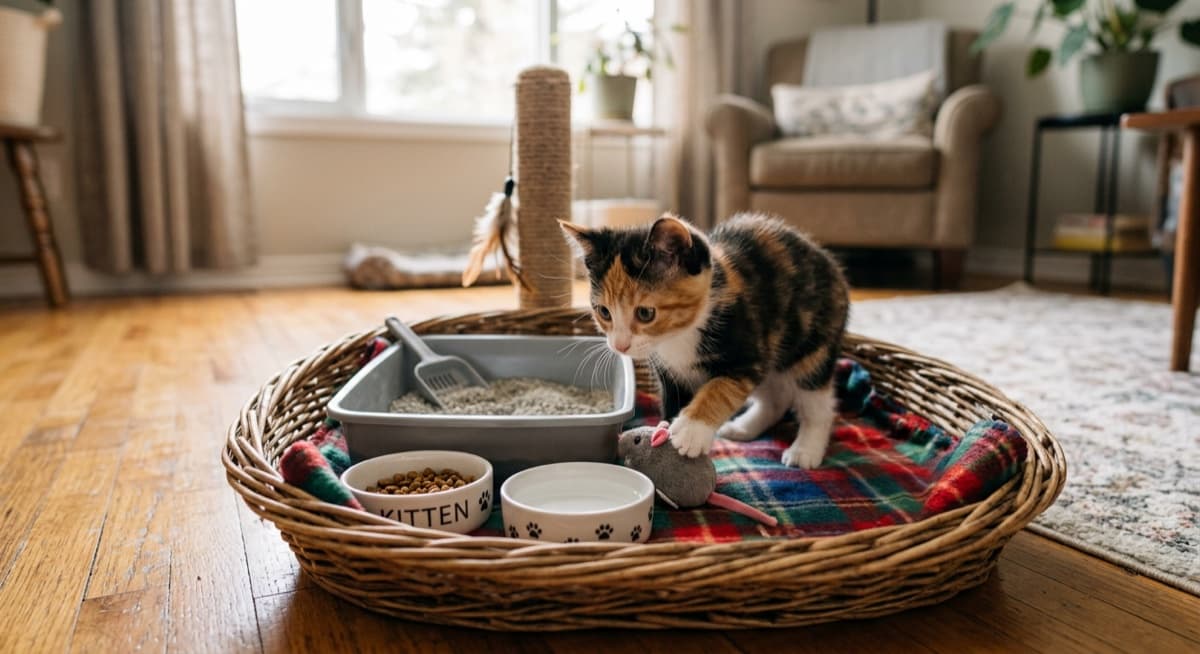
Supplies (essentials)
Some product links below are Amazon affiliate links — we may earn a small commission at no extra cost to you. It never changes what we recommend.
- Carrier. Hard-sided or soft, with a top-loading or front-opening door. $30 to $60. Critical for vet visits.
- Litter box. Uncovered for kittens. They're less likely to get trapped or scared. $20 to $40.
- Litter. Clumping, unscented. Buy whatever brand the foster used; transition gradually if you switch. $15 to $25 per bag.
- Litter scoop. Metal scoops outlast plastic. $5 to $15.
- Food and water bowls. Ceramic or stainless steel, not plastic (acne risk in cats). $15 to $30.
- Kitten food. Look for a bag labelled “kitten” or “all life stages.” Mix wet and dry. $50 to $100 per month.
- Cat tree. Vertical space is essential. Even a small one teaches climbing. $80 to $200.
- Scratching post. Vertical sisal-wrapped plus horizontal cardboard. Kittens develop preferences. $30 to $60.
- Wand toy plus a variety of small toys. Rotate weekly to keep novelty. $20 to $40.
- Soft bed. Ideally one with raised sides. $25 to $50.
- Brush or comb. Even short-haired kittens benefit. $10 to $20.
- Nail clippers. Cat-specific scissor or guillotine style. $10 to $15.
- Feliway diffuser. Calming pheromones, helpful in the first month. $40 to $60.
Kitten-proof your home
- Tuck away or cover electrical cords (cats chew). Use cord protectors or cable raceways.
- Remove or relocate toxic plants. Lilies are deadly to cats. Even pollen can kill. The ASPCA toxic plants list covers the others worth removing: tulips, daffodils, sago palm, philodendrons, monstera, and pothos.
- Secure cleaning supplies, antifreeze, and medications behind closed doors.
- Block tight spaces behind appliances and furniture (kittens crawl into engines/heating vents).
- Childproof toilet lids. Kittens have drowned in open bowls.
- Move breakables off counters and shelves. Kittens climb everything.
- Check window screens are secure. Loose screens are how indoor cats become outdoor cats.
- Hide hair ties, string, and small objects (intestinal foreign body risk).
Vet schedule (Alberta)
Most rescue kittens come with their first vaccines already done. Confirm with the rescue what's been completed. The schedule below follows the AAHA/AAFP feline vaccination guidelines that Alberta vets typically follow:
- 6 to 8 weeks: first FVRCP (feline distemper combo) vaccine. Deworming.
- 10 to 12 weeks: second FVRCP booster. First FeLV (feline leukemia) vaccine, which the guidelines treat as core for every kitten under a year regardless of whether it will go outdoors.
- 14 to 16 weeks: third FVRCP. Rabies vaccine. Second FeLV (if started).
- 5 to 6 months: spay or neuter. Most rescue kittens are altered before adoption. If not, this is when.
- Annual: wellness exam plus booster shots starting at 1 year. The AVMA pet-owner resources have a good overview of why annual exams matter.
Calgary typical vet costs: kitten wellness package $80 to $150, vaccine series $80 to $120, spay/neuter $200 to $400 if not already done. Low-cost options include a local Calgary low-cost spay/neuter clinic (ask your rescue for current referrals), plus the City of Calgary's low-income spay/neuter assistance through Fair Entry. For deeper background on feline preventive care, the Cornell Feline Health Center is a trusted reference.
Food and feeding
- Feed kitten-formula food until 12 months old (12-month-old cats can transition to adult food).
- Mix wet and dry. Wet food provides hydration; dry is convenient and good for teeth.
- Free-feed (food always available) until 6 months, then transition to scheduled meals 2-3x daily.
- Fresh water always available. Many cats prefer running water. A $30 fountain often boosts intake.
- Keep food and water bowls separate from litter box (cats hate eating near where they go).
Litter training
Most kittens are already litter trained from their mother by 4-6 weeks. If not, it's easy:
- Place the kitten in the litter box after meals and naps.
- Gently take their paw and make a scratching motion in the litter.
- Praise quietly when they use it.
- Don't punish accidents. Clean with an enzyme cleaner (regular cleaners leave scent that draws them back).
- If accidents persist, try a different litter type or box location.
Socialization (the critical window)
Kittens have a critical socialization window from 2 to 7 weeks old. After 7 weeks, they're less open to new experiences. This window shapes adult behaviour. If you're adopting a kitten 8 weeks or older (most rescues), the window is partially closed but you can still build positive associations:
- Expose them to gentle handling daily. Pick up, touch paws, look in ears, brush, trim nails.
- Introduce them to different surfaces: carpet, tile, hardwood, blanket textures.
- Let them meet a variety of people calmly: men, women, kids, different ages.
- Get them used to the carrier early. Leave it open in the home as a hiding spot.
- Practice short car rides (just to the end of the block and back) so vet trips aren't terrifying.
Calgary winter considerations
- Indoor-only is non-negotiable in Calgary. Coyotes patrol the river paths in many neighbourhoods, and -30°C cold snaps make outdoors a death sentence for kittens.
- Heated cat beds or heated cat houses for cold rooms. $30 to $80.
- Run a humidifier in winter. Calgary's cold dry air causes nosebleeds and dry skin in cats too.
- Keep cleaning chemicals (especially de-icers and antifreeze) far away. Antifreeze tastes sweet to cats and is fatal.
- Salt and ice melt residue tracked in on shoes can irritate paws. Wipe paws after they walk near entryways.
The first 30 days: what to focus on
- Week 1: safe room, decompression, building trust. Don't rush anything else.
- Week 2: open up to more of the house. Begin handling exercises.
- Week 3: regular play sessions. Carrier training. Slow introductions to other pets if applicable.
- Week 4: first vet checkup if not already done. Start nail trims and gentle teeth brushing.