Showing 10 cats
Tortoiseshell, calico and torbie, distinguished
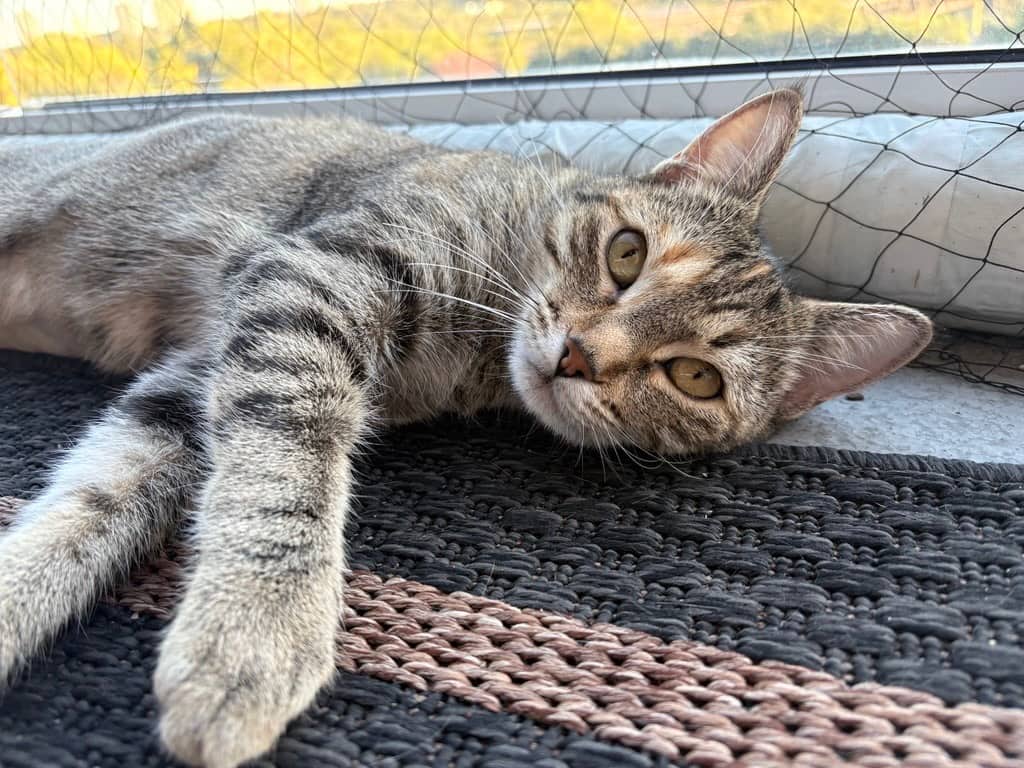
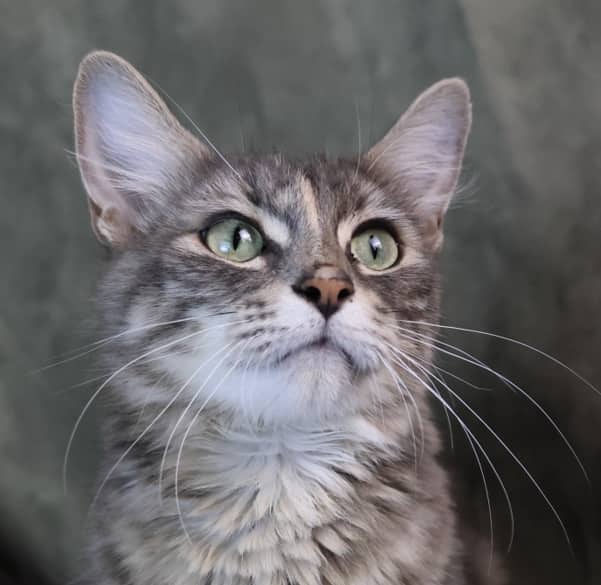
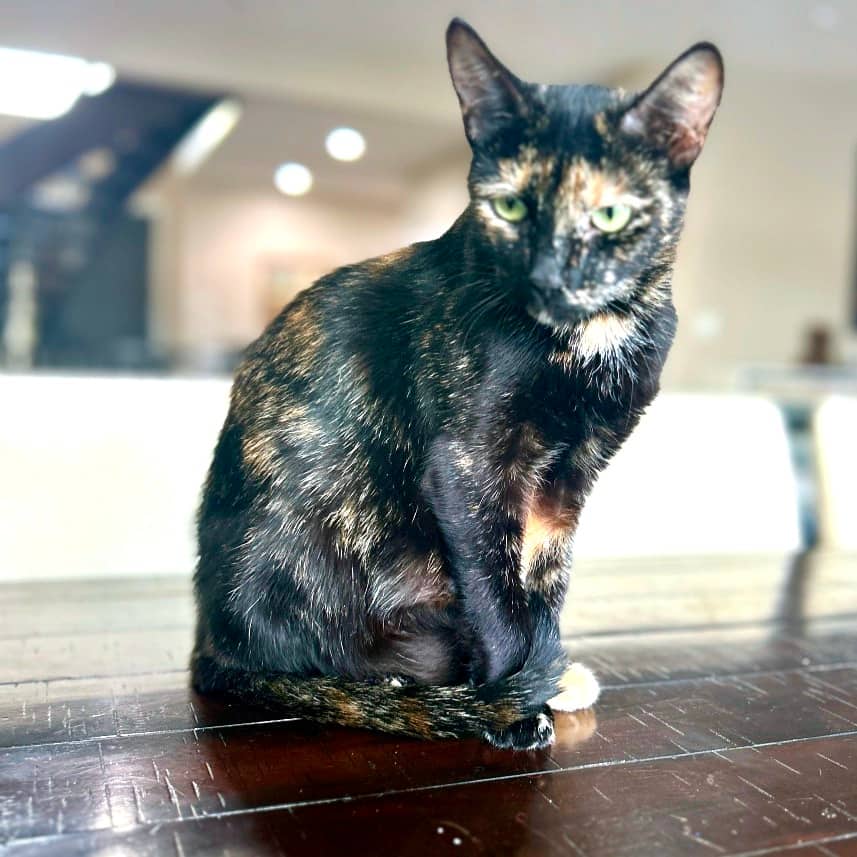
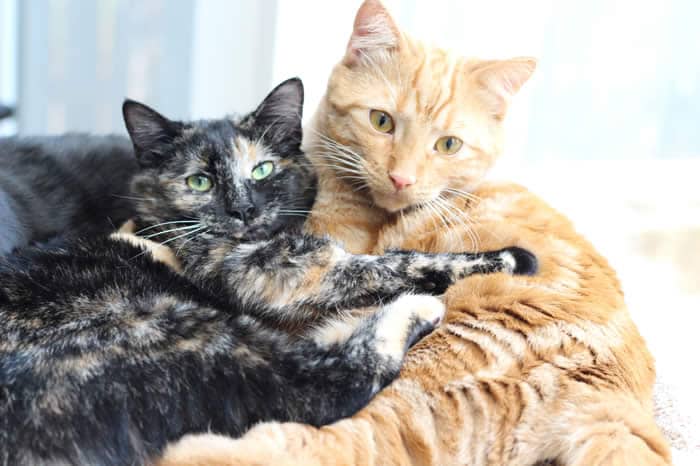
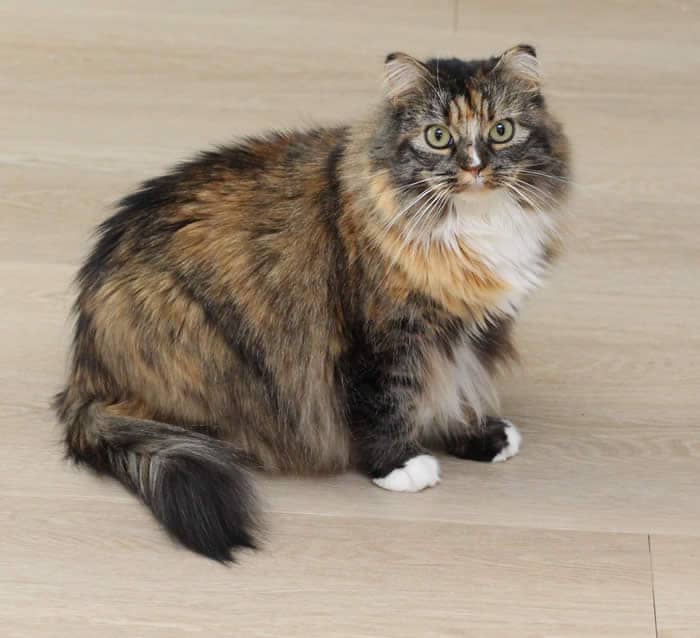
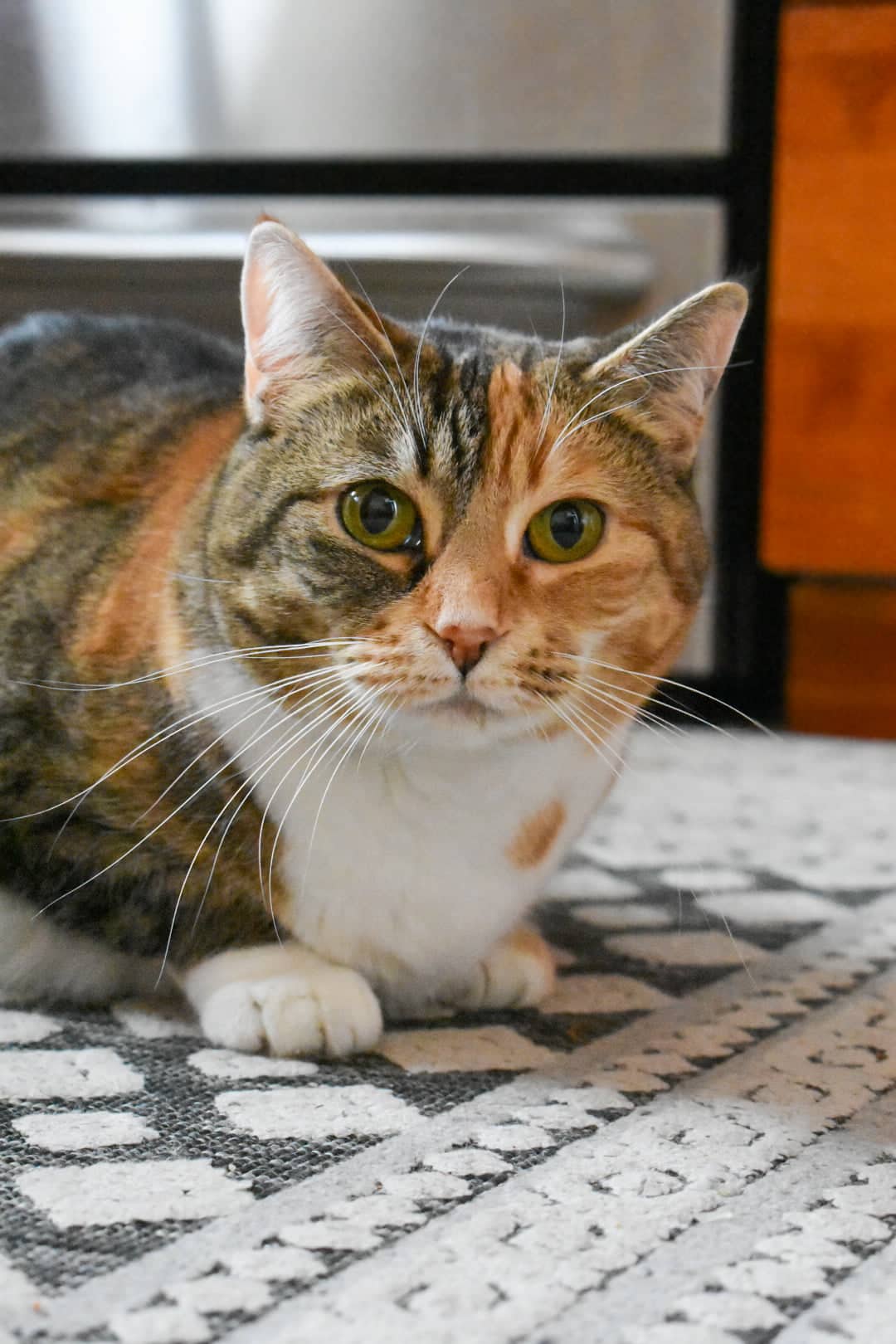
A tortoiseshell has black and orange blended through the coat with little or no white, producing the mottled look the pattern is named for. A calico has those same two colours separated into distinct patches with clear white areas. The colour genetics are identical and a separate white-spotting gene decides which one you end up with. Layer tabby striping over the top and Alberta rescues will often call it a torbie.
Because the terminology varies between organisations, the same cat can be listed as a tortie by one Alberta rescue and a calico by another. Browse by photograph and ask the rescue to confirm rather than trusting the written colour field.
Why torties are female, and what tortitude means
The genes for orange and black both sit on the X chromosome, so a cat needs two X chromosomes to express both at once. Females have them and males do not. A male tortoiseshell requires an unusual XXY configuration, which occurs in roughly one in three thousand male cats and typically brings sterility and other health issues alongside it.
Tortie owners talk about tortitude constantly: opinionated, chatty, hard-bonded to one person, and quick to object when something is not to their liking. No study has connected coat pattern to temperament in cats, so treat it as widely shared owner experience rather than established fact, and ask the foster what this particular tortie is actually like.
Dilute torties, and what to expect adopting one
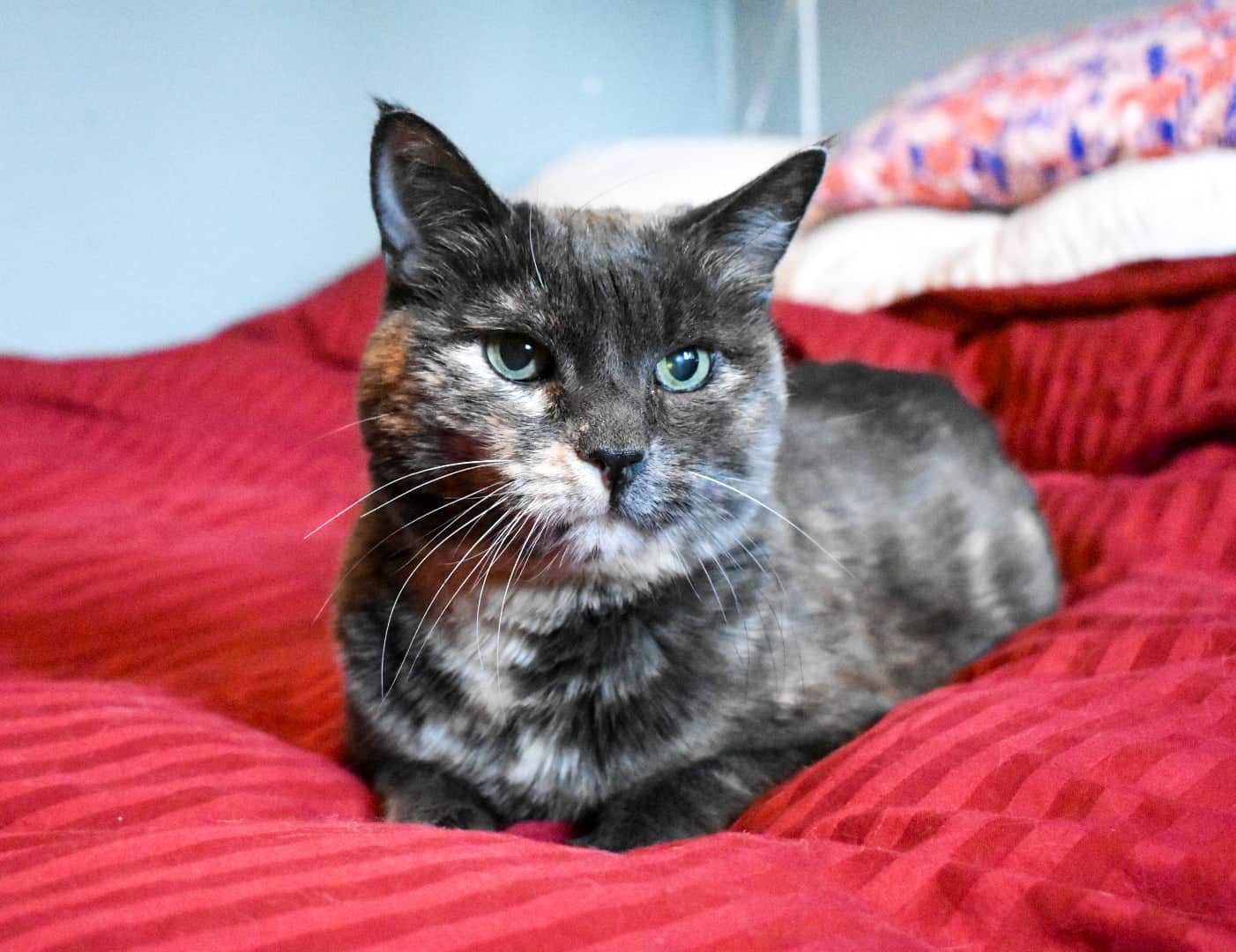
A dilute tortoiseshell swaps the black and orange for softer grey and cream, produced by the same dilution gene that turns black into grey. The mottling is identical, just muted, and Alberta rescues sometimes list these as blue-cream. They attract less competition than a high-contrast tortie for no good reason.
Torties are common enough in Alberta rescue to be findable but distinctive enough to be claimed quickly, so this is a pattern where moving promptly matters more than it does for a black or grey cat.
Prefer a city-specific view? Browse our Calgary Tortoiseshell page, or the cat listings in Edmonton, Red Deer, and Grande Prairie. The broader hub is Cat Adoption Alberta.
The rescues that most often list Tortoiseshells across the province are Calgary Humane Society, AARCS, and Edmonton Humane Society.
Tortoiseshell Adoption FAQ — Alberta
How many Tortoiseshells are available for adoption in Alberta?
As of September 2026, 10 Tortoiseshells are available for adoption in Alberta across 7 rescues on LocalPetFinder. Listings update regularly as cats are adopted and new ones arrive — browse the current Tortoiseshells above and apply directly through the rescue.
Where can I adopt a tortoiseshell cat near me in Alberta?
LocalPetFinder gathers adoptable tortoiseshell cats from the Alberta rescues we cover, including Calgary Humane Society, Edmonton Humane Society and AARCS. Torties are less numerous than black cats or plain tabbies, and their distinctive pattern means they get claimed quickly, so it is worth checking often. Listings refresh regularly.
What is the difference between a tortoiseshell and a calico?
White. A tortoiseshell has black and orange blended together with little or no white in the coat. A calico has the same two colours broken into distinct patches with clear white areas. The underlying colour genetics are identical and the difference comes from a separate white-spotting gene. A torbie is a tortoiseshell with tabby striping layered over the pattern.
Are all tortoiseshell cats female?
Very nearly. Around 99.97 percent are female, because the orange and black colour genes both sit on the X chromosome and a cat needs two X chromosomes to express both at once. Male torties exist but require an XXY chromosome configuration, occurring in roughly one in three thousand male cats, usually with sterility and other associated health issues.
Is tortitude a real thing?
It is real as a widely shared owner experience rather than an established scientific finding. No study has convincingly linked coat pattern to temperament in cats. Many tortie owners independently describe the same opinionated, vocal, one-person personality, which is probably part genuine pattern and part the fact that memorable cats stay memorable.
How much does it cost to adopt a Tortoiseshell in Alberta?
Adopting a Tortoiseshell in Alberta typically costs $100 to $300, and kittens usually carry a premium at $200 to $400. The exact fee varies by rescue, and older cats are often reduced. That fee is not a purchase price. It covers work already done on the cat: spay or neuter, vaccinations, deworming, microchip, and a basic vet workup, which would cost several hundred dollars more if you arranged it yourself after buying. Colour is not a breed, so there is no breeder route to this coat specifically, and the fee reflects the cat's age and the veterinary work already done rather than its markings. Ask the rescue what is included before you apply, since a few include extras like a starter bag of food or a first-month insurance trial.
Tortoiseshell adoption by Alberta city
Alberta rescues transport between cities and several operate province-wide, so it is worth checking Tortoiseshells elsewhere in the province before you give up on a match.