Most training is about teaching your dog to DO something. Settle is about teaching them to do nothing. It's the art of being calm in a stimulating world. And it's the hardest thing you'll teach, especially if your dog is anxious, young, or high-energy. But once they get it, it changes everything.
Why This Command Matters
A dog that can't settle is exhausting to live with. They pace, whine, follow you room to room, and can't relax even when there's nothing happening. For rescue dogs especially, learning to settle is a breakthrough. It tells their nervous system "you're safe, nothing is happening, you can relax." It's also essential for vet visits, restaurants, and travel.
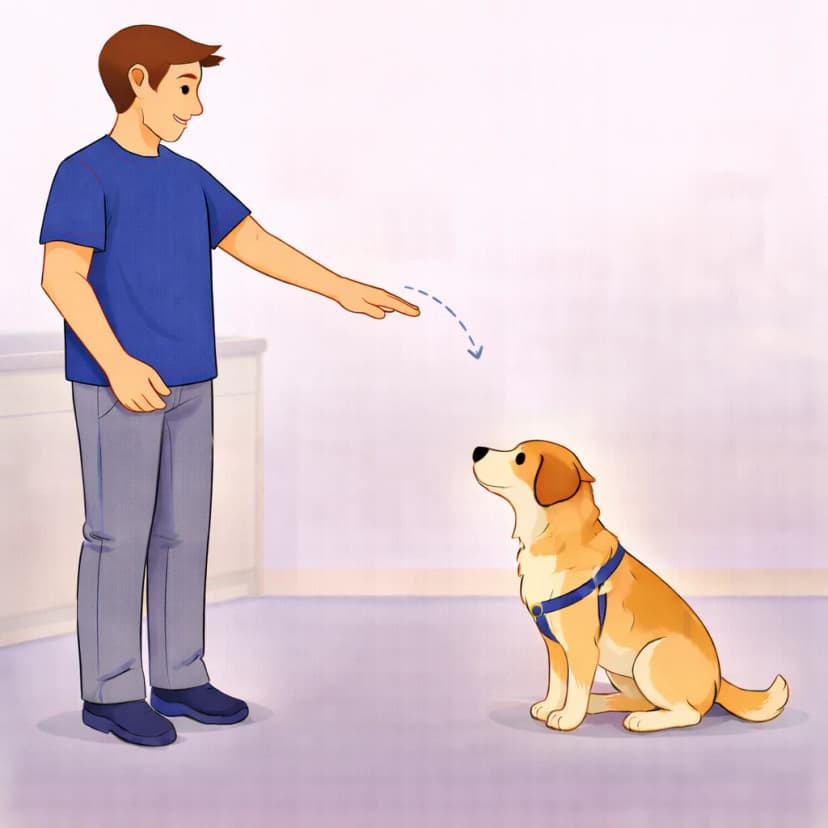
Hand Signal
Slow downward motion with your palm, like you're pressing down on air. The gesture itself is calm and deliberate. It mirrors what you're asking the dog to do.
Step-by-Step Instructions
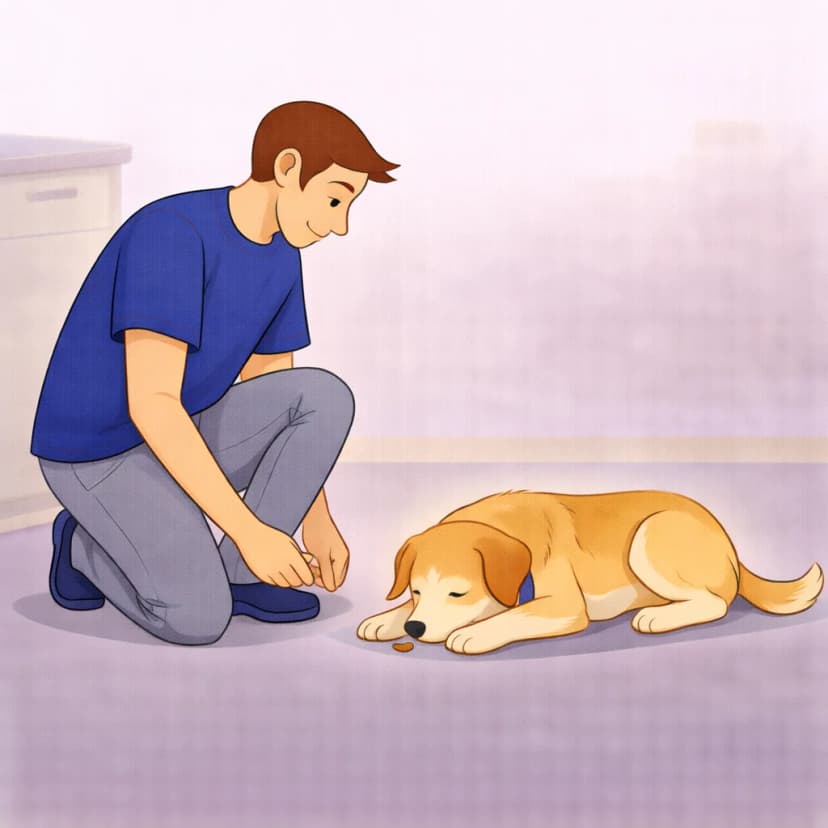
Capture calmness. Reward what you want to see more of
Before teaching a command, start noticing when your dog is calm on their own. Lying on the floor, resting their head, sighing. When you see it, calmly place a treat between their paws without making a big deal of it. Don't say anything. Just treat and walk away.
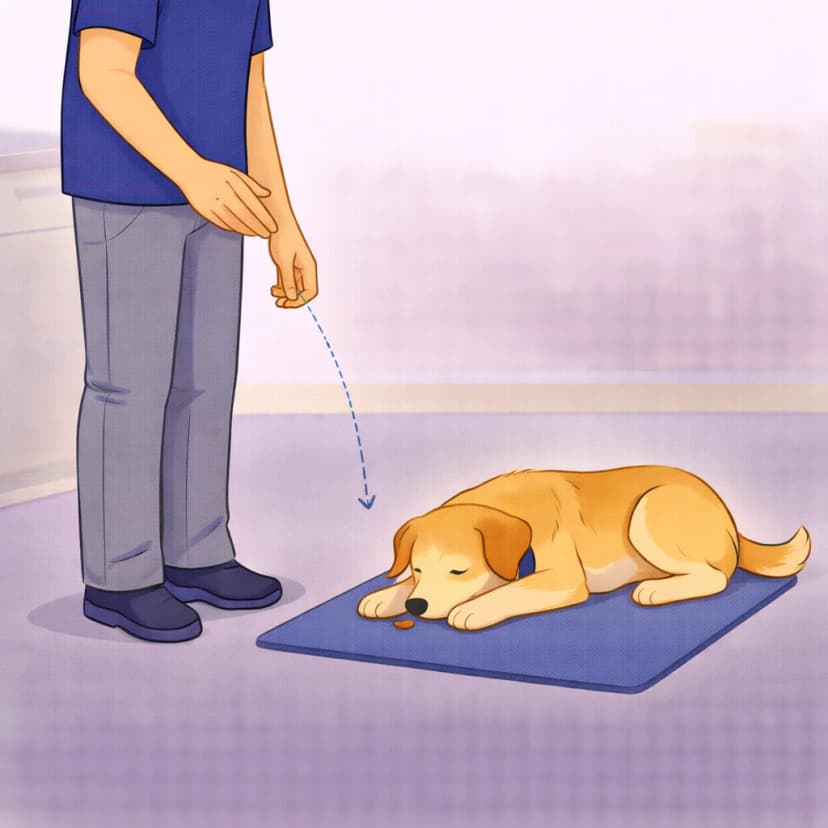
Use a mat to create a calm zone
Place a mat or bed in a common area. Whenever your dog lies on it and relaxes (head down, body loose), drop a treat. Pair this with the "place" command if you've learned it. The mat becomes a physical trigger for calm behavior.
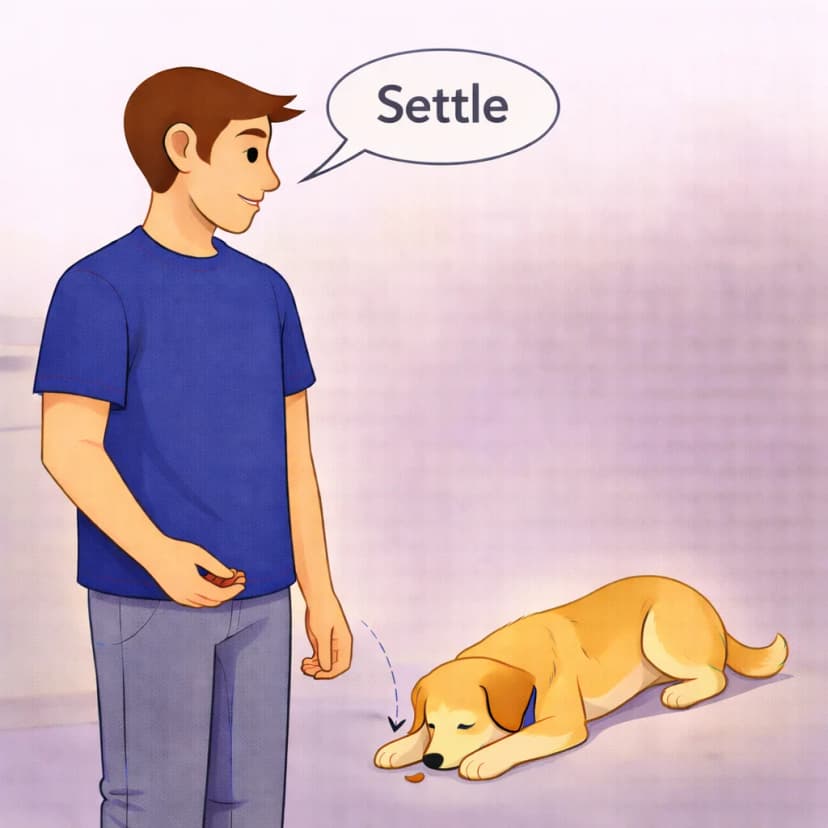
Add the command "Settle"
When your dog is in the process of lying down and relaxing, say "Settle" in a low, calm voice. Reward with a gentle treat delivery. Over time, saying "Settle" while gesturing downward will prompt the calm behavior.
Practice relaxation protocol exercises
Do structured relaxation: ask for a down, then move around the room calmly. Open a cabinet, close it. Sit down, stand up. Take a step toward the door. After each micro-distraction, if your dog stays relaxed. Treat. Build up the intensity slowly.
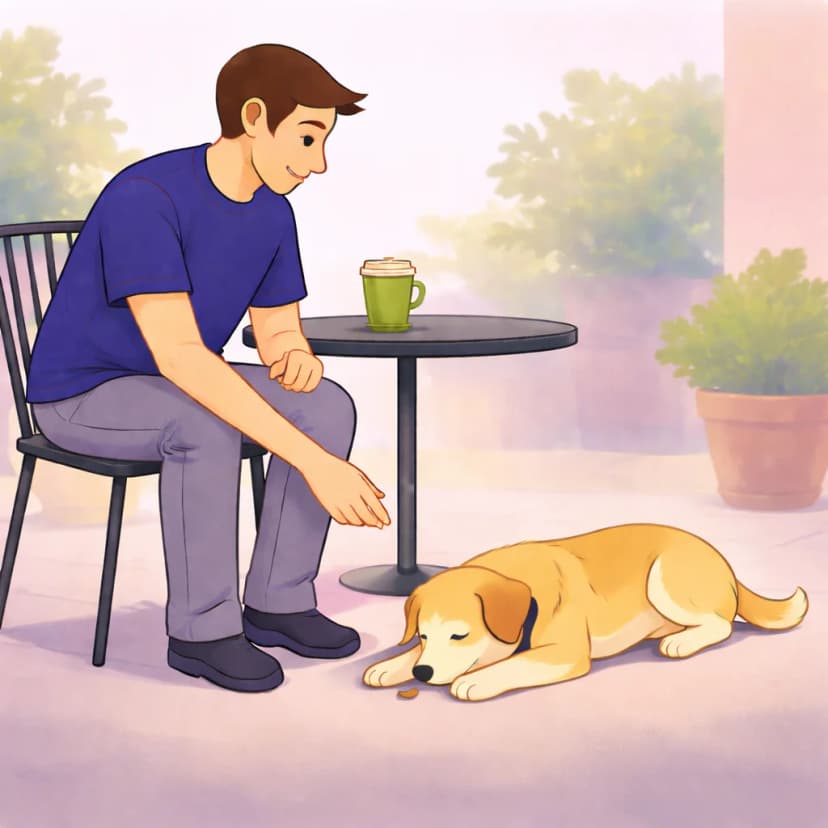
Take settle on the road
Once your dog settles at home, practice in new environments. Start with a quiet coffee shop patio, then a busier one. Bring their mat, ask for settle, and reward calm behavior in increasing levels of stimulation.
Recommended Practice
Capture calm behavior throughout the day. No formal sessions needed at first. Once adding the command, practice 2-3 times daily for 5-10 minutes. Reliable home settling takes 2-4 weeks. Public settling takes 1-3 months.
Common Mistakes
Trying to teach settle when the dog is already overstimulated
Settle is proactive, not reactive. If they're already wound up, help them decompress first (a walk, a chew, a quiet room). Then practice settle when they're in a calmer baseline state.
Making a big fuss when rewarding calm behavior
If your reward delivery is exciting, you undo the calm. Gently place the treat. Speak softly. Keep your energy LOW. Match the state you want to see.
Expecting a hyper puppy to settle for 20 minutes
Puppies under 6 months have very limited settle capacity. Start with 30 seconds and celebrate. Build up over months, not days.
Troubleshooting
"My dog physically cannot relax. They're always pacing or panting"
This could be anxiety, not a training problem. Talk to your vet about whether anxiety medication or supplements might help alongside training. Some rescue dogs need pharmaceutical support before behavioral training can work.
"They settle at home but not in public"
New environments are stimulating. Start at the quietest public place you can find and gradually build up. Bring their mat (familiar scent), bring their favourite chews, and lower your expectations. A 2-minute settle at a coffee shop is a major win.
"My dog settles but pops up at every tiny noise"
They're hypervigilant. Common in rescue dogs. Don't punish the pop-ups. Calmly redirect them back and reward. Over time, they'll learn that noises don't require a response. Playing calm background music at home can also help help them get used to it gradually.
Pro Tips
Play calm music (Through a Dog's Ear or classical) during settle practice. Dogs respond to the tempo, slow music genuinely helps them relax.
A stuffed Kong during settle sessions bridges the gap between "I can't relax" and "oh, this is nice." Licking is inherently calming for dogs.
Capture calm behavior 10+ times a day. Every time you see your dog relaxed, quietly treat. This compounds over weeks.
Practice settle after exercise, not before. A tired dog finds it much easier to learn calm behavior.
📍 Calgary Training Tip
Calgary's Phil & Sebastian cafes, Rosso Coffee, and Monogram Coffee all have dog-friendly patios that are great for practicing settle in a social setting. Start in quieter hours (midweek mornings) and build toward weekend crowds. In winter, practice settle during indoor visits to friends' houses.