Wait is different from stay. Stay means "hold this exact position until I release you." Wait is more casual. It just means "pause for a moment." You'll use it at doors, before crossing streets, getting out of the car, and before meals. It's less formal, more flexible, and you'll use it twenty times a day once it clicks.
Why This Command Matters
Door bolting is one of the most common ways dogs get lost or hit by cars. A dog that waits at every door is dramatically safer. Wait also builds a general habit of checking in with you before moving forward, which is the foundation of a well-mannered dog.
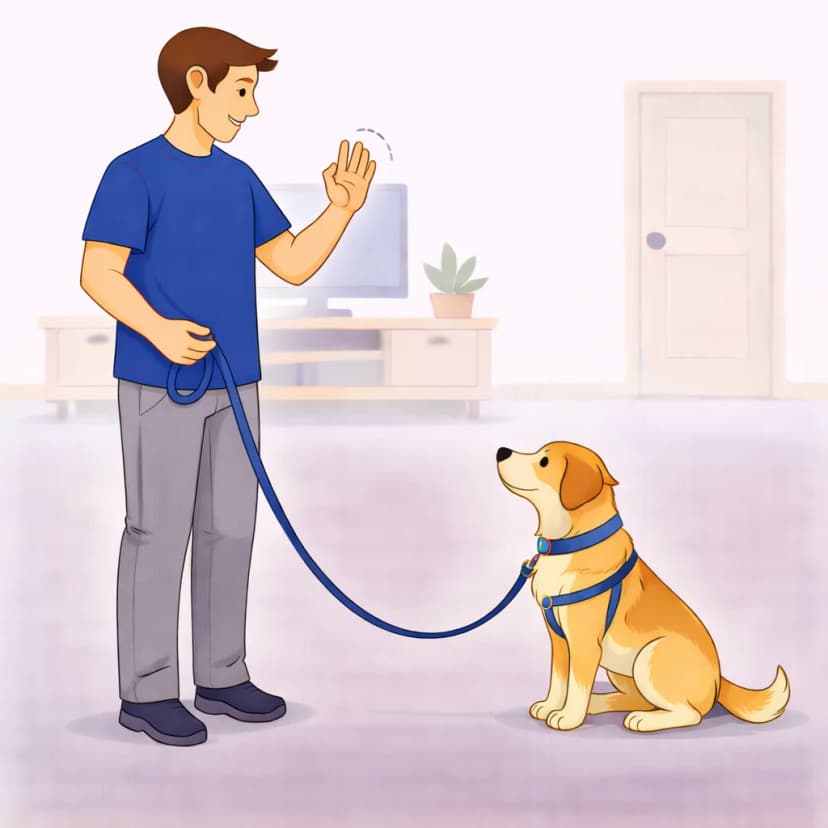
Hand Signal
Hold your palm out briefly (like a shortened stay signal) or simply raise one finger. The gesture is quicker and more casual than the formal stay palm.
Step-by-Step Instructions
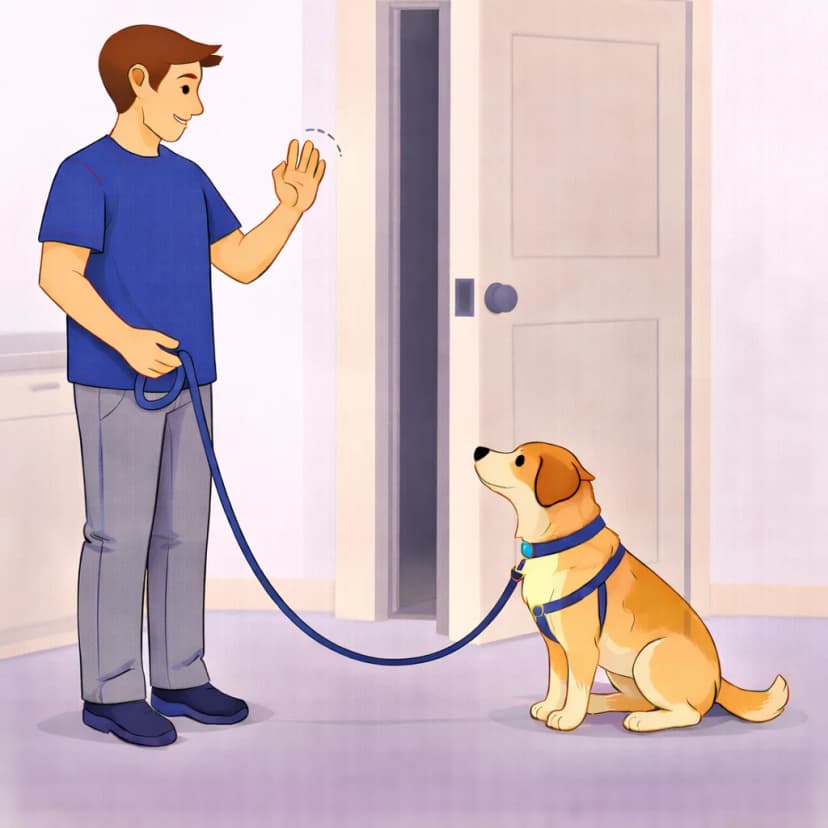
Start at a doorway with your dog on leash
Stand at an interior door with your dog on leash. Say "Wait," then slowly begin to open the door. If they move toward it, close the door calmly. Wait a moment, then try again. When they pause even for a second while the door opens, let them through as the reward.
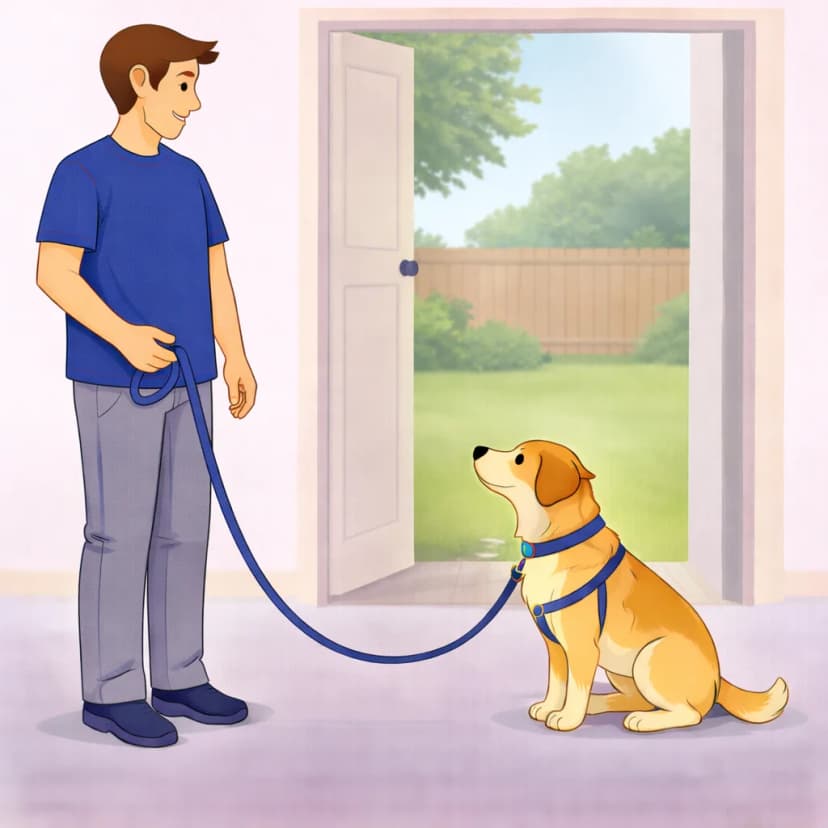
Build up to a fully open door
Gradually open the door wider before they're allowed through. Crack it, then halfway, then fully open. Each time they wait, release through. If they break, close the door and reset.
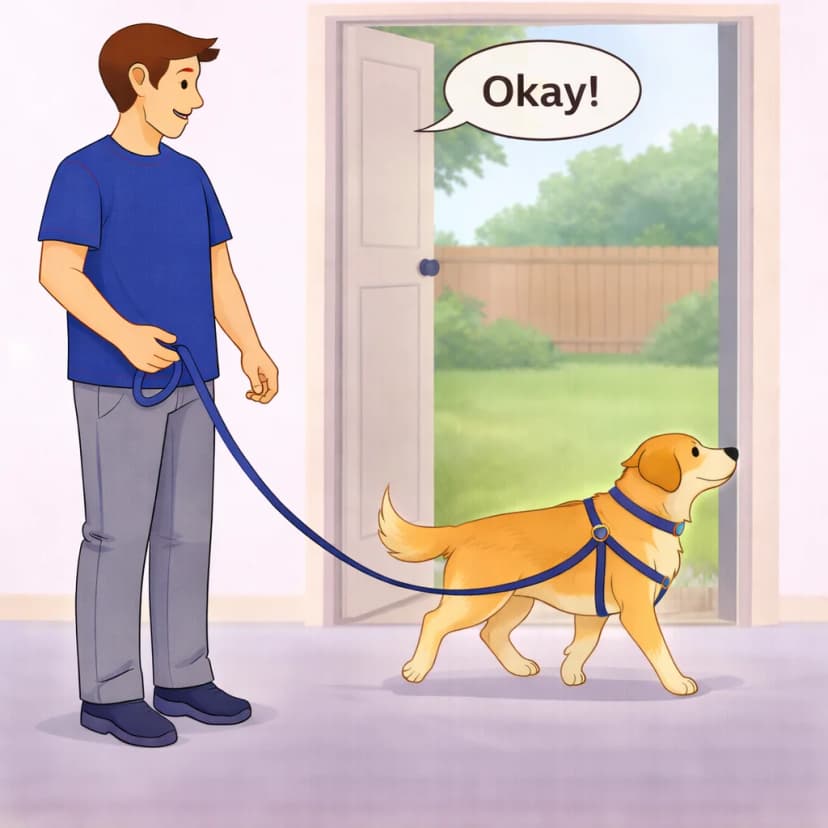
Add a release word
Once they pause reliably, add a clear release: "Okay!" or "Let's go!" The pattern becomes: "Wait", then door opens, then dog pauses, then you say "Okay!", then dog goes through. This gives them a clear green light.
Practice at every door in your house
Front door, back door, car door, crate door. Each one is a new context. Practice at the door to the garage, the gate to the yard, and the car. Consistency across all doors makes it a default habit.
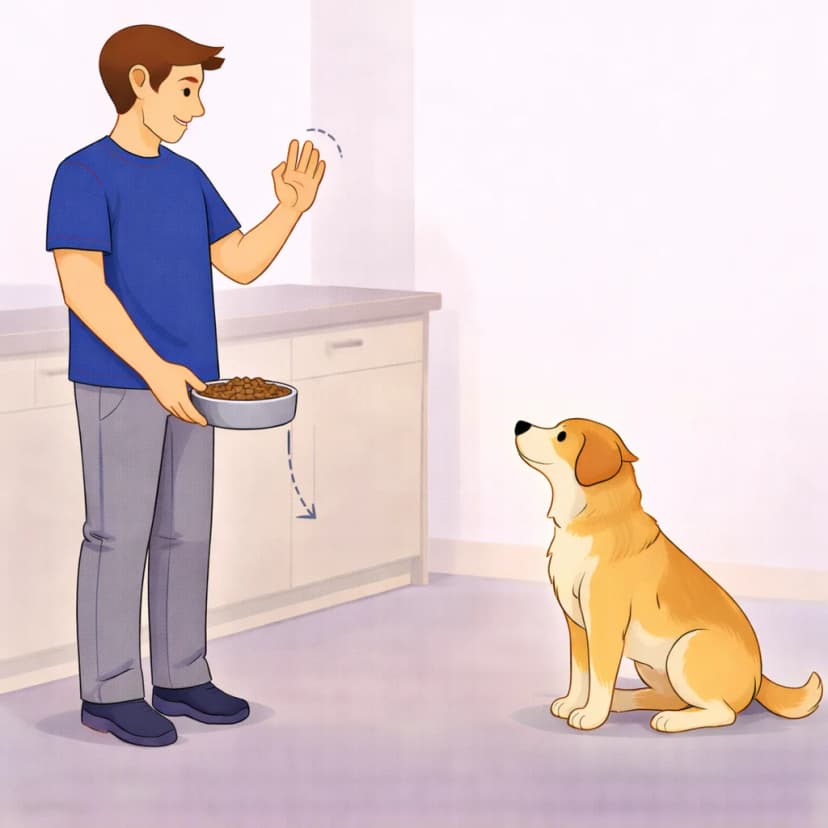
Add wait before meals
Hold the food bowl and say "Wait." If your dog jumps or lunges, raise the bowl. When they sit calmly, lower the bowl slowly. If they break, raise it again. Once the bowl is on the floor, release with "Okay!" This builds incredible self-control.
Recommended Practice
Practice at every door transition throughout the day. This is built into daily life, not separate sessions. Most dogs start pausing at doors within 3-5 days. Reliable automatic waiting at all doorways takes 2-4 weeks.
Common Mistakes
Slamming the door on the dog when they break
Close it gently and calmly. The door closing is an information signal, not a punishment. Slamming creates fear.
Using wait and stay interchangeably
Pick one word for formal holds (stay) and one for casual pauses (wait). Dogs learn the distinction if you're consistent. Wait is temporary, stay is until released.
Only practicing at the front door
Wait should work at all doorways: gates, car doors, crate doors, elevator doors. Practice everywhere.
Troubleshooting
"My dog shoves past me every time I open the door"
Use a leash indoors for practice. Stand between the dog and the door. Open it an inch. If they surge, close it. You may need 20 repetitions before they hesitate. That first hesitation is the breakthrough moment. Give them extra treats.
"They wait for me but bolt when visitors open the door"
The dog hasn't learned that "wait" applies when other people open doors too. Practice with family members opening the door while you manage the dog. Then add friends. Eventually, the door opening itself becomes the command to wait.
"My dog waits but whines and trembles with excitement"
That's okay at first. They're holding themselves back, which is hard work. Reward the effort. Over time, the self-control gets easier and the whining fades. Don't punish the whining. It's them trying their best.
Pro Tips
Make "wait at every door" a house rule from day one. No exceptions, every person, every time.
Practice car-door waits in your driveway before doing it in a busy parking lot.
Once your dog waits at doors automatically, you've built a habit. Habits don't need treats to maintain.
Combine wait with sit for the strongest door manners: sit + wait + door opens + release = perfect.
📍 Calgary Training Tip
Calgary has lots of off-leash park gates where a reliable wait is essential. The double-gate entries at Sue Higgins and Nose Hill are designed for this. Practice "wait" at the first gate before releasing through the second. Also critical at condo and apartment building doors where dogs can bolt into hallways or elevators.