The first-night fear-bite pattern in Rottweiler rescue
“He bit me on the first night” is one of the most-discussed threads in Rottweiler rescue communities. A stressed large-breed dog in an overwhelming new environment can fear-bite, especially when interaction is forced. The dog is not aggressive; the dog is overwhelmed. Prevention rests on 333-rule decompression, no forced interaction, a quiet environment, a Calgary force-free trainer engaged within one to two weeks, insurance and landlord research finished before adoption, and a foster temperament evaluation with verified bite history disclosure. The consequence of getting it wrong with a large powerful dog is higher than with smaller breeds, which is why the rescue community emphasises this advice.
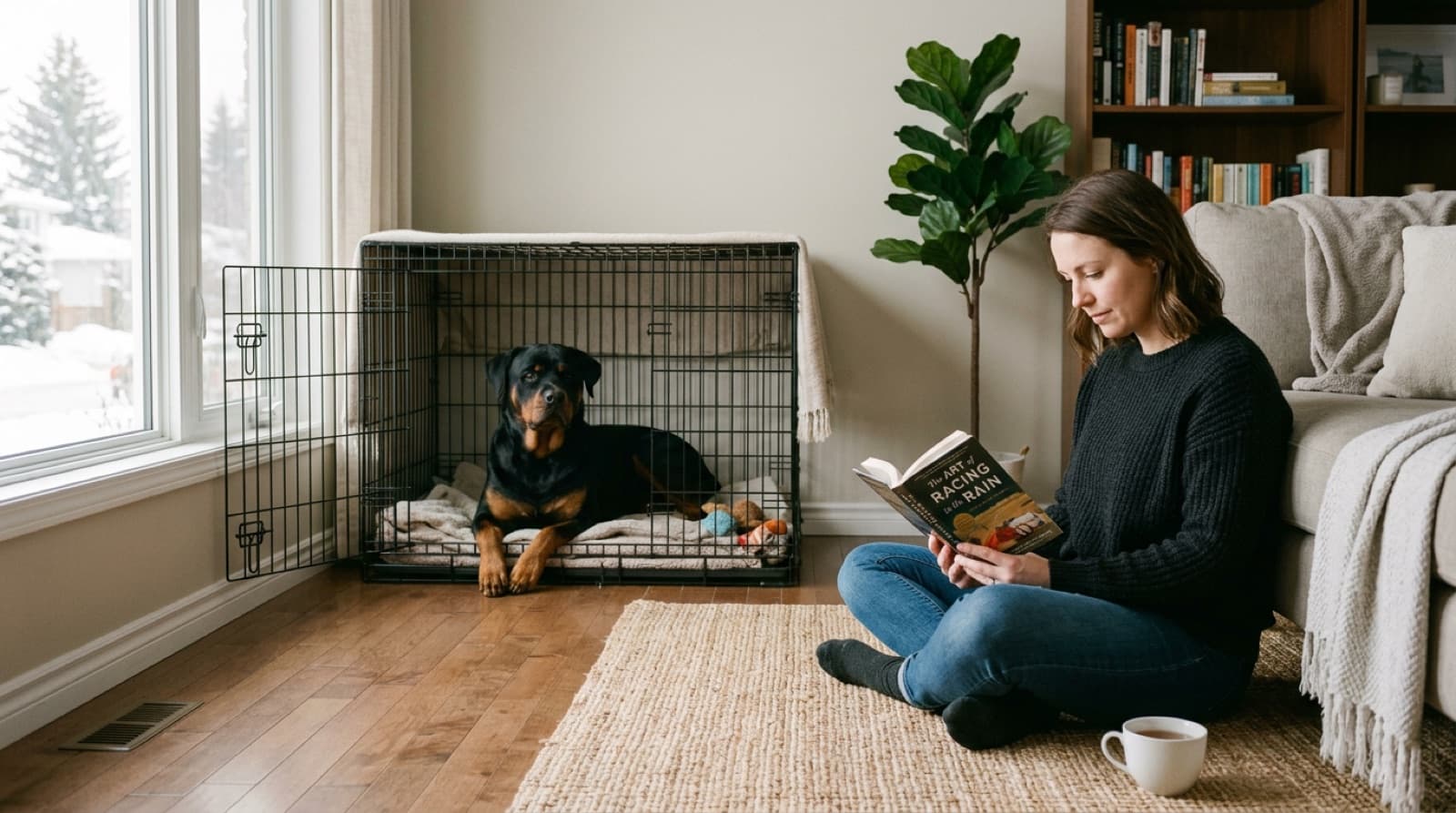
Why first-night biting happens with Rottweilers
The dog is not aggressive. The dog is overwhelmed. The American Kennel Club's Rottweiler breed profile describes the breed as “a calm, confident and courageous dog with a self-assured aloofness” toward strangers, which means stress responses can look different from those of more openly social breeds.
Common contributing factors:
- New-home overstimulation: sights, smells, sounds, household members, and sometimes other pets all new at once
- Forced physical interaction: petting, hugging, face-touching, leashing, or crating before the dog has decompressed
- Undisclosed bite history: some rescues do not disclose previous bite incidents (or do not know)
- Fear-reactive temperament: some Rottweiler lines have lower fear thresholds
- Pain you do not know about: undiagnosed orthopaedic, ear, or dental pain
- Resource guarding that was not triggered in foster
What to do immediately if it happens:
- Do not punish or react with fear yourself
- Calmly remove yourself from the dog's space
- Crate or gate the dog in their safe area
- Do not force interaction for the next 24 to 48 hours
- Contact the rescue right away, disclose what happened, and ask whether the dog has a bite history they did not share
- Schedule a vet exam to rule out pain
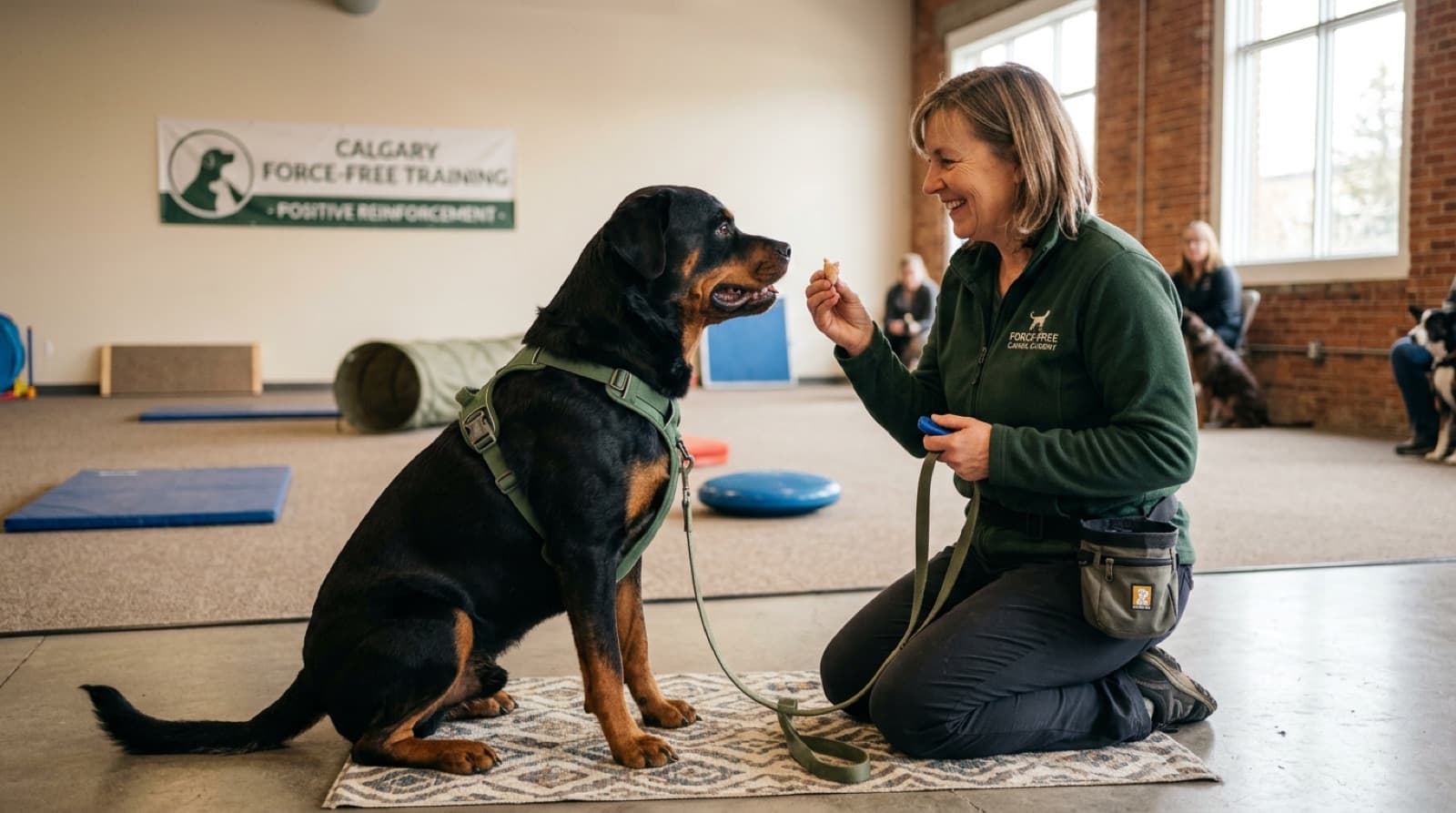
- Book a consult with a Calgary certified force-free trainer or a veterinary behaviourist within a week
What NOT to do: alpha-roll, scold, physically correct, force the dog to “face their fear,” hug or pet for the next 48 hours unless the dog initiates, introduce more new people or pets, skip the vet exam, or hide the incident from the rescue or future trainer. The American Veterinary Medical Association's position on dog-bite prevention emphasises that punishment and confrontation increase, not decrease, risk in fearful dogs.
The 333 rule for rescue Rottweilers (extended)
The 333 rule is canonical rescue-community guidance: three days to decompress, three weeks to learn routine, three months to feel at home. For Rottweilers these timelines are often extended because of size-specific safety and breed temperament.
First 3 days, decompression: dog overwhelmed, sometimes shut down, sometimes hyper-vigilant. May not eat. May seem “too good.” Real personality not showing. Critical for Rottweilers: bite risk is highest in this window. No forced interaction.
First 3 weeks, learning routine: dog starts to settle, learns household schedule, sometimes shows apparent “regression” as real behaviours emerge. Real Rottweiler personality often takes four to six weeks to surface.
First 3 months, feeling at home: real personality fully emerges. Bond deepens.
Calgary Rottweiler extension: many rescue Rotties need 6 to 12 months for full adjustment because of larger size (more environment overwhelm), breed-typical bonding intensity to specific people, and sometimes pre-existing fear or reactivity from past trauma. Severe trauma cases sometimes need 12 to 24 months with ongoing veterinary behaviourist support.
How to ask the rescue about bite history
For Rottweilers, asking the rescue about bite history is essential. A representative case shared in a Calgary adopter forum: “We adopted from a rescue that was not honest about the dog's temperament, and also did not disclose a bite history involving a child. He had extreme issues.” This pattern is unfortunately not rare. Treat the conversation as central to the match, not as paperwork.
What to ask directly:
- Has this dog ever bitten anyone, regardless of how minor?
- Has there been any “air snap” or near-miss?
- Has anyone been frightened by the dog's response in any situation?
- What is the dog's reaction to strangers, other dogs, kids, food removal, toy removal, being startled while sleeping, being grabbed by the collar, and vet handling?
- Why was the dog surrendered? Get specifics, not just “could not keep.”
- How long has the dog been in foster? Has the dog rotated foster homes, and why?
- What is the foster home composition? Other dogs, cats, kids? How does this dog interact?
- Are there any people the dog has shown fear or reactivity toward?
- Has the dog had a recent vet exam? Any medical concerns?
- Are there situations the foster reports avoiding because of the dog's response?
What good rescues do: disclose all bite incidents including minor ones, provide a written foster temperament evaluation, are honest about what they do not know, recommend matches based on the dog's known temperament and adopter experience, and sometimes refuse adoption when the fit is wrong.
Red flags: “no known history” without explanation of how that was assessed, vague temperament information, no foster placement (kennel-only evaluation is rarely enough for a Rottweiler), pressure to adopt quickly, refusal to disclose, or an adoption committee that is not interviewing you about your experience. Walk away from rescues that get defensive or evasive.
How to build trust with a rescue Rottweiler
Same principles as other breeds with elevated importance because of size and temperament.
Principles:
- Let the dog set the pace. Never force interaction.
- Predictability builds trust. Same routine, same person feeding, same time.
- Choice empowers fearful dogs. Offer multiple options when possible.
- Distance matters. Respect the dog's threshold.
- Time is non-negotiable. Trust is not earned in days or weeks.
- Family consistency is essential.
Early weeks practice: sit on the floor at distance, ignore the dog, read a book. Drop treats periodically without acknowledging. Speak quietly when needed. Avoid direct eye contact and reaching. Avoid hugging and face-touching. Let the dog approach and sniff freely.
Handling: touch only when invited. Start with chest or chin, not head or back. Short sessions, end on a positive note. Watch body language carefully. Build cooperative-care patterns for grooming and vet visits with the help of a Fear Free certified professional.
When trust breakthrough happens: sometimes weeks, sometimes months, sometimes a specific moment. For Rottweilers, the bond when it forms is often intense and lifelong. Many Calgary Rottweiler owners describe their rescue Rotties as the most loyal companions of their lives once trust is built.
What NOT to do, Rottweiler-specific
Avoid flooding: do not introduce too much too fast. No visitors, no crowded places, no forced socialisation, no baths in the first week, no vet visits in the first three to seven days unless emergency.
Avoid aversive training: no alpha rolls or dominance methods. These can trigger a defensive bite in a fearful Rottweiler. No yelling, hitting, or throwing things. No shock collars, prong collars, or leash-correction methods. Force-free is essential. The American Animal Hospital Association and Fear Free Pets both recommend positive-reinforcement and low-stress handling for fearful or reactive dogs; aversive methods reliably elevate aggression in fearful Rottweilers.
Avoid forced handling: no hugging or kissing, no face-touching unless invited, no prolonged direct eye contact early, no grabbing the collar without preparation.
Rottweiler-specific additions:
- Do not let kids approach the dog while eating or sleeping
- Do not take the dog's food or toys to “test” resource guarding
- Do not force introductions to other dogs
- Do not skip insurance and landlord research before adoption
- Do not take a rescue Rottweiler to public spaces (off-leash parks, busy patios) before trust and reliable behaviour are established
- Do not use a dog park in the first six or more months
When to engage a Calgary force-free trainer or behaviourist
For rescue Rottweilers, professional engagement is more urgent than for most rescue dogs.
When to consult:
- Right away, ideally a pre-adoption call, then a foundation consult within the first one to two weeks
- When any concerning behaviour emerges (reactivity, fear, growling, snapping, resource guarding)
- After any bite incident, including a minor air snap
- Before introducing other pets, kids, or visitors
- For any first-time Rottweiler owner, regardless of dog history
What to look for in a Calgary professional: credentials from the Certification Council for Professional Dog Trainers (CCPDT: CPDT-KA, CBCC-KA), the International Association of Animal Behaviour Consultants (IAABC, CDBC), the Karen Pryor Academy, or Fear Free Pets. For severe cases, ask your primary vet for a referral to a board-certified veterinary behaviourist (Dip. ACVB); any medication, when used, is prescribed and monitored by that veterinarian.
What to ask a prospective trainer: Are you certified in force-free / LIMA / positive-reinforcement-only methods? Do you have rescue-dog trauma experience? Do you have Rottweiler-specific experience? What is your methodology for fearful or fear-reactive dogs? Will you coordinate with the rescue and a veterinary behaviourist if needed? Can you provide references?
Red flags: shock or prong-collar recommendations, alpha or dominance language, promises of rapid results, refusal to explain methodology, or refusal to coordinate with veterinary care.
Typical Calgary investment range: private in-home training runs roughly $80 to $150 per session, group reactive-dog classes $200 to $400, behaviour-modification programs $500 to $2,000, and a veterinary behaviourist referral $300 to $500 per session, with telehealth options available for adopters in Alberta. Expect roughly $500 to $3,000 in the first year for trainer and behaviourist support combined.
Senior Rottweiler adoption, the underrated path
Why senior Rottweiler adoption: calmest and most predictable temperament. Often house-trained and well-mannered. Foster evaluation comprehensive. Less competitive applications. Often deeply grateful and bonded. Less exercise demand.
Reality: two to four years of companionship is typical given an eight to ten year Rottweiler lifespan. Health concerns are elevated (cancer, cardiac disease, hip dysplasia). Pet insurance can be challenging because of pre-existing conditions. Sometimes mobility issues. End-of-life considerations are part of the commitment.
Calgary senior Rottweiler paths: Calgary Humane Society, AARCS, BARCS Rescue, Cochrane Humane Society, City of Calgary Animal Services, and Pawsitive Match Rescue Foundation's foster network.
Senior Rottweiler environment: single-floor preferred, soft bedding, easy access to water and food, calm household, predictable routine, traction rugs on hardwood as needed.
Emotional framework: senior adoption means giving a wonderful dog calm dignified final years. The bond is often profound and immediate. The end-of-life journey is emotionally demanding but meaningful.
Bottom line for a Calgary rescue Rottweiler trauma case
Likely to succeed if: patience for an extended 333-rule timeline, force-free training commitment in the first year, pet insurance enrolled early, a Calgary veterinary baseline scheduled, an emergency medical fund of roughly $5,000 to $15,000, a predictable household routine, a Calgary certified force-free trainer relationship with reactivity experience, emotional preparation for slow trust building, a verified foster temperament evaluation and bite history disclosure, insurance and landlord research finished before adoption, and a long-term mindset.
Likely wrong if: not willing to use force-free methods, leaning toward aversive training, impatient with slow progress, unable to fund the lifetime reality, a first-time Rottweiler owner without breed-experienced mentorship, or a household with very young children and a severely reactive dog and full-time work obligations.
Reward: extraordinary loyalty once trust is built. Calgary Rottweiler owners often describe their rescue Rotties as the most devoted dogs of their lives. The first-night bite risk is real and prevention matters; the partnership when it works is exceptional.
References used in this guide: American Kennel Club: Rottweiler breed information; American Veterinary Medical Association: dog-bite prevention; International Association of Animal Behaviour Consultants; Certification Council for Professional Dog Trainers; AAHA canine behaviour management guidelines; Fear Free Pets.
Browse adoptable Rottweilers in Calgary
Foster-evaluated rescue Rotties from 13+ Calgary rescues. Prioritise rescues with detailed temperament evaluations and bite history disclosure. Adult adoption, experienced large-breed owner, a Calgary certified force-free trainer, and pet insurance enrolled early is the highest-success path. Listings update regularly.
See Available Rottweilers →Frequently Asked Questions
My rescue Rottweiler bit me on the first night. What happened?
A stressed Rottweiler in an overwhelming new environment can fear-bite, especially when interaction is forced. The dog is overwhelmed, not aggressive. Crate or gate the dog, contact the rescue, book a Calgary force-free trainer within a week, and schedule a vet exam to rule out pain. Do not alpha-roll or punish. Prevention rests on 333-rule decompression and no forced interaction.
What is the 333 rule for rescue Rottweilers?
Three days to decompress, three weeks to learn routine, three months to feel at home. For Rottweilers the timelines often extend; many need 6 to 12 months for full adjustment, and severe trauma cases sometimes need 12 to 24 months. Bite risk is highest in the first three days, so no forced interaction. Real personality often takes four to six weeks to surface.
How do I ask the rescue about bite history?
Ask directly: “Has this dog ever bitten anyone, regardless of how minor? Any air snap or near-miss?” Ask about reactions to strangers, dogs, kids, food removal, vet handling, and being grabbed by the collar. Walk away from rescues that get defensive or evasive about disclosure.
How do I build trust with a rescue Rottweiler?
Let the dog set the pace, keep a predictable routine, offer choice to a fearful dog, respect distance, allow time, and align everyone in the household on the same approach. Sit at distance ignoring the dog, drop treats, avoid direct eye contact and reaching, no hugging, let the dog approach. A Calgary certified force-free trainer is essential.
What NOT to do?
Avoid flooding (visitors, baths, vet, grooming early), aversive training (alpha rolls can trigger defensive bites in fearful Rottweilers), forced handling (hugging, face-touching, eye contact), emotional projection, and inconsistency. Rottweiler-specific: do not test resource guarding, no dog parks in the first six or more months, no busy public spaces before reliable behaviour.
When should I engage a Calgary force-free trainer?
Within one to two weeks for a foundation consult, and immediately after any concerning behaviour or bite incident. Look for CCPDT, IAABC, Karen Pryor Academy, or Fear Free credentials. Avoid trainers who use shock or prong collars or dominance framing. Ask your vet for a referral to a board-certified veterinary behaviourist for severe cases.
What is a realistic decompression timeline?
First 24 to 48 hours: overwhelmed, bite risk highest. Days 3 to 7: beginning to learn home. Weeks 2 to 3: real personality emerging, sometimes apparent “regression.” Months 3 to 6: real adjustment and bonding. Severe trauma cases sometimes need 12 to 24 months for full adjustment with veterinary behaviourist support.
Is senior Rottweiler adoption a reasonable path?
Underrated path for experienced large-breed adopters. Calmest and most predictable temperament, often house-trained, often deeply grateful. Two to four years of companionship is typical. Calgary paths include Calgary Humane Society, AARCS, BARCS Rescue, Cochrane Humane Society, City of Calgary Animal Services, and Pawsitive Match Rescue Foundation.
What is the introduction protocol for the new home?
Before pickup: insurance, landlord, trainer relationship, and vet baseline ready. Pickup day: direct route, calm, no greetings. First 24 hours: safe space, no forced interaction. First three days: quiet routine, no visitors, no walks past dogs. First week: trainer consult. Week 2: vet baseline. Week 3 onward: gradual experience expansion.
Bottom line for a Calgary rescue Rottweiler trauma case?
Succeeds with patience, force-free methods, insurance, an emergency fund, a Calgary certified force-free trainer (ideally reactivity-experienced), emotional preparation, a verified foster evaluation and bite-history disclosure, and a long-term mindset. Wrong fit: aversive training, impatience, tight budget, or a first-time Rottweiler owner without mentorship. Reward: extraordinary loyalty and an exceptional partnership.
Companion guides
Rottweiler Adoption in Calgary
The full overview of rescuing a Rottweiler in Calgary: rescues, screening, cost, lifestyle fit.
Rottweiler Resource Guarding
Force-free protocol for food, toy, owner, and space guarding.
Rottweiler Same-Sex Aggression
Multi-dog household considerations and management for Rottweilers.
Rottweiler Health Issues
Cancer, cardiac, hip dysplasia, and insurance considerations for the breed.
Adoptable Rottweilers in Calgary
Live listings of Rottweilers and Rottie mixes from 13+ Calgary rescues.
New dog? Start with these care guides
Everything a new adopter needs to set up a safe, happy home.