The short answer
American Bulldogs are uncommon in Calgary rescues, and most listings appear as “American Bulldog mix” or are filed under “Pit Bull mix” because shelters often confuse the two. Plan to apply at Calgary Humane Society, AARCS, Pawsitive Match, ARF Alberta, BARCS Rescue, and Heaven Can Wait. BARCS is the rescue most likely to handle bully-type dogs correctly. Adoption fees for an adult dog commonly run $400 to $700. Breeder pricing for documented Johnson or Scott line dogs runs roughly $1,500 to $4,000+. This is a working breed with high prey drive and a 60 to 90 minute daily exercise need, best suited to experienced large-breed owners.
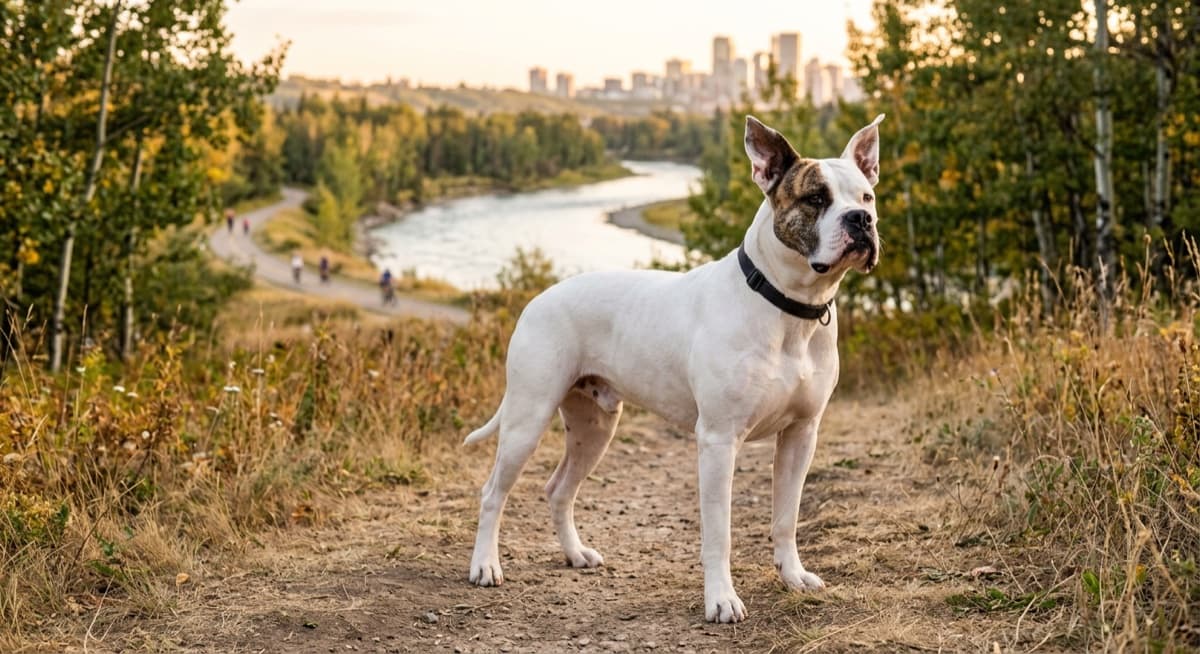
The American Bulldog is one of the most misunderstood breeds in Calgary rescue. Adopters confuse it with the English Bulldog, shelters confuse it with the Pit Bull, and new owners often miss that this is a working farm breed with serious drive. This guide covers what most Calgary content skips: where American Bulldogs actually surface, what an honest adoption looks like, how Johnson and Scott lines differ, the health profile that distinguishes them from flat-faced bulldogs, and the daily behaviour you should expect from a rescued AmBull.
Where to adopt an American Bulldog in Calgary
American Bulldogs in pure form are rare in Calgary rescues. The vast majority of adoptable dogs with American Bulldog ancestry come through as “American Bulldog mix,” “Pit Bull mix,” or “Mastiff mix,” because visual identification at shelters is notoriously unreliable for bully-type dogs.
Rescues to monitor in the Calgary area:
- Calgary Humane Society: the largest Calgary shelter, regular bully-type intake.
- AARCS: foster-based, with structured temperament evaluations that help correctly identify line and behaviour for working breeds.
- Pawsitive Match: Calgary foster-based, takes in medium and large bully-type dogs.
- ARF Alberta: Calgary foster-based with regular bully and mastiff-type intake.
- BARCS Rescue: Calgary foster-based, bully breeds are a core focus. The rescue most likely to correctly distinguish American Bulldog from Pit Bull and to give you accurate temperament notes.
- Heaven Can Wait: Calgary rescue with occasional bully intake.
- Calgary Animal Services: municipal facility, stray bully-type dogs pass through regularly.
When you contact a rescue, ask directly: “Has this dog been temperament-evaluated as an American Bulldog, or is the breed a best-guess from photos?” Most foster-based rescues will be honest about the limits of visual identification.
Set up listing alerts on the LocalPetFinder American Bulldog page. Listings refresh regularly, so you will see new arrivals before most adopters.
What does an American Bulldog cost in Calgary?
Calgary adoption fees vary by rescue, but the realistic ranges are:
| Source | Fee range | Typically includes |
|---|---|---|
| Calgary Humane Society | $405 adult (1 to 6 years), $270 senior | Spay or neuter, vaccinations, microchip, vet exam |
| AARCS | $425 adult, $150 senior | Spay or neuter, vaccinations, microchip, foster history |
| BARCS / Pawsitive Match | BARCS $650 / Pawsitive Match $475 (adult) | Spay or neuter, vaccinations, microchip |
| Breed-specific specialty rescue (transport) | $400 to $700 | Transport, foster-based temperament evaluation |
| Johnson or Scott line breeder puppy | $1,500 to $4,000+ | Health testing, documented line, contract, breeder support |
Lifetime cost is the bigger number. Plan for first-year costs in the $1,500 to $3,000 range across vet visits, training (force-free trainer time is non-optional with this breed), high-quality food, joint supplements, and pet insurance. Calgary requires a city dog licence for every dog three months and older under the Responsible Pet Ownership Bylaw (calgary.ca/bylaws-standards).
For a full lifetime cost breakdown, see our Calgary adoption costs guide.
American Bulldog vs English Bulldog vs Pit Bull
Confusing these three breeds is the single most common mistake Calgary adopters make. Each is a different dog with a different health profile, exercise need, and behaviour pattern. The American Kennel Club recognizes the American Bulldog as a working breed, and the American Bulldog Association maintains the parent club breed standard.
| Trait | American Bulldog | English Bulldog | Pit Bull type |
|---|---|---|---|
| Weight | 60 to 120 lbs | 40 to 55 lbs | 35 to 65 lbs |
| Muzzle | Normal length | Brachycephalic (flat) | Normal length |
| BOAS breathing risk | No | Yes, severe | No |
| Origin | Catch-dog, farm work | Companion (modern) | Working terrier heritage |
| Daily exercise | 60 to 90 minutes vigorous | 20 to 30 minutes gentle | 45 to 75 minutes |
| Calgary rescue availability | Uncommon, often mis-labelled | Rare | Common (and mixes) |
| Typical lifespan | 10 to 16 years | 8 to 10 years | 12 to 16 years |
The takeaway: the American Bulldog is not a flat-faced couch dog and is not a Pit Bull. It is closer in temperament and physical need to a working farm breed. For deeper coverage, see our English Bulldog adoption guide and Pit Bull adoption guide.
Johnson, Scott, and hybrid lines
American Bulldogs come in two recognized lines plus a common hybrid cross. Knowing the difference helps you read a rescue listing and predict size, structure, and likely temperament, even when the rescue itself does not document the line.
- Johnson type (Classic or Bully). Heavier, more muscular, broader head, shorter muzzle, often 80 to 120 lbs. Resembles a bully breed visually. Lower endurance, more guard-oriented temperament. Often the line confused with English Bulldog at first glance, though still not brachycephalic.
- Scott type (Standard or Performance). Lighter, more athletic, longer muzzle, often 60 to 100 lbs. Bred for catch work on hogs. Higher endurance, more prey-driven temperament, more dog-reactive when undersocialized.
- Hybrid. A cross between the two lines. Most modern American Bulldogs in North America are hybrids, splitting traits in unpredictable ways.
In Calgary rescue, lines are rarely documented. Judge any individual dog on observed temperament, structure, and the foster's notes rather than the line label. A well-socialized hybrid from an experienced foster will tell you more than any pedigree could.
Why American Bulldogs end up in rescue
The same traits that make American Bulldogs great working dogs make them difficult companions for many households. Calgary rescues see a recurring pattern of surrender reasons that prospective adopters should understand before committing.
- Exercise mismatch. Owners adopt expecting a calm bulldog and find a 90-pound working dog that destroys furniture when under-exercised.
- Prey drive surprises. Many AmBulls cannot live safely with cats, small dogs, or off-leash with wildlife. This becomes obvious only after the dog matures.
- Dog-reactivity. Undersocialized AmBulls often become reactive toward other dogs in adolescence. Most rescues warn about this on profiles.
- Joint and weight issues. Hip and elbow dysplasia surface as the dog ages, and many owners cannot afford the surgical costs.
- BSL in other provinces. AmBulls are sometimes classified under breed-specific legislation in Ontario and parts of Manitoba, leading to relinquishment transports into Alberta. Alberta itself has no provincial BSL.
- Owner life changes. Moves, new babies, separations, and housing changes hit large powerful breeds especially hard.
None of these are reasons to avoid the breed. They are reasons to adopt with realistic expectations and to ask the rescue specifically about the dog's known history, prey drive, and dog-tolerance.
Realistic Calgary inventory expectations
On any given week, Calgary rescues collectively list zero to a handful of dogs described as American Bulldog or American Bulldog mix. Pure-line documented AmBulls are uncommon. The realistic adoption path is one of two routes.
- Patient single-rescue waitlist. Wait for a documented American Bulldog to appear at BARCS or AARCS, expect weeks to months.
- Wide bully-mix search. Apply to any dog listed as “Pit Bull mix” or “Mastiff mix” with a body and temperament profile that matches what you actually want. This is how most Calgary AmBull adopters end up with their dog.
Read the foster temperament notes carefully. For a working breed, those notes matter more than the breed label. A foster who reports “tolerant of cats, low prey drive, neutral toward other dogs” gives you signal regardless of whether the rescue called the dog an American Bulldog or a Pit Bull mix.
What to expect from a rescued American Bulldog
American Bulldogs are working dogs by heritage. Centuries of catch-dog and farm-guard breeding produced a confident, powerful, prey-driven companion that needs a job. The behaviour profile differs from any other bulldog you may have met.
- Working drive. AmBulls need a daily outlet. Without one, they redirect onto furniture, fences, and walls. Structured training, weight pulling, scent work, or flirt-pole sessions help.
- Exercise demand. 60 to 90 minutes of vigorous activity daily. Walks alone are not enough. Off-leash time at Nose Hill Park, Sue Higgins Park, Bowmont Park, or Tom Campbell's Hill works well, with caveats around prey drive and dog reactivity.
- Prey drive. Many AmBulls cannot be trusted off-leash near small animals or cats. Test recall in a fenced area before any open-field decision.
- Training intensity. Plan to work with a Calgary force-free trainer experienced with bully and working breeds from week one. Foundation training is non-optional.
- Socialization windows. Adolescent AmBulls (8 to 18 months) often become more dog-reactive. Maintain structured socialization through this phase.
- Indoor behaviour. Once exercised, most AmBulls are surprisingly calm indoors. Many become couch dogs in the evening. Daytime under-exercise is the failure mode.
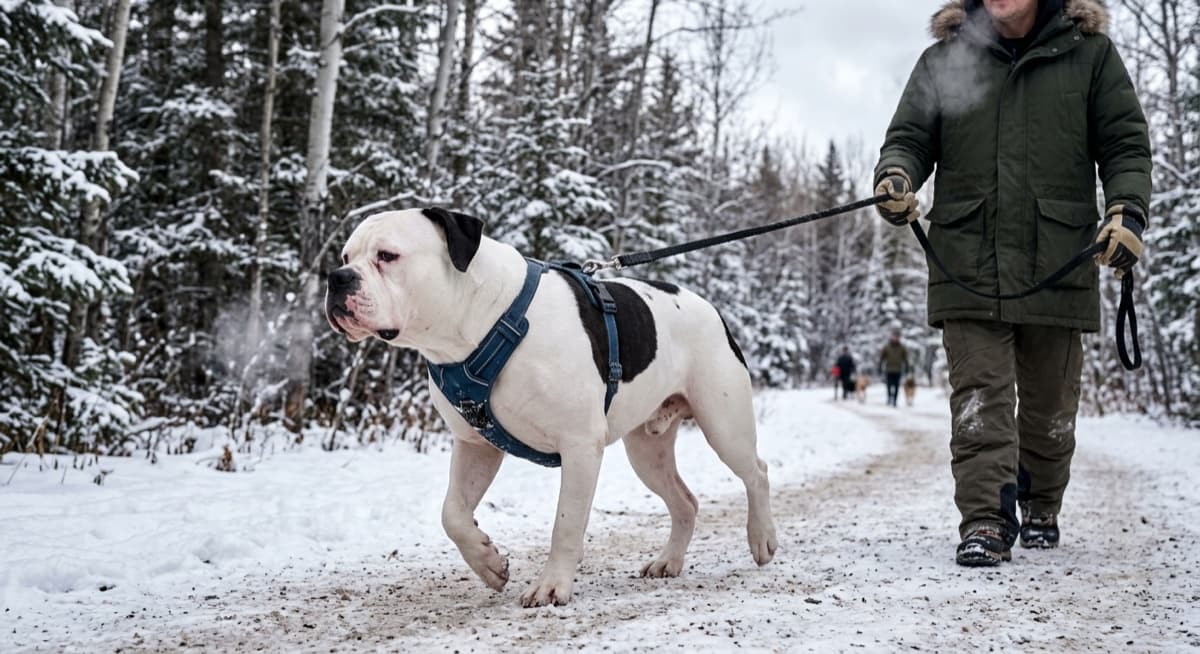
- Calgary winters. The short coat handles routine winter cold below -20°C poorly. Plan for a winter coat for the dog, paw protection on salted sidewalks in your neighbourhood, and shorter outdoor sessions in deep cold combined with indoor mental work.
Apartment living in Beltline or Inglewood is possible with a committed owner, an exercised dog, and a building that accepts large breeds. It is not the right default. A house with a yard, off-leash access, and an experienced large-breed handler is closer to ideal.
Browse American Bulldogs in Calgary
See currently available American Bulldogs and AmBull mixes across 15+ Calgary rescues in one place. Listings refresh regularly, and listing alerts let you see new arrivals before most adopters.
See Calgary American Bulldogs available now →Health considerations: joints, skin, and line-specific concerns
The American Bulldog's health profile is sharply different from the English or French Bulldog. AmBulls are not brachycephalic, so the BOAS breathing concerns that dominate flat-faced bulldog care simply do not apply. What does apply is a set of large-breed orthopedic, skin, and line-specific concerns.
- Hip and elbow dysplasia. Common in large athletic breeds. Maintaining a lean weight, controlled exercise during puppyhood, and joint supplements help. Many Calgary AmBull owners carry pet insurance for this reason.
- Skin allergies and demodex. White-coated AmBulls (common in Johnson lines) carry higher risk of demodectic mange and contact allergies. Regular skin checks and a vet who knows the breed help.
- ACL and cruciate tears. Athletic stress on a 90-pound frame creates risk. Surgical repair in Calgary commonly runs into thousands of dollars.
- Bloat (gastric dilatation volvulus). A deep-chested large-breed emergency. Feed two smaller meals daily, avoid heavy exercise right after meals, and know the symptoms.
- Cherry eye and entropion. Both are surgically correctable, and reputable rescues will disclose if a dog has had either.
- Neuronal ceroid lipofuscinosis (NCL). A neurological disease found in some Johnson lines. DNA testing is available, and reputable breeders test for it. Rescue dogs are rarely tested unless symptoms appear.
Lifespan averages 10 to 16 years, with healthier athletic Scott line dogs trending toward the higher end. Always consult your vet for diagnosis, treatment, and medication decisions. Online articles are starting points, not medical advice.
Calgary-specific notes: no BSL, and what that means for AmBull adopters
Alberta has no provincial breed-specific legislation, and the City of Calgary regulates dog behaviour rather than appearance under the Responsible Pet Ownership Bylaw. This is genuinely good news for American Bulldog adopters.
Many AmBulls in Calgary rescue arrive as transport from provinces and municipalities with breed restrictions. Ontario has a long-standing Pit Bull ban that frequently sweeps up American Bulldogs by visual mis-identification, and parts of Manitoba have similar restrictions. Alberta's behaviour-based approach means you can adopt and licence an American Bulldog without breed restriction.
That said, the bylaw still applies. Calgary requires a dog licence for every dog three months and older, on-leash compliance in all non-designated areas, and active management of nuisance behaviour. For a powerful working breed, that means consistent training, secure fencing, and careful management around children, cats, and unfamiliar dogs. Alberta's permissive legal centre is matched by a community expectation that you handle the breed responsibly.
Frequently Asked Questions
Where can I adopt an American Bulldog in Calgary?↓
How much does an American Bulldog cost to adopt?↓
Are American Bulldogs the same as English Bulldogs?↓
Are American Bulldogs Pit Bulls?↓
What's the difference between Johnson and Scott American Bulldogs?↓
Are American Bulldogs good for first-time owners?↓
How much exercise does an American Bulldog need?↓
What health issues should I expect with an American Bulldog?↓
Continue reading
Browse Calgary bulldogs
All bulldog types in Calgary rescue: American Bulldog, English Bulldog, French Bulldog, and Olde English Bulldogge, refreshed regularly.
English Bulldog adoption Calgary
The flat-faced companion breed, often confused with American Bulldogs. BOAS breathing health, calmer exercise needs, and Calgary rescue routes.
Pit Bull adoption Calgary
The bully-type breed most commonly confused with American Bulldogs at shelters. Adoption process, BSL context, and what to expect.
Calgary rescue puppies guide
The 15+ Calgary shelters with puppies, by-rescue application process, realistic wait times, and how to avoid Kijiji scams.
New dog? Start with these care guides
Everything a new adopter needs to set up a safe, happy home.