The pattern Calgary Bullmastiff prospects keep running into
A family considering their first Bullmastiff calls a Calgary trainer. The trainer's response is some version of “those are dangerous dogs, you should reconsider, look at a Lab instead.” The family panics, second-guesses the choice, sometimes walks away from the breed entirely. The Reddit thread “Want a Bullmastiff but local trainer cautions me against the breed” is one of the most-recurring discussions in r/Bullmastiff for a reason. The honest answer is usually that the trainer doesn't know the breed well, has confused it with Cane Corso or Presa Canario, and is giving advice based on the reputation rather than the reality. Bullmastiffs are calm, low-drive, family-oriented dogs that look intimidating to strangers and act like 130 lb couch ornaments at home. The trainer warning is real. The breed danger isn't.
Why this breed gets the reputation it does
The Bullmastiff reputation problem comes from a few overlapping sources, and once you understand them you can see why the warnings happen even when they're not warranted.
The breed looks intimidating. Bullmastiffs are 100 to 130 lbs of solid muscle with a heavy mastiff-type head, a black mask, and a serious face. Strangers who know nothing about the breed see a big dog with a guard-dog look and assume the worst. The breed's history as estate guardians (the breed was developed in 19th-century England specifically to take down poachers without killing them) gets retold in ways that sound scarier than the modern dog actually is.
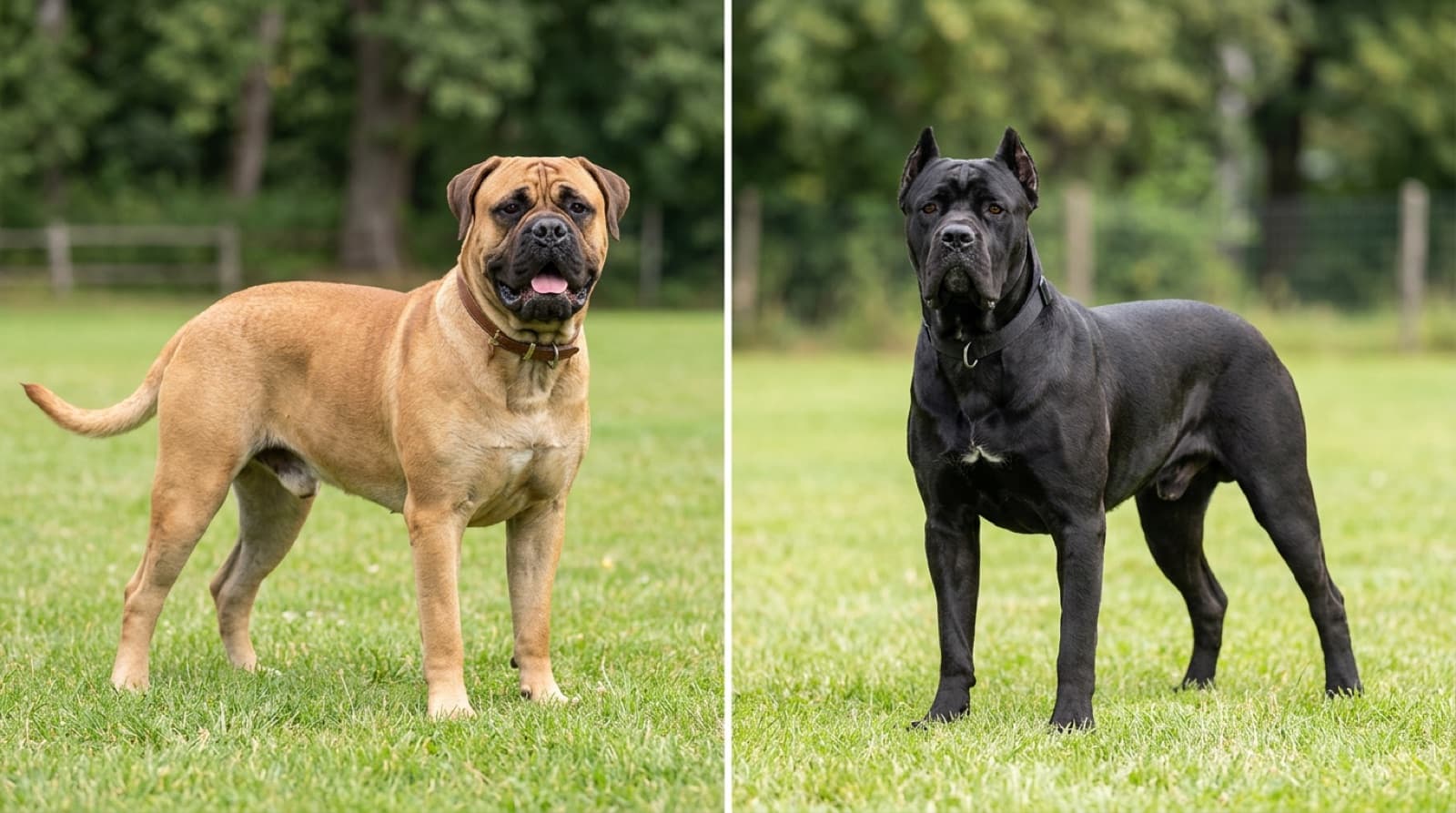
The breed gets confused with other large guardian breeds. Cane Corso, Presa Canario, Dogo Argentino, working-line English Mastiffs, and various Bandogge crosses all share a similar visual profile but have genuinely higher drive and more reactive temperaments. A trainer who has worked with one of those breeds and assumes the Bullmastiff is similar will give bad advice. The breeds look alike. They are not the same dog.
Some breed legislation includes Bullmastiffs in dangerous-breed restrictions even though the bite statistics don't support it. Calgary is BSL-free, but some Calgary condo boards and rental insurance carriers include Bullmastiffs on weight-based or breed-based restriction lists. That contributes to the reputation without reflecting actual breed temperament.
And like every big breed, when a Bullmastiff bite incident does happen, it makes the news. A bite from a 130 lb dog produces serious injury regardless of breed. The headlines reinforce a reputation that doesn't match the day-to-day breed reality.
What a Bullmastiff actually acts like in a Calgary home
The Calgary Bullmastiff families we know describe the same dog, with small variations.
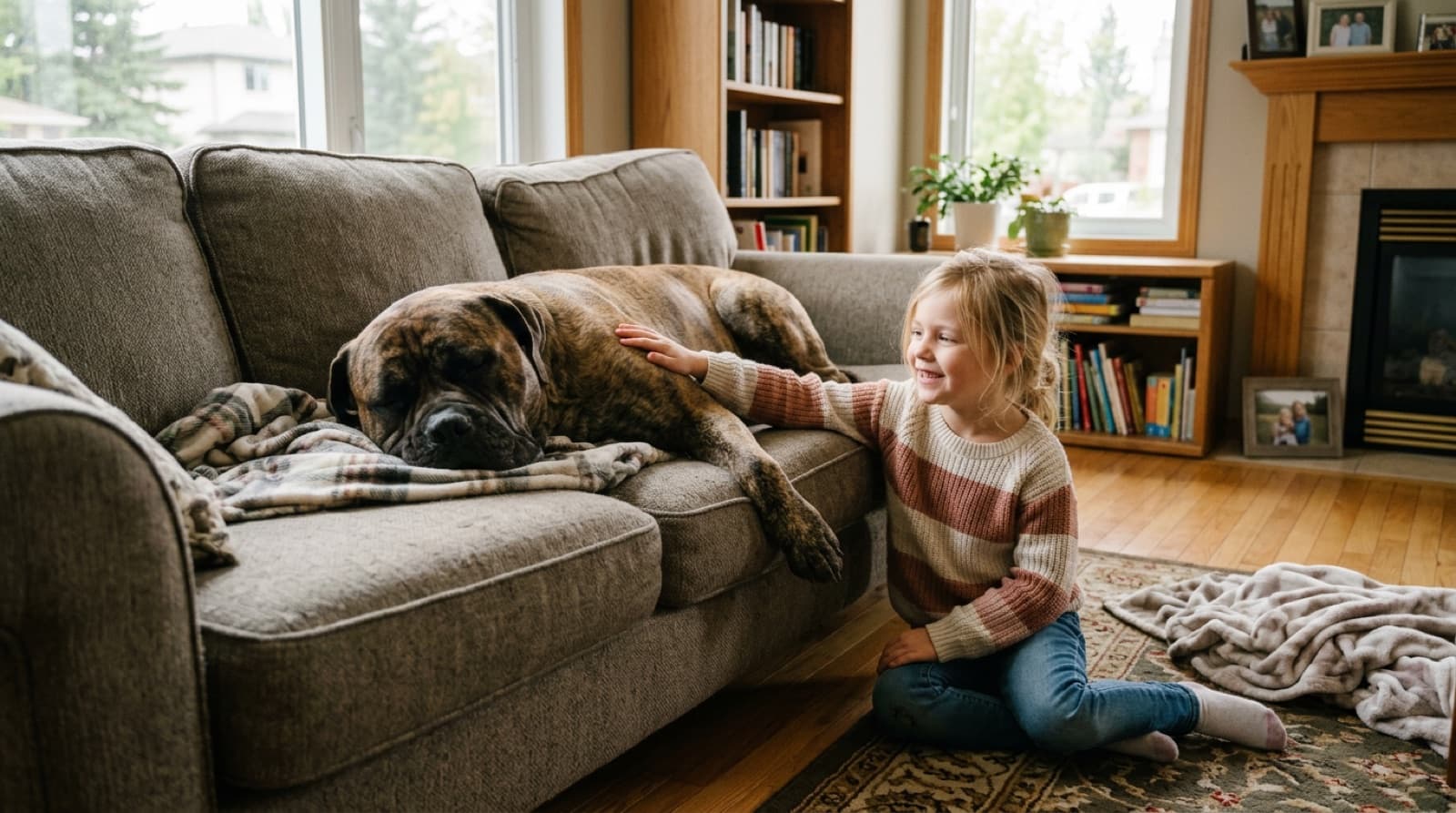
An adult Bullmastiff sleeps most of the day. They wake up for food, walks, visitors, and the occasional important household event (UPS delivery, the cat doing something interesting, dinner being prepared). Otherwise they're on a dog bed or, more often, on the couch. The breed has strong opinions about couch privileges.
Walking is 30 to 45 minutes twice a day for most adults. They're not a hiking breed, they're not a running breed, and they'll tell you when they've had enough by sitting down and refusing to continue. Calgary off-leash parks (Bowmont, Edworthy, Sue Higgins) are reasonable for adult Bullmastiffs with good recall, but the breed isn't high-energy enough to need extensive off-leash time.
Stranger reaction is calm and reserved rather than reactive. A well-socialized Bullmastiff at the door is alert and watchful but rarely barks excessively or lunges. They size up the visitor, decide if the visitor is a threat (almost never), and then go back to napping. The breed's natural protectiveness is reserved for situations that genuinely warrant it, which in modern Calgary suburban life is essentially never.
With family, they're physically affectionate without being clingy. They want to be in the same room, often touching or leaning on you, but they don't follow you to the bathroom or panic when you leave the room. They're not a velcro breed in the Doberman or Boxer sense.
Drool is constant. Snoring is loud, especially in older dogs. The breed snores at volumes you can hear from another room. Most Bullmastiff families adapt within a month and stop noticing.
Adolescence (12 to 24 months) is genuinely lighter than Boxer or Rottweiler adolescence. There's some boundary-testing, some recall slipping, some increased counter-curiosity, but it doesn't derail families the way Boxer or GSD adolescence often does. The breed grows up calmer than they spend their adolescence being.
Bullmastiff vs Cane Corso vs Presa Canario vs English Mastiff
The breeds in the broader Mastiff family look superficially similar but have very different temperaments. Calgary trainers and even some general veterinarians lump them together. They shouldn't.
Bullmastiff (100 to 130 lbs). Developed as estate guardians whose job was being present and intimidating without active aggression. Selected over generations for low-drive, calm temperament, family-oriented behaviour, and willingness to work alongside their handler. Calm in the home, alert to strangers, naturally protective without reactivity. The most family-friendly of the working-guardian-type breeds.
Cane Corso (90 to 110 lbs). Italian working guardian, much higher drive than Bullmastiff. Active protection breed. More reactive temperament, higher prey drive, requires experienced handler and structured training program. Excellent dog for the right home. Wrong dog for first-time big-breed owners. The Calgary trainers who warn families away from “big guardian breeds” are usually thinking of this one.
Presa Canario (85 to 130 lbs). Canary Islands working dog, higher drive than Cane Corso, banned in some jurisdictions due to bite-incident history. Genuinely difficult dog requiring significant breed experience and ongoing training. Not suitable for most family pet situations. Calgary BSL-free but some rental insurance carriers exclude.
English Mastiff (130 to 220+ lbs). Calmer than Bullmastiff, even lower drive, almost couch-only as adults. Larger size brings earlier orthopedic issues. Lifespan 6 to 10 years (often shorter than Bullmastiff). Excellent family dog but the size makes Calgary apartment living impractical for most.
Neapolitan Mastiff (110 to 200 lbs). Heavy guardian breed, more wary of strangers than Bullmastiff or English Mastiff, requires careful socialization. Health issues stack heavy (cherry eye, hip dysplasia, cardiomyopathy, short lifespan). Niche breed, not a typical first-time recommendation.
Tibetan Mastiff (90 to 160 lbs). Independent guardian breed, very different temperament from Bullmastiff. Bred for solo livestock guardian work, less biddable, more independent decision-making. Requires experienced handler.
The point: when a Calgary trainer gives you a generic “big guardian breeds are dangerous” warning, they're usually thinking of Cane Corso, Presa Canario, or working-line guardian breeds. None of those describe the Bullmastiff temperament. Confirm what breed your trainer is actually thinking about before you weigh their advice.
How to vet a Calgary trainer who knows the breed
The fastest way to find out if a Calgary trainer knows Bullmastiffs is to ask them direct questions before you book a session. Three questions, in order:
1. How many Bullmastiffs have you trained? If the answer is “I haven’t worked with the breed specifically but I work with other large breeds,” that's an honest answer and worth taking seriously. Move on or specifically ask about Mastiff-family experience. If the answer is “I’ve worked with Cane Corso, Presa Canario, and Bullmastiff and they’re all similar,” walk away. The trainer is conflating breeds with very different temperaments.
2. What's your methodology for low-drive guardian breeds vs working guardian breeds? A trainer who knows the breed family will distinguish between them naturally. They'll talk about drive level, reactivity profile, and the different training approaches each calls for. A trainer who can't distinguish doesn't know the breed family well enough to advise you.
3. What's your stance on aversive collars (prong, e-collar) for guardian breeds? The right answer is “I don’t use them.” Force-free, positive reinforcement only, or LIMA (Least Intrusive, Minimally Aversive) are the methodologies that work for guardian breeds. Aversive corrections elevate aggression and bite risk in guardian-type dogs, which is the opposite of what families with these breeds want.
The Calgary force-free trainers most consistently recommended for Bullmastiff and Mastiff-family work include ImPAWSible Possible (family-focused, fear-free certified), Dogma Training, Sit Happens, Raising Fido (reactive specialty), and Kindly K9. $80 to $150 per private session is the standard rate. Group classes run $200 to $400 for a multi-session program. CCPDT, KPA (Karen Pryor Academy), IAABC, and Fear Free certifications are the credentials worth looking for.
If you can't find a Calgary trainer with breed-specific experience, lean on Bullmastiff Rescue Inc. (bullmastiffrescuers.net) and the CKC Bullmastiff Fanciers of Canada for trainer recommendations. Both communities maintain informal lists of breed-experienced trainers across North America and can point you toward someone in Alberta or BC.
When a trainer warning is worth taking seriously anyway
Not every trainer warning is breed misunderstanding. Some are legitimate concerns about your specific situation, and those deserve real consideration regardless of which breed you're looking at.
If a trainer says “I’d worry about a 130 lb dog with your toddler given you're also adopting a new dog at the same time,” that’s a specific situation concern, not a breed concern. The same trainer would say the same thing about a Lab or a Golden in the same scenario. Take it seriously.
If a trainer says “your apartment building has a 25 lb weight limit, you can't have any large breed there,” that’s a housing concern, not a breed concern. Verify your building rules in writing before you keep looking.
If a trainer says “your budget for medical care doesn't cover the breed-typical health profile,” that’s honest financial advice. Bullmastiffs have a 30 to 50% lifetime cancer rate and lifetime medical costs of $20,000 to $40,000+. If your budget can't absorb that, the trainer is right to flag it.
If a trainer says “I think you're working too many hours for any large breed to be home alone safely,” that’s a lifestyle concern. Bullmastiffs handle 4 to 6 hours alone fine. Nine-plus hours alone every day is hard on the breed (and most breeds).
Distinguish breed misunderstanding from situation concerns. The first is wrong and worth pushing back on. The second is honest and worth taking seriously.
Bottom line on the reputation gap
The Bullmastiff reputation in Calgary is mostly inaccurate. The breed reads as dangerous to people who don't know it, and gets confused with higher-drive guardian breeds by trainers who haven't worked with the broader Mastiff family. The actual breed temperament is calm, low-drive, family-oriented, and significantly easier than the working guardian breeds the warnings actually apply to.
The genuine Bullmastiff challenges (size, drool, lifespan, medical costs) are predictable lifestyle and financial considerations, not aggression or temperament risk. Calgary families willing to do the financial preparation and the breed homework usually end up with a calm devoted dog who looks intimidating to strangers and acts like a 130 lb couch ornament at home.
If your Calgary trainer warned you off the breed, verify their actual breed knowledge before you let it change your decision. Ask the three questions above. If they don't know Bullmastiff temperament specifically, find a trainer who does, lean on Bullmastiff Rescue Inc. for recommendations, and trust the breed-experienced community over a generalist trainer's pattern-matched warning.
Browse adoptable Bullmastiffs in Calgary
Calgary rescue Bullmastiff intake is rare, and the breed-specific rescue path through Bullmastiff Rescue Inc. (bullmastiffrescuers.net) runs a longer waitlist. We pull from 13+ Calgary rescues regularly and surface what's available. Foster-to-adopt is the most common path Calgary families use.
See Available Bullmastiffs →Frequently Asked Questions
Are Bullmastiffs aggressive?
No, not as a breed-typical trait. Bullmastiffs are naturally protective and territorial (the original estate-guardian job), but the breed standard calls for steady, family-oriented temperament. Aggression in Bullmastiffs is usually poor breeding, inadequate socialization in the first 16 weeks, or aversive training. None are breed traits.
Why do some Calgary trainers warn families away from Bullmastiffs?
Trainer unfamiliarity. The Calgary trainer pool sees Bullmastiffs once or twice a year. They default to lumping the breed with higher-drive guardian breeds they DO see (Cane Corso, Presa Canario, working-line Mastiffs) and warn accordingly. Those breeds have higher drive. The Bullmastiff doesn't. The fix is finding a trainer who knows the breed family.
How is a Bullmastiff different from a Cane Corso or Presa Canario?
Drive level. Cane Corso and Presa Canario are working guardians bred for active protection. Higher prey drive, defensive drive, more reactive. Bullmastiffs were estate guardians whose job was presence without active aggression. Selected for low-drive calm temperament. Calmer, more tolerant, easier for first-time big-breed owners. Different categories of dog despite the visual similarity.
How is a Bullmastiff different from an English Mastiff?
Size: English Mastiffs 130 to 220+ lbs vs Bullmastiff 100 to 130 lbs. Energy: English Mastiffs even lower energy, almost couch-only. Lifespan: similar 8 to 10 years, English Mastiffs often shorter. Temperament: English Mastiffs more laid-back, Bullmastiffs slightly more alert. Health profile similar with English Mastiffs facing earlier orthopedic issues from larger size.
What does a Bullmastiff actually act like in a real Calgary home?
Calmer than people expect. Sleeps most of the day on the couch. Walks 30 to 45 minutes twice a day. Calm reserved stranger reaction, alert without barking excessively. Physically affectionate without clingy. Drool constant, snoring loud. More dignified house guest than the reputation suggests.
How do I find a Calgary trainer who knows the breed?
Ask three questions: How many Bullmastiffs have you trained? Methodology for low-drive guardian vs working guardian breeds? Stance on prong/e-collar for guardian breeds? The Calgary trainers most recommended for Bullmastiff work: ImPAWSible Possible, Dogma, Sit Happens, Raising Fido, Kindly K9. $80 to $150 per private session.
My Calgary trainer told me not to get a Bullmastiff. Should I listen?
Depends on the reason. “I don’t know the breed well, find a trainer who does” is honest advice. “Bullmastiffs need a strong dominant hand” is outdated dominance theory, find another trainer. Specific situation concerns (toddler at home, apartment weight limit, budget for medical) are legitimate regardless of breed. Distinguish breed misunderstanding from situation concerns.
Can a Bullmastiff actually live with kids and other dogs?
Yes, with the same caveats for any large breed. Temperament fits family life: calm, tolerant, naturally protective without reactivity. The challenge is size, not behaviour. Environmental management (baby gates, supervision, designated dog beds) does most of the work. Other dogs usually fine, opposite-sex pairings safer. Cats fine if socialized early. Small dogs need supervision (size mismatch, not aggression).
How does Bullmastiff temperament hold up in Calgary winters?
Better than people expect. Heavy build helps with cold tolerance. -15°C fine for short walks. Below -20°C, coat for anything beyond potty break. Below -25°C, indoor exercise main option. Low energy actually helps (content with shorter walks). Salt and ice melt hard on pads. Chinooks sometimes affect older dogs with arthritis or cardiac issues.
Bottom line: is the Bullmastiff reputation accurate?
Mostly not. The reputation paints the breed as dangerous and risky. The reality is calm, low-drive, family-oriented, significantly easier than working guardian breeds it gets confused with. Real challenges (size, drool, lifespan, medical costs) are predictable lifestyle and financial considerations, not aggression risk. Verify your trainer's breed knowledge before letting their warning change your decision.
Adoptable Bullmastiffs in Calgary
Live listings of Bullmastiffs and Bullmastiff mixes from 13+ Calgary rescues.
Bullmastiff as a First Dog
When the breed actually works for first-timers and when it doesn't.
Buy or Adopt a Bullmastiff?
Cost comparison plus rescue scarcity reality plus foster-to-adopt path.
Bullmastiffs with Kids
Knockdown reality, drool around baby, family safety setup.
New dog? Start with these care guides
Everything a new adopter needs to set up a safe, happy home.