The Calgary Corgi apartment + barking reality
Corgi bark is DEEP + LOUD + sustained, disproportionate to 24–38 lb body. Why? Welsh cattle herders bred dogs to project bark across pasture (50–100+ yards). Modern Corgis retain this vocal heritage. Calgary apartment + Corgi = Bylaw 5N2007 (excessive barking) risk. 311 complaint → warning → ticket ($150–$500) → escalating fines + sometimes condo/landlord involvement. Bark collars NOT recommended: especially dangerous for IVDD-prone dwarf breed (collar pressure on spine) and aversive methods elevate aggression in herding breeds. Force-free training + environmental management + adequate exercise + neighbour communication + Calgary apartment-friendly building selection (older + thicker walls + elevator + pet-tolerant) = magnificent apartment Corgi. Many Calgary apartment Corgi success stories, honest assessment + comprehensive commitment essential.
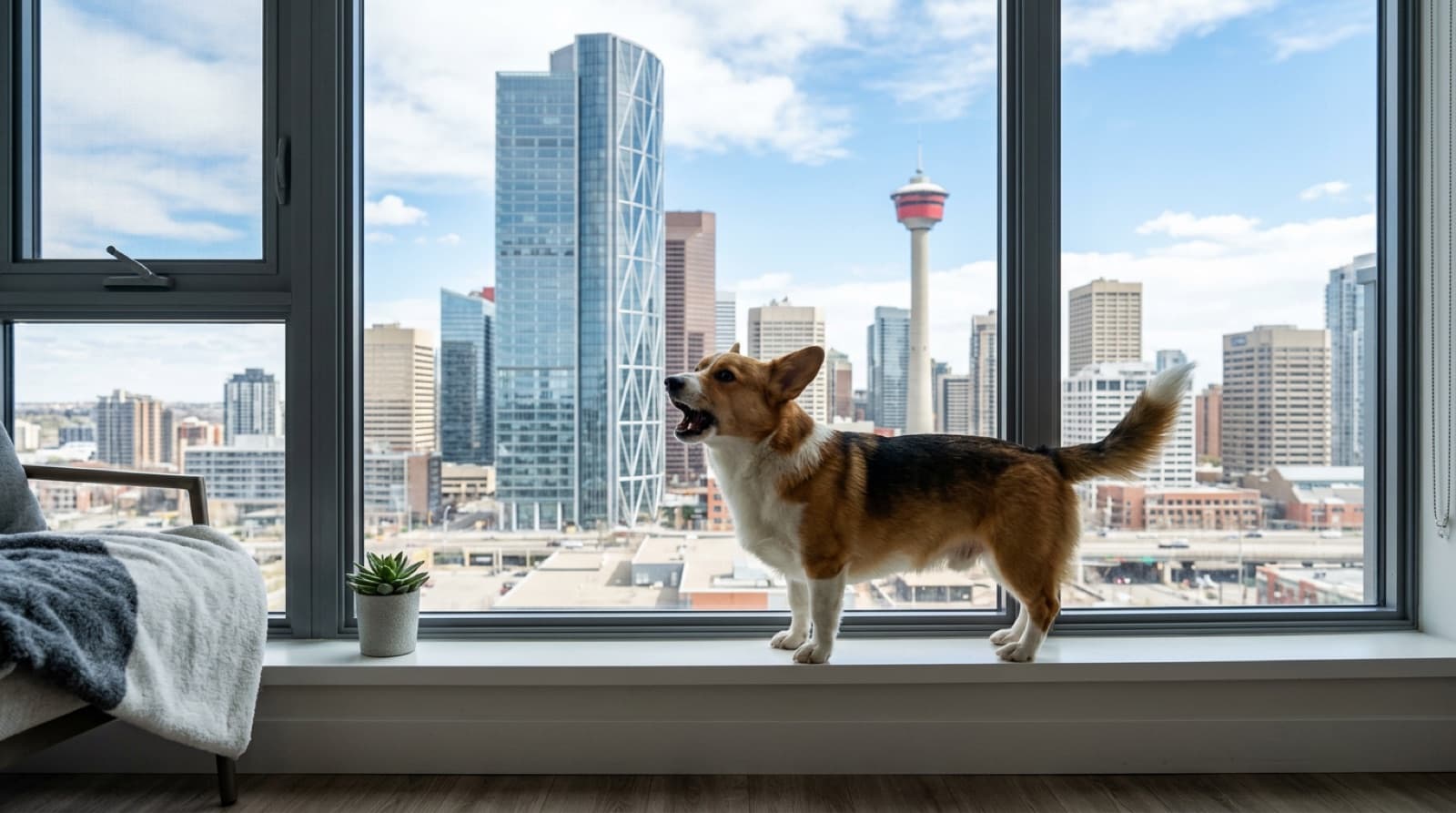
Why Corgis are SO LOUD for a small dog
Corgi bark is DEEP + LOUD + sustained, disproportionate to 24–38 lb body.
Why:
- Herding-bred: Welsh cattle herders needed bark to project across pasture (50–100+ yards)
- Bred for vocal communication, bark intensity + persistence selected for
- Deep chest cavity for body size = resonant bark
- High alert/alarm threshold genetics
- Sometimes interpreted as “small dog syndrome” but actually herding heritage
Corgi bark characteristics: deep tone for body size (sometimes mistaken for larger dog over phone), sustained (doesn't quickly stop), projecting (carries far), persistent (alarm at perceived threats), sometimes high-pitched “yelling” quality.
Calgary owner reality: apartment neighbours hear distinctly. Calgary Bylaw 5N2007 complaints common. Corgis among most-cited apartment-incompatible breeds.
Corgi bark is BREED FEATURE, not training failure (entirely). Management + training reduces but doesn't eliminate.
Calgary Bylaw 5N2007 + neighbour complaint reality
Calgary Bylaw 5N2007 (excessive barking) enforcement is real. 311 complaint triggers process.
Bylaw process:
- 311 complaint triggers bylaw investigation
- Warning issued first
- Repeated complaints = ticket ($150–$500)
- Continued = formal hearing + escalating fines
- Sometimes condo/landlord complaints separate
Neighbour complaint patterns: daytime alert barking (deliveries, neighbours) sometimes tolerated, nighttime barking quickly complaint-worthy, weekend/holiday barking reduced tolerance, sustained barking sessions worst, when-owner-gone barking signature complaint.
Apartment building dynamics: some buildings strict pet policies, condo boards sometimes mediate, landlord can issue notice based on complaints, sometimes eviction proceedings for repeated noise issues.
Proactive neighbour management: meet neighbours BEFORE complaints (introduce Corgi, explain working on training), apology gifts sometimes (cookies, plants), communication about progress, document training efforts.
When complaint received: acknowledge concern, communicate plan, hire force-free trainer, show progress over time.
Worst-case: sometimes apartment relocation needed, sometimes Corgi rehoming if apartment incompatibility severe.
Alarm barking at hallway noises, protocol
Why alarm barking: herding heritage = alert dog instinct, apartment hallway sounds (footsteps, voices, doorbells, deliveries) trigger alarm response, sometimes territorial, overstimulation, boredom, anxiety-driven.
Protocol:
- BLOCK trigger access, window blinds, sound-blocking door seals, white noise machine
- DESENSITIZATION to common triggers, play recordings of trigger sounds quietly + reward calm
- “Quiet” command training, reward silence, not bark-then-silence pattern
- DON'T REWARD with attention (rewards barking)
- DON'T YELL (Corgi interprets as joining bark)
- Enrichment during alone time (food puzzles, frozen Kong, snuffle mats)
- Adequate exercise before owner leaves
- White noise machine
- Calgary daycare 1–2x/week reduces stress
- Force-free trainer for persistent issues
- Pheromone diffusers (Adaptil) sometimes
- Medication sometimes (vet consult)
Apartment-specific tips: neighbour communication, schedule outings during high-barking times, avoid rewarding barking with attention or going outside, window management, background noise (TV/radio) sometimes masks triggers.
Extinction burst: when ignoring + counter-conditioning starts working, barking sometimes increases dramatically before stopping. Stay consistent.
Bark collars NOT safe for Corgis
Bark collars NOT recommended for Corgis specifically.
Why dangerous:
- IVDD-prone dwarf breed: collar pressure on spine particularly risky. Even “humane” vibration collars compress spine
- Herding breed psychology, aversive corrections elevate aggression + reactivity
- Relationship-based breed, aversive damages trust
- Suppressed warnings, sometimes leads to bite without warning
- Sometimes ESCALATES barking (anxiety + frustration)
Types + risks: shock collars (pain-based, NEVER use), vibration collars (less harmful but still aversive), citronella (sometimes ineffective), ultrasonic (sometimes ineffective), harness-mounted devices (still aversive approach).
Long-term consequences: increased anxiety, sometimes increased aggression, damaged relationship, suppressed warnings → unexpected bite, skin irritation under collar, sometimes neck injury.
What to use instead: force-free training (counter-conditioning + desensitization), environmental management, mental + physical enrichment, professional Calgary force-free trainer, sometimes medication (vet consult), sometimes lifestyle changes.
Investment: $200–$1,000 force-free trainer = lifetime appropriate behaviour vs sometimes lifelong reactivity from aversive collar use.
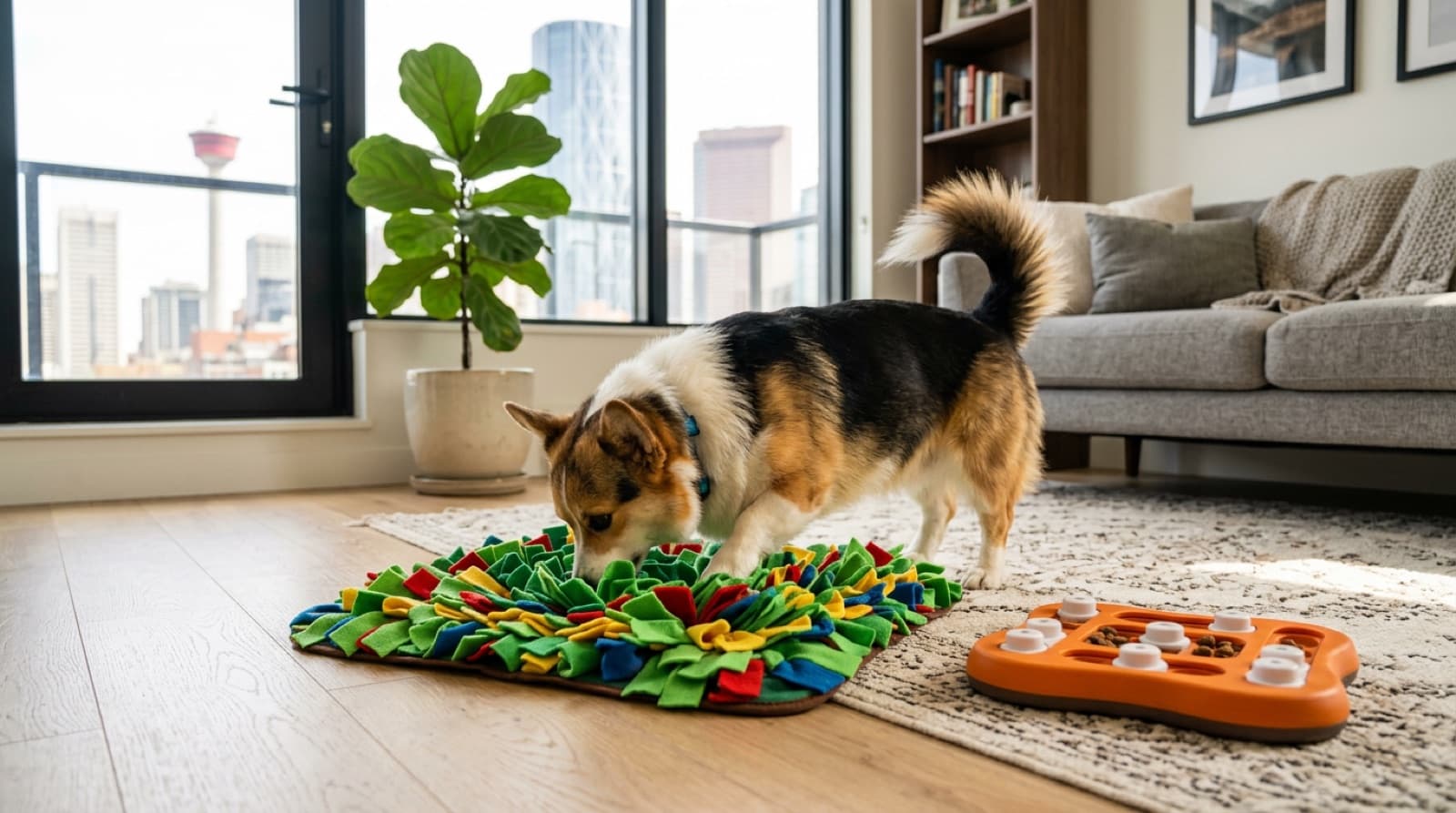
Daily exercise prevents boredom barking
Adult Corgi: 45–60 minutes daily structured exercise + mental enrichment 15–30 min.
Why exercise prevents barking: tired dog less reactive, mental + physical satisfaction reduces frustration, adequate stimulation reduces alarm-triggering, exercise releases endorphins.
Corgi-appropriate exercise:
- Walking, 2–3 walks daily 15–20 min each
- Hiking (controlled, no high jumps for IVDD prevention)
- Fetch on flat surfaces (no high jumps)
- Herding drive outlet activities, treibball, flirt pole, scent work
- Agility (modified, low jumps for IVDD prevention)
- Swimming (excellent low-impact)
- Mental enrichment, food puzzles, snuffle mats, training, scent work
Avoid for IVDD prevention: high jumping (frisbee at height), repetitive jumping, jumping from heights, long stairs, excessive impact.
Indoor exercise during Calgary winter: indoor fetch in long hallways, stair work (controlled), trick training, food puzzles, scent games, Calgary indoor daycare 1–2x/week.
Calgary off-leash parks: Bowmont, Edworthy, Sue Higgins, Fish Creek (designated areas), Calgary suburb residential walks.
Calgary daycare for Corgi exercise: Doggie District, K9 Sports Connection, Tail Blazers, Bow Wow, Calgary Pet Crew, Dogtopia, ImPAWSible Possible. $30–$55/day single visits.
When apartment NOT good for Corgi
Some Corgi + apartment combinations DO NOT work. Honest framework.
When apartment not good:
- Building with strict noise restrictions
- High-foot-traffic building (constant alarm triggers)
- Multiple adjacent neighbours (compounded complaint risk)
- Thin-walled building
- Working owner + 9–5 day + apartment + Corgi (alarm barking unsupervised)
- Apartment without elevator (stairs problematic for IVDD-prone breed)
- Small apartment (under 600 sqft) + Corgi + heavy shedding
When owner not right for apartment Corgi: inflexible work schedule, no commitment to force-free training, tight budget for daycare/walker/training, no tolerance for shedding, allergic family members, frequent travel.
Honest alternative breeds for Calgary apartment with strict noise concerns: Cavalier King Charles Spaniel (calmer, less vocal), Greyhound (surprisingly apartment-friendly, quiet), Bichon Frise (low-shedding, less vocal), Maltese, Yorkshire Terrier (variable barking).
Calgary apartment-friendly success patterns
Successful Calgary Corgi apartment owners: adult adoption (3+ years, calmer), home-based or hybrid work, dedicated daily exercise (45–60+ min outdoor + indoor enrichment), daycare 1–2x/week, force-free trainer relationship, neighbour-friendly communication, building with thicker walls, end-of-hallway or corner unit, elevator access (IVDD prevention).
Calgary apartment-friendly neighbourhoods for Corgi:
- Sunnyside, older buildings, walkable to off-leash (Bow River pathway)
- Bridgeland, older buildings, residential, dog-tolerant
- Inglewood, older + character buildings, sometimes thicker walls
- Beltline, mixed age buildings, downtown convenience
- Sometimes Crescent Heights, Mount Pleasant
Avoid: high-rise + many stairs (IVDD risk), modern downtown towers with strict noise restrictions, buildings with documented past pet complaints.
Investment: daycare $200–$400/month, walker $20–$30/visit, force-free trainer $200–$1,000 first year, pet-friendly apartment premium $50–$150/month.
Calgary condo board approval: verify pet policies BEFORE adoption. Some buildings restrict by breed/size.
Force-free Calgary trainers for barking
Calgary trainers familiar with Corgis + apartment vocalization:
- ImPAWSible Possible Calgary, fear-free certified
- Dogma Training Calgary, positive reinforcement specialist
- Sit Happens Calgary, multiple locations
- Raising Fido Calgary, reactive/anxiety specialty
- Calgary K-9, verify methods
- Kindly K9 Calgary, boutique behavioural support
Certifications: CCPDT, KPA, IAABC, Fear Free Certified, PMCT.
Investment: $80–$150/private session. Multi-session program $300–$1,000. Veterinary behaviourist (Dr. Karen van Haaften DVM Vancouver telehealth) $300–$500/session for severe cases.
Red flags: recommends bark collar (especially for IVDD-prone Corgi), promises rapid results, punishment-based methods, doesn't consider apartment-specific factors, no herding breed experience.
Frequently Asked Questions
Why are Corgis so loud for a small dog?
Herding-bred to project bark across pasture (50–100+ yards). Deep chest cavity = resonant bark. Sustained alarm response. NOT “small dog syndrome.” BREED FEATURE. Calgary apartment neighbours hear distinctly. Bark intensity disproportionate to body size.
Can a Corgi live in apartment without disturbing neighbours?
Possible with comprehensive commitment. Adult Corgi + force-free training + adequate exercise + daycare + neighbour communication + Calgary apartment-friendly building (older + thicker walls + elevator + pet-tolerant). Calgary neighbourhoods: Sunnyside, Bridgeland, Inglewood, Beltline.
Calgary Bylaw 5N2007 reality?
Excessive barking enforcement. 311 complaint → investigation → warning → ticket ($150–$500) → escalating fines. Sometimes condo/landlord involvement. Daytime alert barking sometimes tolerated, nighttime quickly complaint-worthy. Proactive neighbour management essential.
How to stop alarm barking at hallway noises?
Block triggers (window blinds, white noise), desensitization (recordings + reward calm), “quiet” command training, don't reward with attention/yelling, enrichment during alone time, adequate exercise, Calgary daycare, force-free trainer, sometimes medication. Extinction burst expected.
Are bark collars safe for Corgis?
NO. Especially dangerous for IVDD-prone dwarf breed (collar pressure on spine). Aversive elevates aggression in herding breeds. Damages relationship. Sometimes escalates barking. Long-term: increased anxiety + suppressed warnings → unexpected bite. Use force-free training instead.
How much exercise prevents boredom barking?
45–60 min daily structured exercise + 15–30 min mental enrichment. Walking + hiking (controlled) + herding drive outlets (treibball, flirt pole, scent work) + swimming + mental enrichment. AVOID high jumping/stairs/excessive impact (IVDD prevention). Calgary daycare 1–2x/week sometimes valuable.
When apartment NOT good for Corgi?
Strict noise restrictions, high-foot-traffic, multiple adjacent neighbours, thin walls, working owner + 9–5 + minimal daycare, no elevator (IVDD risk), under 600 sqft. Alternative breeds: Cavalier King Charles, Greyhound, Bichon Frise, Maltese, Yorkshire Terrier.
Calgary apartment-friendly success patterns?
Adult Corgi + Calgary apartment-friendly building (Sunnyside/Bridgeland/Inglewood/Beltline) + thicker walls + elevator + pet-tolerant + daily exercise + daycare 1–2x/week + force-free training + neighbour communication. Investment $3,500–$7,000/year apartment Corgi.
Calgary force-free trainers for barking?
ImPAWSible Possible, Dogma, Sit Happens, Raising Fido (reactive/anxiety specialty), Kindly K9. $80–$150/private session, $300–$1,000 multi-session programs. Veterinary behaviourist (Dr. Karen van Haaften DVM Vancouver telehealth) $300–$500/session severe cases.
Bottom line: Calgary Corgi apartment + barking?
SUCCESSFUL IF: adult Corgi, force-free training, Calgary apartment-friendly building, adequate exercise + enrichment, hybrid/home-based work or daycare, neighbour communication, IVDD prevention. WRONG IF: bark collar reliance (IVDD-prone breed danger), strict noise building + working owner + minimal daycare. Honest assessment essential.
Adoptable Corgis in Calgary
Live listings of Pembroke + Cardigan Welsh Corgis from 13+ Calgary rescues.
Corgi Training
Stubbornness reframe, force-free methods, herding drive redirect.
Corgi Shedding + Grooming
Coat blow + NEVER shave + brush kit + bath frequency.
Corgi Back + Spine Health
IVDD prevention, relevant for apartment dogs (no jumping, ramps, elevator vs stairs).
New dog? Start with these care guides
Everything a new adopter needs to set up a safe, happy home.