The Corgi training reframe Calgary owners need
Corgis aren't stubborn. They're HERDING DOGS bred to make independent decisions. Welsh cattle herders worked at distance from handler (50–100 yards), constantly assessing cattle movement + making decisions WITHOUT direct human direction. When a Corgi “doesn't listen,” it's usually evaluating whether the command is worth doing or competing interest is more important. NOT defiance. Force-free training honors this temperament. Aversive/alpha training fails on Corgis and creates the exact “stubborn aggressive” outcome owners then rehome. Many Calgary Corgis adoption-failed at “balanced trainers” thrive with force-free approach + herding drive outlets (treibball, flirt pole, scent work). Decision-maker temperament + force-free methodology + short sessions + high-value rewards + redirected herding drive = magnificent adult Corgi.
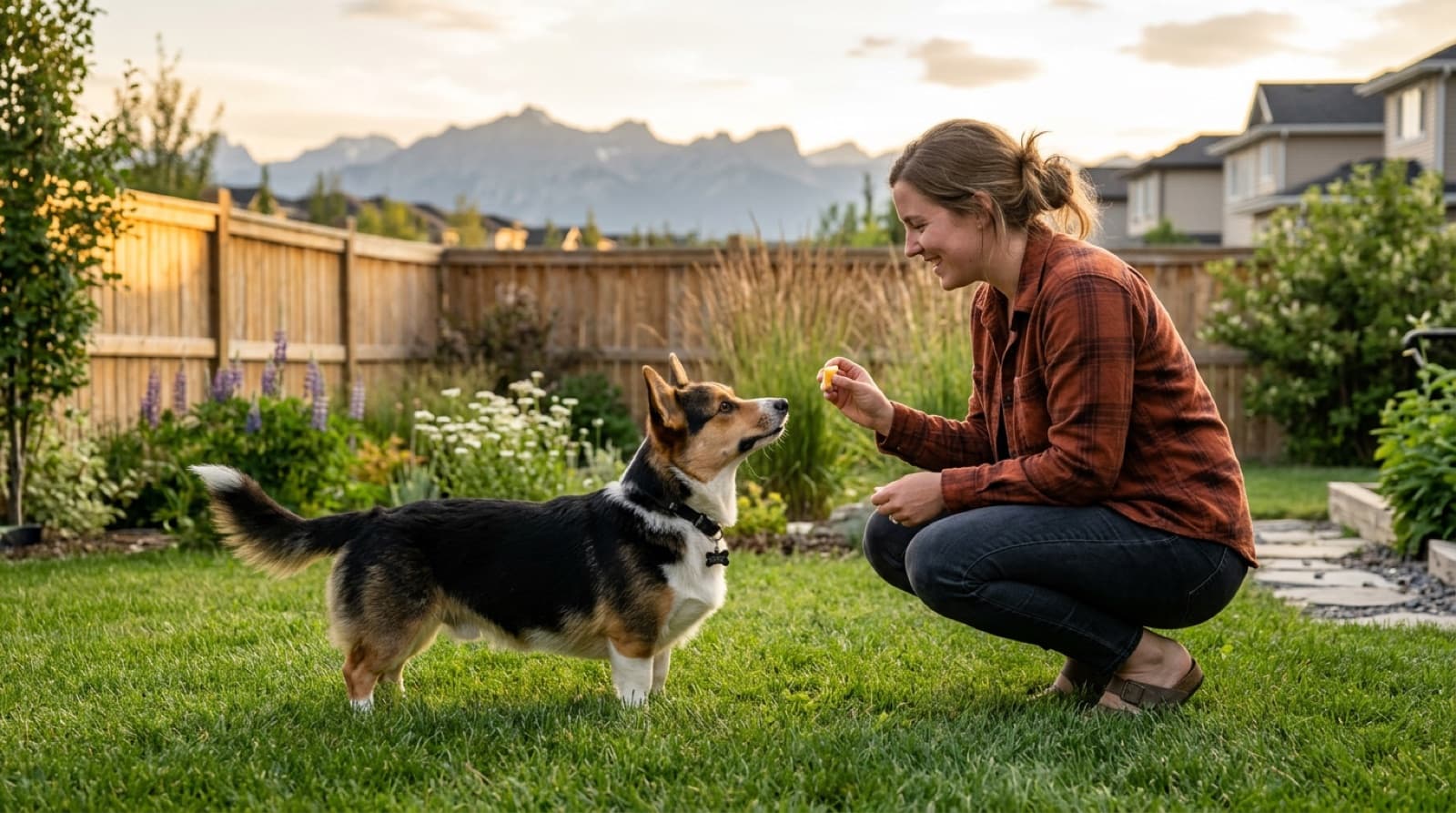
Stubborn → Herding-Bred Decision-Maker reframe
Corgis were bred to herd cattle in Wales: working 50–100 yards from handler, making constant decisions about cattle movement WITHOUT direct human direction.
When a Corgi “doesn't do” what you ask:
- Reward not motivating enough
- Instruction not clear
- Dog sees better option
- Competing interest more important
- Physical/emotional/medical limitation
NOT defiance. NOT dominance.
What this means for training: high-value rewards essential (chicken, hot dogs, freeze-dried liver, kibble alone usually insufficient), make training worth it (Corgi calculates effort vs reward), clear communication, relationship building, patience for processing time, family consistency.
Why aversive/alpha training fails on Corgis
The “balanced trainer” / dominance industry preys on Corgi owners with quick-fix promises. Reality: aversive methods elevate aggression in herding breeds.
- Herding breed psychology: Corgis bred for cooperative work with handler. Aversive correction breaks cooperative relationship
- Relationship-based: Corgis work best with trusted partners
- Suppressed warnings: aversive corrections suppress growling (warning before bite). Suppressed Corgi sometimes bites without warning
- Research evidence, multiple studies show aversive methods INCREASE aggression in herding breeds
- Dominance theory discredited, modern animal behaviour science: dogs cooperative, not competitive with humans
What balanced/dominance trainers do: prong collars, e-collars (shock), choke chains, alpha rolls, leash corrections, “pack leader” rhetoric.
Long-term consequences: increased reactivity, suppressed warnings → unexpected bite, damaged relationship, anxiety + depression.
Calgary force-free trainers: ImPAWSible Possible, Dogma Training, Sit Happens, Raising Fido, Calgary K-9 (verify methods), Kindly K9.
Adolescent regression 6–18 months
Corgi adolescence: typically 6–18 months. Mental maturity 18–24 months.
Phase breakdown:
- Onset 6–9 months: sexual maturity hormones, training slips subtly
- Peak chaos 8–14 months: recall fails, boundary testing, selective hearing, sometimes increased reactivity
- Gradual settling 14–18 months: consistent owners see training re-integration
- Mental maturity 18–24 months
Calgary rescue intake peak: 8–18 months Corgi adolescence. Owners give up assuming dog is “broken.” Reality: months from settling.
Force-free training + management + patience = adolescent Corgi → magnificent adult.
Herding nipping at kids, redirect protocols
Why Corgis nip running kids: herding instinct (bred to nip cattle heels for movement control), running children trigger same response, NOT aggression, instinct.
Protocol:
- STOP THE RUNNING, don't allow kids running/screaming around Corgi during over-arousal
- Manage environment, baby gates separate Corgi during high-energy kid time
- “Place” command, Corgi to bed during chaotic kid play
- Impulse control training
- Adequate exercise 45–60 min daily + mental enrichment
- Herding drive outlet: treibball, flirt pole, scent work
- Calgary force-free trainer for individualized protocol
- NEVER aversive corrections
- Teach kids “be a tree”, stand still if Corgi approaches running
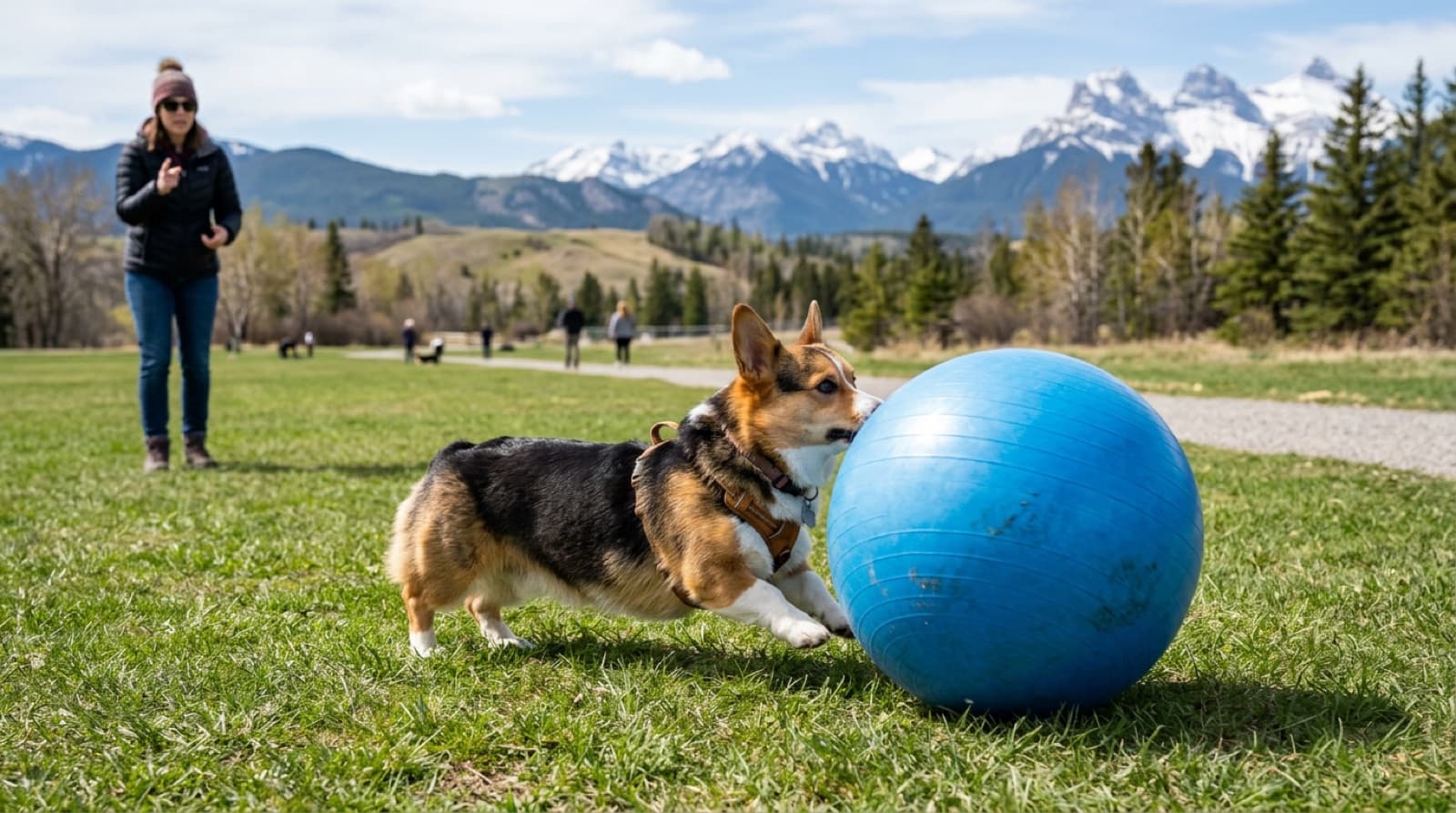
Herding drive redirect, treibball, flirt pole, scent work
Redirected herding drive = magnificent adult Corgi. Suppressed/ignored herding drive = redirected to inappropriate targets (kids, joggers, vacuum cords).
Appropriate outlets:
- Treibball: “urban herding” sport using exercise balls. Corgi “herds” balls into goal. Calgary classes through force-free trainers
- Flirt pole: cat-toy-style dog toy (lure on stick + line). Mimics prey movement. Burns Corgi energy quickly. $30–$60
- Scent work: nose work classes (Calgary: Cypress K9 Detection). Mental enrichment exceeds physical. $150–$300/8 weeks
- Agility (modified for IVDD, avoid high jumps), Calgary indoor + outdoor classes
- Herding trials (some Calgary herding clubs accept Corgis)
- Fetch games (controlled, no high jumps)
- Tug-of-war (channels prey drive)
- Puzzle toys + snuffle mats $20–$60
- Trick training (Corgis love showing off)
Investment: $150–$500/year in herding outlet activities = magnificent well-balanced adult Corgi.
Short training sessions (5–15 min)
Why short for Corgis: moderate attention span, cognitive load (mental work tires more than physical), motivation (long sessions burn through reward + interest), decision-making temperament.
Recommended structure:
- 5–15 minutes typically (max 20)
- 2–3 sessions daily ideal vs single long
- End while interested, leave dog wanting more
- Multiple commands per session
- High rate of reinforcement
Failed approaches: repetitive drilling (Corgi finds boring + loses interest), long sessions (frustration), aversive corrections when frustrated.
Indoor training during Calgary extreme weather: living room basics, hallway recall, place command, trick training, Calgary nose work classes.
Calgary force-free trainers
Calgary trainers familiar with Corgis / herding breeds:
- ImPAWSible Possible Calgary, fear-free certified, family-focused
- Dogma Training Calgary, positive reinforcement specialist
- Sit Happens Calgary, multiple locations
- Raising Fido Calgary, reactive/anxiety specialty
- Calgary K-9, verify current methods
- Kindly K9 Calgary, boutique behavioural support
Certifications: CCPDT, KPA, IAABC, Fear Free Certified, PMCT.
Red flags: recommends prong/e-collar/choke chain, “alpha”/“dominance” approaches, promises rapid behaviour change, physical corrections (alpha rolls), ignores growls.
Investment: $80–$150/private session, $200–$400/group class. $200–$1,000 first year = lifetime well-behaved adult.
Frequently Asked Questions
Why does my Corgi suddenly stop listening at 6–12 months?
Classic adolescent regression. Brain rewiring + hormones + boundary testing + herding-bred independence emerging. NOT failure. Maintain consistency, high-value rewards, short sessions, mental enrichment, force-free trainer. Mental maturity 18–24 months Corgis. Calgary rescue intake peak this age.
Are Corgis stubborn or herding-bred to think independently?
Herding-bred decision-makers. Welsh cattle herders worked 50–100 yards from handler making constant independent decisions. NOT defiance, NOT dominance. High-value rewards essential, clear communication, relationship-first, patience for processing.
Should I use alpha/dominance training?
NO. Aversive methods elevate aggression in herding breeds. Suppresses growl warnings → bite without warning later. Damages cooperative relationship. Calgary force-free: ImPAWSible Possible, Dogma, Sit Happens, Raising Fido, Kindly K9. CCPDT/KPA/IAABC/Fear Free certifications.
How to stop nipping kids' ankles?
Stop the running, manage environment (baby gates), “place” command, impulse control training, adequate exercise (45–60 min), HERDING DRIVE OUTLET (treibball, flirt pole, scent work), Calgary force-free trainer. Teach kids “be a tree” (stand still). NEVER aversive corrections.
Best herding drive redirect?
Treibball (“urban herding” with exercise balls), flirt pole ($30–$60), scent work (Calgary nose work classes Cypress K9 Detection $150–$300/8 weeks), modified agility (no high jumps for IVDD), herding trials, fetch games, puzzle toys, trick training. Investment $150–$500/year = magnificent balanced adult.
Calgary force-free trainers?
ImPAWSible Possible, Dogma Training, Sit Happens, Raising Fido, Calgary K-9 (verify), Kindly K9. $80–$150/private session, $200–$400/group class. CCPDT/KPA/IAABC/Fear Free certifications. Avoid prong/e-collar/choke chain trainers.
Adolescent regression management?
6–18 months. Onset 6–9 mo, peak chaos 8–14 mo, settling 14–18 mo. Maintain consistency + high-value rewards + manage environment + impulse control + short sessions + mental enrichment + force-free trainer + patience. Calgary rescue intake peak this age.
Puppy biting + mouthing?
Herding breed mouth use + teething + play + adolescent regression. END PLAY when teeth touch skin. Don't play rough. Redirect to toys. Tug-of-war (let Corgi win sometimes). NEVER hand corrections. Tired Corgi less mouthy. Most resolve 18–24 months. Adult-onset (3+) = behavioural consult.
Training session length + frequency?
5–15 minutes. Max 20. 2–3 sessions daily. End while interested. Multiple commands per session. High rate of reinforcement. Calgary indoor training during extreme weather. Short + high-value + consistent + relationship-focused + force-free.
Bottom line: Calgary Corgi training?
SUCCESSFUL IF: reframe stubbornness as herding-bred independence, force-free LIMA methodology, short sessions (5–15 min), high-value rewards, real-world functional training, herding drive redirect (treibball/flirt pole/scent work), Calgary force-free trainer, family-inclusive. WRONG IF: aversive corrections, alpha/dominance, punishing growls, suppressing herding drive instead of redirecting.
Adoptable Corgis in Calgary
Live listings of Pembroke + Cardigan Welsh Corgis from 13+ Calgary rescues.
Corgi Shedding + Grooming
Coat blow 2–4 weeks 2x/year, NEVER shave warning, brush kit, bath frequency.
Corgi Barking + Apartment
Herding-bred bark to project across pasture. Calgary Bylaw 5N2007. Apartment management.
Corgi Back + Spine Health
IVDD prevention, relevant for training (no high jumping in agility, modified equipment).
New dog? Start with these care guides
Everything a new adopter needs to set up a safe, happy home.