The short answer
Dachshunds appear in Calgary rescues regularly. Best Calgary rescues: CHS, AARCS, BARCS, Pawsitive Match. Adoption fee: $300 to $700 vs $1,500 to $3,000+ from a breeder. “Alberta Dachshund Rescue” is a real, CRA-registered Alberta rescue (based in Spruce Grove, serving Calgary adopters provincially). “Range Road Dachshunds” is a breeder, not a rescue. “Teacup Dachshund” is NOT a real breed and is a red flag for unethical breeding. Standard (16 to 32 lbs) vs Miniature (8 to 11 lbs) are both real. Dapple-to-dapple breeding is unethical because it produces deaf/blind puppies. Three coat varieties: Smooth (most common), Longhaired (calmer), Wirehaired (terrier-like). Pet insurance is essential. Dachshunds have the highest IVDD rate of any breed (~25% lifetime, $5K to $15K Calgary surgery).
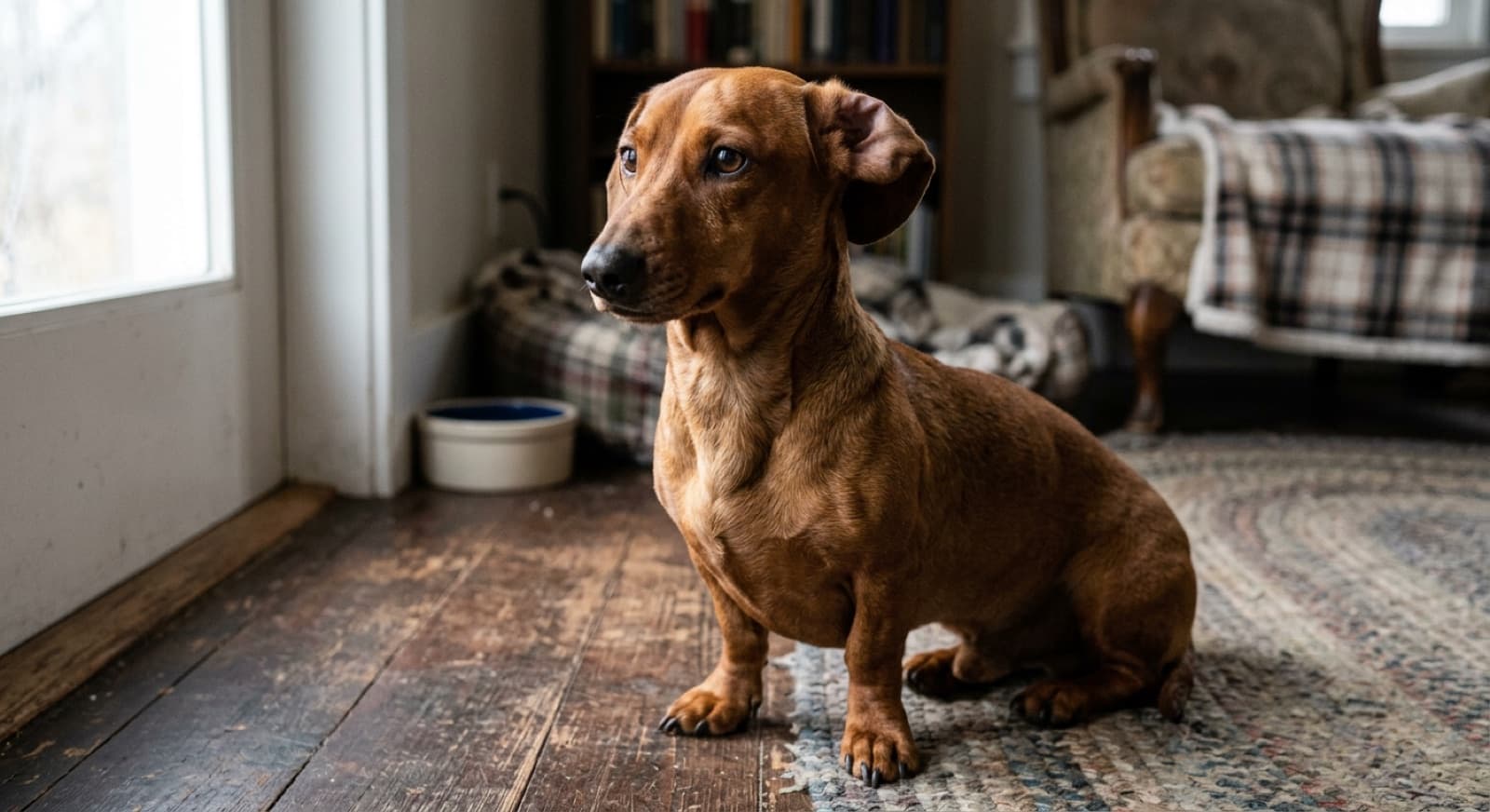
Where can I adopt a Dachshund in Calgary?
Dachshunds appear in Calgary rescues regularly. Best places to check: Calgary Humane Society, AARCS, BARCS, Pawsitive Match, Calgary Animal Rescue. Browse all currently available Calgary Dachshunds and Doxie mixes (Smooth, Longhaired, Wirehaired, Mini, Standard, Doxie crosses) across 15+ Calgary rescues at LocalPetFinder's Dachshund breed page. Listings update regularly.
Dachshunds appear across all Calgary neighbourhoods including Signal Hill, McKenzie Towne, Beltline, and Kensington. Most surrendered Dachshunds are 2 to 8 year old adults. Puppies are rare.
The most common Calgary Dachshund surrender reasons: IVDD or back injury (medical cost overwhelm), elderly owner downsizing or passing, “puppy was a gift” mismatches, lifestyle changes, and behavioural issues from poor socialization.
Is “Alberta Dachshund Rescue” a real organization?
Adopters frequently search “Alberta Dachshund Rescue.” Yes, it is real: Alberta Dachshund Rescue (ADR) is a CRA-registered charity (registered since 2013) based in Spruce Grove, near Edmonton, that rescues and rehomes Dachshunds across Alberta. It is volunteer-run with no Calgary office, so Calgary adopters are served provincially. Check its current adoptable dogs and adoption process on the ADR website before applying.
Verify any rescue you find by name through:
- Canada Revenue Agency charitable registry
- Physical address in Alberta
- Public-facing vet references
- Recent adoptable dog listings
Dachshund Rescue of North America (US-based) and Canadian Dachshund Rescue (Ontario) run volunteer pipelines that occasionally place dogs in Alberta. Verify each through the same checklist.
For most Calgary Dachshund adopters, monitoring the major general rescues (CHS, AARCS, BARCS, Pawsitive Match) is the best path. The Dachshund Club of Canada provides breed information but does not directly rescue.
What is Range Road Dachshunds?
Range Road Dachshunds is a Dachshund breeder, not a rescue, based in Western Canada. Searches for “Range Road Dachshunds Canada” or “Range Road Dachshund breeders” suggest adopters may be confused about the difference between breeders and rescues.
If you are looking to adopt (not buy), Range Road Dachshunds is not the path. They breed and sell puppies. For adoption, monitor the established Calgary rescues (CHS, AARCS, BARCS, Pawsitive Match).
If you are considering buying from any Dachshund breeder, verify they perform health testing on parents. Look for eye CERF, IVDD spinal screening if available, patella OFA, and colour genetics testing for dapple-to-dapple breeding avoidance.
Most Dachshund breeders in Alberta and BC produce ethically-bred puppies, but verify carefully. Backyard breeders and puppy mills are also common in the breed. Range Road Dachshunds and other Western Canadian Dachshund breeders typically charge $1,500 to $3,000+ per puppy.
How much does it cost to adopt a Dachshund in Calgary?
Calgary Dachshund adoption fees range $300 to $700. CHS: $135 to $400. AARCS, BARCS, Pawsitive Match: $400 to $700. Calgary Animal Services: $225 + GST. Senior Dachshunds (8+ years): $200 to $350. Buying from a breeder runs $1,500 to $3,000 for pet quality, $3,500 to $6,000+ for show lines or “rare” colours and sizes.
Annual care costs: $1,500 to $3,000 per year. Pet insurance is strongly recommended because Dachshunds have the highest IVDD rate of any breed (~25% lifetime). A single surgery costs $5,000 to $15,000 in Calgary.
Calgary insurance runs $35 to $70 per month for a young healthy Dachshund. Verify the policy covers IVDD specifically. Some Canadian insurers exclude IVDD or classify it as orthopedic.
| Source | Dachshund Fee | What's Included |
|---|---|---|
| Calgary Humane Society | $135 to $400 | Spay/neuter, vaccines, microchip, vet check |
| AARCS / BARCS / Pawsitive Match | $400 to $700 | Spay/neuter, vaccines, microchip, foster history |
| Calgary Animal Services | $225 + GST | Spay/neuter, vaccines, microchip, City licence |
| Senior Dachshund (8+ years) | $200 to $350 | Same as above with reduced fee |
| Pet quality breeder | $1,500 to $3,000 | Initial vaccines only |
| Show line / “rare” colour | $3,500 to $6,000+ | Verify health testing, often unethical |
Are there free Dachshunds for adoption in Calgary?
Almost never legitimately. “Free Dachshund” listings on Kijiji, Craigslist, or Facebook Marketplace are typically:
- Backyard breeders using “free” framing as bait-and-switch
- Owners trying to bypass rescue surrender fees by giving the dog away
- Outright scams demanding “shipping fees” or “vet release fees” for non-existent dogs
- Sick or unsocialized puppies dumped by breeders
Real Dachshund adoption is never free. Dachshunds are particularly risky to adopt informally because IVDD history is critical to know. A Dachshund that has had a back episode is at high risk of recurrence.
If a “free” Dachshund has had any back issues, the new owner inherits potentially $5,000 to $15,000 in future surgical costs without warning.
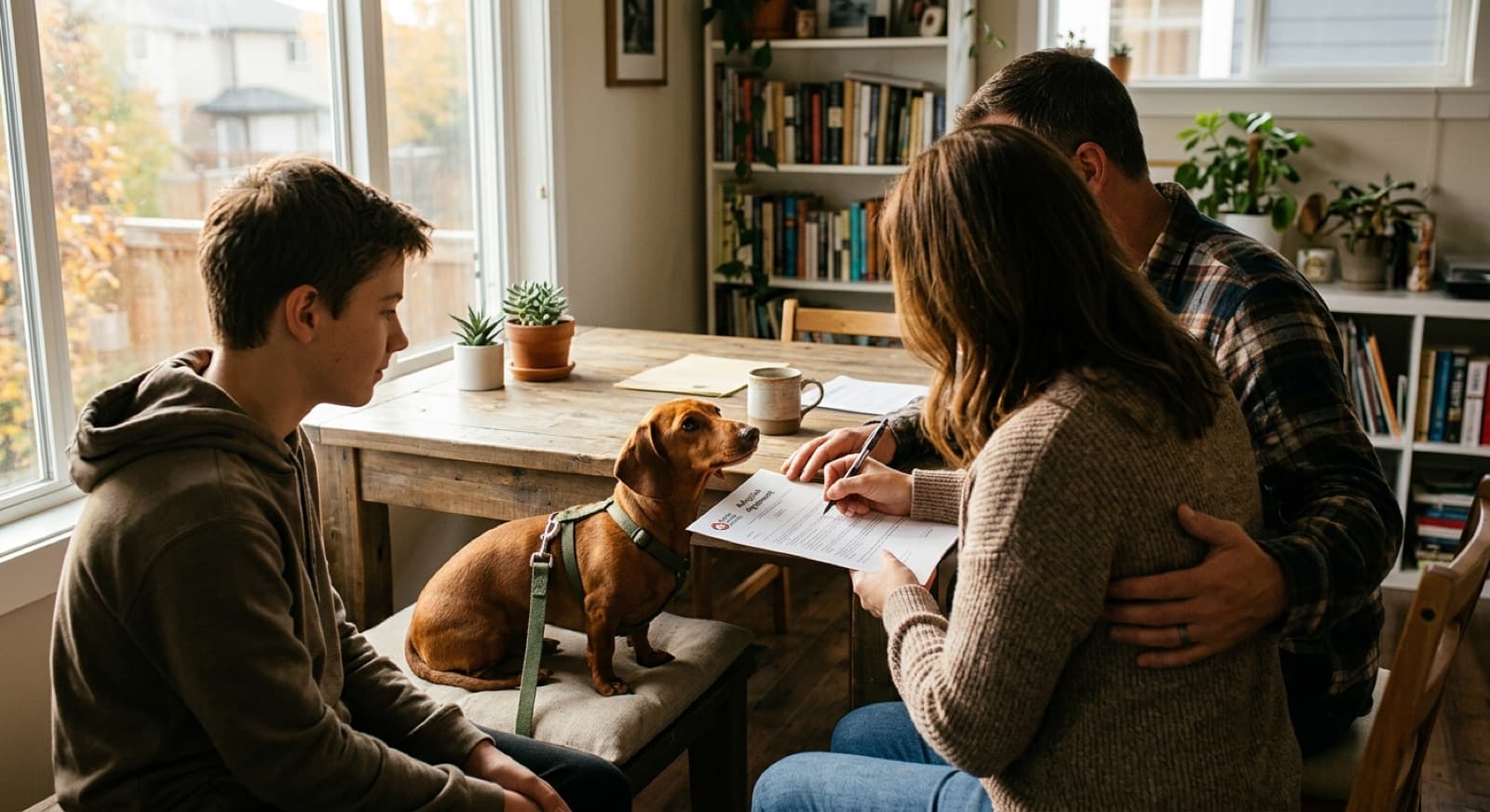
Should I look at “Dachshund puppies for sale Calgary” instead of adoption?
Adoption is the better path for most Calgary households. Dachshunds in particular benefit from adult adoption because IVDD is so common. Adopting an adult means you can verify back health on X-rays before committing.
If you do buy from a breeder, only choose breeders who:
- Eye CERF + patella OFA + colour genetics testing on BOTH parents
- Allow home visits and meeting both parents
- Take dogs back at any age
- Never sell through pet stores or Kijiji
- Never breed dapple-to-dapple (produces deaf/blind double-dapple puppies)
- Require contracts with spay/neuter clauses
- Have a waitlist
“Dachshund breeders Alberta” search results include many backyard breeders without health testing. Verify carefully.
What are “Mini” and “Teacup” Dachshunds, and are they real breeds?
Miniature Dachshunds are real and recognized. Teacup Dachshunds are NOT. The Canadian Kennel Club recognizes two Dachshund size classes: Standard Dachshund (16 to 32 lbs adult) and Miniature Dachshund (8 to 11 lbs adult, sometimes called “Mini Doxie”).
There is NO official “Teacup” or “Toy” Dachshund classification. Dogs marketed as “Teacup Dachshunds” are typically:
- The smallest end of the Miniature standard naturally
- Underbred runts from unethical breeders (severe health risks)
- Puppies sold before adult weight is established
Marketed Teacup Dachshunds often have serious health problems: hypoglycemia, fragile bones, dental issues, organ underdevelopment, and shortened lifespan. Backyard breeders charge $3,000 to $6,000+ for “Teacup” labeling.
Adopt a small adult Miniature Dachshund from a Calgary rescue if size is your priority. Same end result without the health gamble.
What is the difference between Standard and Miniature Dachshunds?
Two recognized size classes within the same breed:
| Trait | Standard Dachshund | Miniature Dachshund |
|---|---|---|
| Adult weight | 16 to 32 lbs | 8 to 11 lbs |
| Height at shoulder | 8 to 9 inches | 5 to 6 inches |
| Calgary rescue prevalence | More common | Less common |
| Apartment fit | May exceed weight limits | Fits all Calgary apartments |
| IVDD risk | High (slightly higher per body weight) | High (same genetic predisposition) |
| Lifespan | 12 to 15 years | 14 to 17 years |
| Breeder pricing | $1,500 to $2,500 | $2,000 to $3,500 |
Both have identical temperament patterns: bold, alert, vocal, prey-driven, stubborn-but-intelligent, and prone to back issues. Both come in smooth, longhaired, and wirehaired coat varieties. Calgary rescues see both regularly. Preference is mostly aesthetic.
What are dapple, double-dapple, and other Dachshund colour patterns?
Dachshunds come in many CKC-recognized colours: red, black-and-tan, chocolate, cream, blue (dilute), Isabella (dilute chocolate), brindle, sable, dapple (merle pattern), and piebald. Two patterns require ethical caution:
- DAPPLE. The merle gene pattern. Single-dapple dogs (one parent dapple) are healthy.
- DOUBLE-DAPPLE. Produced by breeding two dapple parents together. Double-dapple Dachshunds have ~25% rate of severe deafness, blindness, microphthalmia (small or missing eyes), and other defects.
Ethical breeders NEVER breed dapple-to-dapple. Backyard breeders sometimes do this to produce “rare” mostly-white double-dapple puppies that sell for premium prices.
If a Calgary breeder offers white-or-mostly-white Dachshund puppies at premium prices, ask if both parents were dapple. If yes, this is unethical breeding and high-risk for the puppy's health.
Calgary rescues sometimes take in double-dapple Dachshunds from failed breeding programs. These dogs need patient adopters who can manage potential blindness or deafness.
Other patterns to know: Piebald (white-with-spots, distinct from dapple, generally healthy), Isabella/Lilac (dilute, prone to colour dilution alopecia), and Cream (recessive, healthy).
What is the difference between Smooth, Longhaired, and Wirehaired Dachshunds?
Three coat varieties recognized by CKC, all the same breed:
| Variety | Coat | Temperament Note | Grooming |
|---|---|---|---|
| Smooth | Short, sleek | Standard breed temperament | Weekly brushing, occasional bath |
| Wirehaired | Rough, bristly, beard + eyebrows | More terrier-like (more energetic, more vocal) | Hand-stripping or specialty groom every 6 to 8 weeks ($60 to $100) |
| Longhaired | Long, silky, feathering | Calmer (Cocker Spaniel ancestry) | Daily brushing required, professional groom every 8 to 12 weeks ($60 to $80) |
All three coat varieties have the same IVDD risk, same back protection needs, and same prey drive. Coat is purely aesthetic and grooming-related, not a health or temperament difference. Calgary rescues see all three varieties. Smooth is most common, longhaired second, wirehaired least common. Wirehaired Dachshunds are sometimes mistaken for “Schnauzer mixes” by foster families. DNA testing can confirm.
Why do Dachshunds end up in Calgary rescues?
Common reasons:
- IVDD or back injury. Surgery cost ($5,000 to $15,000) overwhelms families. Some rescue Dachshunds have already had IVDD surgery and need ongoing management.
- Elderly owner downsizing or passing. Dachshunds live 12 to 16 years and often outlive their owners. This is the most common surrender.
- “Puppy was a gift” mismatches. Vocal, stubborn, and prey-driven traits surprise gift recipients.
- Behavioural issues from poor socialization.
- House-training challenges. Notoriously difficult to housetrain.
- Prey drive incidents. Dachshunds chase cats, squirrels, and small dogs. Some have killed neighbour's small pets.
- Aging owner mobility. Older owners can no longer lift a Dachshund safely.
Most surrendered Dachshunds are well-socialized adults, often with full medical histories.
How long do Dachshunds live?
12 to 16 years typically, among the longer-lived medium breeds. Miniature Dachshunds often live longer (14 to 17 years) than Standards (12 to 15 years). Some Dachshunds reach 18+ years with excellent care.
Common health issues to watch for: IVDD or back issues (the defining breed health concern, and the highest lifetime rate of any breed), patellar luxation, eye conditions (PRA, double-dapple-related), dental disease, obesity, and heart disease in seniors. Lifetime IVDD estimates vary by study, from about 15% in a 2025 JAVMA analysis of 43,517 dogs to roughly 19–24% in earlier work summarised by the Universities Federation for Animal Welfare, but every source agrees Dachshunds rank highest.
The shorter lifespan compared to other small breeds (Yorkies, Poms 13 to 16) is partly driven by IVDD complications and obesity. With excellent care (weight management, no jumping or stairs, ramps, harness only, regular vet care, pet insurance), many Dachshunds reach the upper end of their range.
See our Dachshund health issues guide.
Should I adopt an adult Dachshund?
Strongly yes. Adult Dachshunds are the bulk of Calgary rescue inventory and excellent adoption choices.
Benefits:
- Known adult temperament. Dachshund variation is wide.
- Known coat type for Wirehaired and Longhaired (puppies do not fully show coat until 6 to 12 months).
- IVDD history transparency. Calgary rescues with vet records can tell you if the dog has had any back episodes. This matters enormously for future care.
- Often house-trained. Dachshunds are notoriously hard to housetrain as puppies.
- Past worst chewing and training-overwhelm phase.
Adoption fee: $300 to $700 vs $1,500 to $3,000+ for puppies. Adult Dachshunds typically have 6 to 12+ years of lifespan ahead. Ask the rescue for vet records, IVDD history, hip and spine X-rays if available, plus allergy and dental records.
How do I avoid Dachshund scams in Calgary?
Dachshund scams are common because of breeder pricing ($1,500 to $6,000+).
Red flags:
- E-transfer demands before seeing the dog
- Refuses video call or in-person meeting
- “Ships” from another province or country
- Photos look stolen (reverse-image search)
- “Rescue” pricing matches breeder pricing ($800+ from a “rescue”)
- Demands cash, gift cards, or crypto
- Posts on Kijiji, Craigslist, or Facebook Marketplace
- Pressure to act fast
- No vet records, microchip number, or registration
- “Teacup” or “Toy” Dachshunds at premium pricing. Not a real classification.
- White-or-mostly-white double-dapple puppies at premium prices. Likely unethical dapple-to-dapple breeding.
- “Rare” Isabella or blue at extreme premium. Colour dilution alopecia risk.
Verified Calgary rescue alternatives: CHS, AARCS, BARCS, Pawsitive Match. If you find a Dachshund outside this network, run all the verification steps before any payment.
Frequently Asked Questions
Where can I adopt a Dachshund in Calgary?
CHS, AARCS, BARCS, Pawsitive Match, and Calgary Animal Rescue. Browse current Calgary Dachshunds (Smooth, Longhaired, Wirehaired, Mini, Standard) at LocalPetFinder's Dachshund breed page.
Alberta Dachshund Rescue verified?
Yes. Alberta Dachshund Rescue (ADR) is a CRA-registered charity based in Spruce Grove (albertadachshundrescue.com) that rehomes Dachshunds across Alberta, serving Calgary adopters provincially. As good practice, still confirm any rescue through the CRA registry, address, vet refs, and recent listings before paying.
Range Road Dachshunds, rescue or breeder?
Breeder, not rescue. Western Canadian Dachshund breeders typically charge $1,500 to $3,000+. For adoption, monitor established Calgary rescues.
Dachshund adoption cost?
$300 to $700 from rescues vs $1,500 to $3,000+ from breeders. Annual care $1,500 to $3,000 per year. Insurance $35 to $70 per month. Verify IVDD coverage specifically.
Free Dachshunds?
Almost never legitimate. Backyard breeders, scams, dumped sick puppies. Particularly risky for Dachshunds because IVDD history matters and cannot be verified informally.
Dachshund puppies for sale vs adoption?
Adoption is better for most. Adult adoption lets you verify back health on X-rays. If buying, only choose breeders with eye CERF + patella OFA + colour genetics testing on BOTH parents.
Mini vs Teacup Dachshunds?
Miniature is real (CKC-recognized, 8 to 11 lbs). Teacup is NOT a real classification. Backyard breeder marketing for runts and underbred dogs. $3K to $6K premium pricing for serious health risks.
Standard vs Miniature?
Standard 16 to 32 lbs (more common in rescues), Miniature 8 to 11 lbs (fits all Calgary apartments). Same temperament, same IVDD risk. Lifespan: Standard 12 to 15 yr, Mini 14 to 17 yr.
Dapple/double-dapple ethics?
Single dapple is healthy. Double-dapple (dapple-to-dapple breeding) carries ~25% deaf/blind/eye-defect rate. Unethical breeders produce mostly-white double-dapples for premium prices. Ethical breeders never breed dapple-to-dapple.
Smooth vs Longhaired vs Wirehaired?
Smooth (most common, weekly brushing), Wirehaired (terrier-like temperament, hand-strip every 6 to 8 wk), Longhaired (calmer, daily brushing). Same IVDD risk and back protection needs across all coats.
Why Dachshunds in rescues?
IVDD or back injury cost overwhelm, elderly owner passing, gift mismatch, undersocialization, housetraining difficulty, prey drive incidents, and aging owner mobility issues.
How long do Dachshunds live?
12 to 16 years typical (Mini 14 to 17, Standard 12 to 15). Watch for IVDD (~25% lifetime), patellar luxation, eye conditions, obesity, and heart disease in seniors.
Adult Dachshund adoption?
Strongly yes. Bulk of Calgary rescue inventory. Known temperament and IVDD history transparency. Often housetrained. Bypasses puppy phase. $300 to $700 vs $1.5K to $3K+.
Scam red flags?
E-transfer demands, video call refusal, “ships” from elsewhere, stolen photos, cash or crypto, Kijiji listings, Teacup pricing, double-dapple white puppies, and rare colour premium pricing.
Two Dachshunds at once?
Generally wait 8 to 12 months between adoptions. Avoid littermate syndrome (puppies bond to each other more than humans). Best second pick: opposite-sex, different age, different energy. Bonded pairs (already-bonded adults) are an exception and require a home that takes both.
More Dachshund guides
Adoptable Dachshunds in Calgary →
All currently available Dachshunds (Smooth, Longhaired, Wirehaired, Mini, Standard). Updates regularly.
Is a Dachshund Right for You? →
Honest breakdown and self-assessment for Calgary households considering a Doxie.
Bringing Home a Dachshund: First Week →
Setup, ramps, harness, sleep, decompression, and back-safe routines from day one.
Dachshund Potty Training Calgary →
Why Dachshunds are notoriously hard to housetrain and how Calgary winters complicate the schedule.
Dachshund Puppies Adoption Calgary →
Why rescue puppies are rare, what to look for, and ethical breeder verification.
Buy or Adopt a Dachshund? →
Rescue vs ethical breeder vs Kijiji. Real cost, health testing, and the honest tradeoffs.
Dachshund Cost of Ownership Calgary →
Year one and annual costs, IVDD emergency fund, grooming, food, and insurance.
Pet Insurance for Dachshunds Calgary →
IVDD coverage, exclusions to watch for, and Canadian insurers compared.
Dachshund Separation Anxiety Calgary →
Why velcro Doxies struggle alone, alone-time training, and when to call a behaviourist.
Dachshund Barking and Aggression →
Alert-bark management, fear-reactivity, and neighbour-friendly behaviour for Calgary apartments.
Dachshund Crate Training Calgary →
Crate size, IVDD recovery protocol, and how to use the crate for back-safe rest.
Dachshunds with Kids and Cats →
Age-appropriate kid pairings, prey-drive risk for cats, and managed introductions.
Senior Dachshund Adoption Calgary →
Why senior Doxies are the easiest adoption choice and what to expect medically.
Mini vs Standard Dachshund Calgary →
Detailed size class comparison, apartment fit, IVDD risk, and lifespan differences.
Dachshund Health Issues Calgary →
IVDD (highest of any breed, $5K to $15K Calgary), back protection, patellar luxation, and dental.
Dachshund Calgary Care Guide →
Back-safe exercise, ramps, harness vs collar, prey drive, and Calgary winter low-belly considerations.
New dog? Start with these care guides
Everything a new adopter needs to set up a safe, happy home.