The short answer
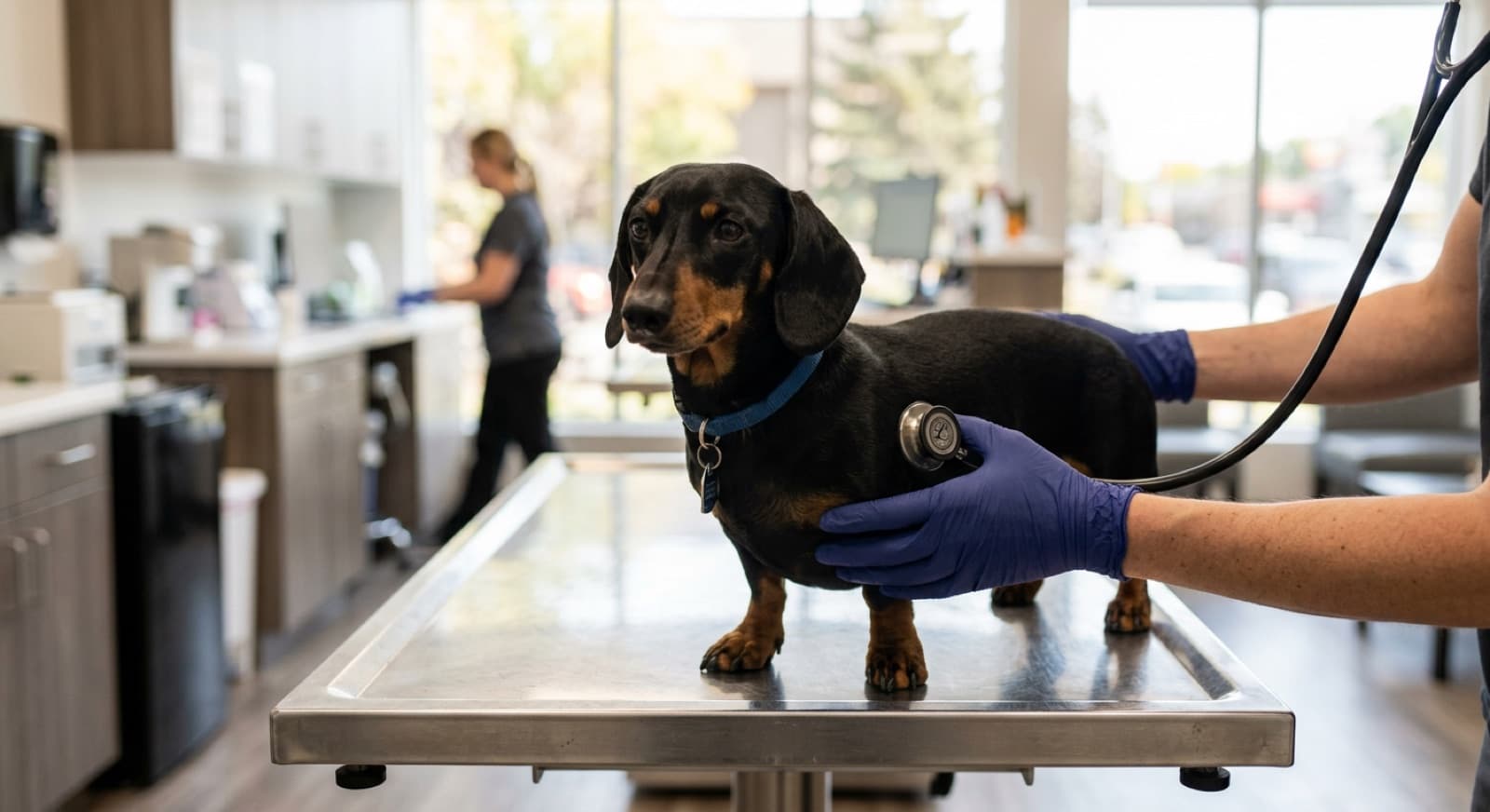
Dachshunds have the HIGHEST IVDD rate of any breed at about 25% lifetime prevalence. Calgary IVDD surgery costs $5,000 to $15,000+. Pet insurance is essential. Enrol BEFORE the first back episode because pre-existing IVDD is excluded everywhere. Six-step prevention: weight management (every pound matters), no jumping on or off furniture (use ramps), no stairs, harness only (never collar), back-supporting lift technique, back-safe exercise. Other Dachshund issues include patellar luxation (about 7 to 10%), eye conditions (PRA, double-dapple defects, cataracts), severe dental disease (about 75% by age 3), and diabetes (about 1 to 2%, obesity-driven). Lifetime vet costs run $15,000 to $30,000+. Calgary insurance runs $35 to $70 a month for a young healthy Dachshund. Verify the policy covers IVDD specifically.
IVDD is the defining Dachshund emergency
Sudden hindlimb weakness, dragging back legs, refusal to walk, screaming pain, urinary incontinence all signal an IVDD emergency. Surgical decompression within 24 to 48 hours dramatically improves outcomes. Delay can mean permanent paralysis. Calgary specialty neurology: Western Veterinary Specialist Centre, VCA Canada West. Calgary IVDD surgery cost: $5,000 to $15,000+. Use a towel to slide under the dog for transport. Do NOT bend the spine. Pre-program specialty vet contacts before any emergency.
What is IVDD in Dachshunds and how common is it?
Intervertebral Disc Disease (IVDD) is the defining Dachshund health issue. Dachshunds have the HIGHEST IVDD rate of any breed, approximately 25% lifetime prevalence. The breed-genetic risk comes from chondrodystrophic body type (long back, short legs) plus genetic premature disc degeneration.
Discs between vertebrae harden and calcify abnormally early in Dachshunds (often by age 1 to 2). They can then rupture, herniate, or extrude into the spinal canal. The result is pain, paralysis, or death. Onset typically appears between ages 3 and 7.
Symptoms range:
- Mild: reluctance to jump, hunched back, yelping when picked up, slight hindlimb weakness
- Severe: sudden hindlimb paralysis, dragging hind feet, urinary or fecal incontinence, screaming pain
IVDD is a vet emergency when paralysis or loss of bladder control develops. Surgical decompression within 24 to 48 hours dramatically improves outcomes. Calgary surgical IVDD treatment runs $5,000 to $15,000+ at specialty neurology (Western Veterinary Specialist Centre, VCA Canada West).
Both Standard and Miniature Dachshunds are equally affected. Conservative management for mild cases means 4 to 8 weeks strict crate rest, anti-inflammatories, and physiotherapy.
How do I prevent IVDD in my Dachshund?
Prevention is dramatically easier than treatment. Six-step Dachshund back protection protocol:
- Weight management. Keep your Dachshund LEAN. Standard target: 16 to 20 lbs (lean Standard) or 8 to 10 lbs (lean Miniature). Every extra pound dramatically increases IVDD risk. Veterinary body condition score 4 to 5 of 9 ideal.
- NO jumping on or off furniture. Use pet ramps or pet stairs (Solvit, Petmaker brands, $50 to $150 in Calgary at Petsmart, Costco, Amazon). Never let your Dachshund jump from couches, beds, or cars.
- NO stairs. Carry your Dachshund up and down stairs whenever possible. If unavoidable, slow walking beats running.
- Always use a HARNESS, never a collar for leash attachment. Collar pressure on the cervical spine speeds up disc damage. Front-clip or back-clip harness, never head halters.
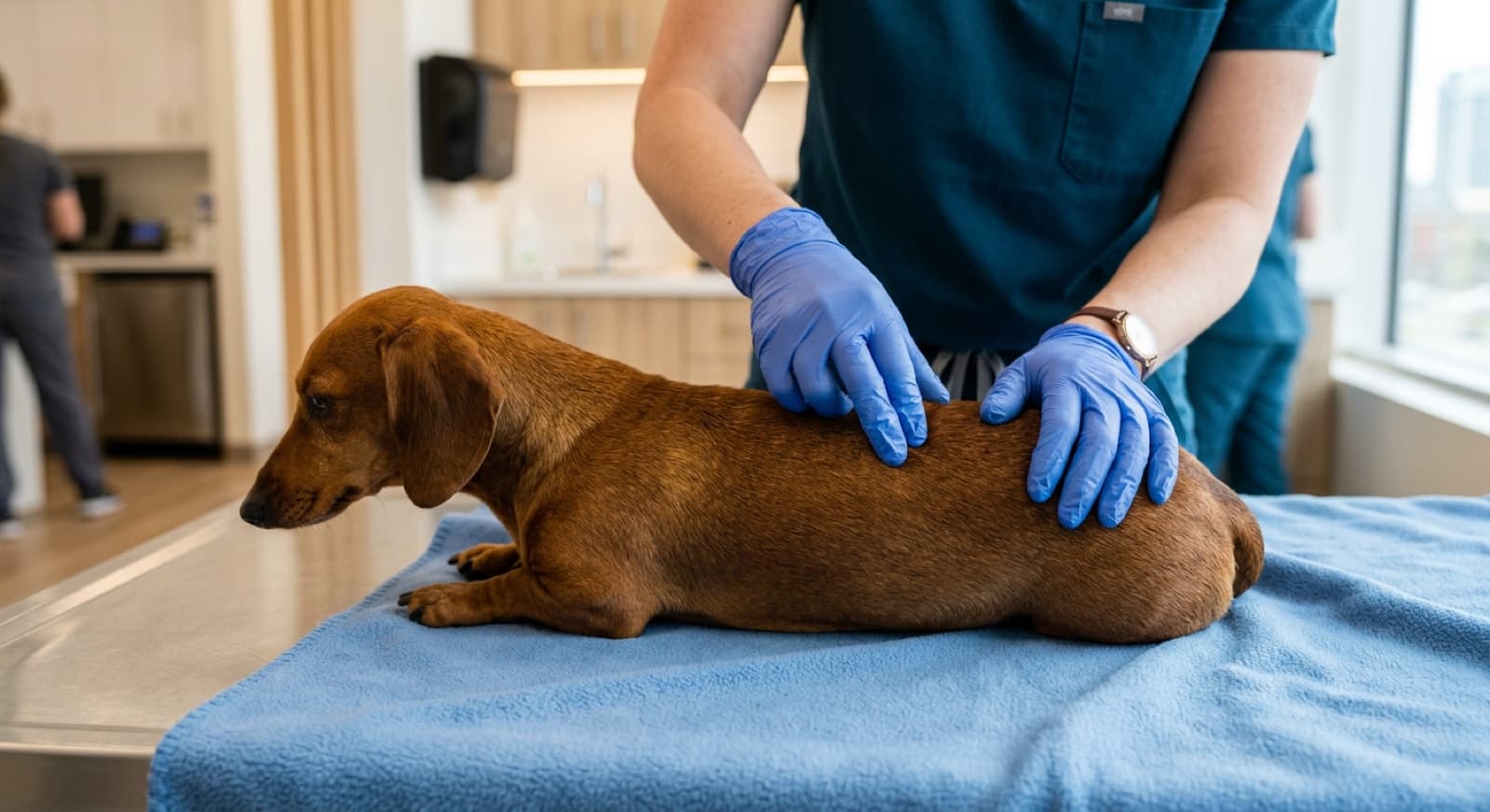
- Back-supporting lift technique. One hand under chest, one hand under hindquarters. NEVER pick up a Dachshund under the front legs only (puts all weight on the spine). NEVER let kids pick up a Dachshund.
- Back-safe exercise. Leashed walks, gentle play. Avoid high-impact running, agility or flyball sports, jumping for frisbees, and rough play with larger dogs.
Calgary IVDD-aware vet check at adoption ($150 to $300) for adult Dachshunds sets a baseline back health on X-ray. Pet insurance recommended BEFORE first IVDD episode because insurers exclude pre-existing IVDD.
How is IVDD diagnosed and treated in Calgary?
Diagnosis starts with a vet exam (neurological assessment). For confirmed cases, X-rays show calcified discs but do not reveal soft-disc material. MRI is the gold standard for surgical planning. Calgary specialty MRI runs $2,500 to $3,500. CT scan is an alternative ($1,500 to $2,500).
Treatment by severity grade:
| Grade | Symptoms | Treatment | Calgary Cost |
|---|---|---|---|
| 1 to 2 (Mild) | Pain, reluctance to jump, no paralysis | Conservative (4 to 8 weeks crate rest, anti-inflammatories, physio) | $500 to $2,000 |
| 3 (Moderate) | Hindlimb weakness, ataxia | Surgery often recommended | $5,000 to $10,000 |
| 4 to 5 (Severe) | Paralysis, loss of bladder control, no deep pain perception | Emergency surgery within 24 to 48 hr | $10,000 to $15,000+ |
Recovery: 4 to 8 weeks strict crate rest post-surgery, gradual return to walking, possible permanent mobility issues. Some severe cases need lifelong mobility carts (Walkin' Wheels, $400 to $1,200 in Calgary).
Recurrence rate runs about 20 to 30%. Dachshunds with one IVDD episode have a second within 1 to 3 years. Lifelong management is essential. Calgary canine rehab: Sundance Rehab, Western Veterinary Specialist Centre.
Should I get pet insurance for my Dachshund?
Absolutely yes. Dachshunds are the breed where pet insurance most reliably pays for itself. The single highest-value scenario is IVDD surgery. Calgary IVDD surgery costs $5,000 to $15,000+. Insurance with $5,000 to $15,000 limits returns the full premium investment in one episode.
Lifetime vet costs for Dachshunds typically run $15,000 to $30,000+. Calgary insurance runs $35 to $70 a month for a young healthy Dachshund.
CRITICAL caveats specific to Dachshund insurance:
- Verify the policy covers IVDD specifically. Some Canadian insurers exclude IVDD or treat it as orthopedic with sub-limits. Read the fine print.
- Enrol BEFORE first IVDD episode. Pre-existing IVDD is excluded across every Canadian provider.
- Choose a policy with annual or lifetime limit of $15,000+ to cover full IVDD surgery plus recovery.
- Beware of breed-specific exclusions. Some insurers add Dachshund-specific clauses.
Top providers for Dachshunds: Trupanion (no per-condition limits, single surgery covered fully), Pets Plus Us, Petsecure. AVOID any policy with per-condition limits under $5,000.
The Dachshund insurance equation: about $10,000 in premiums over 12 years equals $5,000 to $15,000 IVDD surgery covered.
Do Dachshunds get patellar luxation?
Yes. Common in Dachshunds, especially Miniatures. Affects approximately 7 to 10% of the breed. Genetic and graded 1 to 4. Calgary surgery runs $3,000 to $5,000 per knee. Many Grade 1 to 2 cases are managed without surgery using weight control, joint supplements, and limited high-impact activity. Patellar luxation often co-occurs with IVDD risk. Both are worsened by obesity. Weight management is the single most important intervention for Dachshund joint health.
What eye problems do Dachshunds have?
Multiple, including some breed-specific concerns:
(1) PRA (Progressive Retinal Atrophy). Gradual blindness by age 4 to 7. DNA testable ($150 to $200 Embark).
(2) Cataracts. Common in seniors. Calgary surgery $3,000 to $5,000 per eye.
(3) Double-dapple-related eye defects. About 25% rate of microphthalmia (small or missing eyes), severe blindness when bred dapple-to-dapple. Avoid double-dapple breeders.
(4) Dry eye or KCS. Lifetime cyclosporine drops (about $30 a month).
(5) Glaucoma. Sudden eye pressure increase. Emergency: red eye, squinting, cloudy cornea equals vet within hours.
Calgary specialty veterinary ophthalmology: VCA Canada West, Western Veterinary Specialist Centre. Annual eye exams recommended for adult Dachshunds, especially seniors and dogs from unknown breeding backgrounds.
How serious is dental disease in Dachshunds?
Severe and very common. Approximately 75% of Dachshunds have dental disease by age 3, among the higher rates of any breed. Cause: small jaw with crowded teeth (especially Miniatures), retained baby teeth, and food trap pockets. Dachshunds often need professional dental cleanings every 12 to 18 months. Calgary dental cleaning cost runs $500 to $1,500 depending on extractions. Lifetime dental care for a Dachshund often runs $4,000 to $8,000+.
Prevention: daily tooth brushing with dog-safe toothpaste from puppyhood, VOHC-approved dental chews, and regular vet exams. For adopters: ask the rescue if a recent dental cleaning has been performed. Many rescue Dachshunds need extensive dental work in their first year of adoption ($1,000 to $2,500).
What is the Dachshund anesthesia profile?
Standard risk for small breeds. Anesthesia mortality runs roughly 0.1%. Dachshund-specific considerations: long body length and back issues complicate positioning during surgery (careful spine support throughout), tendency to obesity means careful drug dose calibration, and IVDD-related pain medication interactions. For senior Dachshunds (8+ years): pre-op bloodwork including kidney and liver values, heart screening, urinalysis. Calgary specialty centres (VCA Canada West, Western Veterinary Specialist Centre) handle major surgery, especially IVDD-related procedures requiring spinal monitoring.
Why is obesity so dangerous for Dachshunds?
Obesity dramatically worsens every Dachshund health issue.
Specific mechanisms:
- IVDD. Every extra pound increases spinal compression. Overweight Dachshunds have 2 to 3x higher IVDD rates than lean ones.
- Patellar luxation. Extra weight worsens kneecap instability.
- Diabetes risk. Dachshunds are prone to diabetes. Obesity multiplies the risk.
- Heart disease. Obesity stresses the heart, especially in seniors.
- Reduced lifespan. Overweight Dachshunds typically live 1 to 3 years less than lean ones.
Calgary lean Dachshund body condition: 16 to 20 lbs for Standard, 8 to 11 lbs for Miniature. Veterinary body condition score: 4 to 5 of 9 ideal. Most Dachshunds in Calgary are overweight.
Weight management strategy: measured kibble (do not free-feed), low-fat treats, daily exercise within back-safe limits, and a prescription weight-loss diet (Hill's Metabolic, Royal Canin Satiety, $90 to $130 a bag) if standard diet fails. Annual vet weigh-ins matter.
Single most important intervention for Dachshund longevity: weight management.
Do Dachshunds get diabetes?
Yes. Dachshunds are one of the more diabetes-prone small breeds. Affects approximately 1 to 2% of Dachshunds. Risk factors: obesity (strongest risk factor), age (most cases appear in seniors 8 to 12 years), genetics, recurrent pancreatitis. Symptoms: increased thirst and urination, increased appetite with weight loss, lethargy, possible cataracts. Treatment: lifelong daily insulin injections, prescription diabetic diet (Hill's w/d, Royal Canin Diabetic, $80 to $120 a bag), strict feeding schedule, regular blood glucose monitoring. Calgary cost: $80 to $200 a month insulin plus supplies, $200 to $400 for blood glucose curves every 6 to 12 months. With proper management, diabetic Dachshunds live normal lifespans.
What should I keep on hand for a Dachshund emergency?
Dachshund-specific emergency kit:
(1) IVDD assessment knowledge. Sudden hindlimb weakness, dragging back legs, refusal to walk, screaming pain, urinary incontinence. Most time-critical Dachshund emergency.
(2) Towel for back-support transport. Slide gently under the dog without bending the spine.
(3) Pet first aid kit.
(4) Phone numbers programmed: regular vet, Calgary 24-hour emergency clinic, Pet Poison Helpline 1-855-764-7661.
(5) Calgary specialty neurology contact info (VCA Canada West, Western Veterinary Specialist Centre) for IVDD emergencies.
(6) Current photo with weight plus microchip number on physical card.
(7) Carrier or harness within easy reach.
(8) Pet insurance card or vet financing info (CareCredit, ScratchPay). IVDD surgery $5,000 to $15,000+.
(9) Pet ramps or stairs for daily access ($50 to $150).
(10) IVDD-history-aware feeding schedule for diabetes-prone seniors.
Frequently Asked Questions
What is IVDD?
Highest rate of any breed (about 25%). Long-back and short-leg body type causes premature disc degeneration. Surgery $5K to $15K Calgary. Both Standard and Miniature equally affected.
IVDD prevention?
Six steps: weight management, no jumping (use ramps), no stairs, harness only, back-supporting lift, back-safe exercise. Pet insurance BEFORE first episode.
IVDD treatment?
Grade 1 to 2: 4 to 8 weeks crate rest plus meds ($500 to $2K). Grade 3+: surgery within 24 to 48 hr ($5K to $15K). MRI for diagnosis ($2.5K to $3.5K Calgary). Recurrence runs about 20 to 30%.
Pet insurance for Dachshunds?
Absolutely essential. Calgary runs $35 to $70 a month. Verify IVDD coverage specifically. Enrol BEFORE first episode because pre-existing is excluded everywhere. Trupanion best (no per-condition limits).
Patellar luxation?
About 7 to 10% rate, especially Miniatures. Calgary surgery $3K to $5K per knee. Grade 1 to 2 managed conservatively. Weight management is critical.
Eye problems?
PRA blindness ($150 to $200 DNA test), cataracts ($3K to $5K per eye Calgary), double-dapple defects, dry eye, glaucoma. Annual eye exams.
Dental disease?
About 75% by age 3. Cleanings every 12 to 18 months ($500 to $1,500 Calgary). Lifetime dental $4K to $8K+. Daily brushing essential.
Anesthesia profile?
Standard risk about 0.1%. Long body needs careful spinal positioning. Senior pre-op: bloodwork plus heart screen. Calgary specialty for major surgery.
Why obesity matters?
Worsens IVDD (2 to 3x risk), patellar luxation, diabetes, heart disease. Reduces lifespan 1 to 3 years. Most Calgary Dachshunds are overweight. Single most important intervention.
Diabetes?
About 1 to 2% rate, obesity-driven. Daily insulin plus prescription diet plus monitoring. Calgary runs $80 to $200 a month. Manageable with committed care.
Emergency kit?
IVDD recognition plus towel transport, first aid, ER vet numbers, specialty neurology pre-programmed, microchip plus weight, harness, insurance, ramps for daily access.
Spay/neuter timing?
Wait until 12 to 18 months because early sterilization is linked to about 25% higher IVDD risk. Females between heat cycles. Males after growth plates close. OSS (Ovary-Sparing Spay) preserves hormones. Calgary $400 to $800.
Cushing's disease?
Top-5 breed risk, about 1 to 2% of seniors. Pot-belly, thirst, appetite, hair loss, thin skin. Trilostane $50 to $150 a month. Calgary lifetime $5K to $15K. Often mistaken for aging.
Senior cognitive dysfunction?
CCD affects about 28% at 11 to 12yr, over 60% at 15 to 16yr. DISHA symptoms. Anipryl $80 to $120 a month, supplements, enrichment. Calgary Sentient Vet Care for severe. Rule out IVDD pain first.
Pancreatitis?
Higher-risk breed. Triggered by high-fat treats, table scraps, sudden diet changes, obesity. Calgary ER $1.5K to $5K. Recurrence common, so a lifelong low-fat diet is often needed.
Is a Dachshund Right for You?
Calgary fit check: lifestyle, kids, climate, back-care commitment, lifespan reality.
Dachshund First Week Home
Day-by-day Calgary settling-in plan: ramps, harness, vet visit, back protection.
Dachshund Potty Training
Stubborn breed playbook: indoor pads for Calgary winter, consistency, regression fixes.
Dachshund Puppies in Calgary
Where to find puppies, ethical breeder vs rescue, dapple ethics, coat varieties.
Buy or Adopt a Dachshund?
Breeder vs rescue trade-offs in Calgary. Costs, health screening, ethics.
Dachshund Cost of Ownership
Year 1 plus annual plus lifetime totals for a Calgary Dachshund. Insurance and IVDD math.
Pet Insurance for Dachshunds
Which Canadian provider covers IVDD properly. Calgary premium ranges and timing.
Dachshund Separation Anxiety
Velcro breed, alone-time training, Calgary daycare options, working-owner protocol.
Dachshund Barking and Aggression
Watchdog instincts, reactivity at the window, Calgary neighbour-friendly fixes.
Dachshund Crate Training
Crate setup, schedule, IVDD-recovery crate rest survival guide.
Dachshund with Kids and Cats
Family fit, kid handling rules (no front-leg lifts), prey drive around cats.
Senior Dachshund Adoption
Adopting older Dachshunds in Calgary. IVDD history, dental, mobility considerations.
Mini vs Standard Dachshund
Size comparison: temperament, IVDD risk, apartment fit, Calgary winter handling.
Dachshund IVDD Recovery
8-week crate rest survival, surgery decision, Calgary rehab, wheelchair options.
New dog? Start with these care guides
Everything a new adopter needs to set up a safe, happy home.