The short answer
Three Calgary-specific Dachshund priorities matter more than anything else. First, back protection. No jumping off furniture, ramps required, no stair running, carry the dog, harness only, never a collar for the leash. Second, weight management. Lean target 16 to 20 lbs Standard or 8 to 10 lbs Mini, because obesity is the biggest IVDD multiplier. Third, prey drive awareness. Cats, squirrels, and coyotes all matter. Off-leash recall is unreliable, so use a long-line. Calgary winter calls for belly-coverage coats (low to ground means snow contact) and salt-protective paw care. Apartments work well for Mini Dachshunds. Standards may exceed weight limits, and 3rd-floor walk-ups are a problem. Caveats with young children. Back fragility plus snap reflex make supervision essential. Housetraining is hard, with a 4 to 12 month timeline. The Dachshund longevity formula: harness, ramps, lean weight, back-safe exercise, pet insurance, and dental care.
The most important Calgary Dachshund safety rule
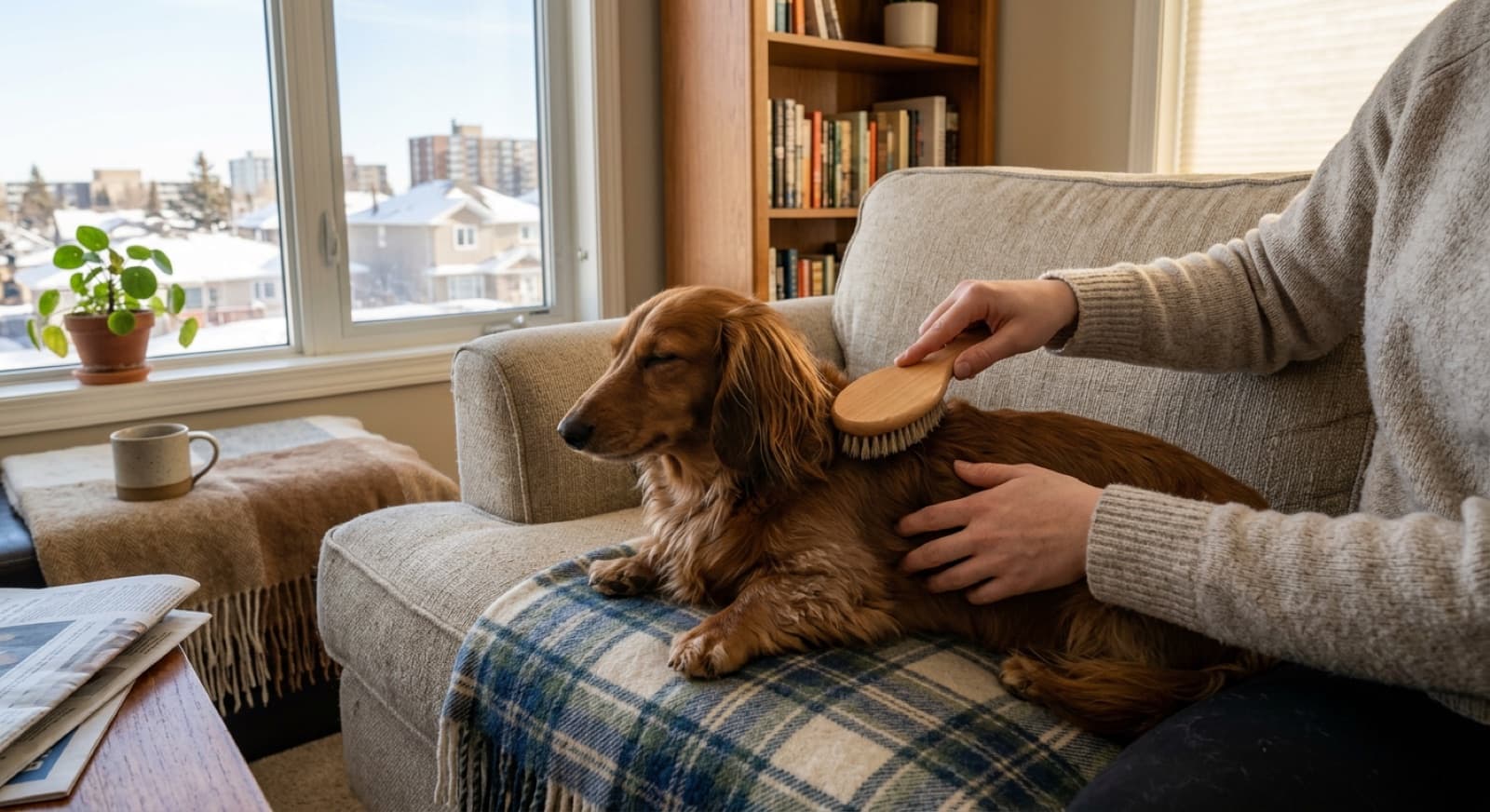
NEVER let your Dachshund jump off the couch, bed, or out of the car. One jump can cause IVDD. The most common cause of Calgary Dachshund surrenders is a back injury that cost $5,000 to $15,000+ in surgery. Pet ramps ($50 to $150) are the cheapest IVDD insurance available. Train your Dachshund to use ramps from day one. If your dog jumps before you can stop them, that is the moment to add ramps to every furniture height in the home.
How much exercise does a Dachshund need?
30 to 60 minutes of low-impact daily exercise plus mental stimulation. Despite the small size, Dachshunds were bred for badger hunting and carry moderate working-dog energy. The exercise must stay back-safe. Dachshund spines are vulnerable.
Daily exercise menu:
- Two 15 to 30 minute leashed walks at moderate pace
- 15 to 30 minutes of mental work (puzzle feeders, scent work, training)
- Gentle indoor play (low-impact fetch, tug, no jumping)
- Off-leash time in safe fenced dog parks (Sue Higgins, Southland)
AVOID:
- Long-distance running alongside you (back stress)
- Agility, flyball, dock diving (high-impact)
- Jumping for frisbees
- Rough play with much larger dogs
- Off-leash hiking with elevation changes
Calgary back-safe exercise venues: Bow River pathway (flat), Glenmore Reservoir loop (flat), Confederation Park, Edworthy Park if you stick to the flat trails, and fenced off-leash parks. Stop exercise right away if you see limping, refusing to continue, hunched posture, or vocalizing.
Do I really need ramps for my Dachshund?
Yes. Pet ramps and stairs are not optional for Dachshunds. They are the single most-recommended IVDD prevention tool.
Use ramps for:
- Couch access. Jumping off causes most household IVDD episodes.
- Bed access. Same risk.
- Car access. Jumping into the back of an SUV is a common Dachshund injury.
Calgary ramp options:
- Solvit Deluxe Telescoping Pet Ramp ($120 to $180 at Petsmart, Costco, Amazon)
- Petmaker Foldable Ramp ($60 to $90)
- Pet Gear Stramp Stair-Ramp Combo ($90 to $130)
- Pet stairs (smaller, fit beside furniture): Pet Gear Easy Step ($40 to $70), PetSafe CozyUp ($50 to $90)
Initial cost ($150 to $300 total) versus IVDD surgery ($5,000 to $15,000) makes ramps the cheapest IVDD insurance available. Train your Dachshund to use ramps from day one. Most will resist at first. Use treats and patience.
How should I handle stairs with my Dachshund?
Avoid stairs when you can, and slow down when you cannot. Stairs are a major IVDD trigger because jumping and running on stairs sends impact through the spine.
Calgary practical tips:
- Carry your Dachshund up and down stairs when possible (one hand under chest, one under hindquarters).
- If you live in a multi-level home, restrict access to one level with baby gates.
- For unavoidable stairs, walk slowly with your dog on leash and never let the dog run.
- Carpet runners on hardwood and tile stairs reduce slipping.
- For senior Dachshunds with mobility issues, full-stair restriction may be needed.
Apartment buildings with elevators are ideal for Dachshunds. Avoid third-floor walk-ups unless you plan to carry the dog every time.
Why is harness mandatory for Dachshunds?
Collar pressure on the cervical spine speeds up disc damage and raises IVDD risk.
Three reasons harness is mandatory:
- Collar pressure during pulling directly stresses the cervical spine where IVDD often happens.
- Sudden leash jerks (running after squirrels, lunging at other dogs) can cause acute spinal injury through a collar.
- Choke chains and prong collars are dangerous on Dachshund anatomy. Never use them.
Best harness types for Dachshunds:
- Step-in or vest-style harnesses (RuffWear Front Range $40 to $80, Puppia Soft Harness $25 to $40, Kurgo Tru-Fit $35 to $60)
- Avoid: head halters (can twist neck), choke chains, prong collars, slip leads
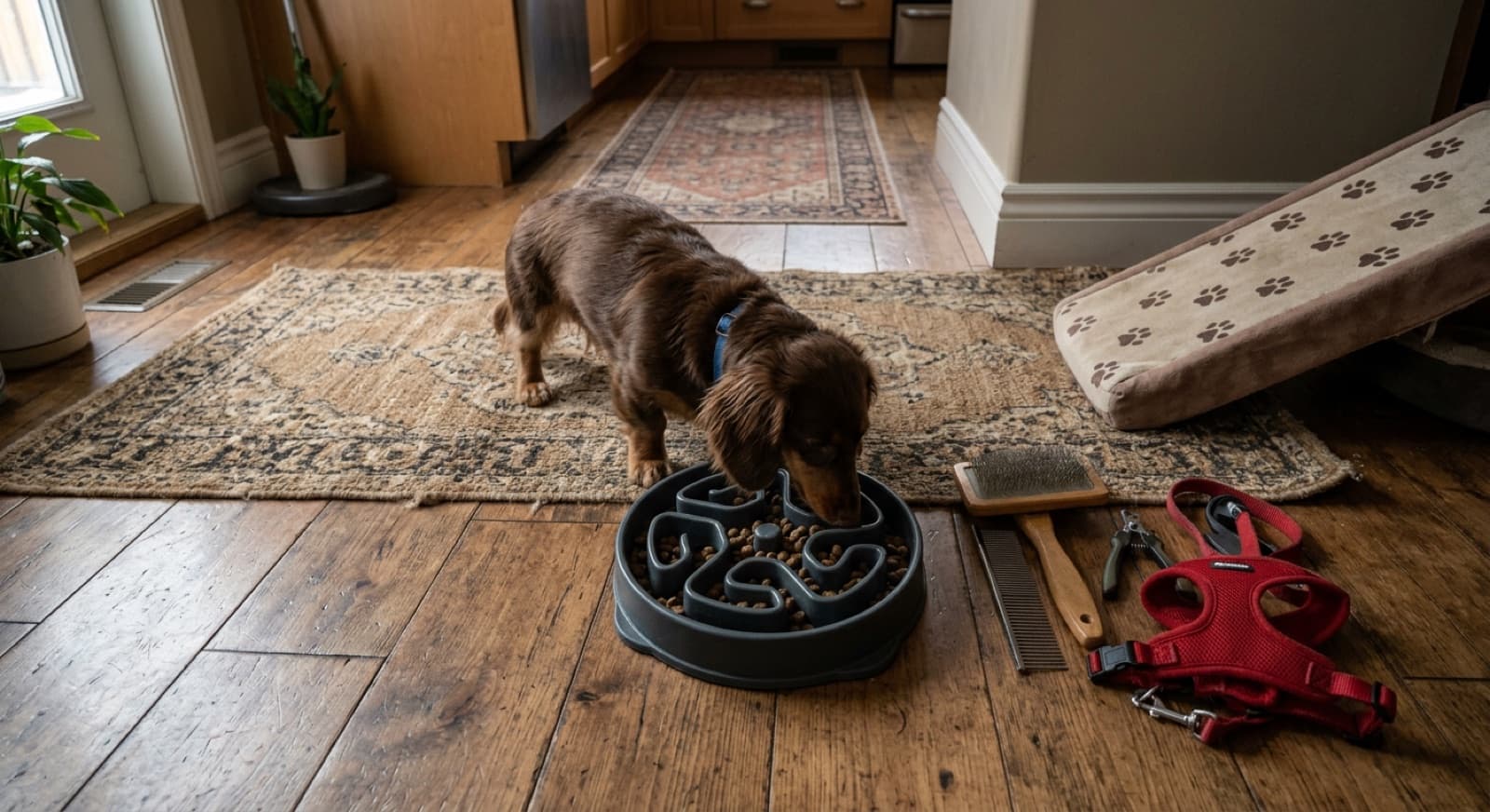
For Dachshund-specific harness fit, make sure the harness does not press on the chest or rub the armpits, has back support, and clips at the chest (front-clip) for pulling control. Collars are fine for ID tags only, never for leash attachment.
How does Dachshund prey drive affect Calgary life?
Dachshunds were bred for badger hunting. They keep serious prey drive that shapes daily life in Calgary.
Calgary considerations:
- Cats. Many Dachshunds chase cats. Some can live with cats raised together from puppyhood. Many cannot.
- Squirrels and rabbits. Calgary has both. Dachshunds will lock on to small wildlife.
- Small dogs. Some Dachshunds chase small dogs at parks, not always in play.
- Coyotes. Calgary has urban coyote presence. A Dachshund is small enough to be prey, so never go off-leash near wooded areas (Nose Hill, Confederation Park edges, Bow River woods).
- Birds. Dachshunds will chase birds in the yard.
Off-leash recall is unreliable for many Dachshunds because of prey drive. Use long-line training (15 to 30 foot biothane line) for safe off-leash freedom.
Calgary fenced off-leash parks where Dachshunds can run safely: Sue Higgins (fully fenced, water access) and Southland (fully fenced). Avoid unfenced off-leash zones with wildlife.
How does Calgary winter affect Dachshunds?
Calgary winter is hard on Dachshunds for several reasons.
- Low to ground. Dachshund bellies touch snow and ice while walking. Cold belly contact can set off UTIs and discomfort.
- Short coat. Smooth variety especially offers little insulation against -20°C to -35°C winter cold.
- Salt and ice between toe pads. Dachshund paw fur traps salt, causing chemical burns.
- Snow drifts can be deeper than the dog is tall.
Winter gear for Dachshunds:
- Insulated coat with belly coverage. RuffWear Powder Hound, Hurtta Extreme Warmer, Canada Pooch, fitted for the long Dachshund body. $50 to $150 in Calgary.
- Booties for salt and cold. Muttluks, Pawz disposables, RuffWear Polar Trex.
- Musher's wax (Bag Balm, Calgary-made Rocky Mountain Dog organic paw cream) as an alternative to booties.
- Sweaters indoors for Smooth Dachshunds in cool houses.
Walk timing: short walks in extreme cold (10 to 15 minutes max below -20°C). Indoor potty options for very cold days: pee pads or a shovelled relief area in the yard.
Are Dachshunds good apartment dogs in Calgary?
Yes. Dachshunds suit Calgary apartment life well with caveats.
Strengths: small size (Miniatures fit every Calgary condo weight limit), moderate exercise needs, calm indoors when exercised.
Caveats:
- Vocal. Alert barkers. Train a “quiet” command from puppyhood.
- Stairs and elevators. Elevator buildings are ideal. Multi-flight walk-ups are hard.
- Prey drive. Small dogs in apartment hallways can trigger chase behaviour.
- Housetraining. Notoriously hard. Needs a steady indoor schedule.
Best Calgary apartment Dachshund owner: WFH professional or retiree, ground-floor unit or elevator building, willing to commit to back protection. Worst fit: third-floor walk-ups, busy households with frequent visitors, and owners working 9 to 5 with a long commute.
Verify the weight limit before signing the lease. Standard Dachshunds (16 to 32 lbs) may exceed some condo rules. Miniatures (8 to 11 lbs) fit them all.
Are Dachshunds good with kids?
Caveats apply. Dachshunds are not the best small breed for households with young children.
Issues:
- Back fragility. Kids picking up Dachshunds incorrectly cause severe back injuries.
- Snap reflex. Quick to snap when startled, frightened, or in pain. Bite incidents involving Dachshunds and children are higher than the general dog population.
- Tail-step injuries. Kids stepping on Dachshund backs cause IVDD episodes.
- Resource guarding. About 15% of Dachshunds show food or toy guarding around children.
Better fits: families with kids 8 and older who can learn proper handling, and families that use separation strategies (baby gates, place training). Worst fits: families with toddlers, multiple young children, kids with friends who visit and do not know dog rules.
For best results: enrol in a Calgary Dachshund-experienced training class together (Dogma, Raising Fido), supervise all dog-child interactions, teach kids NEVER to pick up the Dachshund, and teach kids to respect the dog's space.
How do I housetrain a Dachshund?
Dachshunds are notoriously hard to housetrain, among the toughest small breeds. Realistic timeline: 4 to 12 months for a Dachshund puppy to be reliably housetrained. Some never become 100% reliable.
Reasons: stubborn temperament, small bladder, trouble in cold or wet weather (many refuse to potty in Calgary winter), and prey-drive distraction outdoors.
Successful approach:
- Strict schedule. Out every 1 to 2 hours at first, after every meal, nap, and play, before bed, right after waking.
- Take the dog to the same potty spot every time.
- Reward heavily for outside elimination (high-value treats right after).
- Supervise indoors at all times.
- Crate train. Most Dachshunds will not soil their sleeping space.
- Do not punish accidents. Stress increases accidents in Dachshunds. Clean with an enzymatic cleaner.
- For cold-weather refusal (very common): shovel a relief area or use indoor pee pads as a winter backup.
UTIs and crystals are common in small dogs and mimic housetraining failure. A vet check makes sense if accidents continue past 6 months despite a steady routine.
What should I avoid doing with my Dachshund?
The Dachshund “do not do” list:
- Do not let them jump on or off furniture. IVDD risk. Use ramps.
- Do not let them run up or down stairs. Carry when possible.
- Do not use a collar for leash attachment. Harness only.
- Do not pick up under the front legs only. Full body support always.
- Do not let kids pick up the Dachshund. Period.
- Do not feed table scraps. Obesity is the biggest IVDD multiplier.
- Do not allow free-feeding. Measured kibble for weight management.
- Do not do high-impact exercise. Agility, flyball, dock diving, and frisbee jumping are all dangerous for Dachshund spines.
- Do not skip pet insurance. IVDD surgery cost makes it essential.
- Do not let them off-leash near wildlife. Prey drive plus small body equals lost dog or coyote prey.
- Do not buy from breeders without health testing.
- Do not breed dapple to dapple. Produces deaf or blind puppies.
- Do not buy “Teacup Dachshunds”. Unethical breeding marketing.
- Do not skip dental care.
- Do not allow obesity. The single most damaging long-term health choice.
The Dachshund longevity formula: harness, ramps, lean weight, back-safe exercise, pet insurance, dental care, and ethical sourcing.
Can I travel with my Dachshund?
Yes, with caveats.
Air travel: Mini Dachshunds (under 9 kg) usually qualify for cabin travel with most Canadian airlines. Standard Dachshunds (16 to 32 lbs) usually exceed cabin weight limits and must travel cargo, which is risky and stressful. Avoid cargo travel when possible.
Car travel: Crash-tested crates (Gunner G1 Kennel, Sleepypod Mobile Pet Bed) or harnesses (Sleepypod Clickit, Kurgo Impact). NEVER let your Dachshund jump into or out of cars unsupervised. Use a ramp or carry. Plan frequent stops every 90 to 120 minutes for stretch breaks.
Hotel and Calgary-area weekend trips (Banff, Canmore, Lake Louise): Dachshunds adapt well. Pack their bed, food, and ramps for hotel furniture.
Boarding: Dachshund-experienced facilities only. Calgary options: Camp Bow Wow, Calgary Dog Daycare ($50 to $80 a night). Pet sitting in your home is often safer than boarding for IVDD-prone Dachshunds. They keep their ramp and no-stairs routine in familiar territory.
Frequently Asked Questions
Exercise needs?
30 to 60 min low-impact daily plus 30 min mental work. Two leashed walks and indoor play. Avoid agility, frisbee jumping, long runs, and hiking with elevation. Calgary back-safe spots: Bow River, Glenmore Reservoir.
Ramps required?
Yes. Not optional. $50 to $300 total for couch, bed, and car ramps. Cheapest IVDD insurance available ($5K to $15K surgery). Train from day one.
Stairs?
Avoid when possible. Carry up and down. Baby gates to restrict access in multi-level homes. Carpet runners reduce slipping. Apartment with elevator is ideal.
Why harness mandatory?
Collar pressure on the cervical spine speeds up IVDD. Step-in or vest harness. Avoid head halters, choke chains, and prong collars. Collars only for ID tags.
Prey drive concerns?
Cats, squirrels, rabbits, small dogs, coyotes (Dachshunds are coyote prey size). Off-leash recall unreliable. Use long-line. Calgary fenced parks: Sue Higgins, Southland.
Calgary winter?
Belly-coverage insulated coat (RuffWear, Hurtta, Canada Pooch $50 to $150). Booties or musher's wax for salt. Short walks below -20°C. Indoor pee pad backup. Cold belly contact triggers UTIs.
Apartment dog?
Yes for Mini Dachshunds (Standards may exceed weight limits). Elevator buildings ideal. Vocal, so train “quiet.” Avoid 3rd-floor walk-ups and 9 to 5 plus commute owners.
Good with kids?
Caveats apply. Back fragility, snap reflex, and bite incidents higher than average. Best with kids 8+ taught proper handling. Worst with toddlers. Kids must NEVER pick up the dog.
Housetraining?
Notoriously hard. 4 to 12 month timeline. Strict schedule, same potty spot, heavy reward, crate train, never punish. Cold-weather refusal common, so shovel an area or use pee pads.
What to avoid?
Furniture jumping, running stairs, collar leash, kid lifts, table scraps, free feeding, agility, dock diving, frisbee, off-leash near wildlife, BYB breeders, dapple-to-dapple, “Teacup,” obesity.
Travel?
Mini in cabin (under 9 kg). Standards usually cargo-only, so avoid. Crash-tested crate or harness in car. NEVER jump in or out. In-home pet sitting safer than boarding for IVDD risk.
Excessive barking and neighbours?
Bred to bark. Genetic. Adequate exercise and mental stim, “quiet” command plus treats, desensitization, white noise, crate training, soundproofing, talk to neighbours. Avoid bark collars. Calgary noise bylaws 22:00.
Swimming danger?
Caution. Long body plus short legs equals inefficient swimming and fast fatigue. Drowning deaths in pools, lakes, and tubs. Life jacket plus constant supervision near water. Kiddie pools safer than swimming. Hydrotherapy fine (controlled).
More Dachshund guides
Is a Dachshund Right for You? →
Honest Calgary self-assessment covering IVDD reality, velcro temperament, and lifetime cost.
Dachshund Puppies Adoption →
Where to find Dachshund puppies in Calgary, ethical breeder vetting, and rescue waitlists.
Buy or Adopt a Dachshund →
Breeder vs rescue tradeoffs, real Calgary pricing, and the IVDD-history advantage of adopting an adult.
Dachshund Cost of Ownership →
Lifetime budget for a Calgary Dachshund, annual care line items, and IVDD-emergency scenarios.
Pet Insurance for Dachshunds →
Calgary insurer comparison, IVDD coverage caveats, and when to enrol before pre-existing kicks in.
Dachshund Health Issues →
IVDD (highest of any breed), back protection, patellar luxation, eye conditions, and dental.
Dachshund IVDD Recovery →
Crate rest protocol, Calgary rehab clinics, post-surgery timeline, and when conservative care works.
Bringing Home a Dachshund →
First-week setup, ramp introduction, crate placement, and the Calgary 3-3-3 timeline.
Dachshund Potty Training →
Calgary cold-weather refusal fixes, indoor pee pad backup, and the realistic 4 to 12 month timeline.
Dachshund Crate Training →
Crate sizing for long bodies, IVDD-rest compatibility, and Calgary apartment placement.
Dachshund Separation Anxiety →
Calgary work-from-home patterns, alone-time conditioning, and daycare options for velcro Dachshunds.
Dachshund Barking and Aggression →
Calgary apartment-noise strategies, snap-reflex management, and Calgary force-free trainers.
Dachshund With Kids and Cats →
Age thresholds for kids, cat-introduction protocols, and prey-drive screening for multi-pet homes.
Mini vs Standard Dachshund →
Weight, condo limits, exercise differences, and the “Teacup” marketing trap.
Senior Dachshund Adoption →
Why senior Dachshunds often fit calm homes better, mobility support, and Calgary rescue patterns.
Calgary Winter Dog Care →
Broader Calgary winter protocols for all breeds.
Adoptable Dachshunds in Calgary →
All currently available Dachshunds.
New dog? Start with these care guides
Everything a new adopter needs to set up a safe, happy home.