The short answer
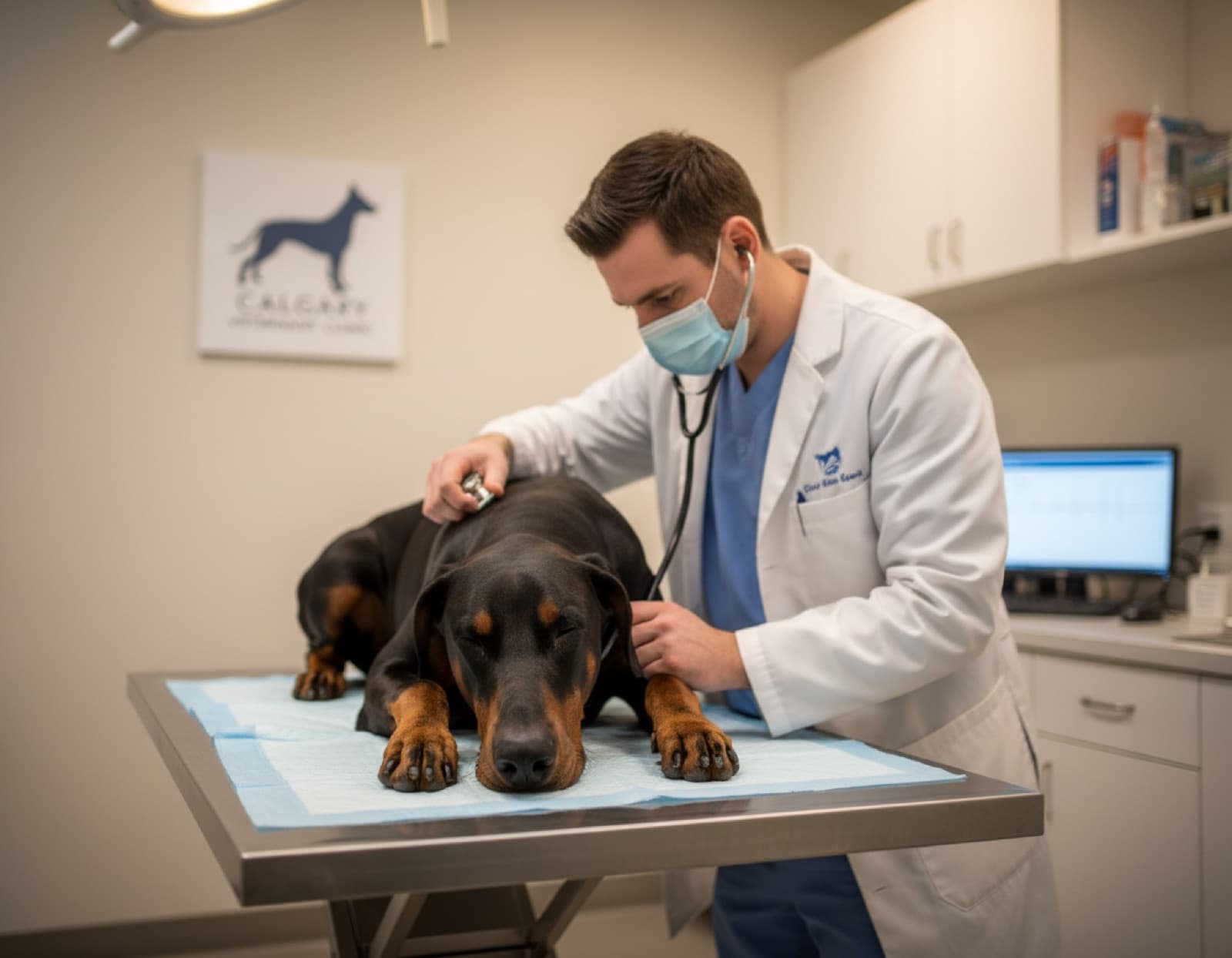
Dilated Cardiomyopathy (DCM) is the breed-defining health concern for Dobermans. Reported lifetime prevalence is high (commonly cited around half of the breed). Many affected dogs show no symptoms until a catastrophic cardiac event. Annual Holter monitor and echocardiogram screening from age 3, performed by a board-certified veterinary cardiologist, plus early pimobendan therapy when indicated, can meaningfully extend healthy life. This guide outlines the Calgary protocol most owners and rescue volunteers see work in practice.
Informational only, not medical advice. This article is general education for Calgary Doberman families. Diagnosis, dosing and treatment decisions belong to your veterinary cardiology team. Reviewed by the LocalPetFinder Editorial Team in consultation with Calgary-area veterinary cardiology references including the American College of Veterinary Internal Medicine (ACVIM), the Orthopedic Foundation for Animals (OFA) cardiac registry, and the Doberman Pinscher Club of America (DPCA) breed health resources. Always consult your veterinary cardiologist for your individual dog.
Why Dobermans have such a high DCM rate
Genetic predisposition combined with breed bottleneck. Modern Dobermans descend from a relatively small founding population developed in 1890s Germany, concentrating cardiomyopathy-susceptibility alleles.
The Doberman genome carries multiple identified DCM-related mutations:
- DCM-1 (PDK4 gene)
- DCM-2 (TTN gene)
- Plus likely other unidentified contributing factors
Even Dobermans testing CLEAR for DCM-1 + DCM-2 genetic markers can develop DCM (multifactorial genetics + environmental factors).
Working/show line distinction matters less for cardiac risk than European vs American (European working lines may have slightly different cardiac risk profile but breed-wide concern remains).
Practical takeaway: assume your Doberman has ~55% lifetime DCM probability. Plan accordingly. This is THE breed-defining health concern; everything else is secondary.
The annual screening protocol
Annual screening from age 3 is the gold standard. The single most actionable thing Calgary Doberman owners can do.
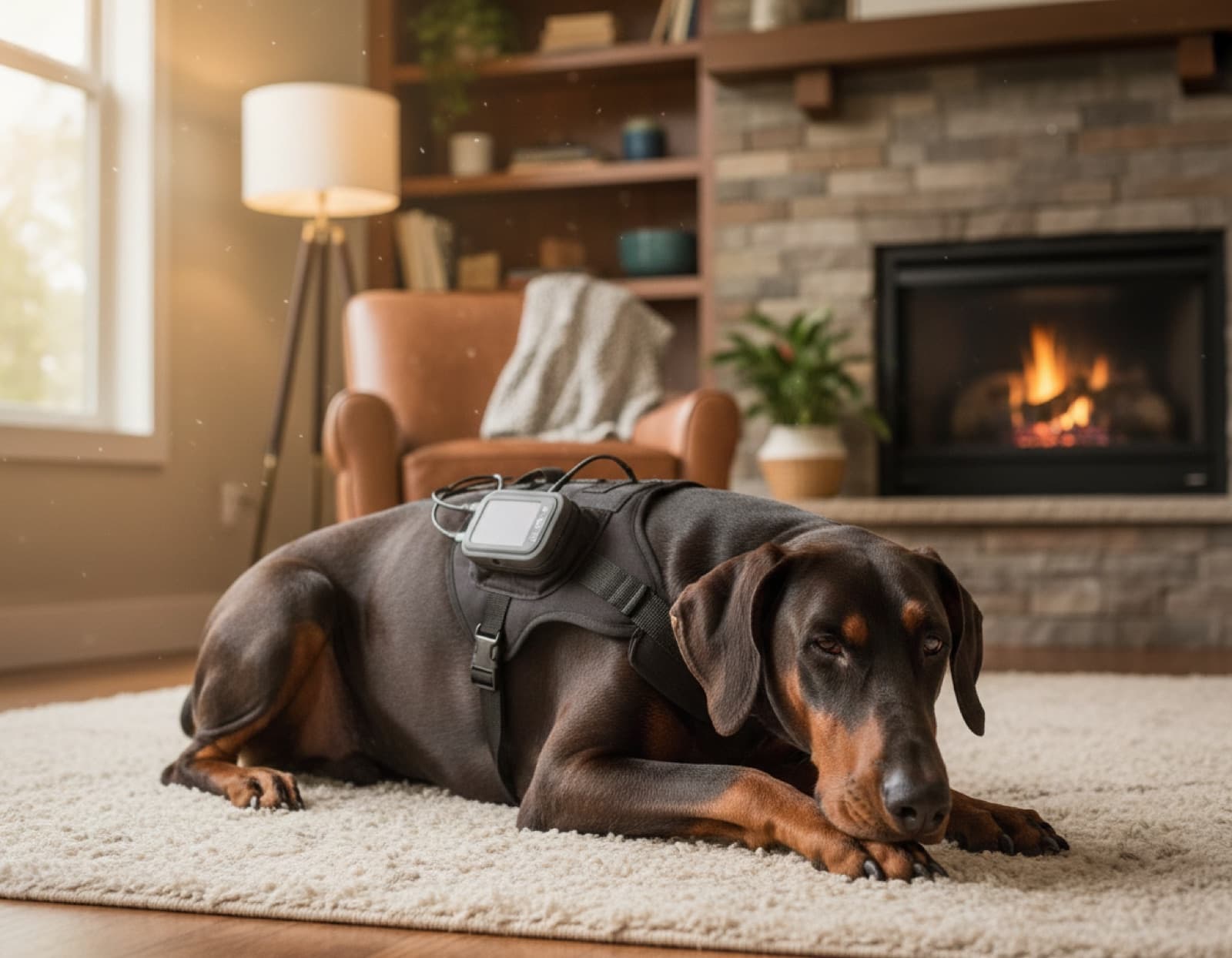
- Holter monitor (24-hour cardiac rhythm recording). Gold standard for detecting occult DCM (cardiac dysfunction before symptoms appear). The dog wears a small device for 24 hours. Detects ventricular premature contractions (VPCs), an early DCM indicator.
- Normal: <50 VPCs/24-hour
- Abnormal: >100 VPCs/24-hour
- At-risk: 50–100 VPCs/24-hour, repeat in 6 months
Calgary cost: $400–$800 per Holter
- Echocardiogram (ultrasound of the heart). Visualises heart structure and function. Detects dilated cardiomyopathy, chamber enlargement and reduced contractility. Calgary cost: $400–$700 per echocardiogram. Performed by a board-certified cardiologist (DACVIM-Cardiology)
- ECG (electrocardiogram). Detects arrhythmias. Routine, included in cardiac evaluation
- ProBNP blood test. An additional marker for early cardiac stress, sometimes used alongside imaging
Screening schedule:
- Age 3–5: annual Holter + echo
- Age 6–9: annual both Holter + echo
- Age 10+: every 6 months Holter + echo (higher DCM emergence risk)
- Any abnormality detected: more frequent monitoring
Calgary protocol annual cost: $500–$1,500/year. Dramatically less than treating advanced DCM.
Rescue Dobermans: many rescues now screen pre-adoption; ask. Adopting unscreened? Schedule first cardiac screening within 30 days. Discovery = transformation of care.
Calgary specialty veterinary cardiology
Calgary has multiple specialty veterinary cardiology options. Your GP vet typically refers; specialty practice handles diagnosis + treatment.
- Western Veterinary Specialist Centre (WVSC). Multi-specialty hospital with board-certified cardiology service (DACVIM-Cardiology). Echo, Holter, ECG and cardiac surgery referral. One of the most established Doberman cardiac options in southern Alberta
- VCA Canada West Veterinary Specialists. Multi-specialty including cardiology. Echo, Holter, ECG and ongoing cardiac care
- Paramount Veterinary Hospital. Emergency and specialty services, with cardiology referral pathways
- CARE Centre (24-hour emergency). For cardiac emergencies (syncope, congestive heart failure, sudden collapse)
- University of Calgary Faculty of Veterinary Medicine. Teaching hospital, sometimes accepts complex cases
What to expect: initial consultation $300–$500. Comprehensive workup: $1,000–$2,500 first visit. Annual follow-up: $500–$1,500. Treatment monitoring (if DCM diagnosed): $300–$600 per visit, every 3–6 months.
Build a long-term specialist relationship, not just emergency reactive care.
Pimobendan: the gold-standard DCM treatment
Pimobendan (Vetmedin) significantly extends life when started at appropriate stage.
What it does:
- Inodilator action (increases heart muscle contractility)
- Vasodilator action (relaxes blood vessels, reduces cardiac workload)
- Combined effect: the heart pumps more efficiently with less workload, slowing disease progression
Evidence-based: the PROTECT study (2012, Journal of Veterinary Internal Medicine) demonstrated pimobendan delays onset of clinical heart failure in Dobermans with occult DCM, with the cited delay commonly reported as roughly 9 to 12 months.
When pimobendan is typically considered (always your cardiologist's call):
- Occult DCM on echocardiogram (dilated chambers, no symptoms)
- Holter showing >100 VPCs per 24 hours with cardiac structural changes
- Symptomatic DCM (clinical heart failure), usually combined with additional cardiac medications
Calgary pricing: pimobendan typically $100–$250/month, with generics in the $80–$180/month range. Lifetime medication once started.
Additional medications in advanced DCM (cardiologist-directed):
- ACE inhibitors (e.g. enalapril, benazepril): $30–$80/month
- Diuretics (e.g. furosemide) for congestive heart failure: $40–$100/month
- Spironolactone for additional fluid management
- Antiarrhythmics (e.g. sotalol, mexiletine): $60–$150/month
Typical DCM-affected Calgary Doberman monthly medication: $200–$500/month.
Prognosis: pre-pimobendan era median survival from diagnosis was commonly reported as 6–12 months. With modern protocols, median survival is often closer to 18–30 months, and some Dobermans live 3–5 years post-diagnosis with optimised therapy. Your cardiologist can speak to individual prognosis.
Symptoms of DCM to watch for
Most Dobermans show NO symptoms before catastrophic event. This is why screening matters more than symptom-watching alone.
Symptoms when they emerge:
- Exercise intolerance (a subtle but important early sign)
- Coughing, especially after exercise, lying down, or at night
- Syncope (fainting): sudden collapse with recovery within seconds. A warning sign
- Weakness or lethargy disproportionate to activity level
- Rapid breathing or dyspnea at rest or after minimal exertion
- Abdominal distention (fluid accumulation in advanced cases)
- Pale or blue gums (an oxygenation problem, treat as emergency)
- Weight loss without a diet change
- Decreased appetite
- Behavioural changes (withdrawal, hiding)
OCCULT DCM (asymptomatic): the most insidious form. Heart structural changes happening but dog appears normal. ONLY SCREENING DETECTS THIS.
Emergency signs (go to ER vet IMMEDIATELY): sudden collapse, persistent coughing with discharge, severe breathing distress, blue/pale gums, distended abdomen with breathing distress, multiple syncope episodes.
Calgary 24-hour ER vets: CARE Centre, Western Veterinary Specialist Centre, VCA Canada West, McKnight Veterinary Hospital.
Diet impact on Doberman DCM
Critical Doberman dietary concern. The FDA has been investigating “Diet-Associated DCM” since 2018. Dobermans are over-represented in non-traditional diet DCM cases.
Diets to AVOID:
- Grain-free diets. Strongly correlated with DCM development. Likely related to legume-heavy formulations disrupting taurine metabolism, and to boutique exotic protein sources without proper nutritional balance. See the FDA investigation into diet-associated DCM
- Boutique or exotic-ingredient diets (kangaroo, alligator, novel proteins) without traditional research backing
- Homemade diets without veterinary nutritionist oversight
Recommended Calgary Doberman diet: grain-INCLUSIVE commercial diets meeting WSAVA guidelines. Brands that meet criteria + employ board-certified veterinary nutritionists + conduct AAFCO feeding trials:
- Royal Canin
- Hill's Science Diet
- Purina Pro Plan
- Eukanuba
- Iams
Supplementation (discuss with cardiologist):
- Taurine. Some Dobermans benefit regardless of diet. $20–$50/month
- L-carnitine for cardiac function support
- Omega-3 for anti-inflammatory and cardiac support
- CoQ10 (emerging evidence for cardiac support)
Rescue Dobermans arriving on unknown diet: transition to grain-inclusive WSAVA-compliant diet within first 30–60 days. Monitor for any cardiac symptoms during transition.
Treatment cost framework
| Stage | Calgary cost | Notes |
|---|---|---|
| Pre-diagnosis screening (annual from age 3) | $500–$1,500/year | Holter + echo + ECG. Cumulative $2,500–$10,500 over 5–7 years |
| New DCM diagnosis workup | $1,000–$2,500 | Specialist consult + comprehensive cardiac evaluation |
| Pimobendan (lifetime) | $100–$250/month | Generic $80–$180/month |
| Comprehensive medication regimen | $200–$500/month | Pimobendan + ACE inhibitor + diuretics + antiarrhythmics as needed |
| Annual follow-up cardiology | $1,000–$2,500/year | Active disease monitoring every 6 months |
| Congestive heart failure crisis | $3,000–$8,000 | ER + hospitalization + emergency stabilization |
| End-of-life palliative care | $200–$500/month | Last 6–12 months |
Lifetime cost for DCM-affected Doberman: $20,000–$50,000+.
Pet insurance: typical Doberman policies cover 80–90% of cardiac costs after deductible. Trupanion (no payout limits) is particularly valuable for cardiac care. Calgary premiums commonly run $60–$150/month depending on age. Enrol before diagnosis. Cardiac issues are excluded as pre-existing if diagnosed before enrolment.
Without insurance or savings: consider pet-specific lending (Calgary CareCredit, Petcard), CARE Foundation cardiac support funds, social fundraising.
Sudden cardiac death prevention
The most feared Doberman event. Sudden cardiac death (SCD) is documented in Dobermans, often before any clinical symptoms.
Causes commonly described in the veterinary cardiology literature: malignant ventricular arrhythmia (most common), massive infarction or cardiac arrest, and advanced DCM with sudden decompensation.
Prevention via screening:
- Annual Holter detects high VPC counts (>100/24-hour) = arrhythmia risk indicator
- Echocardiogram identifies structural disease
- Sometimes additional Holter studies if borderline findings
- ECG assessment during specialist visits
At-risk profile: high VPC counts on Holter, echo-detected DCM, family history of sudden death, prior syncope episodes, older Dobermans (8+) without recent screening.
When arrhythmia intervention is indicated: cardiologists may prescribe antiarrhythmic medications (e.g. sotalol, mexiletine) for high-risk dogs, typically $60–$150/month. Reported to meaningfully reduce SCD risk in selected cases. Always your cardiologist's call.
SCD mortality reporting: a meaningful share of DCM-affected Dobermans die from sudden cardiac events rather than progressive heart failure. Annual screening and proactive treatment shift this distribution favourably.
Proactive cardiac ownership: knowing your Doberman's cardiac status, having a medication plan, and having an emergency vet plan in place reduces risk meaningfully. It cannot eliminate risk entirely.
End-of-life decision framework
Quality-of-life assessment is one of the hardest aspects of Doberman ownership. DCM often forces these decisions.
Frameworks that help:
- HHHHHMM Scale (Dr. Alice Villalobos): Hurt, Hunger, Hydration, Hygiene, Happiness, Mobility, More good days than bad. Each rated 0–10. A total under 35/70 suggests poor quality of life
- Butterfly Effect: track favourite activities. When 50%+ of favourites have been gone consistently for 1–2 weeks, quality is significantly compromised
- Pain management first: treat cardiac symptoms aggressively under cardiologist guidance. Diuretics for breathing comfort, pimobendan for stamina, antiarrhythmics if rhythm issues
- Appetite: sustained 3+ days of refusing favourite food typically signals decline
- Dignity: incontinence, severe breathing difficulty, persistent vomiting suggest quality of life has been lost
Calgary hospice care: in-home euthanasia services include Lap of Love and Compassionate Care Veterinary Hospice. Home euthanasia typically runs $400–$700. Many families prefer this for a peaceful, family-present passing.
After-care: Calgary cremation services (Companion Animal Cremation and others) range $200–$500 for individual cremation.
Specific Doberman end-of-life considerations:
- Cardiac decline is often progressive over weeks or months, which allows planning
- Sometimes it is sudden (SCD without warning), leaving family in grief without preparation
- The quality-of-life trajectory is often clear: increasing exercise intolerance, decreased appetite, breathing difficulty, and medication-resistant symptoms
- Most Dobermans are euthanised due to quality-of-life decline, not technical “death from heart failure” alone
Pet loss support: Calgary pet loss support groups, Lap of Love grief resources, Argus Institute pet loss hotline. The decision for euthanasia is yours alone.
Senior Doberman adoption with cardiac risk in mind
Senior Dobermans (8+ years) are tragically underrated and disproportionately need rescue placement.
The cardiac risk reality: a 9-year-old Doberman carries the breed's elevated lifetime cardiac risk, and much of it has likely already manifested or will appear within the next 1–3 years. Adopting a senior Doberman means realistically planning around a likely DCM diagnosis in that window.
And yet, this is the same population that most desperately needs adopters. Senior Dobermans are commonly surrendered due to medical costs (often a DCM diagnosis), owner death, divorce, financial hardship, or family lifestyle changes.
Considerations:
- Pet insurance limitations: pre-existing conditions are not covered
- Financial reality: a lifetime cost in the $20,000–$50,000+ range may not be feasible. Palliative care and a comfort-focused approach is a valid and loving choice
- Short but profound: 2–4 years can be transformative
- End-of-life reality: you are likely adopting a dog you will lose
Who should adopt senior Dobermans: emotionally prepared adults, those with prior pet end-of-life experience, retirees with time/budget for medical care, those motivated by rescue work specifically, those wanting calm companion vs energetic companion.
Calgary rescues frequently have senior Dobermans (8–12 years) with $200–$500 fees who deserve loving final years. This is some of the most meaningful adoption work available.
Browse adoptable Dobermans in Calgary
Cardiac risk is part of every Doberman's story. Rescues that screen pre-adoption (or share known history) make planning easier from day one.
See Available Dobermans →Frequently Asked Questions
Why such high DCM rate?
Genetic predisposition plus breed bottleneck (1890s German founding population). DCM-1 (PDK4) and DCM-2 (TTN) are the two best-known genetic markers, and even genetic-clear Dobermans can still develop DCM. The breed is consistently reported as the most-affected of any dog. Plan accordingly. This is the breed-defining health concern.
Annual screening protocol?
From age 3: Holter monitor (24hr rhythm) + echocardiogram + ECG + sometimes ProBNP blood test. Age 3–9 annual, age 10+ every 6 months. Calgary $500–$1,500/year. Detects OCCULT DCM (asymptomatic structural changes). Discovery enables treatment.
Calgary specialty cardiology?
WVSC + VCA Canada West DACVIM-Cardiology specialists. Initial consult $300–$500, comprehensive workup $1K–$2.5K, annual follow-up $500–$1.5K. Build long-term specialist relationship. CARE Centre + WVSC + VCA Canada West + McKnight 24hr ER for emergencies.
Pimobendan therapy?
Gold-standard DCM treatment. PROTECT study: delays heart failure 9–12 months. Inodilator + vasodilator action. $100–$250/mo Calgary. Start with occult DCM (echo changes no symptoms) or high VPC counts. Median survival pre-pimobendan 6–12mo, modern era 18–30mo, some 3–5 years post-diagnosis.
DCM symptoms?
Most Dobermans NO symptoms before catastrophic event. Watch: exercise intolerance + coughing + syncope + weakness + rapid breathing + abdominal distention + pale/blue gums + weight loss + appetite change + behaviour change. Occult DCM (asymptomatic) ONLY screening detects. Emergency: sudden collapse, persistent cough, severe breathing distress = ER vet IMMEDIATELY.
DCM-1 + DCM-2 genetic testing?
DCM-1 (PDK4) carries roughly 2x risk and DCM-2 (TTN) roughly 3x risk based on the research available. Double-positive carries significantly higher risk. Genetic-clear status reduces but does not eliminate risk. Embark testing runs $40–$80 per marker. Results inform screening priority and frequency. Genetic testing is not a diagnosis tool on its own. Clinical screening remains primary.
Diet impact?
CRITICAL. FDA Diet-Associated DCM investigation since 2018. Dobermans over-represented. AVOID grain-free + boutique exotic + homemade without nutritionist. RECOMMENDED: grain-INCLUSIVE WSAVA-compliant only (Royal Canin, Hill's, Pro Plan, Eukanuba, Iams). Supplements: taurine + L-carnitine + omega-3 + CoQ10 (discuss cardiologist).
Treatment costs?
Pre-diagnosis screening $500–$1,500/year ($2.5K–$10.5K cumulative). New diagnosis workup $1K–$2.5K. Pimobendan $100–$250/mo. Comprehensive regimen $200–$500/mo. Annual follow-up $1K–$2.5K. CHF crisis $3K–$8K. Lifetime cost $20,000–$50,000+. Trupanion insurance with no payout limits ideal.
Sudden cardiac death prevention?
25–35% of DCM-affected Dobermans die SCD vs progressive heart failure. Prevention: annual Holter (high VPC counts indicator) + echo + antiarrhythmic medication if at-risk (sotalol/mexiletine $60–$150/mo). Family history matters. Annual screening + treatment shifts mortality distribution favourably.
End-of-life decisions?
HHHHHMM Scale + Butterfly Effect + pain management first + appetite + dignity = framework. Calgary hospice: Lap of Love, Compassionate Care Veterinary Hospice $400–$700 home euthanasia. Companion Animal Cremation $200–$500. Pet loss support: Argus Institute. Specific Doberman: progressive decline often allows planning, sometimes sudden SCD without warning.
Senior Doberman adoption?
A 9-year-old Doberman carries the breed's elevated lifetime DCM risk, often already manifested or imminent. Insurance has pre-existing limitations. The $20K–$50K+ lifetime cost may not be feasible, and a palliative, comfort-focused approach is a valid and loving choice. 2–4 transformative years are still possible. Right for emotionally prepared adults, retirees, and those with prior end-of-life experience. Wrong for families with financial inflexibility or expecting a long-term family pet.
Calgary Doberman cardiac protocol summary?
Genetic test + annual screening from age 3 + specialist relationship + grain-inclusive WSAVA diet + supplements + pimobendan if needed + pet insurance pre-diagnosis + emergency preparedness + symptom monitoring + end-of-life planning. Mantra: assume DCM until proven otherwise + screen accordingly. Most Dobermans live 10–13+ wonderful years with proactive cardiac care.
Adoptable Dobermans in Calgary
Live listings of Dobermans and Doberman mixes from Calgary rescues, updated regularly.
Doberman Health Issues
DCM cardiac, vWD bleeding disorder (70%+ carrier rate), Wobbler syndrome, colour dilution alopecia, hip dysplasia, anesthesia profile.
Doberman Adoption Calgary
Where to find Dobermans, Doberman rescue verification, Steeldust + Valhalla breeder clarification, costs.
Golden Cancer Awareness
Companion guide for breed-defining health concerns. Goldens carry high lifetime cancer risk and Dobermans carry high lifetime DCM risk: a similar pattern of breed-specific monitoring requirements.
New dog? Start with these care guides
Everything a new adopter needs to set up a safe, happy home.