If you are at month 6 with a Havanese puppy and you are exhausted, that is normal for the breed. Calgary Havanese owners we work with consistently report 5 to 8 months of frequent accidents before reliability arrives. The community describes Havanese as “stubborn but smart,” which sounds cute until you are scrubbing carpet for the fourth time this week.
Build the routine that works for this specific breed: more frequent breaks, smaller crate, and indoor backup for the worst Calgary winter weeks. Stop comparing your timeline to your neighbour's Yorkie. Owners who burn out are usually the ones who expected a 4-month timeline and felt like failures at month 5.
This guide covers why this breed runs longer, what timeline is realistic, the protocol Calgary force-free trainers teach, the winter complication that derails most first-year potty training, and when an accident pattern is actually a vet problem rather than a training one. If you are still deciding whether a Havanese fits your household, see the Havanese adoption guide. For the first-month settle-in routine that sets house training up for success, see bringing home a Havanese. If your dog also struggles when alone, work through the separation anxiety guide in parallel: solo accidents are often anxiety, not house training.
Why Havanese Are Harder Than Other Small Breeds
Three breed-specific factors stack up to make Havanese house training a longer process than the average small dog. Knowing about them upfront removes a lot of frustration.
1. Smart enough to test the rules
Havanese learn rules quickly. They also learn the gap between “I have to go potty here” and “I can go on this rug when nobody is watching.” Most owners notice their Havanese is reliable when they are in the room and unreliable when alone for the first time around month 4 or 5. This is the breed working out the boundary, not failing to learn the rule. The AKC breed profile calls Havanese “intelligent and outgoing” with a reputation as natural performers. That same intelligence is what makes them creative about house-training loopholes.
2. Small bladder, big water tolerance
A 10 lb dog has a small bladder. Havanese also drink water frequently throughout the day, especially after the active morning hours. The combination is shorter intervals between potty needs and harder-to-predict timing, a drinking-and-elimination behaviour pattern most owners do not anticipate. The breed often needs an outdoor break within 10 to 15 minutes of drinking, faster than most small breeds.
3. Bad-weather avoidance
Havanese hate cold, wet, and windy. A Calgary Havanese will pee on the kitchen tile rather than walk through snow that reaches its chest. From November to March, you are training against the dog's strong preference to stay indoors. This is the single biggest reason Calgary Havanese house training timelines run longer than the same dog in Vancouver or Toronto. A chinook week can also reset progress: the temperature jumps 20°C, snow melts to slush, and the dog suddenly finds the back yard interesting again for 48 hours.
The Realistic Calgary Timeline
| Age | What is realistic |
|---|---|
| 8 to 12 weeks | Multiple accidents per day, no expectation of bladder control. Take out regularly. |
| 3 to 4 months | Beginning to ask to go out (sometimes). 1 to 3 accidents per day. |
| 4 to 6 months | Plateau. Accidents every 1 to 2 days. Most owners feel stuck here. This is normal. |
| 6 to 9 months | Reliability begins. Most accidents are now context-specific (excitement, fear, illness). |
| 9 to 12 months | Reliable in own home. Less reliable in new locations until age 1 to 2. |
| Past 12 months with frequent accidents | See a vet. UTI is the most common cause in small female dogs. |
Note: this assumes a puppy adopted at 8 to 12 weeks. The 2-hours-between-breaks rule for young puppies tracks the bladder-capacity guidance in the AAHA Canine Life Stage Guidelines for puppies in the socialisation window. Adult rescue Havanese already trained in their previous home often skip the bad months entirely. Adult Havanese with no previous training take roughly 4 to 6 months to learn the routine.
The Protocol That Works
Calgary force-free trainers teach a version of this protocol. It mirrors the crate-and-schedule approach recommended by the International Association of Animal Behaviour Consultants (IAABC) and the Certification Council for Professional Dog Trainers (CCPDT). The Havanese-specific notes are about frequency and bad-weather backup.
- Crate or pen the puppy when unsupervised. Always. The crate should be small, just big enough to stand and turn. Dogs do not soil where they sleep, so the crate prevents unsupervised accidents.
- Set a 2-hour timer (8 to 12 weeks) or 3-hour timer (3 to 6 months). Take the puppy out at the timer regardless of whether they look like they need to go. Your nose for “the puppy needs to go now” takes months to develop, the timer is a backup.
- Same potty spot, every time. Pick one location in your yard or apartment area and always go there. The smell of previous successes triggers the dog to go quickly.
- Reward immediately and lavishly when they go outside. Treat in 2 seconds, verbal praise. Not delayed by even 30 seconds. The dog needs to associate the act of peeing outside with the reward, not coming back inside.
- Never punish accidents you find later. The dog has no idea what you are angry about. Clean it up with enzymatic cleaner (Nature's Miracle is the standard). Standard household cleaners do not break down dog urine and the dog will return to the spot.
- Catch and redirect mid-accident. Calm clap or noise to interrupt, scoop the dog up mid-stream, take outside immediately. Reward if they finish outside. No yelling.
- Track patterns for 2 weeks. Most owners discover their Havanese has a specific accident-triggering pattern (after long play, near the front door, on the rug specifically). Knowing the pattern lets you intervene before the accident.
Browse adoptable Havanese in Calgary
Adult rescue Havanese often arrive already house trained from their previous home, skipping the hardest stretch entirely. Read the foster notes when you apply.
See Available Havanese →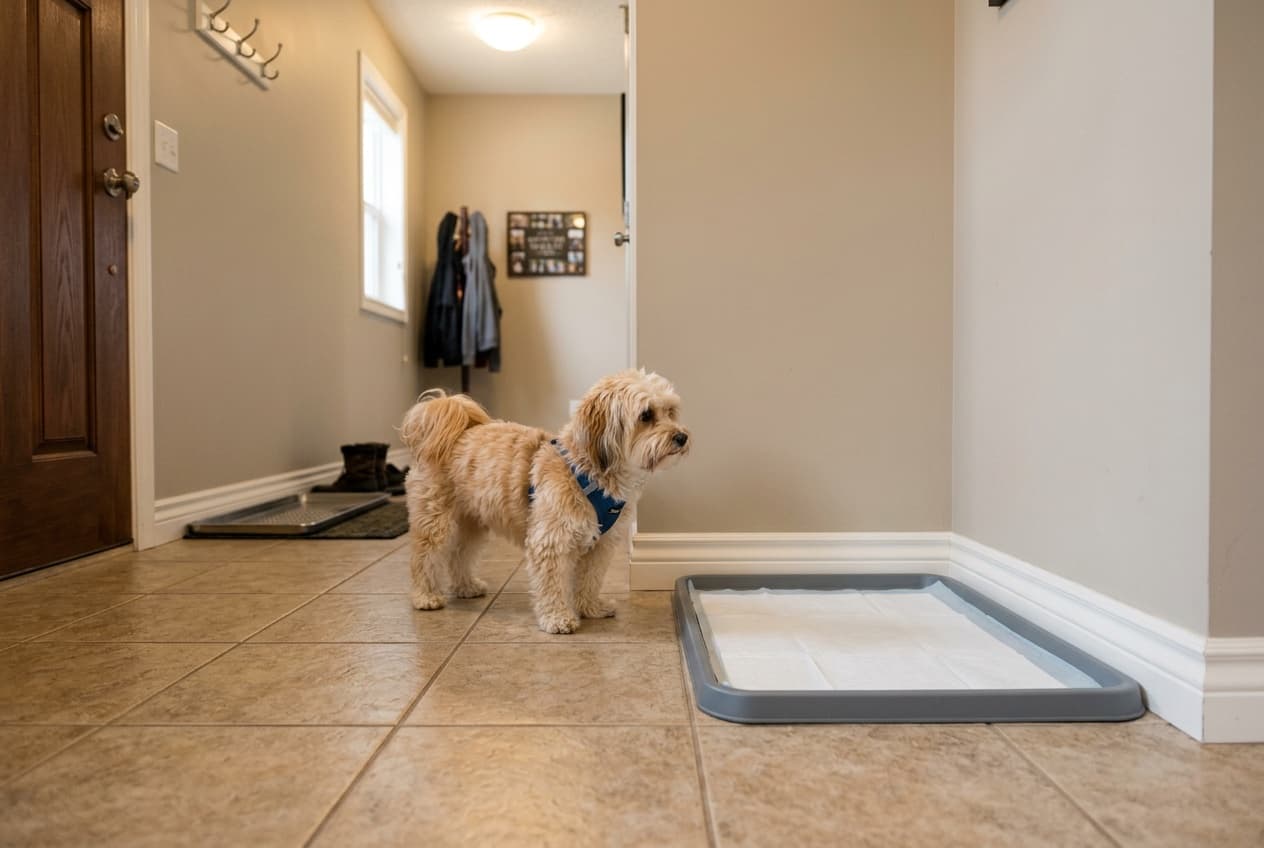
The Calgary Winter Complication
From November to March, Calgary potty training runs into the weather problem. A 10 lb Havanese cannot safely walk through snow above 8 inches deep, cannot tolerate minus 25 wind chill for more than a few minutes, and will absolutely pee on the kitchen tile rather than do either.
Three things that work for Calgary owners:
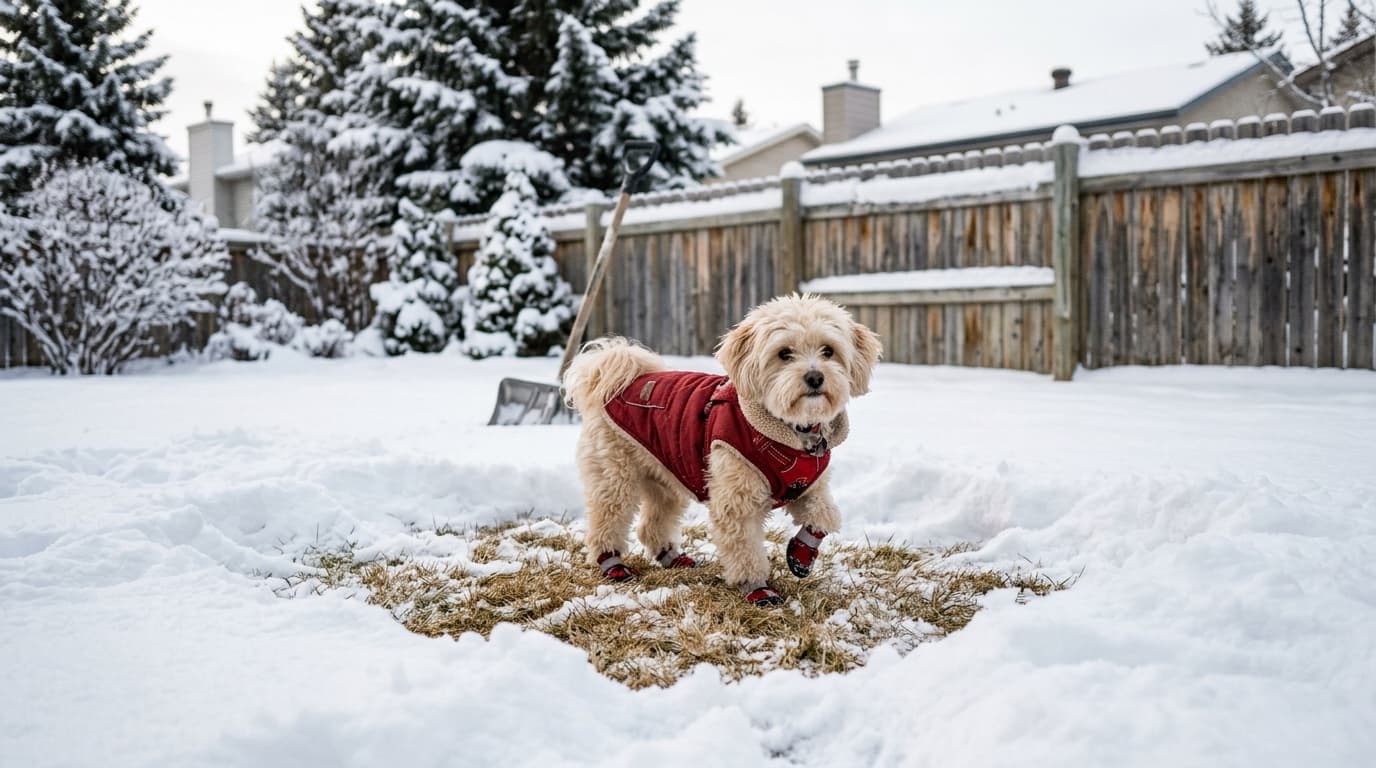
1. Shovel a small potty patch and keep it clear. 3 feet by 3 feet is enough. Pick a sheltered spot near the house. Calgary owners use a snow shovel after every snowfall to maintain the patch through the season.
2. Indoor backup for extreme cold (below minus 25). Designated pee pad or indoor potty grass in one specific spot, used only on the worst nights. Keep it in the same place every winter so the dog learns it as a winter location, not a permanent option.
3. Coat and booties for the breed. A Havanese in a proper insulated coat and booties tolerates short winter potty trips far better than a naked Havanese. The booties matter more than the coat. Salt and ice on bare paws is the fastest way to make a dog refuse the outdoors.
Calgary owners who buy Havanese puppies in spring (April to June) get 6 to 7 months of easy outdoor potty training before winter hits. The reliability is mostly built before the weather complicates things. Owners who buy puppies in October hit the weather problem before basic training is solid, and most of these owners report stretches where the dog “forgets” everything in deep winter and rebuilds in spring.
When Accidents Are Actually a Medical Problem
Some patterns that look like training failure are actually medical. See a vet if you observe any of these:
- • Sudden regression in a previously reliable dog. A 7-month-old who was reliable at 5 months and is now having multiple accidents per day usually has a urinary tract infection. Common in small female dogs, easily treated with antibiotics ($80 to $150 at most Calgary vets).
- • Frequent small dribbles instead of full pees. Bladder stones or anatomical issues. Imaging is required.
- • Drinking water far more than usual. Could be diabetes, kidney issues, or Cushing's. Bloodwork to rule out.
- • Submissive urination on greeting. Stress and anxiety, often resolves with confidence-building, not punishment. A Calgary force-free trainer experienced with small breeds can help. If excitement-pee happens mostly when children greet the dog, see our Havanese with kids and cats guide for greeting-management tips.
- • Accidents specifically when alone. Possible separation anxiety. See our Havanese separation anxiety guide.
For Calgary vet options including low-cost clinics see our low-cost vet guide. For emergency situations (blood in urine, complete inability to pee) see the Calgary emergency vet guide.
Common Calgary Owner Mistakes
- • Skipping the crate. The single biggest predictor of slow training. Without a crate or pen, the puppy has unsupervised access to the entire house and accidents happen out of sight, which trains the dog that hidden accidents are fine.
- • Cleaning with regular household cleaner. Dog urine has compounds that regular cleaners do not break down. The dog smells the spot and returns. Use an enzymatic cleaner like Nature's Miracle. About $15 at Calgary pet retailers, and every owner should keep a bottle on hand.
- • Punishing accidents you find later. The dog has no idea why you are angry. Punishment after the fact teaches the dog to hide future accidents, not to stop having them. The most common form of this mistake: rubbing the dog's nose in the spot. This does not work and damages your relationship.
- • Stretching out the timer too quickly. Going from 2-hour breaks to 4-hour breaks at month 3 because the dog seems “ready” usually backfires. Stay with shorter intervals longer than feels necessary.
- • Comparing to other breeds. Your friend's Lab was reliable at 4 months. Your Havanese will not be. This is breed-typical.
Frequently Asked Questions
Are Havanese hard to potty train?
Yes. Calgary vets confirm the breed's reputation for being among the harder small breeds to house train. The community calls it “stubborn but smart.” Plan on 6 to 9 months for full reliability, not the 3 to 4 months a Lab needs.
How long does it take to potty train a Havanese?
6 to 9 months for full reliability in most cases. Adult rescue Havanese already trained skip this entirely. First 3 months show progress, months 4 to 6 are the plateau, months 6 to 9 is when reliability arrives.
Why are Havanese harder than other small dogs?
Smart enough to test rules, small bladder with high water tolerance (frequent and unpredictable potty needs), and bad-weather avoidance which makes Calgary winters especially tough. All breed-typical, not training failure.
How often should I take my Havanese puppy out?
Regularly at 8 to 12 weeks, every 3 hours at 4 to 6 months, every 4 hours past 6 months. Always after waking, eating, play, and within 10 minutes of drinking. Set a kitchen timer for the first month.
Should I use pee pads for my Havanese?
For Calgary winters, often yes. Pee pads or indoor potty grass give your Havanese an option when minus 25 outside makes outdoor trips genuinely unsafe. Use seasonal: pads November to March, fully outdoor April to October.
What if my Havanese still has accidents at 8 months?
Within normal range, not a problem yet. Frequent accidents past 9 months warrant a vet visit to rule out UTI or bladder stones. If medical is clear, work with a Calgary force-free trainer experienced with small-breed house training. Most stuck cases were medical, missed crate use, or accumulated rug scents.
How do I potty train in Calgary winter?
Shovel a small potty patch (3x3 feet, kept clear), use indoor backup for extreme cold (designated pee pad spot only), and get your Havanese a coat and booties. Spring puppies (April to June) are easier than fall puppies because of the weather window.
Should I crate train for potty training?
Yes. Single biggest predictor of fast training. Properly sized crate (just big enough to stand and turn) prevents unsupervised accidents. Owners without a crate take 2 to 3x longer to reach reliability.
More Havanese guides
Havanese Adoption Calgary →
The full breed adoption guide. Where to find rescue Havanese, breeder vs rescue cost, and the honest reality.
Havanese Grooming Calgary →
Daily brushing reality, $90 to $130 per groom in Calgary, and the puppy cut decision every owner faces.
Havanese Separation Anxiety →
Why Havanese are velcro dogs, what to do if you work full-time, and Calgary daycare options.
Havanese Health Issues →
Luxating patella as the dominant breed concern, surgery costs, and pet insurance from day one.
New dog? Start with these care guides
Everything a new adopter needs to set up a safe, happy home.