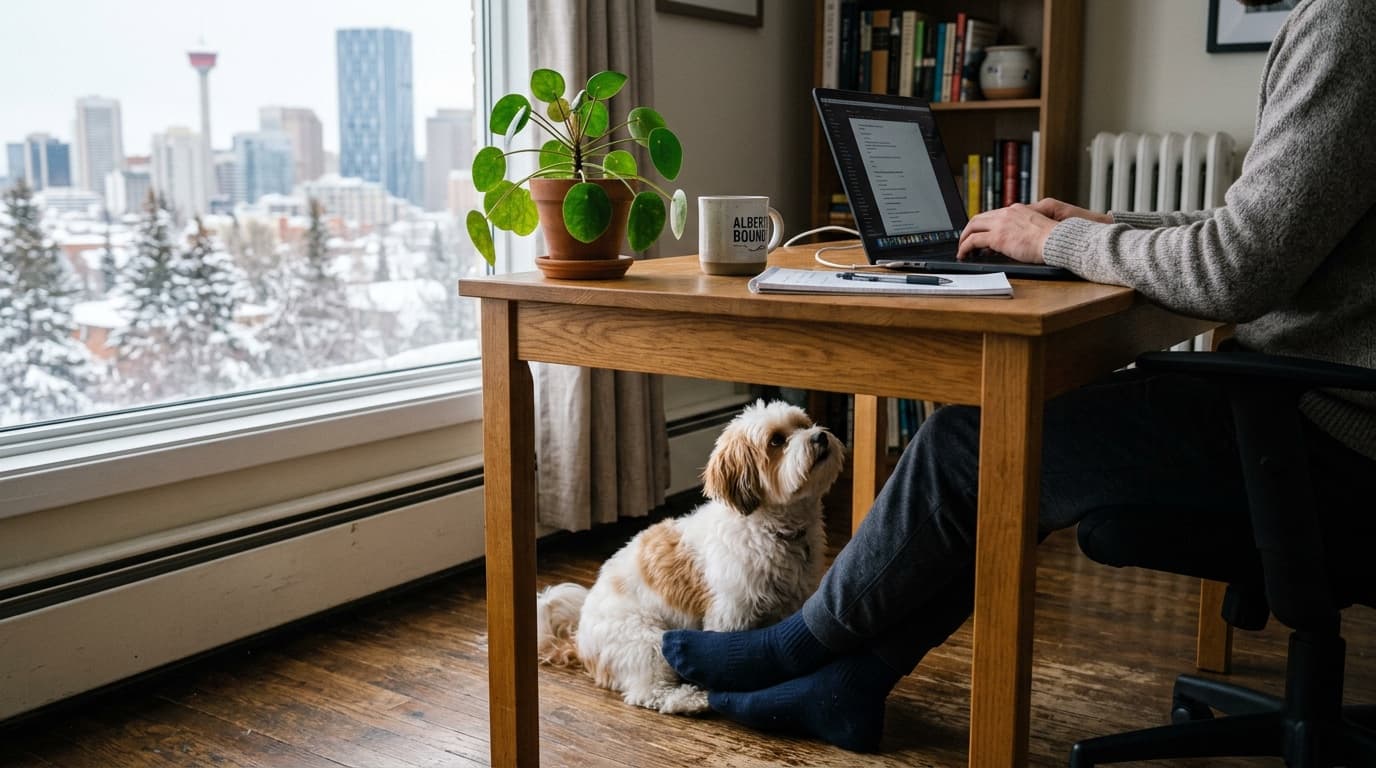
Havanese owners we work with in Calgary almost all describe the same first month: the puppy follows them from room to room, sits at their feet while they work, cries at the bathroom door, and falls apart the first time they leave for groceries. The community calls it the velcro behaviour. It is real, it is genetic, and the question is not whether your Havanese will do this. The question is what you do about it.
Two things to know before adopting. First, the velcro behaviour is a breed trait, not a training failure. Havanese were bred over centuries in Cuba as companion dogs whose entire job was to stay close to humans. Both the American Kennel Club breed profile and the Havanese Club of America describe the breed as a lap dog whose temperament expects a human in the room. Asking a Havanese to be alone all day is asking against the breed's wiring. Second, that does not mean the breed is impossible for working professionals. It means you have to plan for it. The owners who succeed long-term build alone-time tolerance gradually from puppyhood and use a midday break (walker, daycare, or work flexibility) for the first 1 to 2 years.
This guide walks through what velcro behaviour actually looks like, the four realistic paths Calgary owners use for the workday problem, and the training protocol that produces a Havanese who is comfortable alone by month 6 or 7. If you are still deciding whether to adopt, see the full Havanese adoption guide and the is a Havanese right for you screener.
What Velcro Behaviour Actually Looks Like
If you have never lived with a Havanese, the descriptions can sound hyperbolic. They are not. Here is what the first 6 months typically looks like in Calgary homes.
- • Following from room to room. Bathroom, kitchen, bedroom. Your Havanese wants visual contact at minimum, physical contact ideally.
- • Crying when you close a door behind you. Even briefly. This is not the dog being bratty, it is genuine distress at the visual separation.
- • Sitting on or against your feet. Calgary owners describe walking slower around the house because the dog is always physically close.
- • Barking or whining when you leave. First 5 to 10 minutes are the loudest. Without training, this can extend to the full duration of your absence.
- • Hyper-attentive to leaving cues. Picking up keys, putting on shoes, opening the closet. Your dog learns these cues fast and starts the anxiety response before you actually leave.
- • Greeting you like you were gone for years. A 20-minute trip and a full workday produce the same intensity of welcome-home behaviour.
None of this is a problem in a home with consistent human presence. The problem is the gap between what the breed wants (a human always nearby) and what most working adults can provide (8-hour workdays).
The 4 Realistic Paths for Working Calgary Owners
Most successful Havanese-and-full-time-work setups in Calgary use one of these four. Many use a combination.
Midday dog walker
A 30 to 45 minute walk in the middle of the workday breaks 8 hours of alone time into two 4-hour stretches. Calgary walkers charge $20 to $35 per visit, or $250 to $400 per month for daily service. Many Calgary walkers are independent operators who advertise on Facebook neighbourhood groups. Look for force-free walkers, ideally bonded and insured. The dog should look forward to the walker, not just tolerate them.
Doggy daycare 2 to 4 days per week
Pup City Doggy Daycare is the name that comes up most often in our Calgary rescue network for small-dog daycare because their Pup Academy classes layer alone-time training onto the daycare day. Several other Calgary small-dog daycares run similar programs. Most Calgary daycares charge $40 to $60 per day, or $32 to $48 per day with multi-day packages. Most Havanese do best with 2 to 3 days per week of daycare and the rest at home with a walker. Full-week daycare burns dogs out and actually increases anxiety on the home days. Look for separate small-dog play areas. A 12 lb Havanese in a play group with 60 lb retrievers is not a great match.
Work-from-home or hybrid schedule
The simplest path. Havanese thrive in WFH households because the breed gets what it actually wants: a human in the same room most of the day. Hybrid schedules (3 home / 2 in-office) work well too, with the in-office days covered by walker or daycare. The Havanese owners we know who never had separation anxiety are mostly WFH or retired.
Second dog as a companion
Sometimes the right answer, but not as the primary fix. A second dog reduces general loneliness but does not address the human-attachment piece, which is what separation anxiety actually is. Solve the training piece first. Two Havanese on the grooming schedule costs $1,400 to $2,000 per year, plus food and vet. Some Calgary owners adopt a second small breed (Maltese, Bichon, mix) instead of a second Havanese to spread out the grooming load.
Browse adoptable Havanese in Calgary
Many rescue Havanese are adult dogs who have already worked through the velcro phase in their previous home. Easier to integrate into a working household than a 12-week puppy.
See Available Havanese →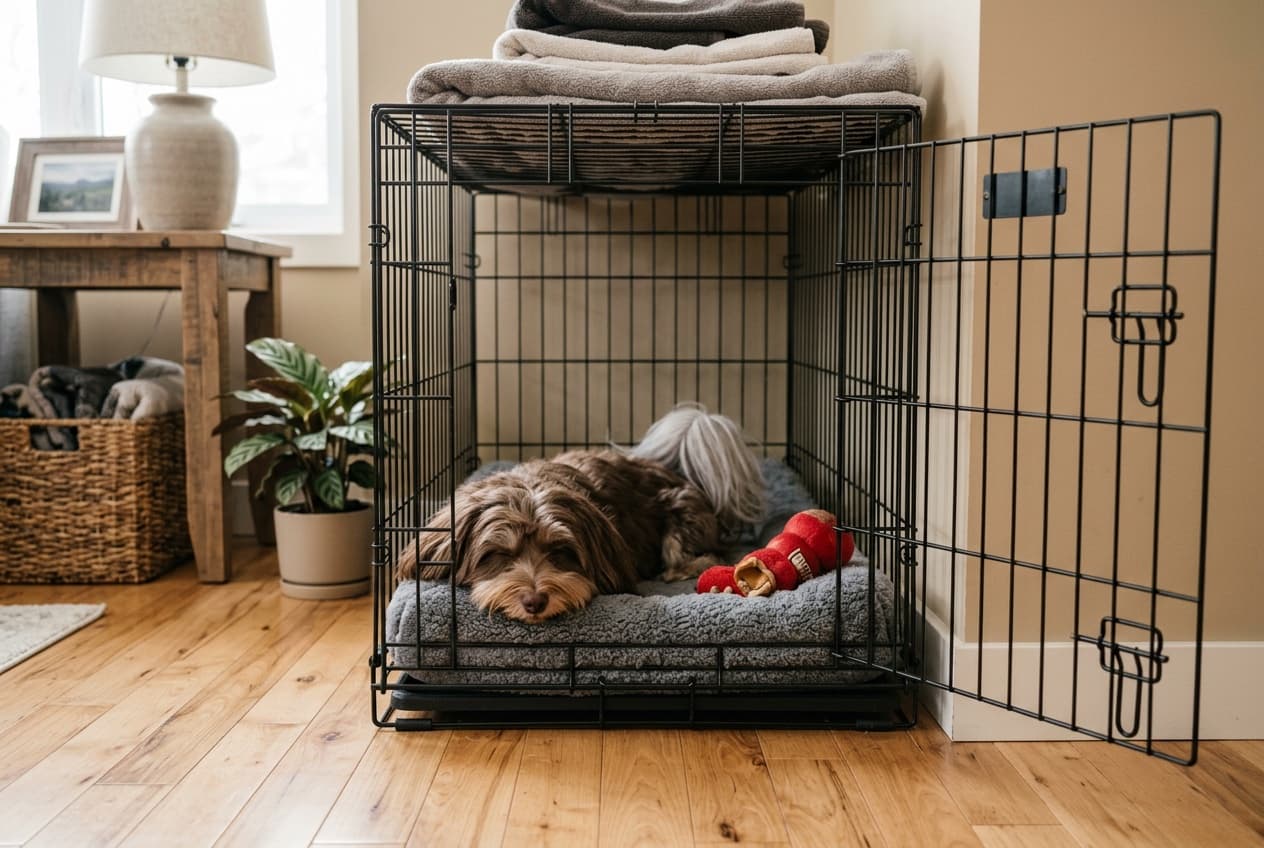
The Training Protocol That Works
Gradual desensitization is the gold standard. Calgary force-free trainers all teach a version of this. The Havanese-specific version we recommend:
Weeks 1 to 2: Build the safe space
Crate or pen with bedding. Feed all meals there with the door open. Random treats deposited in the crate when the dog is not looking. Goal: dog walks into the crate voluntarily.
Weeks 3 to 4: Brief door closures while you stay
30 seconds, then 1 minute, then 5 minutes, with you sitting in the same room. Treat when calm, never when whining. If they whine, you wait for 3 seconds of quiet before releasing. Releasing on whining trains the dog to whine.
Weeks 5 to 8: Brief absences
Step out of the room for 30 seconds. Return calmly without big greetings. Build to 2 minutes, 5 minutes, 10 minutes. Add fake departure cues (pick up keys, then sit back down) so the dog stops associating cues with absence.
Weeks 8 to 16: Real short absences
15 minutes alone, then 30, then 1 hour. Use a frozen Kong or lick mat as a positive distraction. By month 4, your puppy should handle 2 to 3 hours alone calmly.
Months 5 to 7: Workday tolerance
Build to 4 hours alone. With a midday walker break, this covers most working schedules. Dogs trained gradually rarely show severe separation anxiety past 7 months.
Some of the product links in this section are Amazon affiliate links — we may earn a small commission at no extra cost to you. It never changes which products we recommend.
For full first-week and decompression guidance see our first week with a rescue dog guide and the 3-3-3 decompression rule.
Calgary Trainers Who Specialize in Separation Anxiety
If your Havanese is past 6 months and the anxiety is not improving, get professional help before it becomes entrenched. The trainers we recommend in Calgary all use force-free methods. The International Association of Animal Behaviour Consultants (IAABC) maintains a directory of credentialed separation anxiety consultants you can filter to Alberta.
Raising Canine
Force-free Calgary trainer offering private separation anxiety sessions plus group puppy classes that bake in alone-time tolerance from the start. Sessions in this segment of the Calgary market typically run $150 to $300.
Pup City Doggy Daycare (Pup Academy)
Combines daycare with structured puppy training. Pup Academy classes specifically address separation anxiety, alone-time training, and crate work. Best for owners who want the daycare social benefit and the training protocol in one place.
Independent CCPDT or IAABC-certified trainers
Calgary has independent trainers who do separation anxiety work in your home. The key credentials to look for: CCPDT-KA, CCPDT-CSAT, or IAABC-ADT certification. Avoid any trainer who uses prong, e-collar, or alpha-rollover methods. These make Havanese anxiety dramatically worse, not better.
When Velcro Becomes True Anxiety
Most Havanese velcro behaviour is normal breed character. True separation anxiety is something else. Signs you have crossed into clinical territory:
- • Destructive chewing of doors, window frames, baseboards (escape attempts, not boredom)
- • Self-injury: torn nails, bloody paws, raw mouth from chewing crate bars
- • Persistent vocalization for the full duration of alone time, not just first 10 minutes
- • House soiling specifically when alone, when otherwise reliable
- • Vomiting, diarrhea, or refusing food when alone
- • No improvement after 6 to 8 weeks of consistent gradual training
If you see these, ask your regular vet for a referral to a veterinary behaviourist. The American Veterinary Medical Association recommends a vet-led work-up for any separation anxiety case that includes self-injury, prolonged vocalization, or no progress on a structured behaviour protocol. Decisions about whether medication has a role belong with your veterinary team, not an article. Severe separation anxiety responds well to treatment when caught early. Letting it run for years often produces a dog that cannot be left alone at all.
Frequently Asked Questions
Are Havanese velcro dogs?
Yes. The velcro description matches what we see in the Calgary rescue network and in the broader owner community. Havanese were bred over centuries as Cuban companion dogs whose entire job was to stay close to humans. The behaviour is genetic, not a training failure.
Can a Havanese be left alone for 8 hours?
Not without preparation. A Havanese left alone for 8 hours straight without training and without a midday break often develops barking, destruction, or escape behaviour within the first month. With gradual desensitization training and a midday walker or daycare, the breed adapts well.
When does Havanese separation anxiety improve?
Worst between 8 weeks and 6 months. With consistent training, most Havanese settle into manageable alone time by 6 to 7 months. Full adult comfort with longer absences typically arrives around 1 to 2 years.
What are the best Calgary daycares for Havanese?
Pup City Doggy Daycare is the small-dog daycare we hear about most often in the Calgary rescue network because Pup Academy classes add structured alone-time training to the daycare day. Several other Calgary small-dog daycares run similar programs. Calgary daycare costs $40 to $60 per day, $32 to $48 with multi-day packages.
Do I need a dog walker for my Havanese?
If you work outside the home for more than 6 hours straight, yes in most cases. Calgary walkers charge $20 to $35 per visit. A midday 30 to 45 minute walk breaks 8 hours into two 4-hour stretches and reduces anxiety significantly.
Should I get a second dog?
Sometimes, but not as the primary fix. A second dog helps with general loneliness but does not address the human-attachment piece, which is what separation anxiety actually is. Solve the training piece first. Two Havanese cost $1,400 to $2,000 per year just in grooming.
How do I crate train a Havanese?
Crate as positive space, not punishment. For the full first-week protocol, see our bringing home a Havanese guide and the Havanese house training guide. Short version: feed meals in the open crate week 1; add 30-second closed-door sessions while you sit nearby; build gradually to 1 hour by month 2 and 3 to 4 hours by month 4. Never start with hours of confinement on day one.
When should I see a veterinary behaviourist?
When the dog is risking self-injury or property destruction, when 6 to 8 weeks of gradual training shows no progress, or when anxiety is worsening past 1 year. Calgary veterinary behaviourist sessions run $150 to $300. Decisions about medication belong with your veterinary team, not an article.
More Havanese guides
Havanese Adoption Calgary →
The full breed adoption guide. Where to find rescue Havanese, breeder vs rescue cost, and the honest reality.
Havanese Grooming Calgary →
Daily brushing reality, $90 to $130 per groom in Calgary, and the puppy cut decision every owner faces.
Havanese House Training →
The realistic potty training timeline, why this breed is harder than most, and Calgary winter complications.
Havanese Health Issues →
Luxating patella as the dominant breed concern, surgery costs, and pet insurance from day one.
New dog? Start with these care guides
Everything a new adopter needs to set up a safe, happy home.